

Kolkata's Other Dimensions: Tagore's Open-Air University, the East Kolkata Sewage Fish Farms & the Political Walls
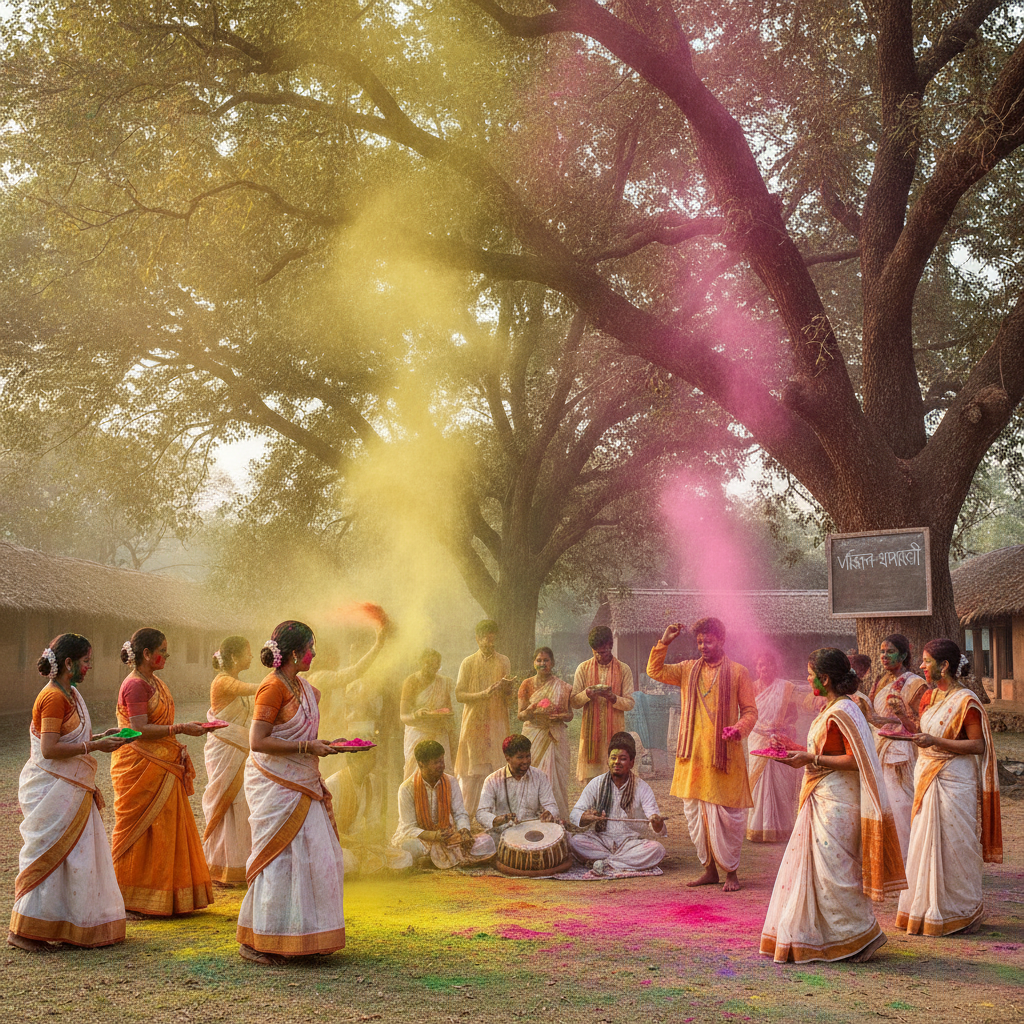
Explore beyond the city centre—Shantiniketan's UNESCO campus where Tagore designed outdoor classroom teaching under trees and Nandalal Bose learned to paint (then drew the Indian Constitution calligraphy), Kolkata's Armenian Church from 1724 and the Armenian Street community of fewer than 100 people, wall painting as political newspaper from Left Front slogans to contemporary murals around Jadavpur University, the Maidan's 400 hectares where 300 cricket matches happen simultaneously on weekends (created as a field of fire for Fort William), and the East Kolkata Wetlands where 13,000 tonnes of vegetables grow in sewage-fed fish ponds in a Ramsar-listed food production and waste treatment system under real estate pressure.

Kolkata's Genius: Tagore's Nobel Prize House, Satyajit Ray's Cannes Revolution & 34 Years of Democratic Communism
Trace the extraordinary intellectual current that runs through Kolkata—Rabindranath Tagore's rambling north Kolkata mansion where India's and Bangladesh's national anthems were written, Satyajit Ray's 1955 Pather Panchali shocking Cannes with black-and-white Bengal village life filmed on a shoestring, 2 million second-hand books on College Street pavements and Coffee House arguments that have been running since 1876, Bengal tigers swimming between Sundarbans mangrove islands in the world's largest tidal mangrove forest, the CPI(M)'s 34-year democratic communist government that lost power over a Singur land grab, and the kathi roll invented at Nizam's restaurant in 1932 as the world's first wrap.

Kolkata Essentials: Howrah Bridge, the World's Largest Art Festival & the City That Produced Two Nobel Prizes
Encounter India's most intellectually serious city—Howrah Bridge's 100,000 daily vehicles above the Mullik Ghat flower market where 2,000 traders unload marigolds by boat at 4am, Durga Puja's 2,500 competing pandal art installations across five October nights (now UNESCO Intangible Cultural Heritage), the Bengal Renaissance that produced Rabindranath Tagore (1913 Nobel Literature) and Amartya Sen (1998 Nobel Economics), Kalighat Temple where Kolkata takes its name and Mother Teresa operated the Home for the Dying alongside it, and the last functioning trams and hand-pulled rickshaws in India.

Kolkata's Weight: The 1943 Famine Churchill Didn't Stop, India's First Metro Under the Hooghly & the Most Passionate Football City
Grapple with Kolkata's full historical weight—the 1943 Bengal Famine where Amartya Sen proved food existed but distribution failed, Churchill refusing to divert shipping until Wavell overrode him and 2-3 million had already died, CIMA Gallery representing the finest Bengali painters in India's most established eastern art market, the world's largest non-trade book fair drawing 2.5 million visitors over 12 January days, Mohun Bagan's 1911 IFA Shield victory over a British Army team as nationalism expressed through football, and India's first metro now running under the Hooghly River as the cheapest way to cross between Kolkata and Howrah.

Kolkata's Hidden Communities: The Idol-Makers of Kumartuli, the Last 25 Jews in India & Kolkata's Chinese Dim Sum Morning
Find Kolkata's extraordinary ethnic and cultural layers—2,000 idol-makers working in Kumartuli's lanes from July to October sculpting the 15-foot Durga clay idols that will be immersed in the Hooghly after five nights of pandal-hopping, the Baghdadi Jewish community reduced from 5,000 to 25 people (Nahoum bakery still selling fruit cake since 1902), the Hakka Chinese community of 2,000 making Sunday dim sum at Tiretti Bazaar after being decimated by the 1962 Sino-Indian War internments, Dalhousie Square's Victorian red-brick administrative core (the finest colonial streetscape outside London), and the ₹7 Hooghly River ferry passing under Howrah Bridge as the best way to see both cities.

Kolkata's Soul: Rosogolla's Disputed Origin, Netaji's Escape from British House Arrest & the City That Teaches by Resisting Description
Complete the Kolkata portrait—the rosogolla geographical indication battle between West Bengal and Bangladesh (India won the GI in 2017; the debate continues), the 50 professional Bengali theatre groups using performance as social commentary in a 150-year continuous tradition, Kali as the city's spiritual identity (Shakti rather than Shiva—the terrifying protective goddess standing on a prostrate god), Netaji Subhas Chandra Bose escaping British house arrest in 1941 dressed as a Muslim holy man to reach Berlin and then Japan to fight for India's liberation through armed force, jazz at Someplace Else on Park Street running live music every night since 1992, and why Kolkata teaches you more the more you know about it before you arrive.