Kolkata's Weight: The 1943 Famine Churchill Didn't Stop, India's First Metro Under the Hooghly & the Most Passionate Football City
Grapple with Kolkata's full historical weight—the 1943 Bengal Famine where Amartya Sen proved food existed but distribution failed, Churchill refusing to divert shipping until Wavell overrode him and 2-3 million had already died, CIMA Gallery representing the finest Bengali painters in India's most established eastern art market, the world's largest non-trade book fair drawing 2.5 million visitors over 12 January days, Mohun Bagan's 1911 IFA Shield victory over a British Army team as nationalism expressed through football, and India's first metro now running under the Hooghly River as the cheapest way to cross between Kolkata and Howrah.
- 1
The 1943 Bengal Famine – History's Most Studied Man-Made Famine
The Bengal Famine of 1943—which killed between 2 and 3 million people in Bengal (primarily in the rural districts surrounding Calcutta) during World War II—is the most studied famine in history and a subject of profound historical and political controversy. Amartya Sen's analysis (in Poverty and Famines, 1981) demonstrated that the famine was not caused by food shortage (food production was adequate) but by failures of food distribution—specifically wartime government policies that prioritised military and urban supply over rural Bengal, combined with a speculative bubble in food prices driven by war-economy inflation. Winston Churchill's hostility to diverting shipping to Bengal (his wartime statements on India were notoriously contemptuous) is a specific point of historical controversy. The famine ended only when the Supreme Commander of Allied Forces, Lord Wavell, overrode Churchill and directed food aid to Bengal.
- 2
Kolkata's Art Scene – CIMA Gallery & the Birla Academy
Kolkata has India's most established fine art market and art institution network outside Mumbai. The Centre of International Modern Art (CIMA Gallery, Sunny Towers, Camac Street)—founded in 1993 by Rakhi Sarkar—is India's most important private contemporary art gallery, representing major Indian artists including Jogen Chowdhury, Ganesh Pyne, and the estates of significant 20th-century Bengali painters. The Birla Academy of Art and Culture (Southern Avenue) maintains a collection of modern Indian masters. The Kolkata Art Fair (annual, November) is the largest art fair in eastern India. Bengali folk art forms—patachitra (scroll painting, from Medinipur district), Kalighat pat (the Kalighat temple's distinctive angular painting style that was one of the first Indian art forms to confront British colonialism), and terracotta temple sculpture (Bishnupur, 3 hours from Kolkata)—have dedicated museum collections at the Indian Museum.
- 3
Kolkata's Literary Scene – Boi Mela & Bengali Literature
The Kolkata Book Fair (Boi Mela)—held annually for 12 days in January–February on the Milan Mela Grounds—is the largest non-trade book fair in the world (non-trade meaning open to the general public rather than industry professionals only): approximately 2.5 million visitors over 12 days, with 800+ publishers and 1.5 million books. The fair has been held annually since 1976; its scale reflects the extraordinary reading culture of Bengali society. Bengali literature—stretching from Bankimchandra Chattopadhyay (19th century novelist), through Rabindranath Tagore (Nobel 1913), Bibhutibhushan Bandyopadhyay (Pather Panchali novel), Mahasweta Devi (activist fiction about Adivasi communities), to contemporary writers including Shirshendu Mukhopadhyay and Sangeeta Bandyopadhyay—is one of India's richest literary traditions.
- 4
Kolkata's Sporting Life – Football, Cricket & the East Bengal–Mohun Bagan Derby
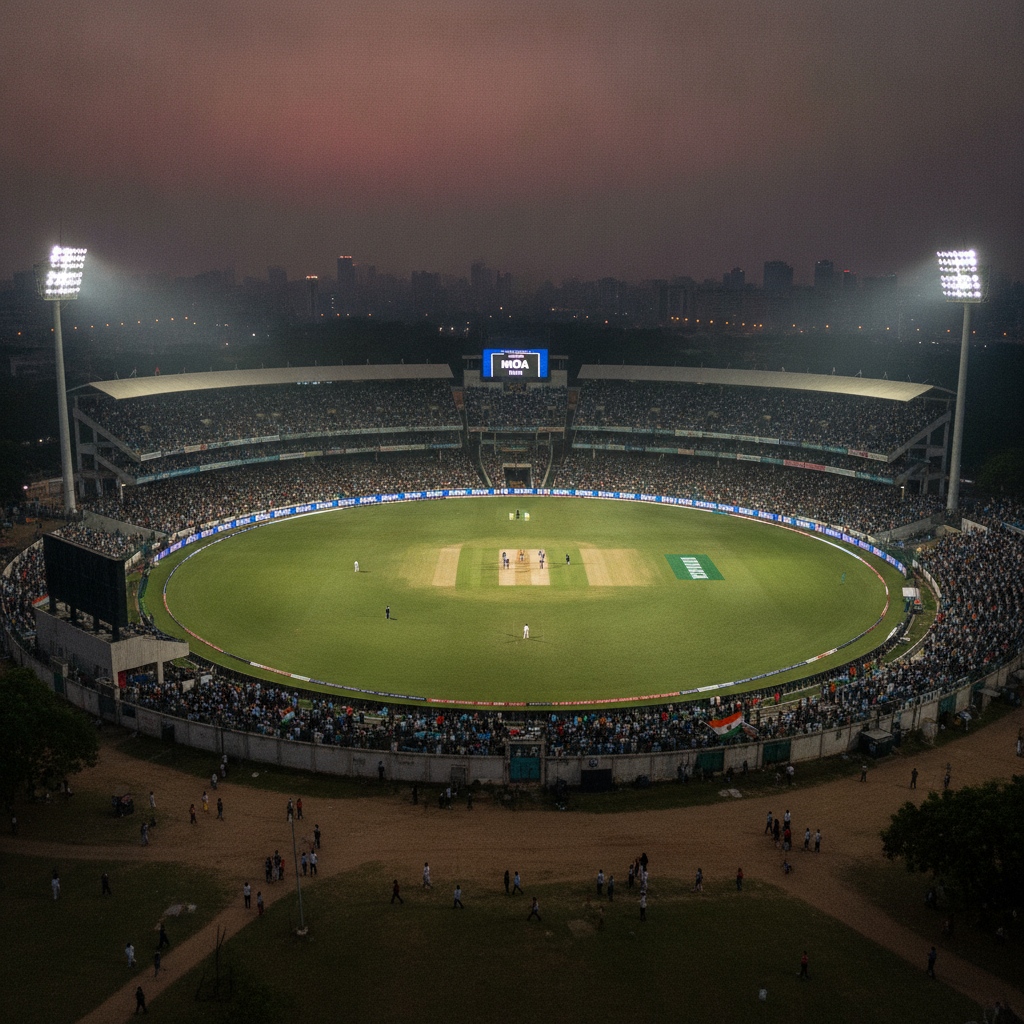
Kolkata is India's most passionate football city: football (association football, not cricket) was the dominant sport in Bengal from the British period, when Indian teams first competed against and began beating British Army teams (Mohun Bagan's 1911 IFA Shield victory over the East Yorkshire Regiment was the first Indian team to win a major British trophy—celebrated as a symbol of nationalist pride). The East Bengal–Mohun Bagan derby (now the Kolkata Derby between East Bengal FC and ATK Mohun Bagan in the Indian Super League) is the most attended club football match in Asia—the Salt Lake Stadium (capacity 85,000) regularly fills for derby matches. The Eden Gardens Cricket Ground (capacity 68,000, the largest cricket ground in India and one of the largest in the world) is the home of cricket's most partisan crowd; Test matches at Eden Gardens between India and Pakistan (when they occur) are among world cricket's most electric atmospheres.
- 5
Kolkata's Decay & Grandeur – The Crumbling Palace City
Kolkata is described by architectural historians as the finest concentration of 19th-century architecture in Asia—and also as the city where that architecture is decaying fastest. The combination of humidity, monsoon flooding, lack of maintenance funds, complex heritage ownership (property divided between thousands of legal heirs over generations), and political disincentive to enforce conservation law has produced a cityscape where extraordinary Victorian, Indo-Saracenic, Edwardian, and Art Deco buildings coexist with extreme urban poverty and physical decay. The Indian National Trust for Art and Cultural Heritage (INTACH) Kolkata chapter has documented thousands of heritage buildings in need of intervention. The tension between development pressure and preservation is acute in areas like North Kolkata (Shyambazar, Maniktala), where centuries-old urban fabric is being demolished for concrete construction.
- 6
Practical Kolkata – Getting Around, Metro & Airport
Kolkata is served by Netaji Subhas Chandra Bose International Airport (CCU), 17 km from the city centre (metro from Airport station to Esplanade in 45 minutes, ₹50/€0.55; taxi ₹400–600/€4.40–6.60 by pre-paid counter). The Kolkata Metro (1984—India's first metro system, 6 lines now operational including the underwater Hooghly River crossing, the first underwater metro tunnel in India) covers most tourist areas: the Blue Line (east–west) connects the airport to Salt Lake; the Green Line (north–south) covers the central tourist corridor. Kolkata's traffic is heavy but manageable by metro; the old city north of BBD Bagh (Dalhousie) is best explored on foot. Best season: October–March (October brings Durga Puja—the definitive time to visit; November–February is the most comfortable weather). Avoid April–June (40°C heat and humidity) and July–September (extreme monsoon flooding).
Walk this route with audio
Stories play automatically as you reach each stop — no tapping needed.
More in Kolkata
Kolkata's Other Dimensions: Tagore's Open-Air University, the East Kolkata Sewage Fish Farms & the Political Walls
Kolkata's Genius: Tagore's Nobel Prize House, Satyajit Ray's Cannes Revolution & 34 Years of Democratic Communism
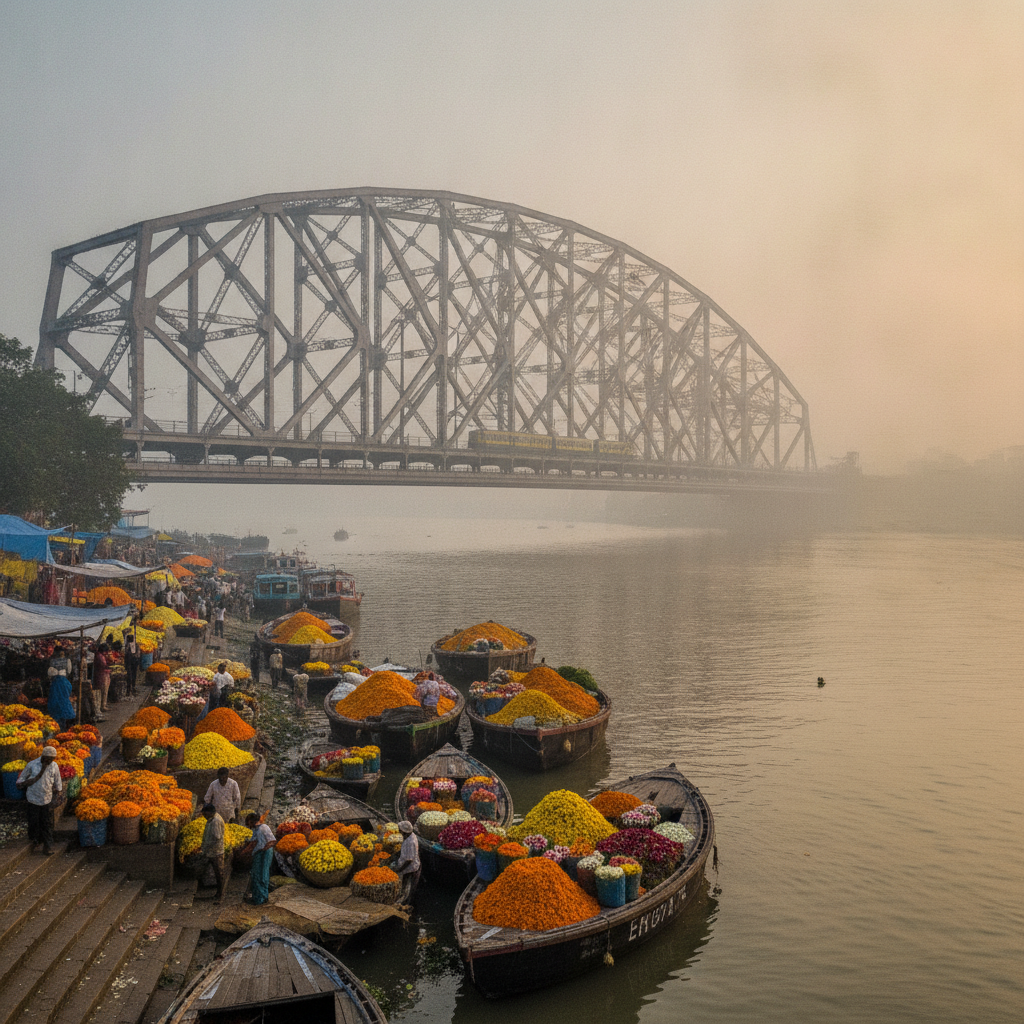
Kolkata Essentials: Howrah Bridge, the World's Largest Art Festival & the City That Produced Two Nobel Prizes
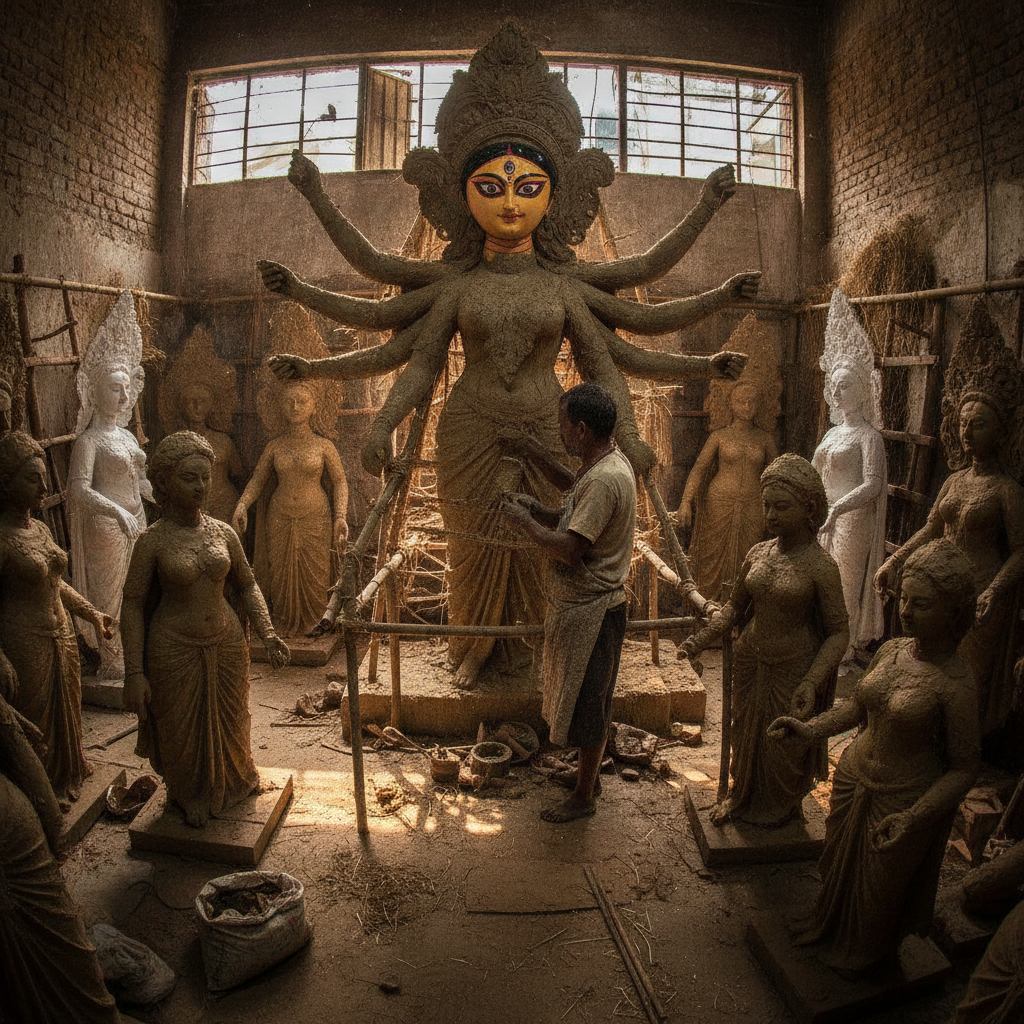
Kolkata's Hidden Communities: The Idol-Makers of Kumartuli, the Last 25 Jews in India & Kolkata's Chinese Dim Sum Morning