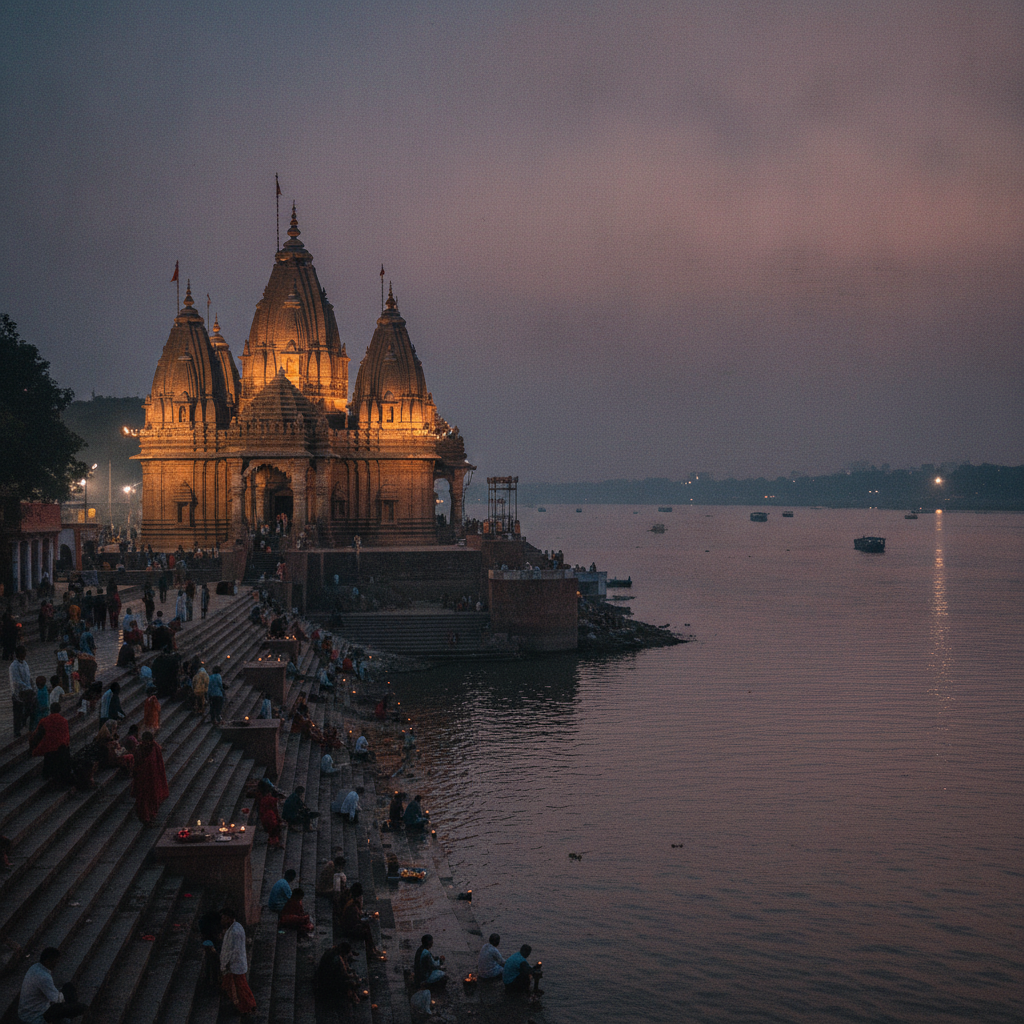
Kolkata's Other Dimensions: Tagore's Open-Air University, the East Kolkata Sewage Fish Farms & the Political Walls
Explore beyond the city centre—Shantiniketan's UNESCO campus where Tagore designed outdoor classroom teaching under trees and Nandalal Bose learned to paint (then drew the Indian Constitution calligraphy), Kolkata's Armenian Church from 1724 and the Armenian Street community of fewer than 100 people, wall painting as political newspaper from Left Front slogans to contemporary murals around Jadavpur University, the Maidan's 400 hectares where 300 cricket matches happen simultaneously on weekends (created as a field of fire for Fort William), and the East Kolkata Wetlands where 13,000 tonnes of vegetables grow in sewage-fed fish ponds in a Ramsar-listed food production and waste treatment system under real estate pressure.
- 1
Shantiniketan – Tagore's Open-Air University
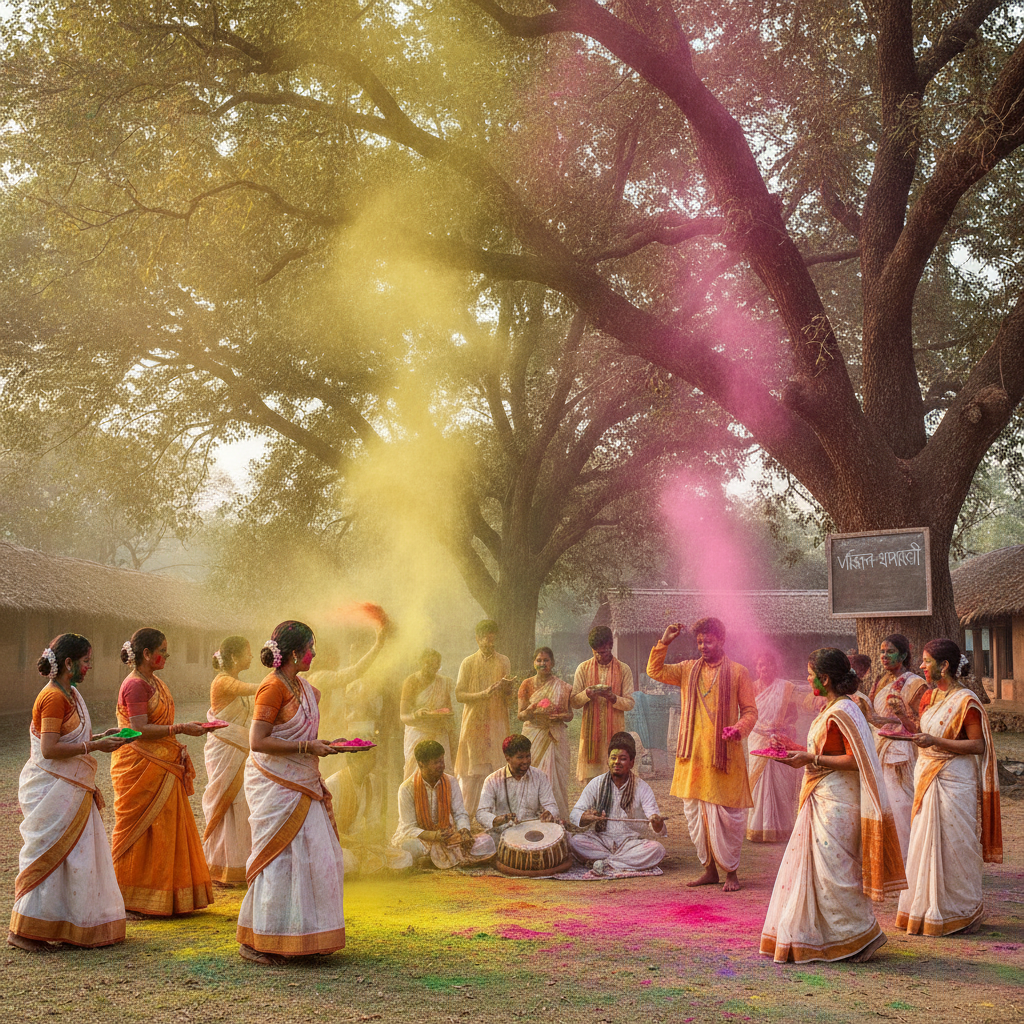
Shantiniketan ('Abode of Peace')—180 km north of Kolkata in Birbhum district, UNESCO World Heritage Site (2023)—is the site of Visva-Bharati University, founded by Rabindranath Tagore in 1921 (expanding his father Debendranath Tagore's earlier ashram). Tagore's educational philosophy rejected enclosed classrooms: Visva-Bharati's teaching was (and partly still is) conducted outdoors under trees, combining Bengali, Sanskrit, and Western knowledge. The campus contains the Uttarayan complex (Tagore's own residences—several small houses, including the Udayan where he spent his last years), the Sangit Bhavana music school, and the Kala Bhavana fine arts department (which trained Nandalal Bose—who designed the calligraphy for the Indian Constitution—and contemporary painters of international standing). The Poush Mela (December fair) and Basanta Utsav (Holi celebration, uniquely colourful at Shantiniketan) attract thousands.
- 2
Kolkata's Armenian Community & St. John's Church
The Armenian community of Kolkata—one of the oldest foreign communities in the city, present from the 17th century—built the Armenian Church of the Holy Nazareth (1724, the oldest church in Kolkata, on Armenian Street) when Calcutta was still a small trading post. The Armenians were significant traders between Bengal, Iran, and the Middle East; the community declined through the 20th century and now numbers fewer than 100 in Kolkata. St. John's Church (1787, south of Dalhousie Square)—Calcutta's first cathedral—contains the tomb of Job Charnock (the British East India Company official traditionally credited with 'founding' Calcutta in 1690, though this claim is contested: Calcutta has had Hindu settlements since the pre-colonial period). The Job Charnock founding story was legally challenged and partially rejected by the Calcutta High Court in 2003.
- 3
Kolkata's Protests & Political Art – The Wall Writing Tradition
Kolkata's walls are its unofficial newspaper: political graffiti (slogans, portraits of political leaders, hammer-and-sickle symbols, election manifestos painted directly onto walls) has covered Kolkata's buildings since the Left Front came to power in 1977, creating a visual political culture unlike any other Indian city. The tradition predates the Left Front—independence movement slogans, Swadeshi movement imagery, and nationalist art all appeared on Calcutta walls from the early 20th century. Street art in contemporary Kolkata has evolved from purely political sloganeering to include artistic murals in areas like the Sreebhumi neighbourhood and around Jadavpur University. The annual Kolkata Street Art Festival has produced large-scale murals by national and international artists in the Lake Market and Ballygunge areas. The political wall painting tradition reached its peak during West Bengal election campaigns, when rival parties essentially competed for wall space.
- 4
The Maidan – Kolkata's Green Lung & Historical Centre
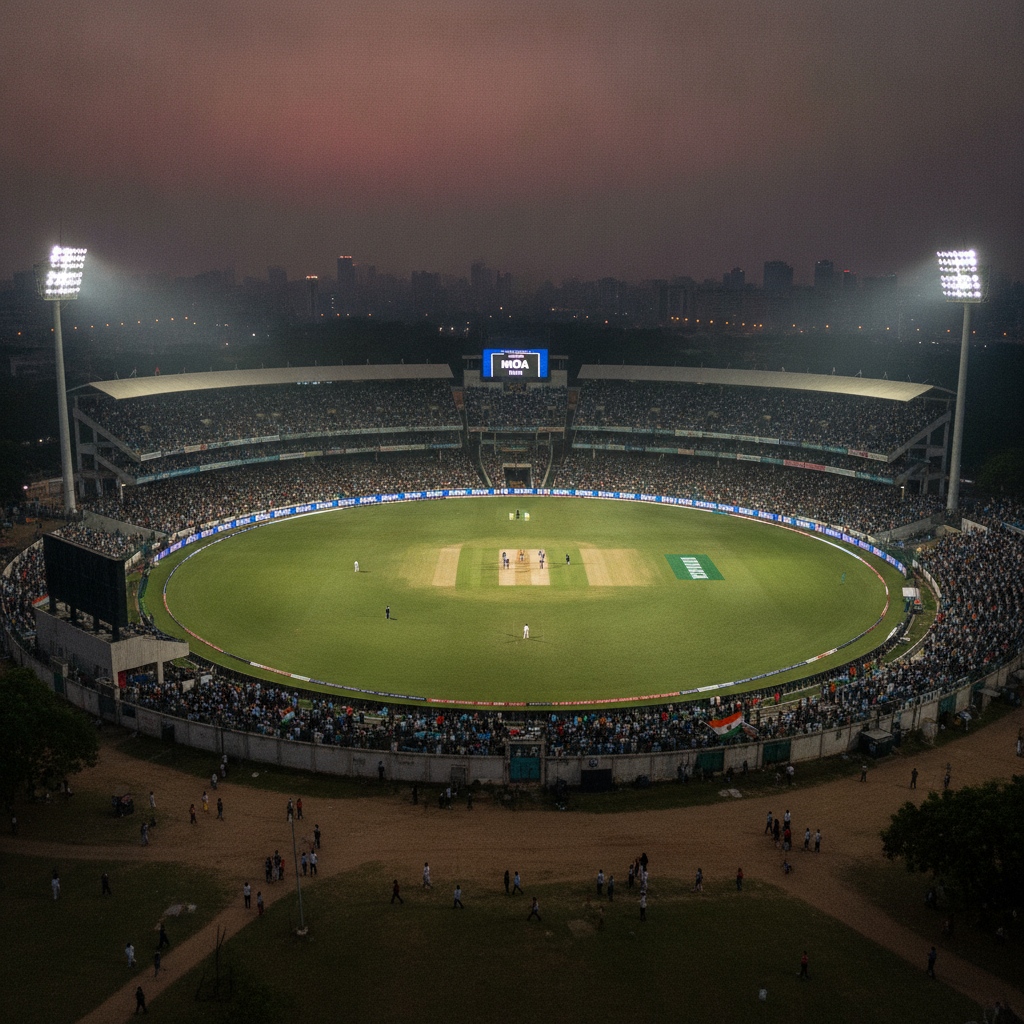
The Maidan ('field' in Urdu)—a 400-hectare open park in central Kolkata, bounded by the Hooghly River, Victoria Memorial, Fort William, and the Chowringhee commercial district—is the largest urban park in Asia and the open space that gives Kolkata its surprising ability to breathe despite extreme urban density. The Maidan was created by the British East India Company to provide a clear field of fire around Fort William (built 1781); the military rationale produced an incidental open space that Kolkata's residents have claimed for cricket (300+ cricket matches occur simultaneously on weekends), football, horse racing (the Royal Calcutta Turf Club, Asia's oldest horse racing club, established 1847), political rallies, morning exercise, and the Kolkata Race Course. The Red Road bisects the Maidan and is used for official ceremonies and, occasionally, Formula E races.
- 5
Kolkata's Monsoon – The City That Floods & Endures
Kolkata receives 1,600 mm of annual rainfall, concentrated in the June–September monsoon; the city floods severely during heavy monsoon events because much of Kolkata is below sea level (including the entire eastern part of the city). The city's drainage system—Victorian-era canals (khal) combined with a post-independence pump system—struggles with extreme rainfall events; the 2021 and 2023 monsoons produced extensive flooding in the eastern suburbs. The East Kolkata Wetlands (UNESCO Ramsar site 2002)—a 12,000-hectare network of sewage-fed fish ponds and vegetable farms on the city's eastern fringe—are simultaneously Kolkata's waste treatment system and food production zone: 13,000 tonnes of vegetables and 13,000 tonnes of fish produced annually from ponds fed by the city's wastewater. The wetlands are one of the most innovative natural infrastructure systems in the world—and under pressure from real estate development.
- 6
Kolkata's New Town – A City Being Built Alongside the Old
New Town (Rajarhat)—a planned city being constructed northeast of Kolkata on former agricultural land—represents the sharp contrast with the crumbling heritage city. The New Town development (begun 2000, major acceleration from 2011) contains the IT sector (major Indian and international technology companies have campuses: TCS, Wipro, Infosys, IBM), Eco Park (480 hectares—India's largest park, opened 2012, with a central lake, replicas of Seven Wonders of the World, and cycle paths), Biswa Bangla Convention Centre, and the rapidly developing residential districts. The new metro line connecting Kolkata Airport to New Town to Salt Lake sector V has accelerated development. Critics note that New Town was built on farmland displacing farming communities and that its development model replicates Indian IT-city patterns without addressing the needs of Kolkata's existing population.
Walk this route with audio
Stories play automatically as you reach each stop — no tapping needed.
More in Kolkata
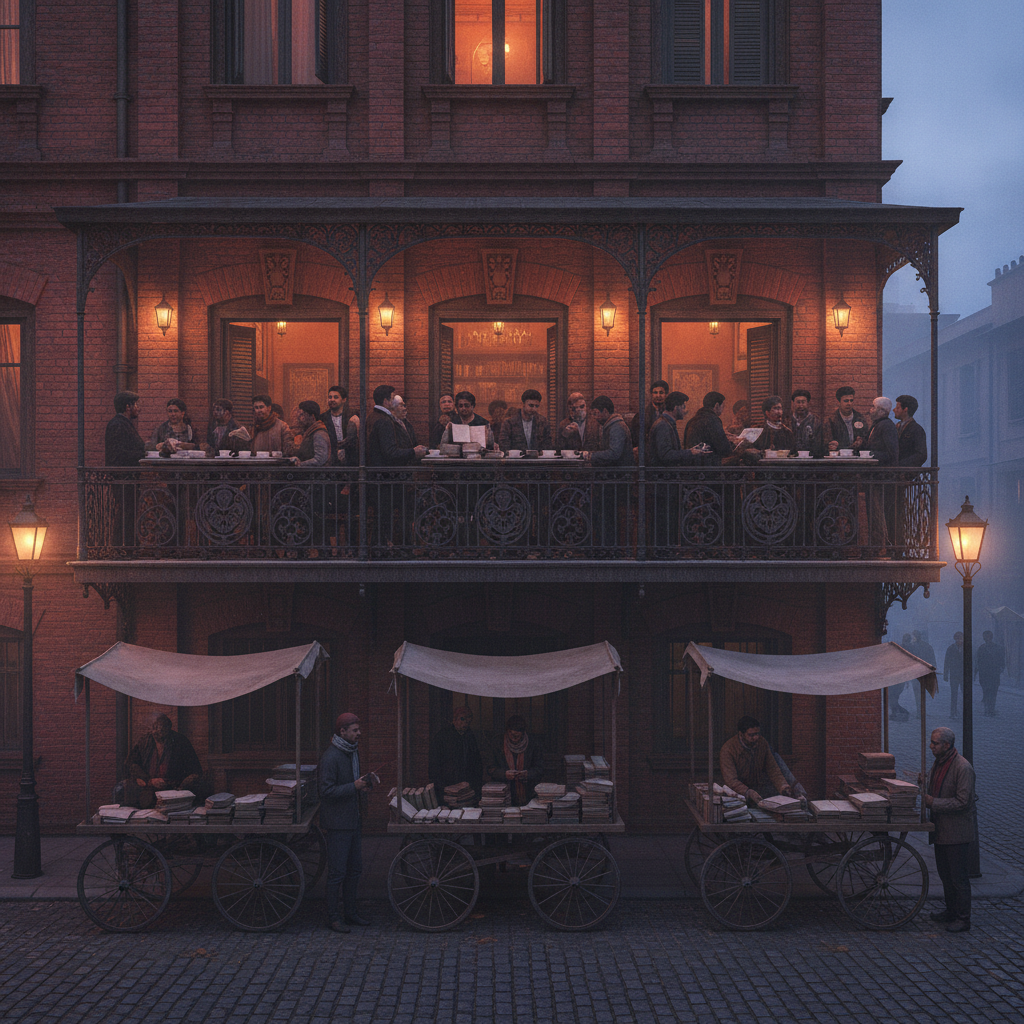
Kolkata's Genius: Tagore's Nobel Prize House, Satyajit Ray's Cannes Revolution & 34 Years of Democratic Communism
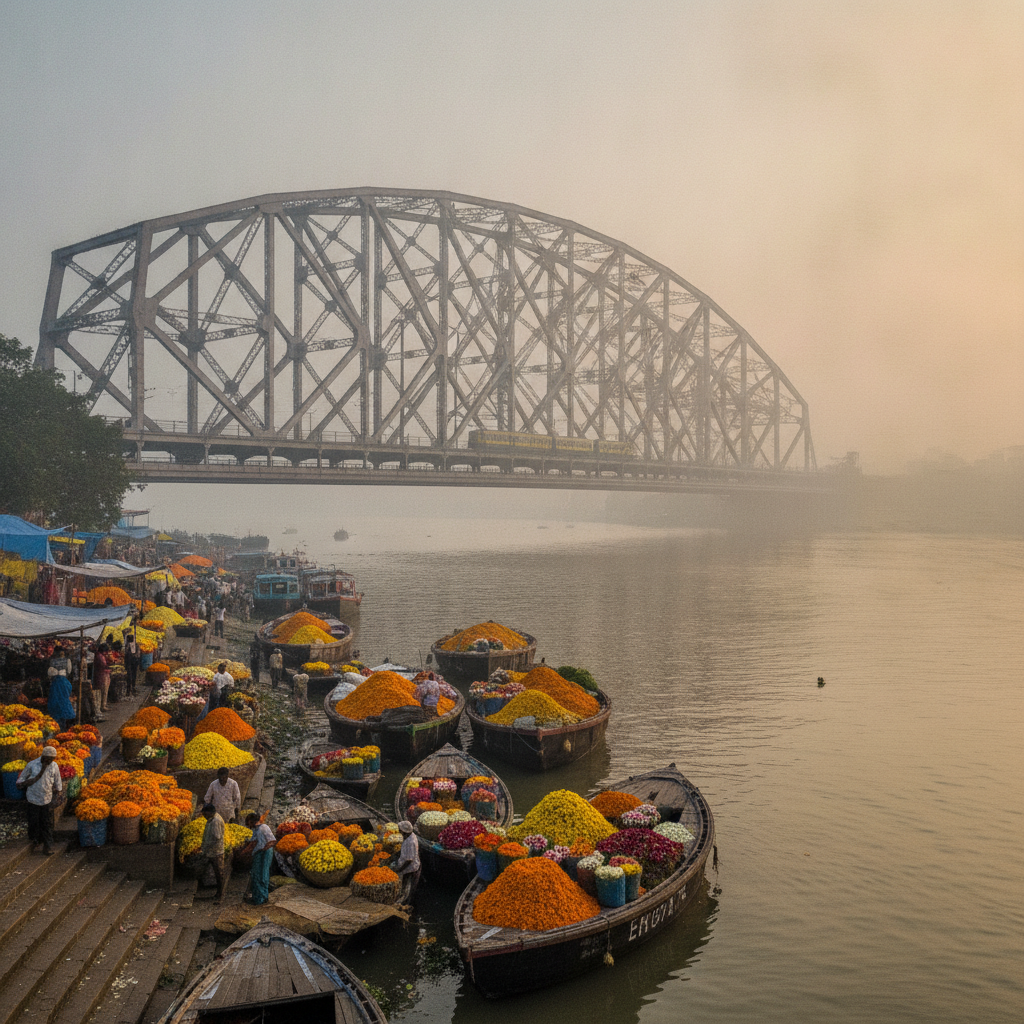
Kolkata Essentials: Howrah Bridge, the World's Largest Art Festival & the City That Produced Two Nobel Prizes
Kolkata's Weight: The 1943 Famine Churchill Didn't Stop, India's First Metro Under the Hooghly & the Most Passionate Football City
Kolkata's Hidden Communities: The Idol-Makers of Kumartuli, the Last 25 Jews in India & Kolkata's Chinese Dim Sum Morning