Yogyakarta
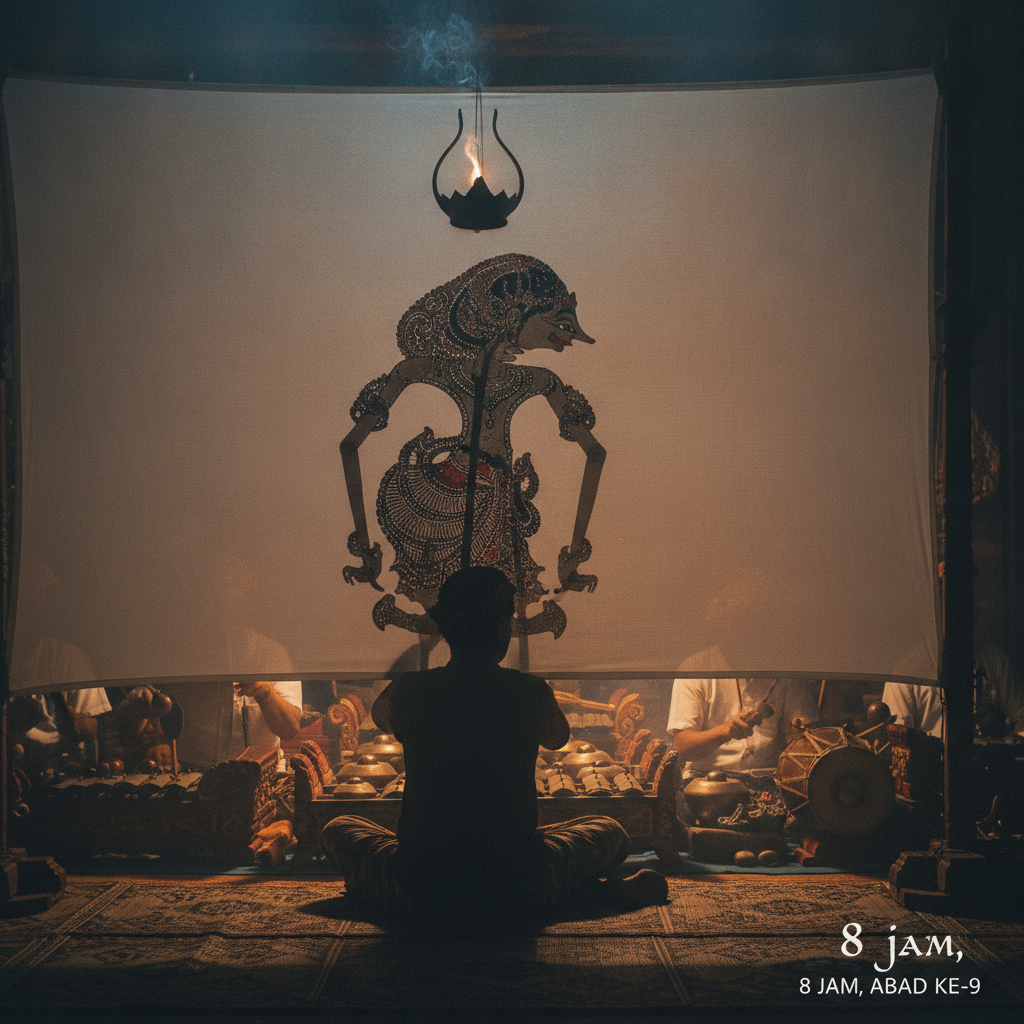
Yogyakarta's Arts: 9-Hour Wayang Kulit at Dawn, Gamelan's Influence on Debussy & Angkringan Cart Food After Dark
Javanese art in depth—the gamelan's bronze metallophone scales (slendro and pelog, neither in Western equal temperament, each set tuned to itself alone) whose sound convinced Debussy and John Cage that European music had a different future, the dalang performing all 30+ wayang characters' voices for 9 hours straight while directing the gamelan with foot signals, Heri Dono's wayang-based installation art and Taring Padi's woodblock banners that made the documenta 15 controversy, the angkringan lantern-cart appearing at dusk selling nasi kucing rice in banana leaf and strong sweet tea to students and becak drivers, Dieng Plateau's 8th-century Hindu temples in a sulphur-venting caldera above 2,000 metres and the dreadlocked children freed by ritual hair-cutting, and the Borobudur-Prambanan combo ticket logistics.
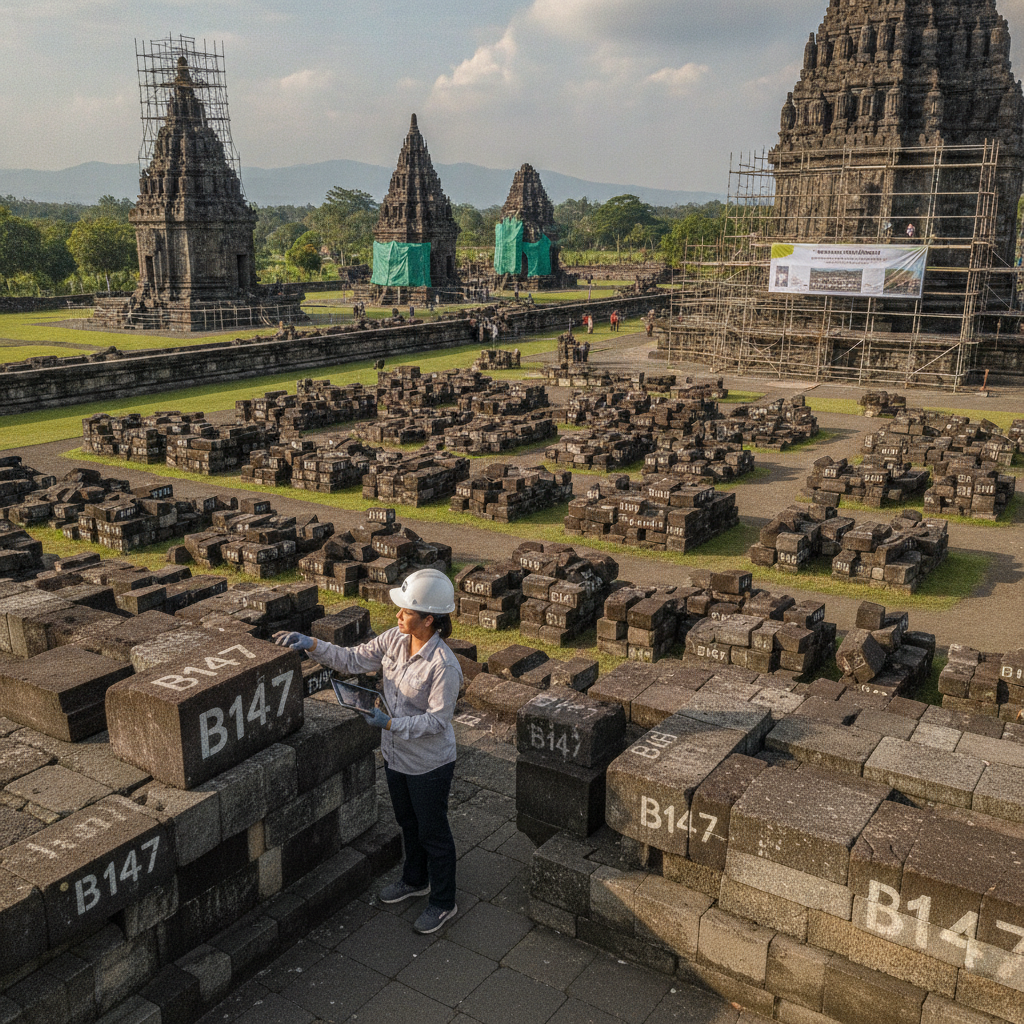
Yogyakarta's Foundations: Muhammadiyah's 50 Million Members Founded Here, Solo's Batik Laweyan & the Sultan's Meditation Practice
The wider Yogyakarta—Solo's Kraton Kasunanan (the rival royal city 65 km east, considered more conservatively Javanese, less tourist-polished) and the Pasar Klewer batik wholesale market, Muhammadiyah's 1912 Yogyakarta founding by KH Ahmad Dahlan now operating 172 universities and 400 hospitals (the world's largest Islamic social organisation), the Gayo and Bajawa arabica specialty scene in converted rice-barn cafés along Jl. Kaliurang where students justify all-day occupation with a single coffee purchase, the Prambanan restoration's 20-year anastylosis reassembly of 2006 earthquake-displaced stones in a compound of 240 temples most still in numbered piles, the Hamemayu Hayuning Bawana philosophy behind the Sultan-Governor's governance, and the patrilineal succession question a sultan with daughters must navigate.
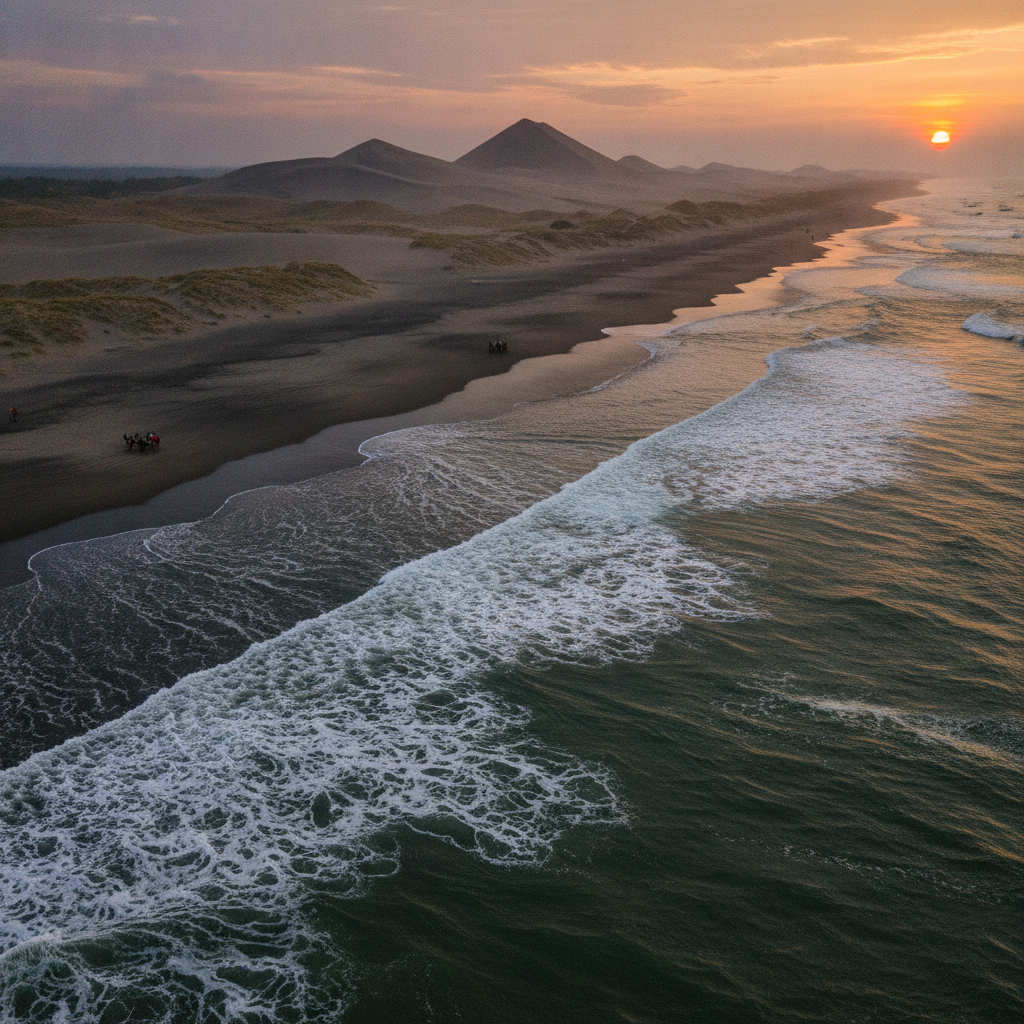
Yogyakarta's Soul: Kotagede Silver Filigree, the Republican Government in the Kraton & Nyi Roro Kidul's Green Sea
The deeper Yogyakarta—Kotagede's 16th-century Mataram mosque courtyard and sterling silver workshops where repoussé and filigree wayang characters are hammered from the reverse, the Sultan Hamengkubuwono IX who sheltered Sukarno's Republican government from Dutch forces in the Kraton in 1948 (the action that saved Indonesian independence), the 4WD jeep tracks across Merapi's grey 2010 lava field to Mbah Marijan's preserved house ruins (the guardian who refused to evacuate and died with the eruption), Parangtritis's green wave warning against green clothing lest Nyi Roro Kidul's spiritual attention be drawn, the Bedoyo court dance's 9-woman depiction of the Sultan's mystical marriage to the Queen of the Southern Sea, and why Yogyakarta teaches Indonesia to the visitor who has time to be taught.
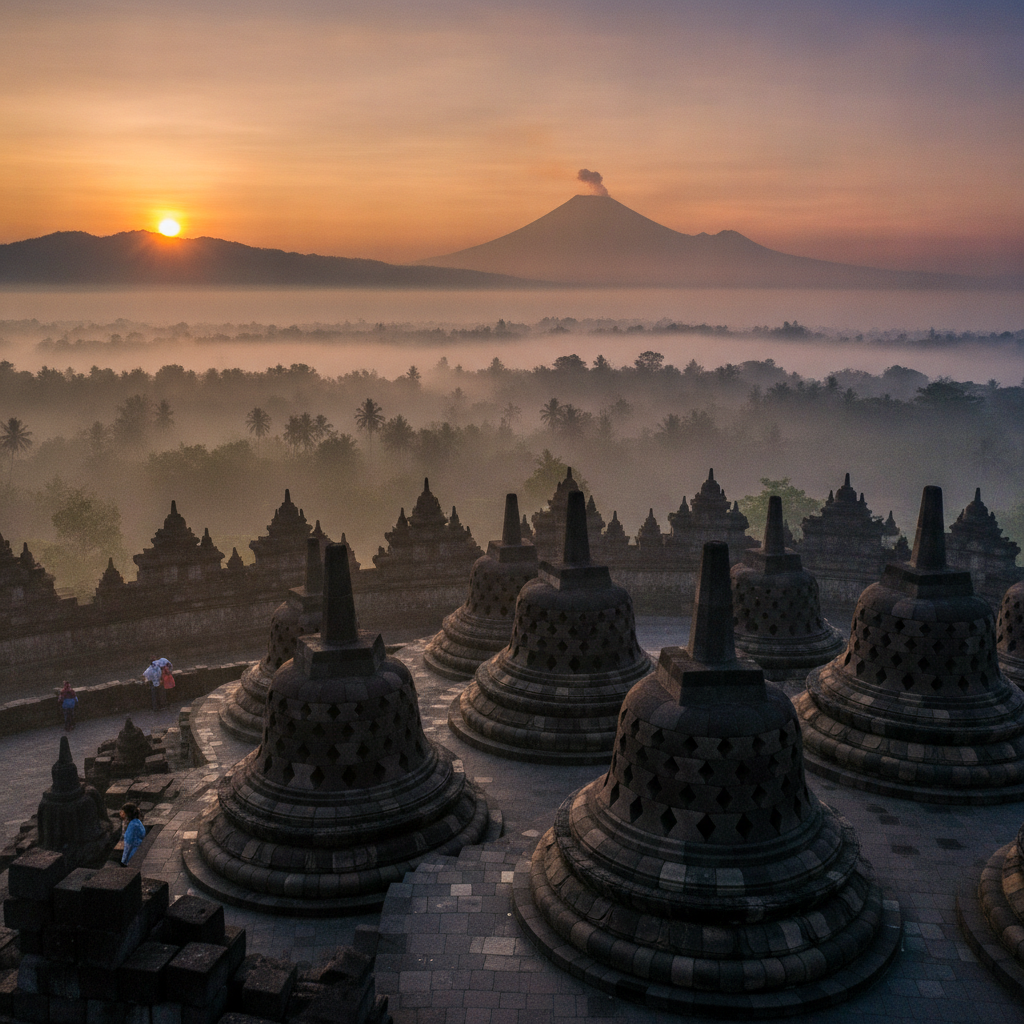
Yogyakarta: World's Largest Buddhist Monument at Borobudur, the Active Sultan-Governor & Gudeg at Dawn on Malioboro
Java's cultural heartland—Borobudur's 9 stacked platforms, 504 Buddha statues, and 2,672 relief panels built by the Sailendra Dynasty (the entire Buddhist cosmological universe in stone, the world's largest Buddhist monument), Prambanan's 47-metre Shiva tower and sequential Ramayana reliefs with full-moon Ramayana Ballet in front of the floodlit temples May–October, the Kraton's 1755 founding axis from Merapi to the Indian Ocean and the Sultan who simultaneously serves as lifetime Governor of Yogyakarta Special Region, Merapi's 2010 eruption that killed 353 and left Kinahrejo village in ruins as a 4WD jeep tour destination, Malioboro's batik tulis and Kotagede silver filigree, and gudeg's sweet jackfruit and 300,000 students from 137 universities making Jogja Indonesia's most artistically active city per capita.
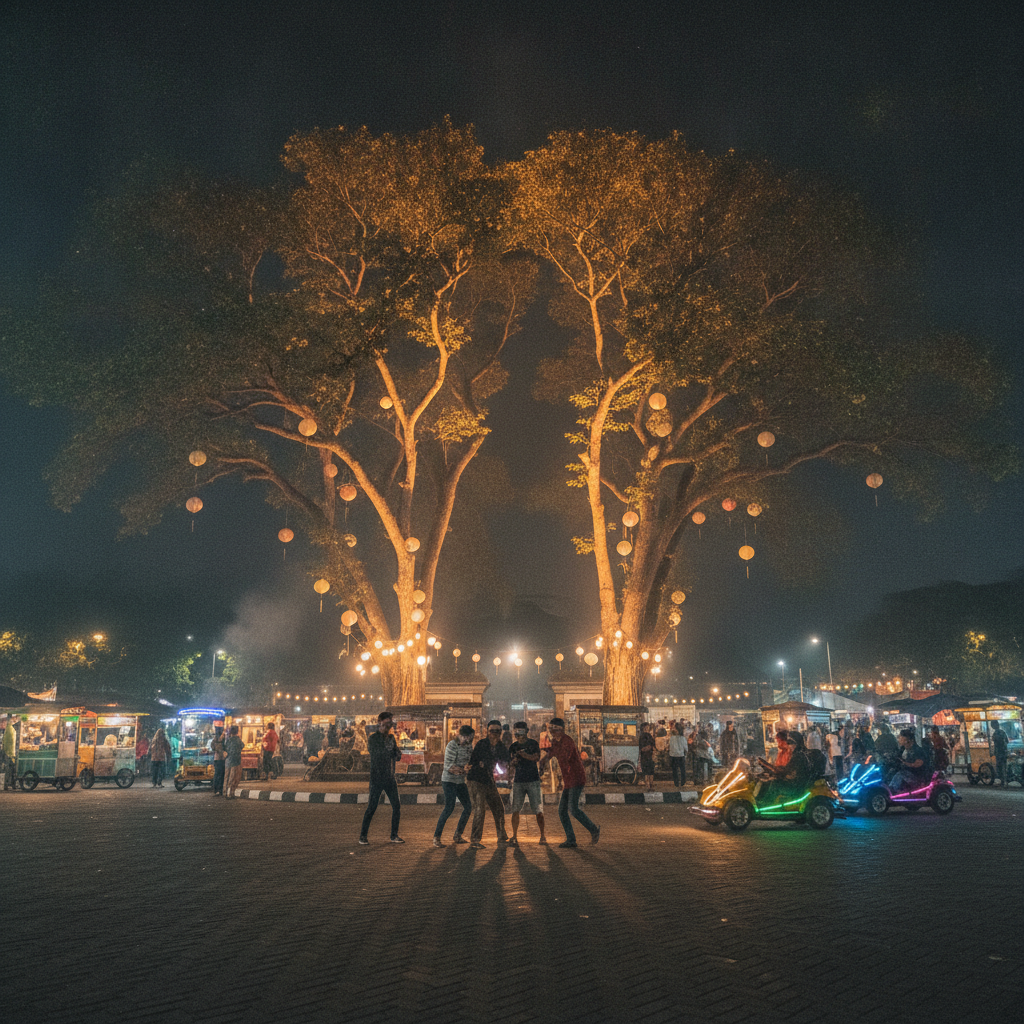
Yogyakarta After Dark and Beyond: Alun-Alun Kidul's Blindfolded Wish Walk, Candi Plaosan's Interfaith Love Story & Gunung Kidul's Spider Gondola
The final Yogyakarta—Gunung Kidul's cove beaches 70 km south by motorcycle (Wedi Ombo's calm double bay, Timang's hand-pulled cable gondola to a fishermen's island), Candi Plaosan's twin Buddhist towers built by a Hindu king for his Buddhist queen (a 9th-century royal interfaith marriage materialised in stone), the Batik Research Centre's 12,000 pattern library documenting which lurik stripe patterns are appropriate for weddings versus funerals, Candi Sambisari's 9th-century temple still partially buried under 6 metres of Merapi volcanic deposits discovered only in 1966, the Alun-Alun Kidul's masangin tradition where the blindfolded walk between two sacred banyan trees grants wishes, and the Argo Wilis eksekutif train to Surabaya across East Java's volcanic landscape for Rp 350,000.