Yogyakarta's Soul: Kotagede Silver Filigree, the Republican Government in the Kraton & Nyi Roro Kidul's Green Sea
The deeper Yogyakarta—Kotagede's 16th-century Mataram mosque courtyard and sterling silver workshops where repoussé and filigree wayang characters are hammered from the reverse, the Sultan Hamengkubuwono IX who sheltered Sukarno's Republican government from Dutch forces in the Kraton in 1948 (the action that saved Indonesian independence), the 4WD jeep tracks across Merapi's grey 2010 lava field to Mbah Marijan's preserved house ruins (the guardian who refused to evacuate and died with the eruption), Parangtritis's green wave warning against green clothing lest Nyi Roro Kidul's spiritual attention be drawn, the Bedoyo court dance's 9-woman depiction of the Sultan's mystical marriage to the Queen of the Southern Sea, and why Yogyakarta teaches Indonesia to the visitor who has time to be taught.
- 1
Kotagede – The Silver City & Former Mataram Capital
Kotagede—5 km southeast of the Yogyakarta city centre, now effectively absorbed into the urban fabric—is simultaneously the centre of Indonesia's finest silver craft production and the site of the original Mataram Sultanate capital (founded 1582 by Panembahan Senopati). The silver workshops: Kotagede's silversmiths produce Indonesia's most valued silver objects—the technique of repoussé (hammering from the reverse to create raised relief designs), filigree (twisting fine wire into intricate openwork patterns), and pierced silverwork—using silver of 92.5% (sterling) purity from Indonesian mines. The traditional products: miniature wayang characters in silver, tea sets, jewellery, and the kendhi (water vessels)—all with designs drawn from Javanese court iconography (the kawung pattern, naga serpent motifs, lotus flowers). The Mataram history: the Mosque of Kotagede (the oldest surviving mosque in Yogyakarta, 16th century—in the courtyard of the former palace grounds) and the royal cemetery (containing the tombs of Panembahan Senopati and his descendants—the founding kings of the Mataram Sultanate that eventually became the Yogyakarta and Surakarta sultanates) are the most significant historical sites in Kotagede.
- 2
Yogyakarta's Role in Indonesian Independence
Yogyakarta's role in the Indonesian independence revolution (1945–1949) exceeds that of any other city except Jakarta: when Dutch forces captured Jakarta (then Batavia) in July 1947, the Republican government of Indonesia relocated to Yogyakarta, which served as the de facto capital of the Indonesian Republic from 1946 to 1950. The Dutch military action ('Police Action')—twice attempted to destroy the Republic by military force (1947 and 1948–1949); the second action captured Yogyakarta on December 19, 1948, arresting Sukarno and Hatta; the Sultan of Yogyakarta (Hamengkubuwono IX—the current sultan's father) refused to collaborate with the Dutch and sheltered the Republican government in the Kraton, providing the Republic with a territorial base. The Republican military counter-offensive (March 1, 1949—the 'General Attack'): Indonesian forces under Colonel Abdul Haris Nasution (later Army Chief of Staff) briefly recaptured Yogyakarta, demonstrating to the international community that the Republic was militarily viable; this action, combined with international pressure (the US threatened to cut Marshall Plan aid to the Netherlands), led to the Dutch recognition of Indonesian independence in December 1949.
- 3
The Merapi Jeep Tour – Visiting the Volcano's Destruction
The post-2010 Merapi jeep tour—a tourism industry that developed from 2011 to serve the large number of visitors who wanted to see the 2010 eruption's aftermath—is Yogyakarta's most distinctive active adventure tourism product. The tour: departing from Kaliurang (20 km north of Yogyakarta, the hill resort at Merapi's foot), 4WD jeeps take groups along dirt tracks through the 2010 lava field deposits to the ruins of Kinahrejo village (the home village of Mbah Marijan—Merapi's official 'guardian,' the juru kunci or key-holder charged with maintaining the spiritual relationship between the Sultan and the volcano—who refused to evacuate and died in the eruption on October 26, 2010; his house ruins have been preserved as a memorial). The lava flows: the tracks cross fields of grey volcanic rock that buries the original agricultural landscape; where the lava flow was deepest (15 metres in some areas), the landscape is otherworldly—the same grey stone covering everything in a uniform apocalyptic layer. The hot springs at Kaliadem (at the foot of the main lava field): warm water pooling in volcanic rock, popular with jeep tour visitors as a post-expedition restorative.
- 4
Parangtritis Beach & the Myth of Nyi Roro Kidul
Parangtritis Beach—27 km south of Yogyakarta on the Indian Ocean coast (accessible by motorcycle or car in 45 minutes)—is the most culturally significant beach in Java and the seat of one of the most important mythological figures in Javanese cosmology: Nyi Roro Kidul (the Queen of the Southern Sea—a female spirit ruler of the Indian Ocean whose relationship with the Sultans of Yogyakarta is one of the most central mythological structures in Javanese spiritual life). The myth: Nyi Roro Kidul is the supernatural bride of the Sultan of Yogyakarta; the coastal palaces (Parangkusumo—a meditation site 3 km west of Parangtritis) are locations where the Sultan's representatives maintain the ritual relationship through regular ceremonies and offerings; the Sultan's bedroom in the Kraton includes a special chamber traditionally kept for Nyi Roro Kidul's visits. The sea: Parangtritis's beach faces the Indian Ocean directly—the waves are dangerous (strong undertow, no swimming is advisable) and the green colour of the sea is traditionally associated with Nyi Roro Kidul (visitors are warned not to wear green, which may attract the spirit's attention). The sand dunes at Parangtritis (a rare inland dune formation behind the beach) offer sandboarding and 4WD dune tours.
- 5
Yogyakarta's Dance Traditions – Bedoyo & Srimpi
Yogyakarta's classical court dance traditions—maintained in the Kraton and taught in the city's dance academies (the Indonesian Institute of the Arts, ISI Yogyakarta, and several private schools)—are among the most refined and least internationally known performing arts in the world. Bedoyo: a sacred court dance performed by 9 female dancers dressed identically in gold-thread court dress (the parang rusak batik pattern, reserved for the most sacred occasions), moving in precisely choreographed formations with extraordinarily slow, controlled movements—the dance depicts the mystical marriage of the Sultan and Nyi Roro Kidul, performed in the Kraton on the Sultan's birthday. Srimpi: a similar court dance for 4 female dancers, less sacred but equally refined in its technical demands (the precise positioning of fingers, the controlled lowering of the eyes, the imperceptible weight shifts that move the dancers across the stage without visible steps). The Sendratari Ramayana: the full-length version of the Ramayana epic as a dance-drama (combining elements of Bedoyo technique with gamelan music and wayang kulit-influenced choreography)—performed at the Prambanan open-air theatre as the most accessible traditional dance performance in the Yogyakarta area.
- 6
Leaving Yogyakarta – The City That Teaches Indonesia
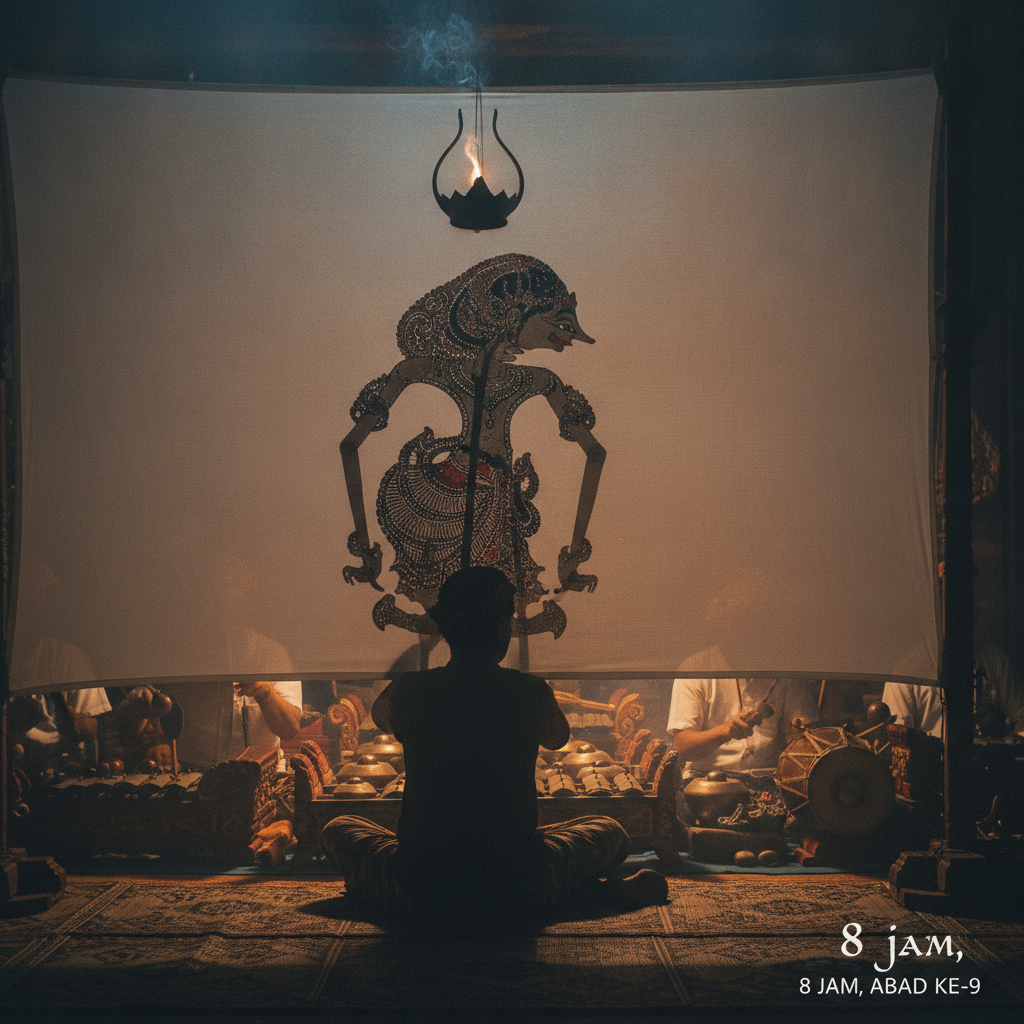
Yogyakarta is, for many foreign visitors to Indonesia, the city that makes Indonesia legible: a place where the abstract complexity of 300 ethnic groups, 17,000 islands, and 700 languages resolves into a particular culture—the Javanese court culture of the Kraton, the batik patterns that encode cosmological meaning in fabric geometry, the 9-hour wayang kulit performance that tells stories 2,000 years old—that can be encountered, understood, and returned to. The paradox: Yogyakarta is one of Indonesia's most culturally specific cities (Javanese court culture is not 'Indonesian' culture in any simple way—the Batak of North Sumatra, the Dayak of Kalimantan, and the Papuans would offer very different entry points to the archipelago's diversity); yet it has become the default introduction to Indonesian culture for most foreign visitors. The student city character: Yogyakarta's 300,000 students ensure that the city remains intellectually and artistically alive in ways that heritage cities built primarily on conservation often are not—the Cemeti gallery, the angkringan debates, the student theatre—exist alongside the Kraton as parallel institutions of cultural production. Leaving Yogyakarta typically means continuing east to Bali (5 hours by train to Surabaya, then a short ferry crossing) or north to Borobudur (which many visitors do on the way out).
Walk this route with audio
Stories play automatically as you reach each stop — no tapping needed.
More in Yogyakarta
Yogyakarta's Arts: 9-Hour Wayang Kulit at Dawn, Gamelan's Influence on Debussy & Angkringan Cart Food After Dark
Yogyakarta's Foundations: Muhammadiyah's 50 Million Members Founded Here, Solo's Batik Laweyan & the Sultan's Meditation Practice
Yogyakarta: World's Largest Buddhist Monument at Borobudur, the Active Sultan-Governor & Gudeg at Dawn on Malioboro