Sukhothai Historical Park Central Zone Walk
Walk the UNESCO World Heritage site of Sukhothai — the ruins of the first capital of the Thai kingdom (founded c.1238 CE) are preserved in the Sukhothai Historical Park, where the brick remains of over 190 temples, palaces, and city walls document the early flowering of Thai Buddhist culture and art.
- 1
Wat Mahathat Central Temple
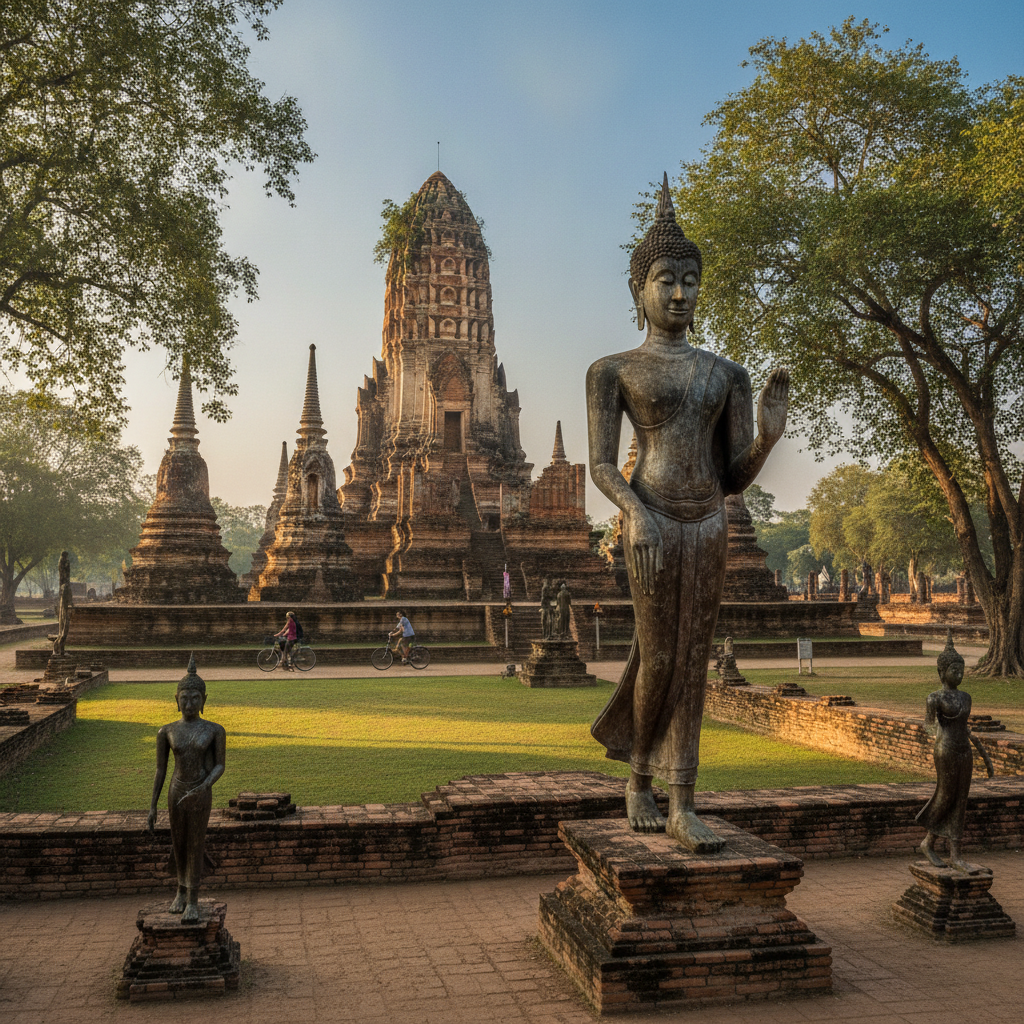
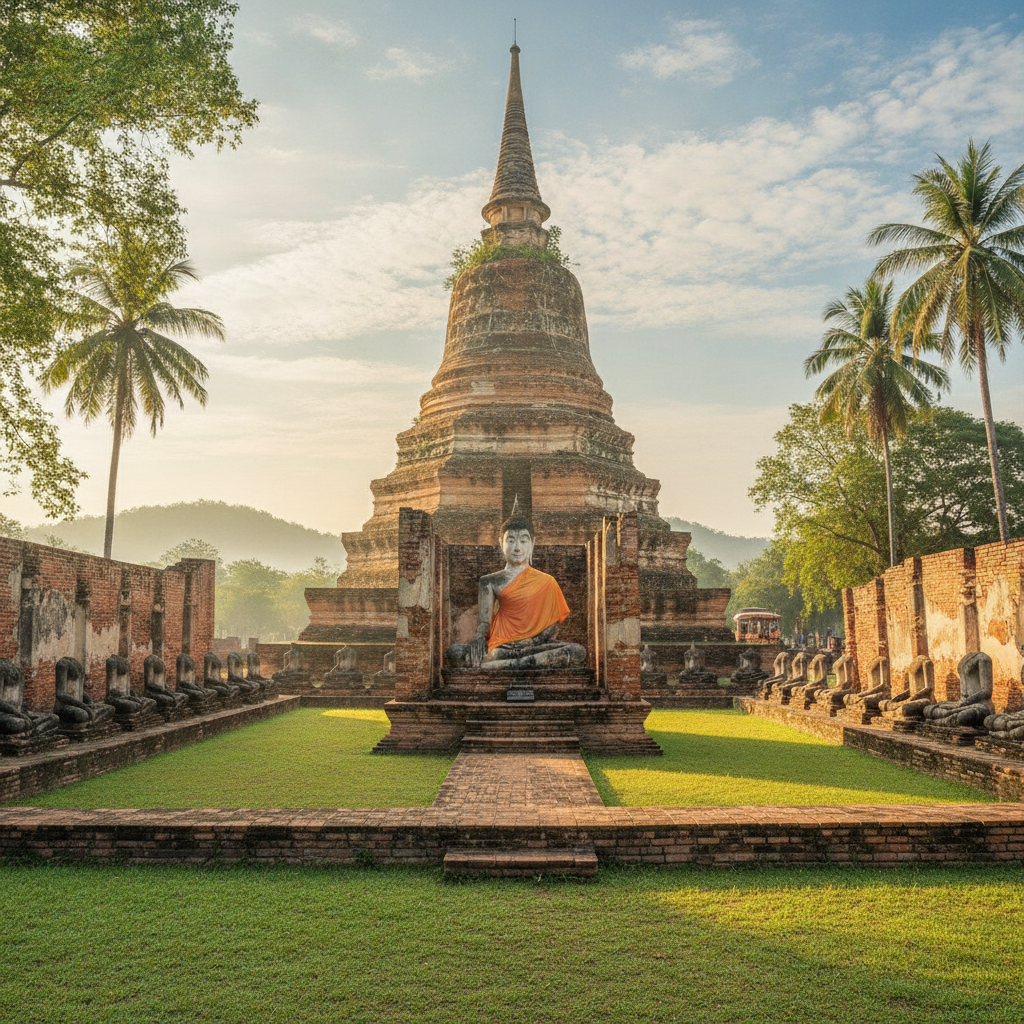
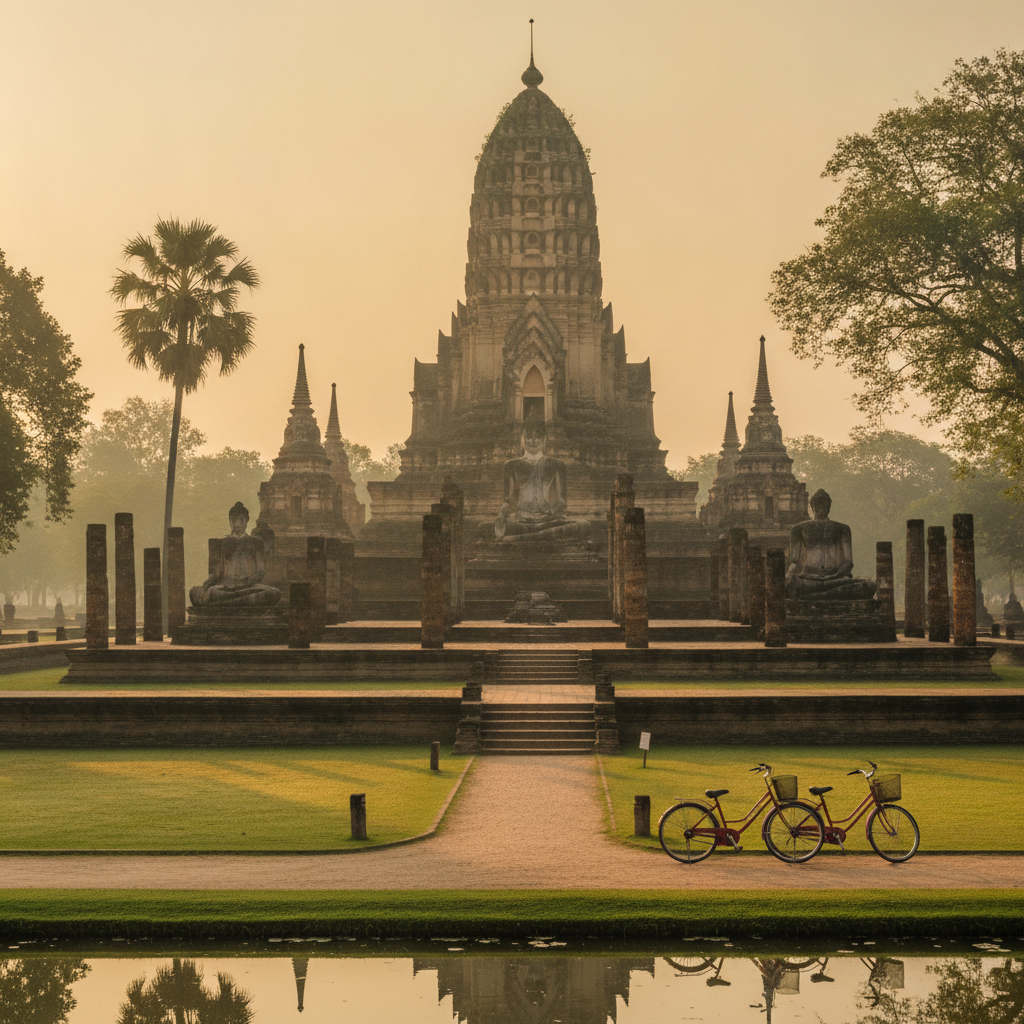
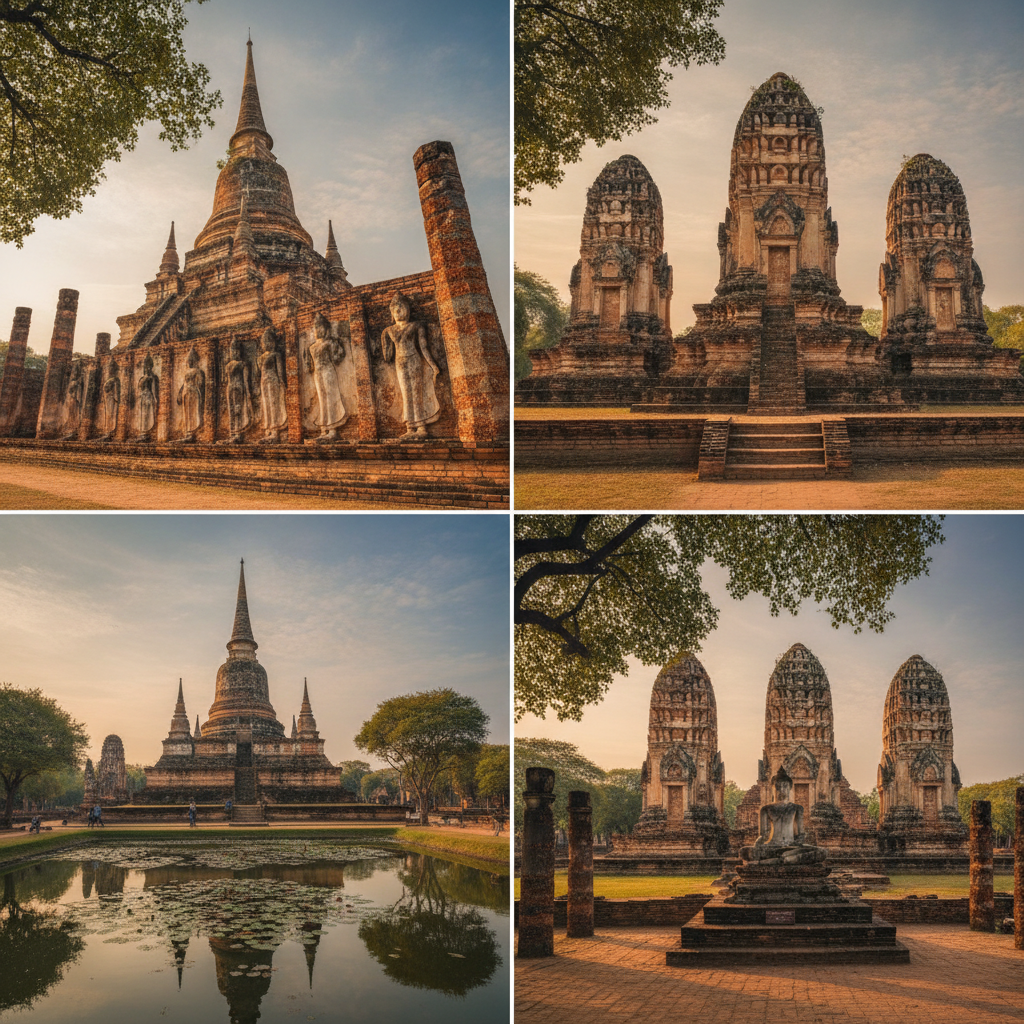
Wat Mahathat (Temple of the Great Relic) at the centre of the Sukhothai Historical Park is the most important temple in the former capital — the vast compound with its central lotus-bud chedi (stupa) surrounded by the ruined prangs (Khmer-style towers), the reclining and standing Buddha images at various stages of preservation, and the brick columns of the collapsed roof system creates the most comprehensive encounter with 13th-14th century Thai Buddhist architecture accessible at any single site in Thailand. The central compound (the largest temple in the city at over 200 metres in length) housed the sacred relics of the Buddha that legitimised the Sukhothai kingdom's spiritual authority, and the lotus-bud chedi form visible at Wat Mahathat is the characteristic architectural innovation of the Sukhothai artistic period — the Thai adaptation of the Sinhalese dome stupa into the elongated lotus-bud form that would define Thai Buddhist architecture for the next seven centuries.
- 2
Ramkhamhaeng National Museum
The Ramkhamhaeng National Museum at the park entrance houses the most comprehensive collection of Sukhothai period art and artefacts accessible in a single location — the museum's collection includes the famous Ramkhamhaeng Inscription (the 13th-century stone stele that documents the first written use of the modern Thai alphabet, attributed to King Ramkhamhaeng who is credited with adapting the Khmer script to create the Thai writing system), the original Sukhothai Buddha images that established the distinctive 'walking Buddha' (phra phut tha jao than yen) style, and the ceramic ware of the Sawankhalok tradition (the sophisticated grey-green celadon and underglaze-black painted ware that was the premier export ceramic production in Southeast Asia from the 14th-16th centuries). The museum visit provides the contextual framework for understanding the historical park's remains.
- 3
Wat Sri Sawai Khmer Towers
Wat Sri Sawai in the southwestern section of the Sukhothai central zone is the most complete example of Khmer architectural influence visible in the historical park — the three laterite prangs (towers) in the characteristic Khmer temple layout, partially converted to Buddhist use from an original Brahmanical Hindu temple, document the coexistence and succession of Khmer and Thai cultural influences in the city's early history. The Khmer-style prang architecture visible at Wat Sri Sawai (the corbelled towers with their diminishing tiers and the tiered base with its carved nagas) predates the Sukhothai architectural style seen at Wat Mahathat and provides evidence of the Khmer administrative presence at the site before the Thai kingdom's founding.
- 4
King Ramkhamhaeng Statue
The modern statue of King Ramkhamhaeng (the third and most celebrated king of the Sukhothai kingdom, reigning c.1279-1298 CE) at the centre of the historical park commemorates the ruler under whom the Sukhothai kingdom reached its greatest extent and cultural achievement — the king who created the Thai alphabet, who established the tradition of the Thai king as accessible and just (the Ramkhamhaeng Inscription describes a king who personally heard the petitions of his subjects and dispensed justice without intermediary), and under whose rule the Sukhothai artistic style (the elongated Buddha image, the flowing robe drapery, the flame-topped ushnisha) reached its mature expression. The statue provides the historical context for the surrounding ruins.
- 5
Lotus Pond Walking Path
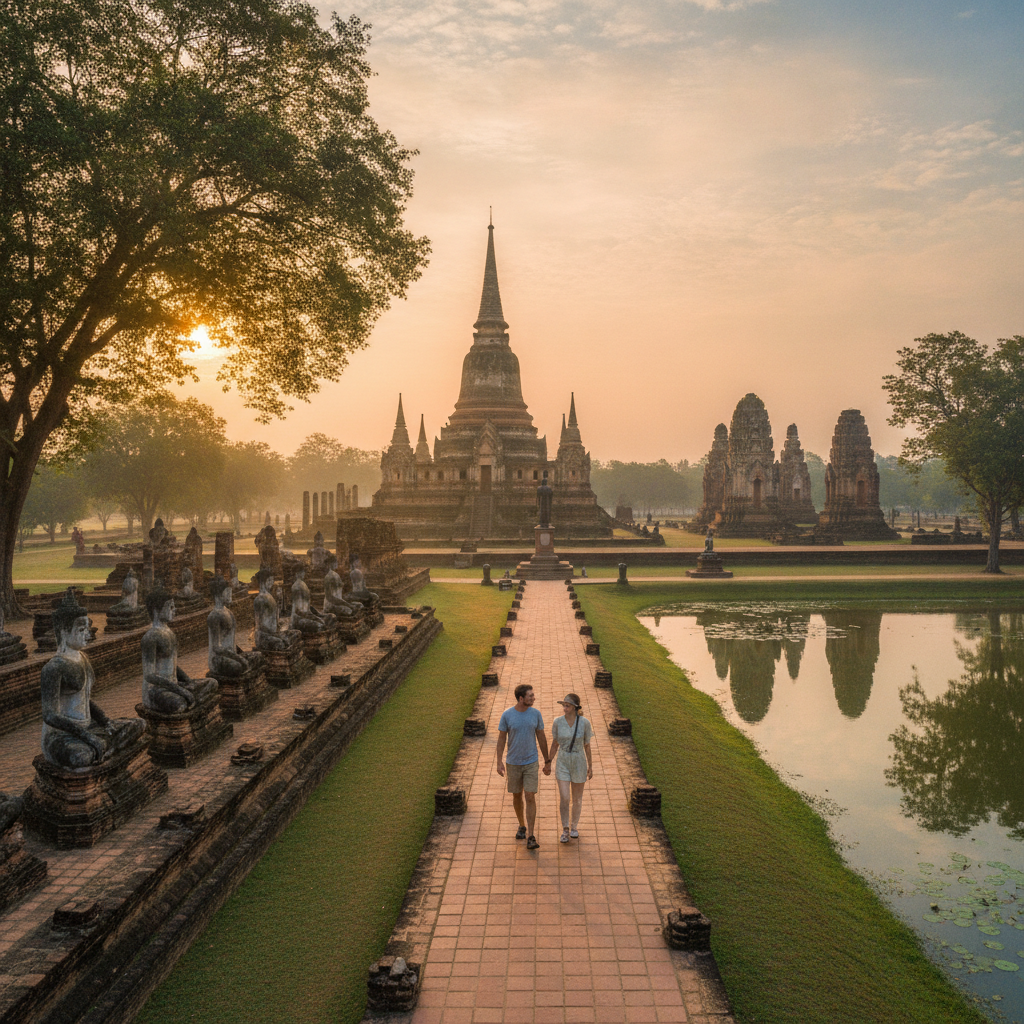
The lotus ponds within the Wat Mahathat compound and throughout the Sukhothai central zone are historical features of the original city layout — the water management system of Sukhothai (the moats, the ponds, and the irrigation channels that supplied the city's water needs and reflected the Buddhist cosmological vision of the island of pure land surrounded by water) is partially preserved in the existing ponds, whose lotus blooms in the dry season create the most visually evocative encounter with the historical landscape. The lotus (the padma, the Buddhist symbol of purity arising from the muddy water) is the dominant motif of the Sukhothai architectural vocabulary (the lotus-bud chedi, the lotus-petal base, and the lotus flowers in the bronze casting), and the living lotus in the historical ponds completes the visual connection between the architectural symbolism and its natural referent.
- 6
Wat Sa Sri Island Temple
Wat Sa Sri in the northern section of the central zone is one of the most romantically situated temple ruins in the park — the Sri Lankan-style bell-shaped chedi and the ruined shrine hall standing on an island in an artificial lake are accessible by the footbridge, creating the impression of the Buddhist temple as a place of meditation accessible only by crossing the water. The bell-shaped chedi at Wat Sa Sri (the pure Sri Lankan dome form, different from the elongated lotus-bud chedi of Wat Mahathat) documents the Theravada Buddhist contact with Sri Lanka that was the critical cultural influence on the Sukhothai kingdom's religious identity — the Sri Lankan monks and manuscripts that introduced the pure Theravada tradition to Sukhothai in the 13th century transformed the religious culture of the kingdom and, through Sukhothai's influence, of all Southeast Asia.
Walk this route with audio
Stories play automatically as you reach each stop — no tapping needed.