Sukhothai Historical Park Bicycle Circuit Walk
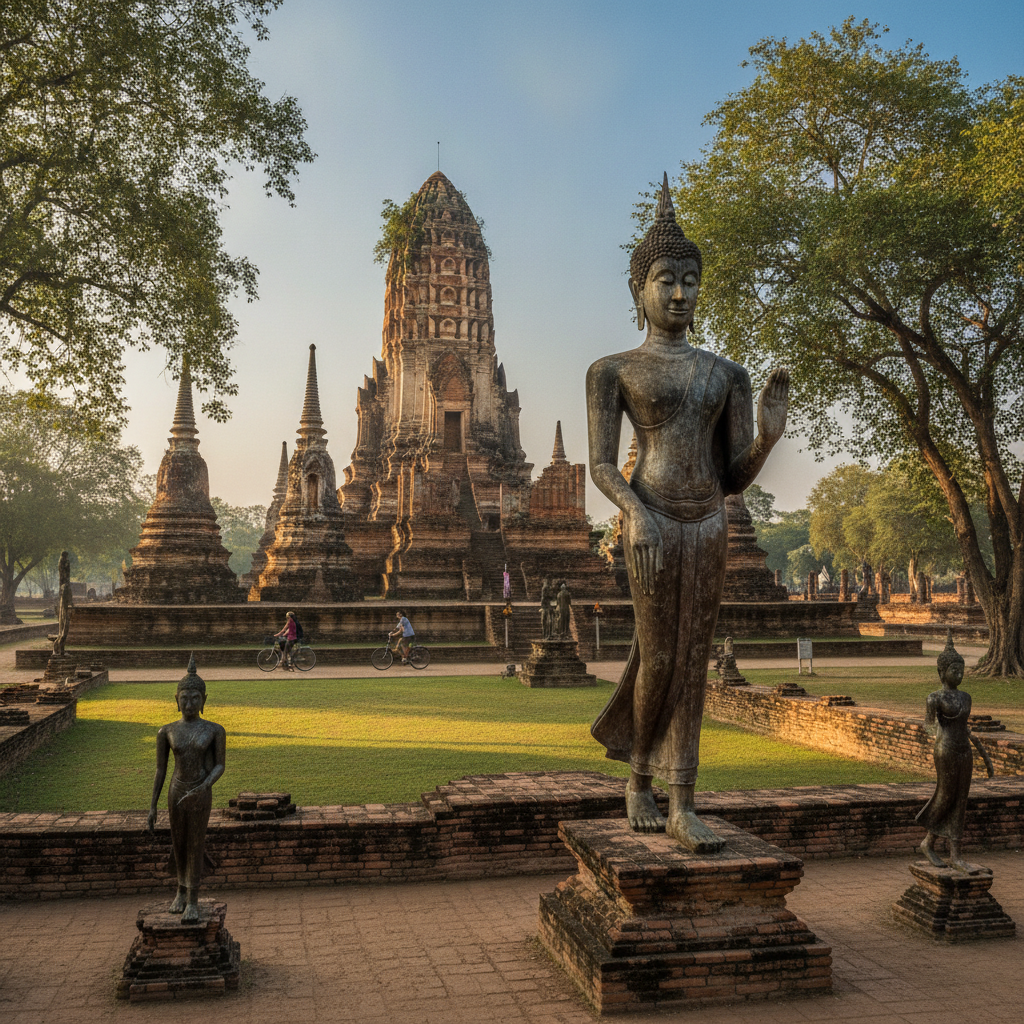
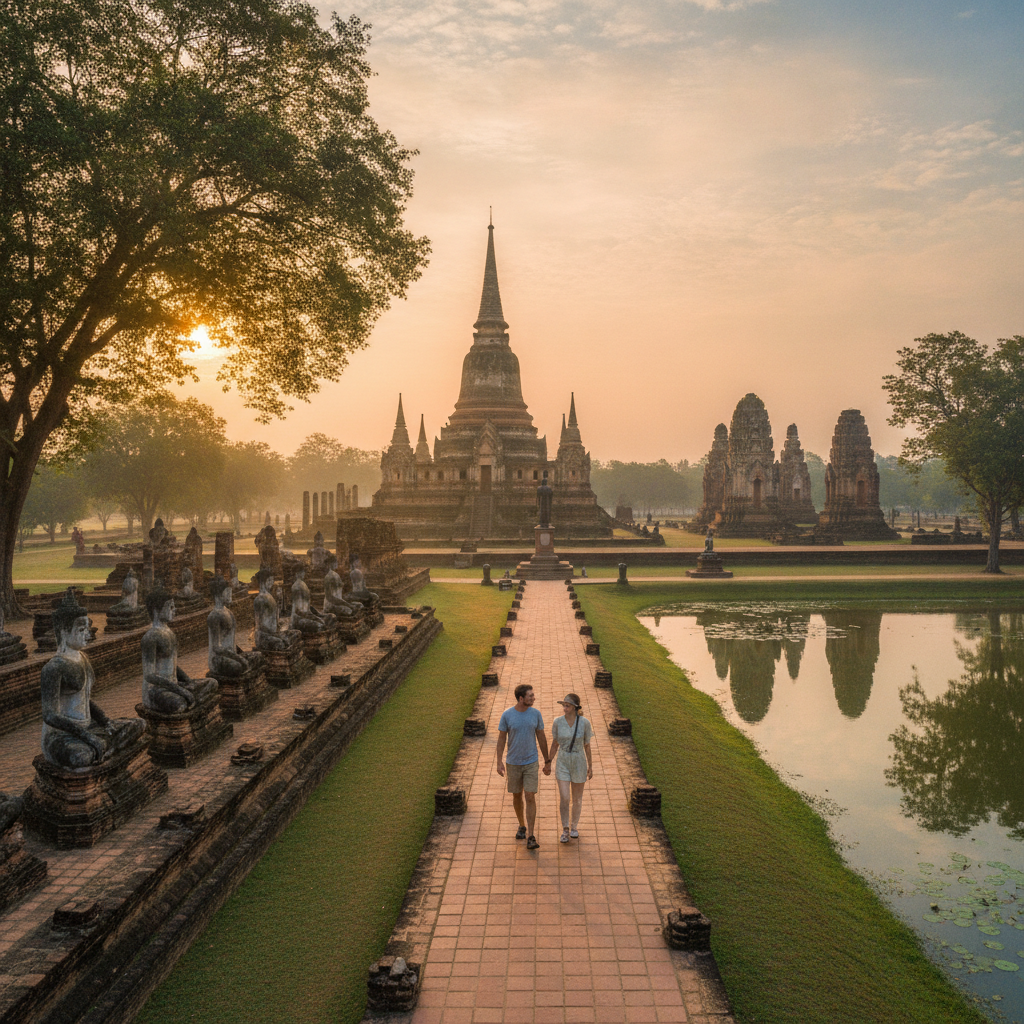
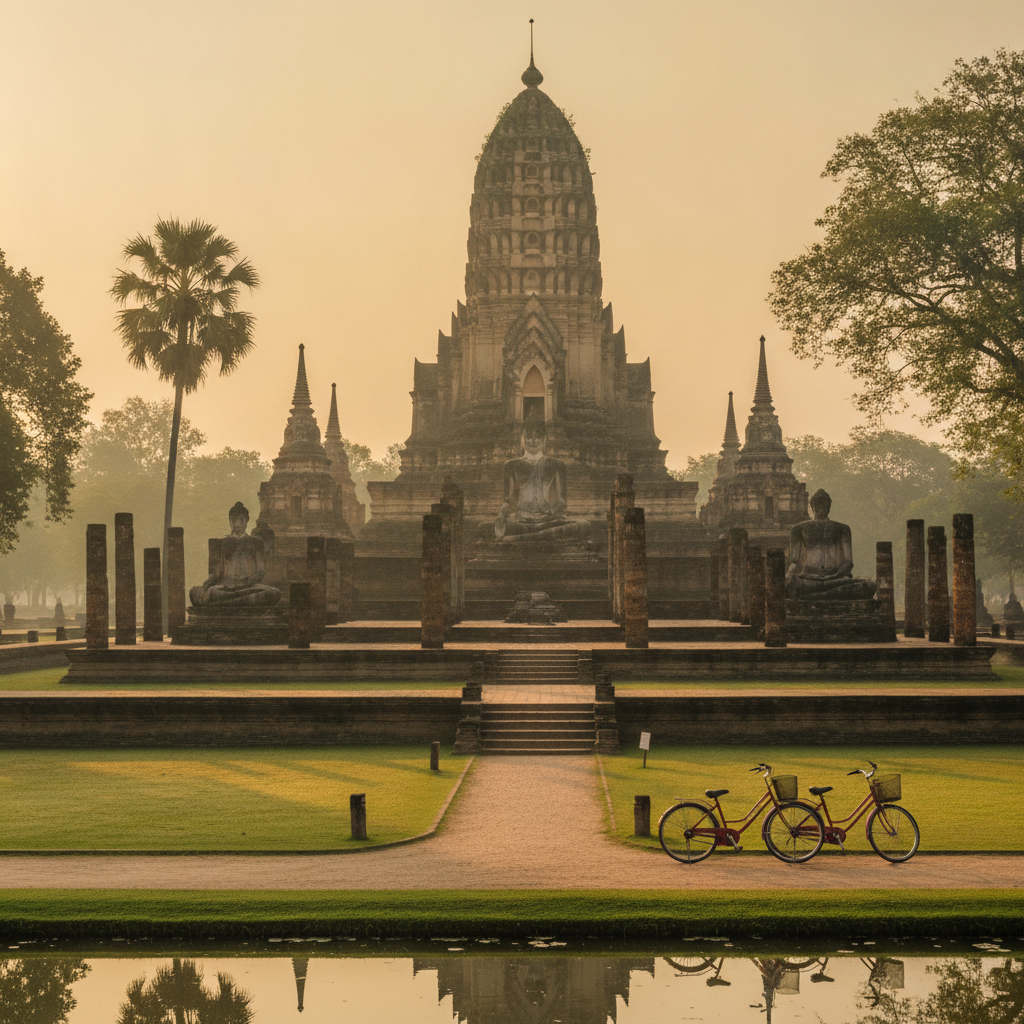
Cycle the Sukhothai ruins — the flat terrain of the historical park (covering 70 square kilometres) makes bicycle touring the preferred way to explore the outlying temple zones beyond the central zone, with the cycling routes connecting the historical park's five zones through the forest and paddy field landscape.
- 1
Bicycle Rental Park Gate
The bicycle rental operations at the Sukhothai Historical Park entrance are the starting point for the most popular exploration method at the site — the flat terrain of the historical park (the original city was built on the level plain of the Yom River valley, with the surrounding hills providing the natural defence and the backdrop for the city's forest temples) makes cycling practical for visitors of any fitness level. The cycling circuit covers the five temple zones accessible by the park's internal road and trail network (the central zone with the main monuments, the northern zone with the hill temples, the southern zone along the road to New Sukhothai, the western zone in the forest, and the eastern zone accessible by the main road) in a full-day programme that provides the most comprehensive encounter with the historical park's extent.
- 2
Northern Zone Hill Temples
The northern zone of the Sukhothai Historical Park, reached by the park's northern road 2km from the central zone, contains the temples built on and around the natural hill outcrop (Khao Luang) that rises above the flat plain to the north of the ancient city — the hill-top temples (including Wat Saphan Hin, where a large standing Buddha image overlooks the historical park from the hill summit) were used as forest hermitages by the meditating monks whose presence gave the Sukhothai kingdom its spiritual authority. The cycle up the gentle slope to the northern zone and then the walk to the hilltop temples provides the only elevated viewpoint of the historical park landscape accessible without mechanical transport.
- 3
Wat Chetuphon Forest Temple
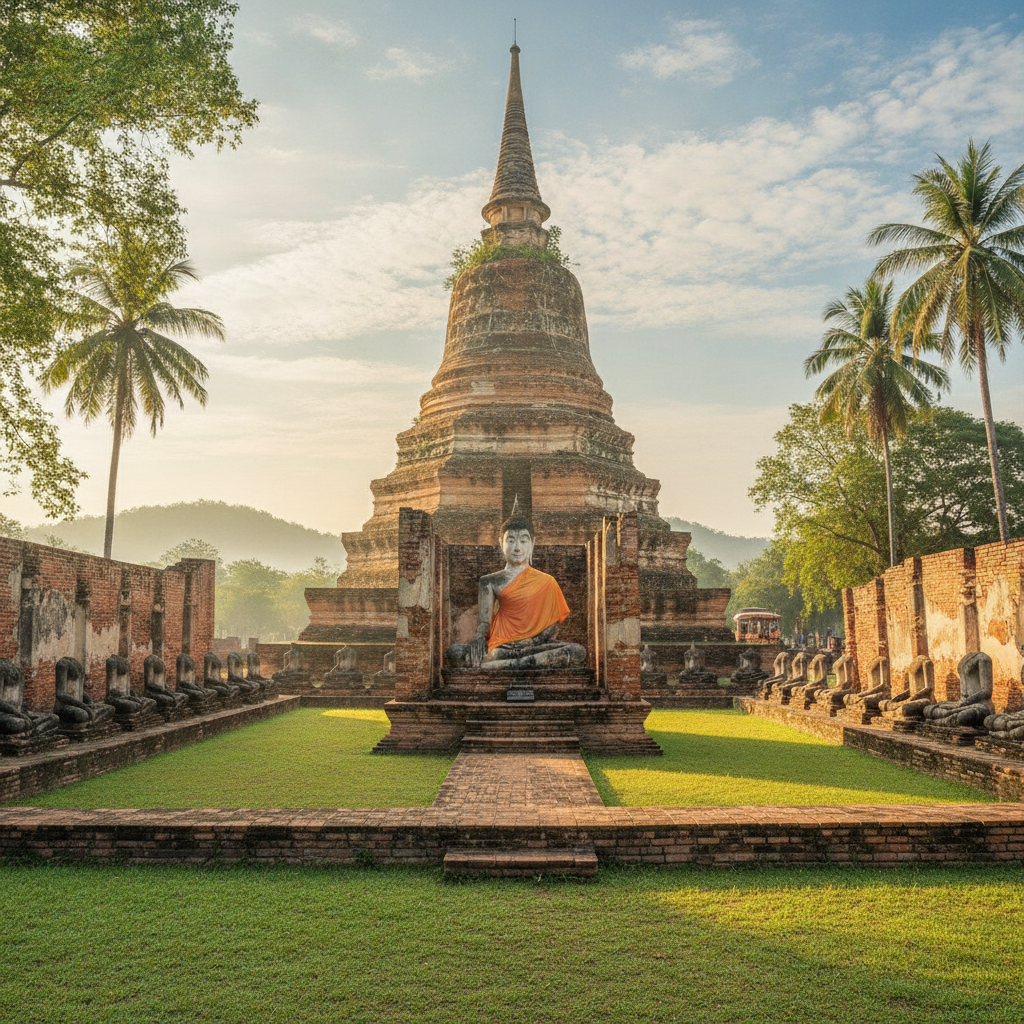
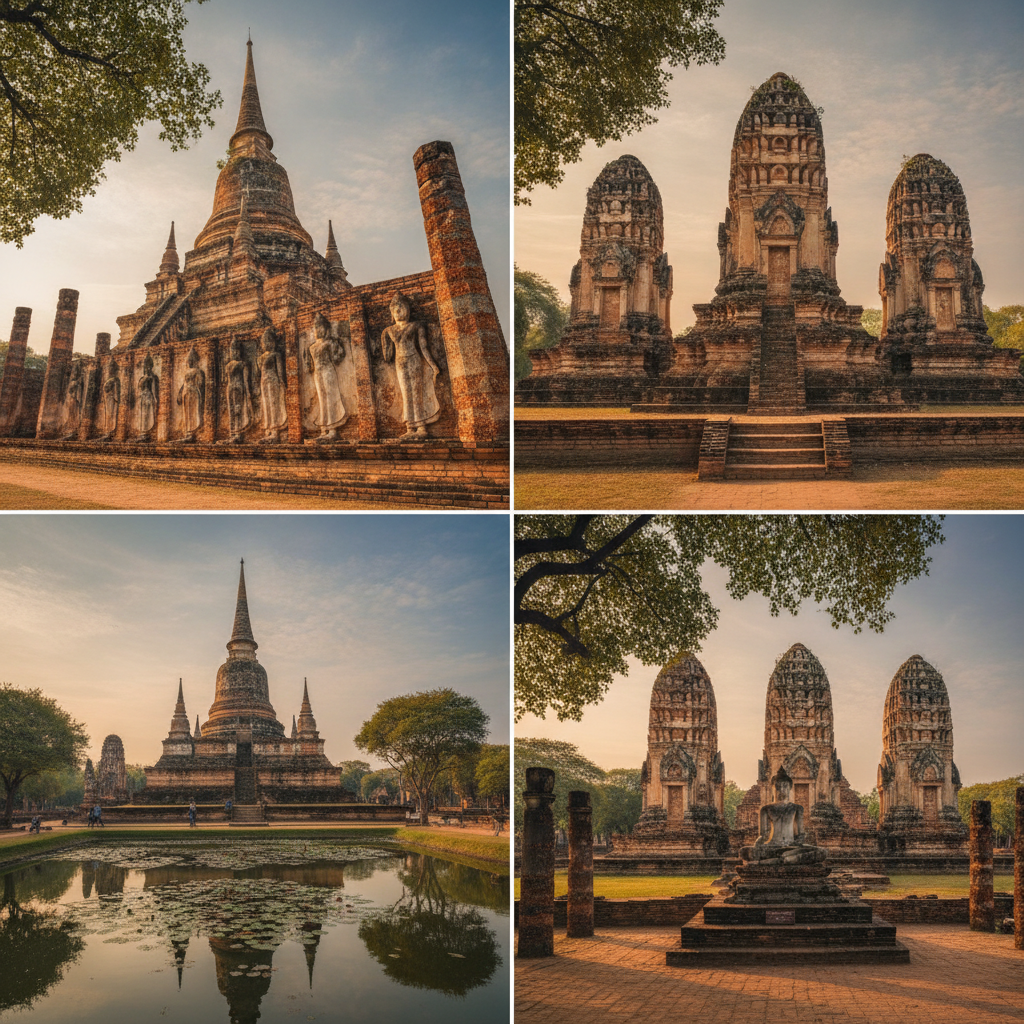
Wat Chetuphon in the southern zone of the Sukhothai Historical Park is the most atmospherically isolated of the major temple ruins — the temple reached by a forest path south of the main road is rarely visited by the tour groups and bicycle tourists who concentrate on the central zone, and the standing, walking, sitting, and reclining Buddha images that survived at the temple's four-sided mandapa (the central shrine with its four-directional Buddha orientations) are among the best-preserved Sukhothai period sculpture accessible within the historical park. The forest setting of Wat Chetuphon (the mature trees growing among and through the brick ruins, the root systems of the banyan trees incorporating the fallen masonry) creates the most romantically overgrown temple atmosphere in the Sukhothai park.
- 4
Western Zone Forest Path
The western zone of the Sukhothai Historical Park, accessible by cycling through the forest to the west of the city walls, contains the most forest-integrated temple ruins in the park — the temples here (including Wat Mangkorn and Wat Aranyik) are set in the secondary forest that has grown back over the once-densely settled western suburbs of the ancient city, creating the most atmospheric overgrown ruins accessible in the Sukhothai area. The forest cycling route (unpaved in sections, suitable for mountain bikes rather than road bicycles) provides the most adventurous cycling experience accessible from the park entrance and the most complete sense of exploring a genuinely ancient and partially reclaimed archaeological landscape.
- 5
Sawankhalok Ceramics Site
Si Satchanalai Historical Park (the sister site to Sukhothai accessible 55km north by road) contains the kiln sites of the Sawankhalok ceramic production tradition — the 200+ celadon and underglaze-black kilns that produced the export ceramics distributed throughout Southeast Asia (the Sawankhalok ceramics found in excavations from the Philippines to Japan document the scale of the trade) are partially excavated and accessible at the kiln site museum. The ceramic production of the Sukhothai kingdom period (the grey-green celadon inspired by Chinese Song dynasty ware but with distinctively Thai forms and designs) was the most technically sophisticated ceramic production in pre-modern Southeast Asia.
- 6
Ramkhamhaeng National Park
Ramkhamhaeng National Park in the hills west of Sukhothai preserves the forested mountain landscape that provided the boundary of the Sukhothai kingdom's heartland — the park's trails climb to the summit of Khao Luang (1,200 metres), passing through the pine forest of the highland zone (the characteristic vegetation of the northern Thai highland) and providing views over the Yom River valley that was the agricultural and commercial foundation of the ancient kingdom. The national park visit connects the historical park's archaeological landscape to the natural environment within which the ancient city was situated.
Walk this route with audio
Stories play automatically as you reach each stop — no tapping needed.