Savannah: Preservation Legacy, Harbor Power and Living Neighborhoods
Discover how the Davenport House saved a city, visit the African American Monument on the Riverwalk, understand the global scale of Savannah harbor, explore Pin Point Gullah heritage, ride the Belles Ferry, and find the creative energy of the Starland District.
- 1
Isaiah Davenport House and Preservation Movement
The Isaiah Davenport House at 324 East State Street, built between 1820 and 1829 by master builder Isaiah Davenport, was the catalyst for the entire Savannah historic preservation movement. In 1955, a group of seven women met over tea and organized to prevent its demolition and replacement with a funeral home parking lot. They raised 22,500 dollars in two weeks to purchase the building, forming the Historic Savannah Foundation in the process. The Davenport House is now a museum operated by the foundation and interpreted for the life of a prosperous early 19th century artisan family. It is considered the building that saved a city.
- 2
Savannah African American Monument and DeSoto Hilton
The Savannah African American Monument, unveiled in 2002 in Rousakis Plaza on the Riverwalk, depicts a family of formerly enslaved people with broken shackles at their feet. Sculptor Dorothy Spradley created the nine-foot bronze work to honor the contributions of African Americans to Savannah history and culture. The memorial faced controversy during planning but received unanimous City Council approval. Nearby, the DeSoto Hilton Hotel at 15 East Liberty Street occupies the site of the former DeSoto Hotel built in 1890, which was the grandest hotel in the South at its opening. The current building dates to 1968 and is a landmark of Savannah hotel history in its own right.
- 3
Savannah Harbor Expansion and Global Shipping
The Savannah Harbor Expansion Project, completed in 2022, deepened the harbor from 42 to 47 feet over 38 miles from the Atlantic Ocean to the Garden City Terminal, making it capable of accommodating fully laden Post-Panamax container ships at all tidal conditions. The project cost 973 million dollars and was one of the largest harbor deepening projects in US history. The Georgia Ports Authority handled a record 5.6 million twenty-foot equivalent container units in fiscal year 2022. Major automakers including Kia, Mercedes-Benz, and BMW use the Savannah port as a primary import gateway. The port generates an estimated 31 billion dollars in economic impact for Georgia and supports 439,000 jobs across the state.
- 4
Pin Point Heritage Museum
The Pin Point Heritage Museum, 12 miles south of Savannah on Moon River, preserves the remains of an oyster and crab processing factory that operated from 1926 to 1985 on a community settled by formerly enslaved Gullah Geechee people after the Civil War. Pin Point is best known as the hometown of Supreme Court Justice Clarence Thomas, who grew up there in the 1950s before moving with his mother to Savannah and eventually being raised by his grandfather. The museum opened in 2011 and interprets both the Gullah Geechee cultural heritage of the community and the specific history of the A. S. Varn and Son factory that employed Pin Point residents for six decades. Community descendants serve as docents.
- 5
Savannah Belles Ferry and Hutchinson Island
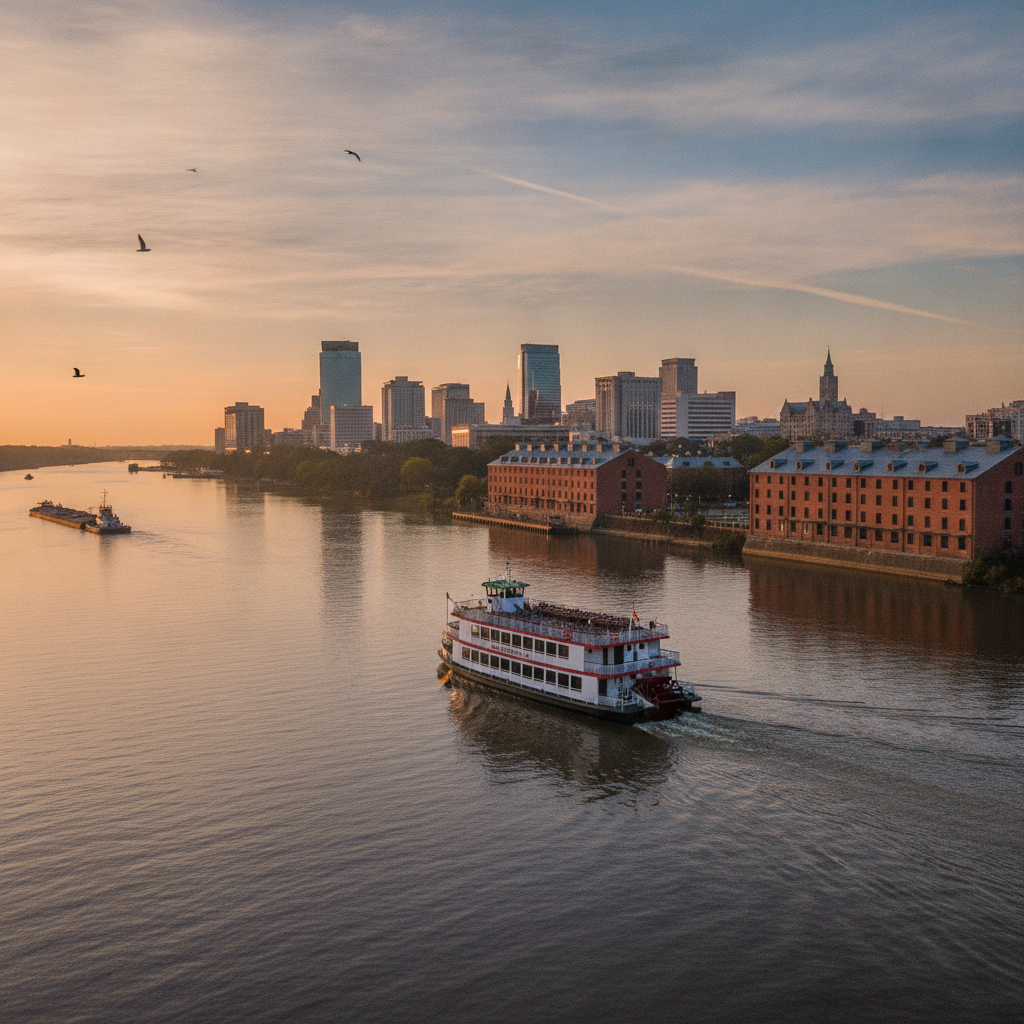
The Savannah Belles Ferry provides free service across the Savannah River between the downtown Riverwalk and Hutchinson Island, where the Savannah International Trade and Convention Center opened in 2000. The ferry operates electric-hybrid vessels named for significant Savannah women including Susie King Taylor, a Civil War nurse and the first Black woman to teach an openly Black school in Georgia. Hutchinson Island itself has limited development despite being adjacent to downtown, with the trade center and a Westin Hotel as its primary facilities. Plans for broader development have been debated for decades. The ferry ride itself provides the best view of the Savannah waterfront skyline and Bay Street bluff from water level.
- 6
Moon River Brewery and New Savannah
Moon River Brewing Company, opened in 1996 in a building constructed in 1821 as the City Hotel, was Savannah first brewpub and anchors the craft beverage scene that has grown substantially since. The building previously housed a cotton warehouse, a coal yard office, and a billiards hall before its conversion. Savannah craft food and drink scene has expanded along Whitaker Street, Jefferson Street, and the Starland District, a formerly industrial neighborhood south of Forsyth Park that has attracted coffee roasters, record shops, independent restaurants, and artist studios since 2010. The Starland District represents Savannah emerging identity as a city that combines deep historic character with contemporary creative industry, drawing young professionals alongside the tourism economy.
Walk this route with audio
Stories play automatically as you reach each stop — no tapping needed.
More in Savannah
Savannah: Oglethorpe Plan (1733 founded 12th and last original colony, 22 of 24 original squares surviving, most intact 18th-century urban planning US, Forsyth Park 1858 fountain, SCAD 15,000 students revitalized historic buildings), Midnight in the Garden of Good and Evil (Berendt book 1994 216 weeks NYT bestseller longest nonfiction, Mercer House Jim Williams shooting, Chablis Lady drag performer, Johnny Mercer 1,500 songs Moon River Oscar 1961 Breakfast at Tiffany's), Bonaventure Cemetery (live oak allees Spanish moss, Little Gracie Watson 1889 most visited grave, Bird Girl statue moved to Telfair Museums, Telfair Museums oldest Southern public art museum, Owens-Thomas House 1816 finest US Regency architecture), Savannah food (Olde Pink House 1771 James Habersham Georgian mansion, Pirate's House 1734 oldest building Georgia shanghaied sailors tunnel Treasure Island, Mrs. Wilkes Dining Room 1943 communal soul food), Film history (Forrest Gump 1994 Chippewa Square bench now Savannah History Museum, Midnight movie Clint Eastwood 1997, Savannah Film Festival SCAD October), Practical (Historic District 2.5 sqkm National Historic Landmark walkable, Tybee Island 30km lighthouse 1736 second oldest US site, Jekyll Island Rockefellers Morgans, Cumberland Island wild horses Carnegie ruins)
Savannah R4: Spanish moss (bromeliad not parasite absorbs moisture from air, nesting habitat for 3 bird species, Ford Model T 12,000 tons annually for seat cushions, City of Savannah manages growth in squares), Savannah squares in detail (Chippewa Square Forrest Gump bench now History Museum, Oglethorpe statue Daniel Chester French sculptor Lincoln Memorial, Monterey Square Pulaski monument Mercer House, Johnson Square 1733 first square Nathanael Greene monument), Factors Walk waterfront (cotton factor system 2.5% commission, cobblestones New England granite ballast, River Street cotton warehouses now bars restaurants, Talmadge Bridge 56m clearance container ships), Craft beer bar culture (open container law Historic District plastic cups, Moon River Brewing 1821 City Hotel most haunted bar US ghost James Stark, American Prohibition Museum only US museum Prohibition, Service Brewing veteran-founded), Georgia nature (Okefenokee 440,000ha 11,000 alligators blackwater amber tea tannic acids, Little St. Simons 30 guests bald eagles loggerhead, Georgia Bight 2,200 loggerhead nests per year), SCAD galleries (SCAD Museum of Art 1853 Gothic Revival depot, Telfair Museums oldest Southern public art 1886 Bird Girl bronze, Savannah Fashion Week student collections)
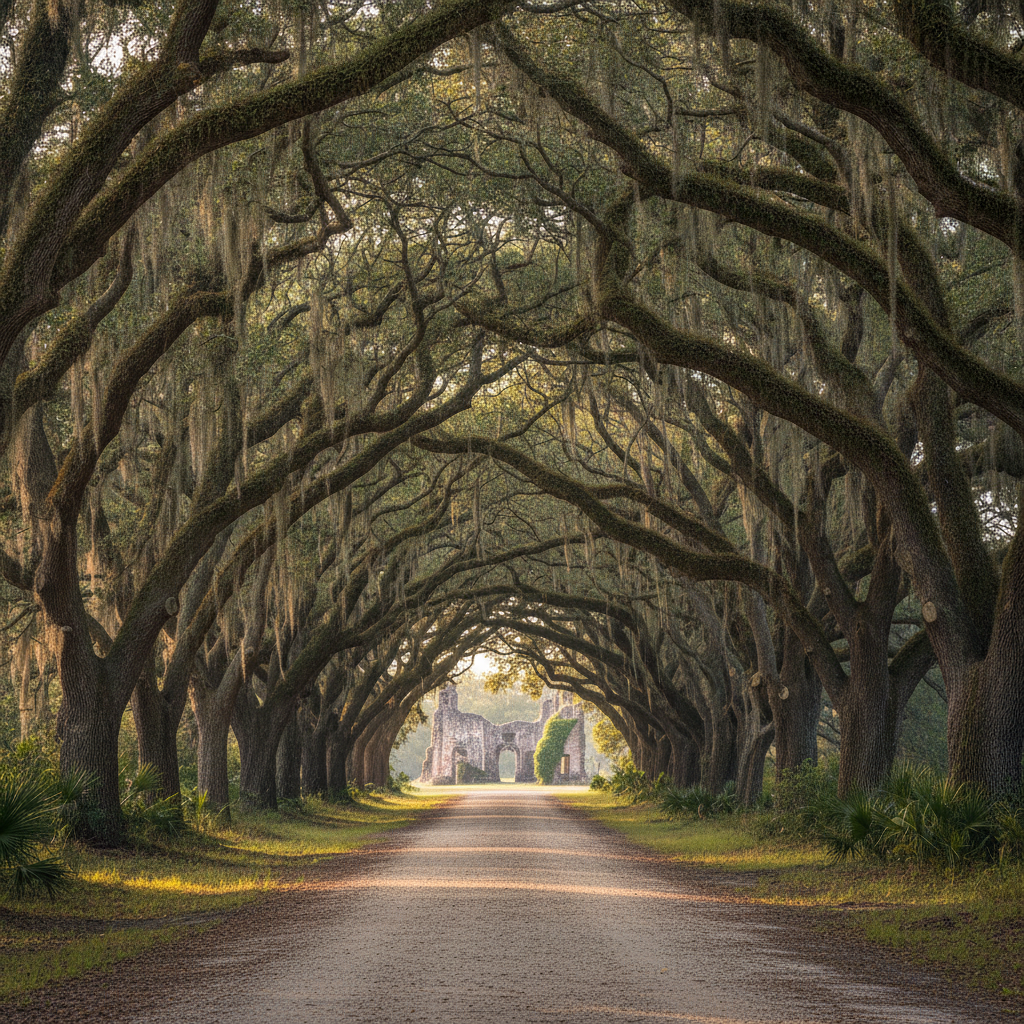
Savannah: Literary City, Victorian Elegance and Oglethorpe Grid
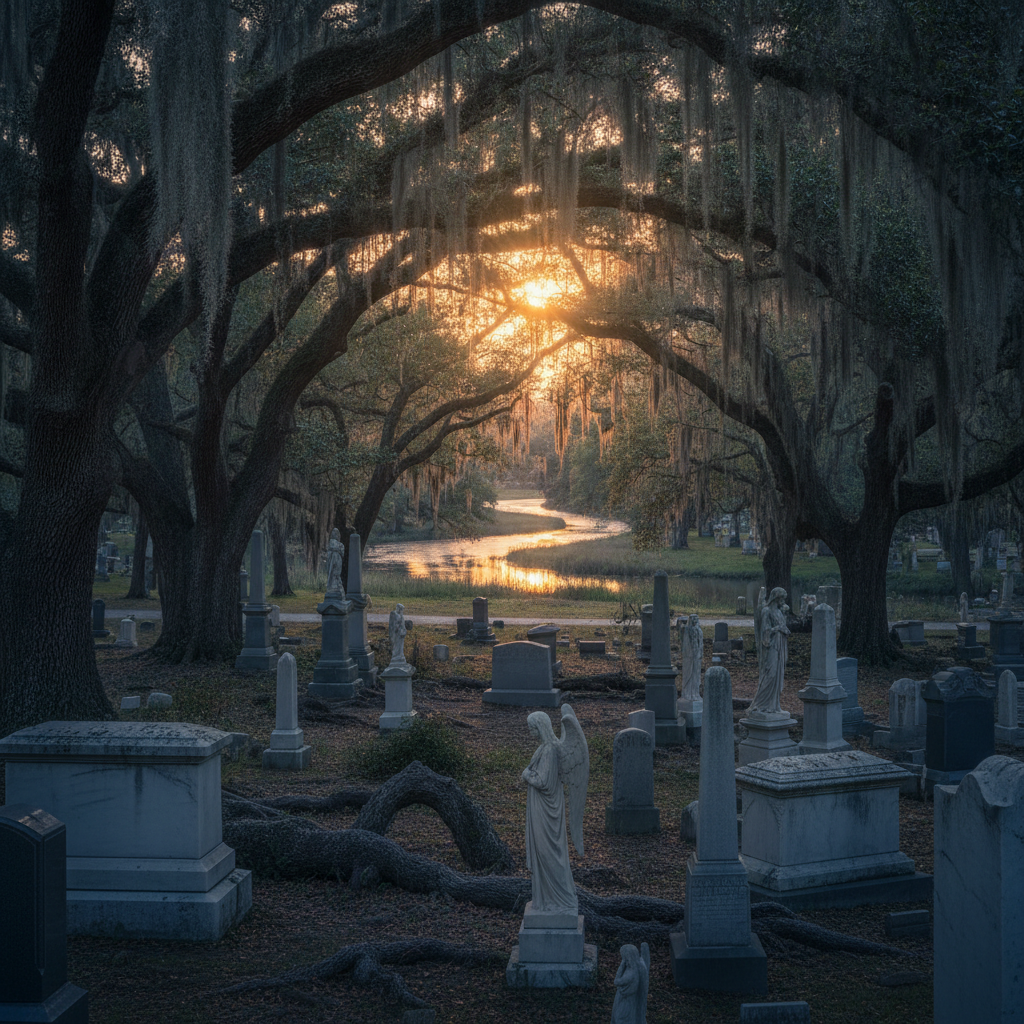
Savannah R2-R4: African American heritage (Sherman Savannah December 21 1864 Christmas gift, Special Field Order 15 January 1865 40 acres and a mule revoked Johnson October 1865, First African Baptist 1773 oldest North American Black Baptist congregation, Underground Railroad West African breathing holes), Tybee Island (lighthouse 1736 second oldest US station, 1958 nuclear B-47 Mark 15 bomb never recovered, Jekyll Island Club 1886-1942 Rockefellers Morgans, 1910 Jekyll Island secret meeting drafted Federal Reserve Act), SCAD (15,000 students largest US art university, 70+ historic buildings restored, Museum of Art 1853 Gothic Revival railway depot, First Fridays Gallery Crawl), Antebellum architecture (Green-Meldrim House Sherman HQ 1864, Isaiah Davenport House 1820 saved 1955 by Historic Savannah Foundation, Owens-Thomas House 1816 finest US Regency, Cathedral of St. John the Baptist 1873 French Gothic), Nightlife ghost tours (open container law Historic District, River Street cotton warehouses, Kehoe House most haunted Savannah, top 3 most haunted US, Savannah Stopover music festival SXSW stop), Practical (St. Patrick's Day 400,000 participants second US, spring azaleas best season, Starland District Back in the Day Bakery, SAV airport direct Atlanta Charlotte)
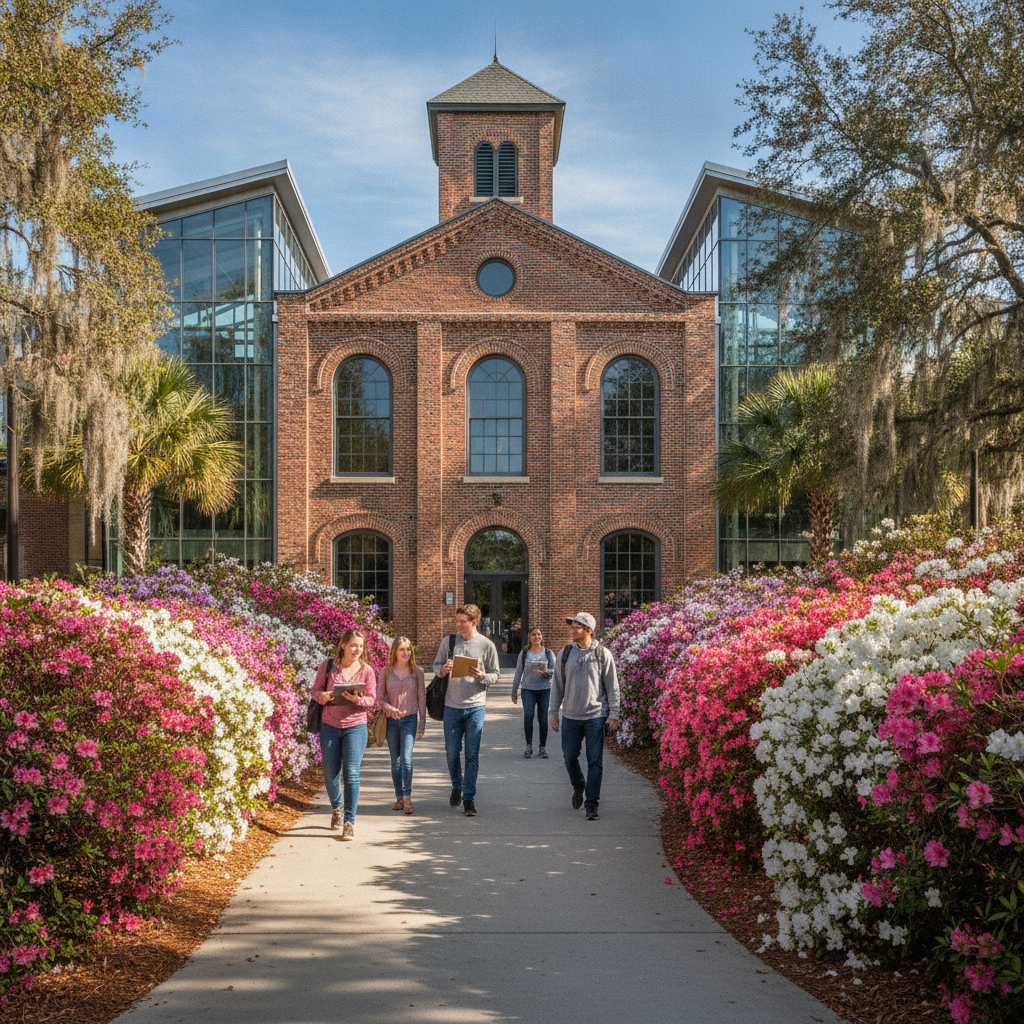
Savannah: Art, Faith, Trade and the Georgia Coast