Savannah: Literary City, Victorian Elegance and Oglethorpe Grid
Walk the Wormsloe tabby ruins, relax in Forsyth Park, trace the Midnight in the Garden story to Mercer House and Bonaventure Cemetery, follow Sherman footsteps through the Civil War sites, and understand why Oglethorpe square plan made Savannah a model city.
- 1
Wormsloe Historic Site and Tabby Construction
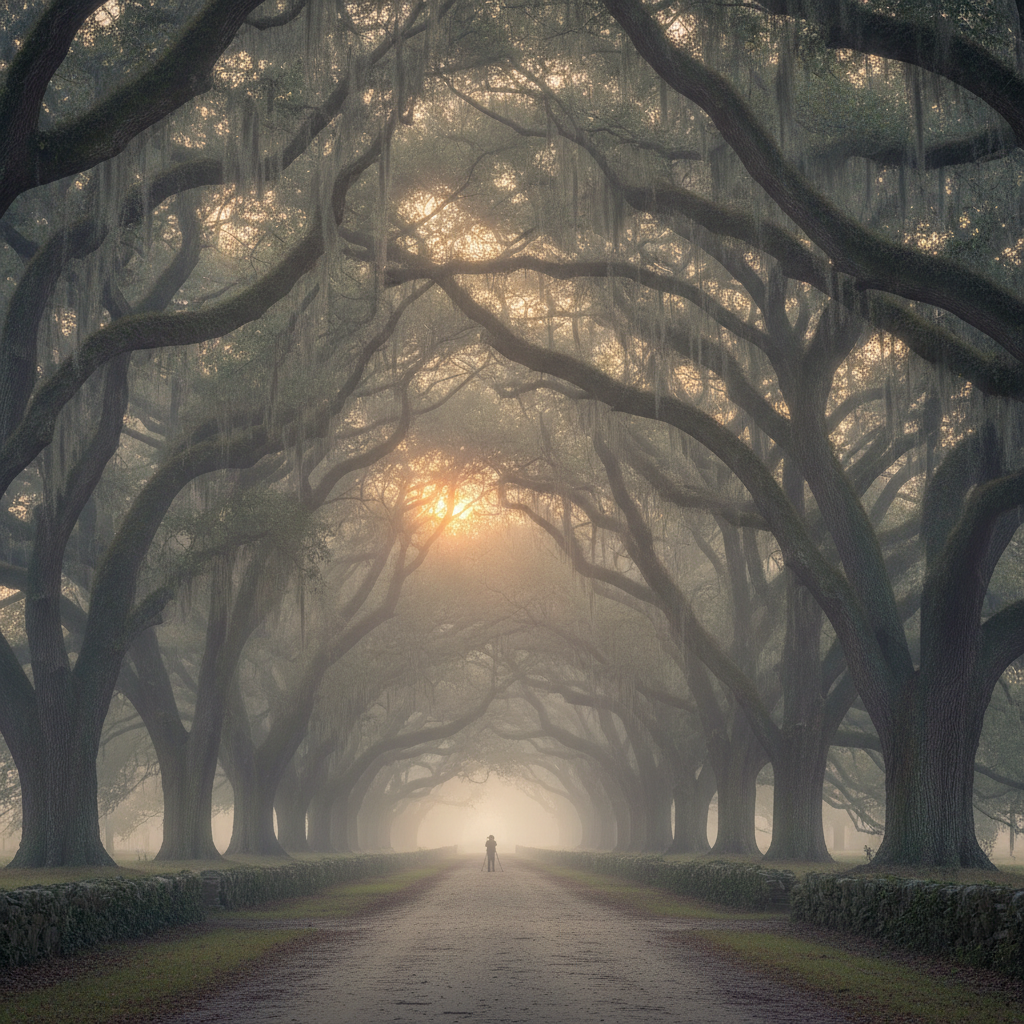
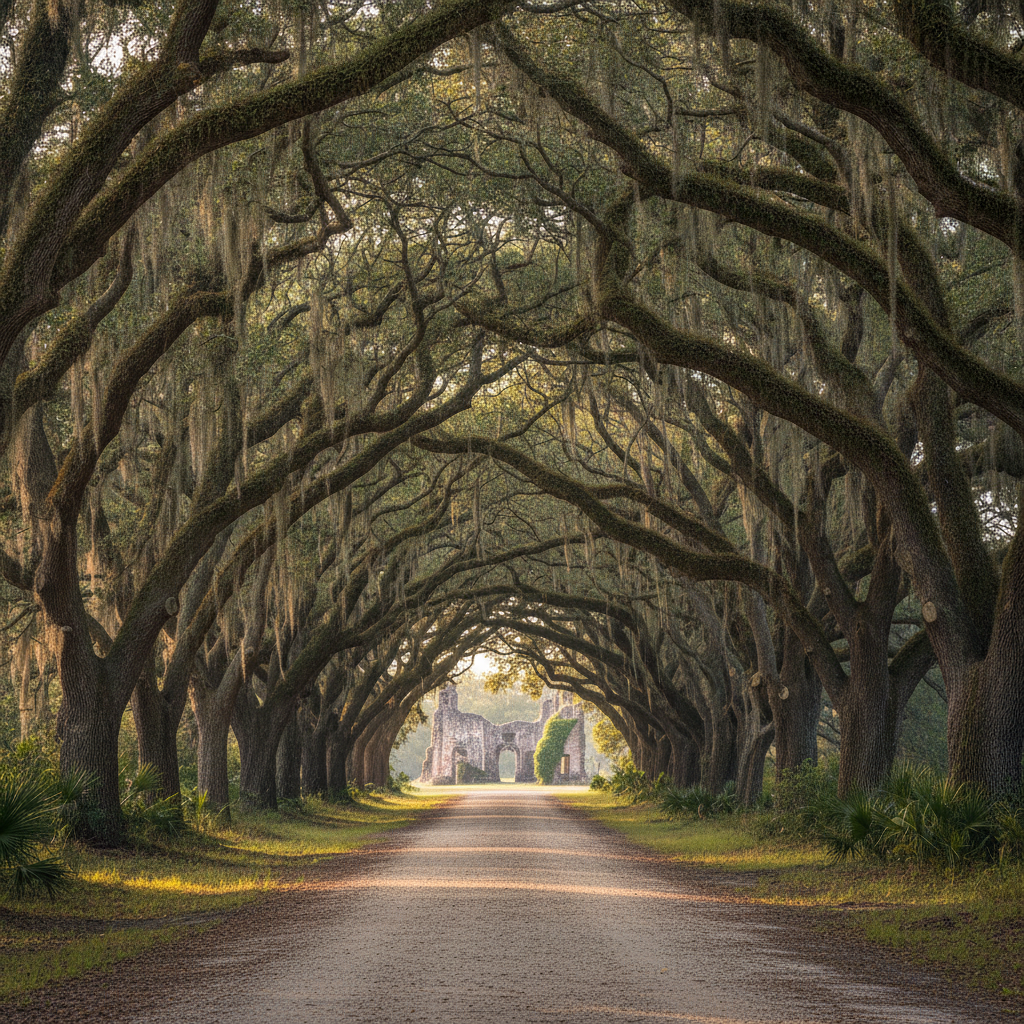
Wormsloe Historic Site, 10 miles south of downtown Savannah on the Isle of Hope, preserves the colonial estate of Noble Jones, one of the original 1733 settlers who arrived with James Oglethorpe. The entry drive, lined with 400 live oaks draped in Spanish moss for 1.5 miles, is one of the most photographed landscapes in Georgia. Jones built the estate fortification and colonial tabby structures using tabby concrete, a material made from oyster shells, lime, sand, and water that was the primary construction medium of coastal Georgia and South Carolina colonial builders. Tabby ruins of the colonial fortification remain at the site. The Georgia Department of Natural Resources manages Wormsloe as a state historic site with living history demonstrations.
- 2
Forsyth Park Fountains and Cultural Life
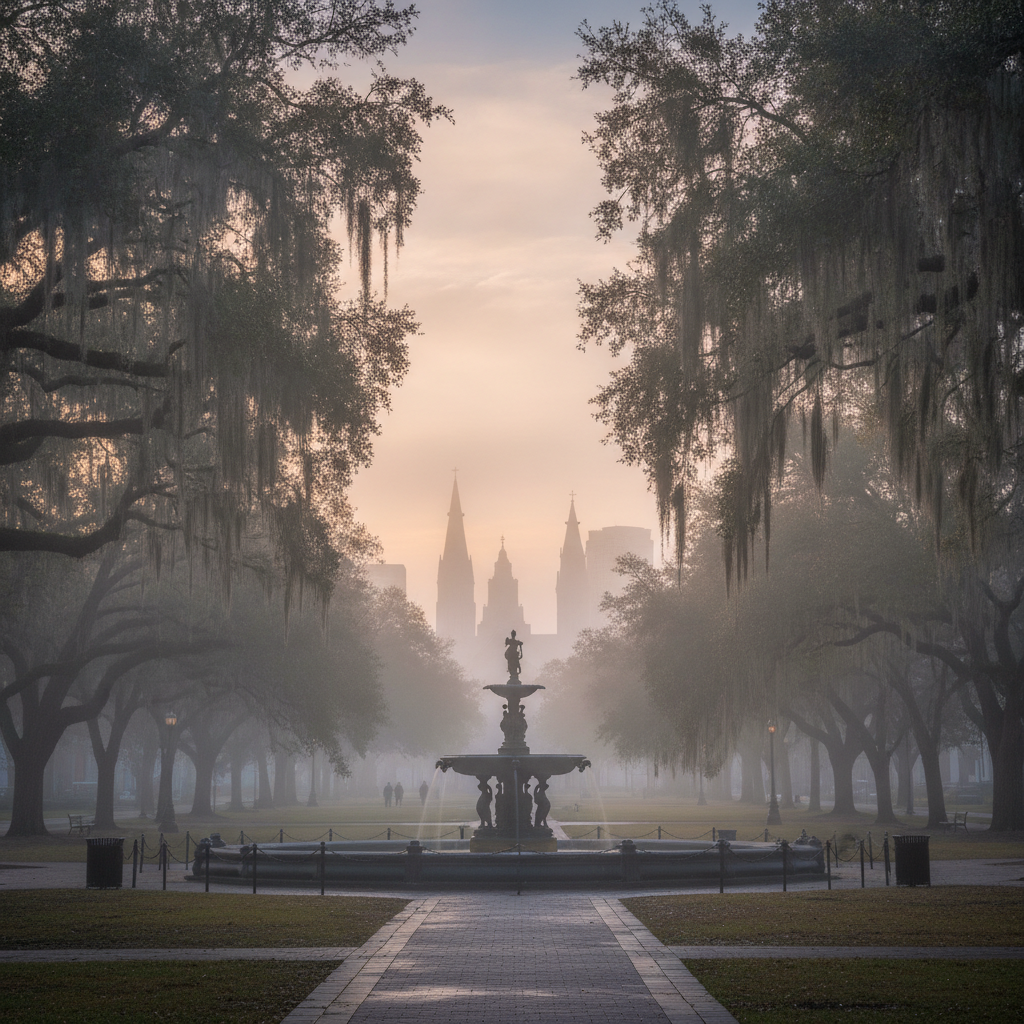
Forsyth Park, laid out in 1851 across 30 acres in the Victorian District, is anchored by its white ornamental fountain installed in 1858 and modeled on fountains at the Place de la Concorde in Paris. A second smaller fountain depicting girls holding fish was added in 1858. The park hosts the Savannah Jazz Festival each September, one of the largest free jazz festivals in the American South. The Savannah Book Festival, held each February, draws authors from across the country for readings in the park and nearby venues. The park fragrant garden for the blind, established in the 1970s, uses labeled plantings of fragrant herbs and flowers designed for visitors who are visually impaired.
- 3
Midnight in the Garden of Good and Evil
John Berendt published Midnight in the Garden of Good and Evil in 1994, a nonfiction account of the 1981 shooting death of Danny Hansford by antiques dealer Jim Williams in his Mercer House mansion. The book spent 216 weeks on the New York Times bestseller list, a record for nonfiction. Clint Eastwood directed the 1997 film adaptation starring Kevin Spacey and Jude Law. The book and film transformed Savannah tourism, increasing visitor numbers dramatically and establishing the city as a literary and cultural destination. Mercer House at 429 Bull Street was built in 1868 and now operates as a museum open for tours. The Bonaventure Cemetery, prominently featured in the book, became so overwhelmed with literary tourists that the Bird Girl statue on the cover was moved to the Telfair Museum for protection.
- 4
Bonaventure Cemetery and Victorian Mourning Culture
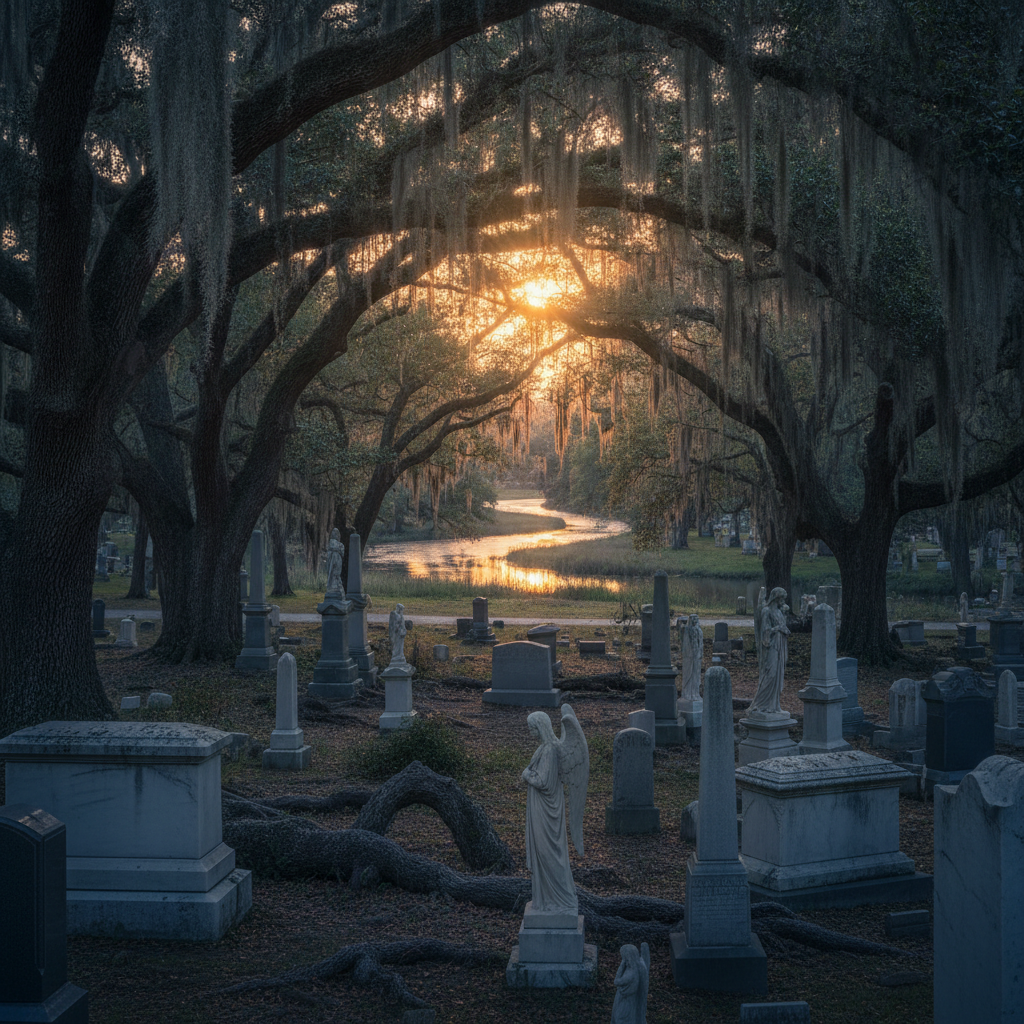
Bonaventure Cemetery occupies 160 acres of bluff-top land above the Wilmington River, originally the plantation of Josiah Tattnall. The site became a cemetery in 1846 and filled with elaborate Victorian funerary sculpture reflecting 19th century mourning culture when cemeteries served as public parks and picnic grounds. The cemetery contains the graves of lyricist Johnny Mercer, poet Conrad Aiken, and Gracie Watson, a young girl whose life-size marble statue at her grave has accumulated coins, toys, and flowers left by visitors for over a century. Live oak trees with massive horizontal limbs and heavy Spanish moss create a canopy that photographers and painters have documented for 150 years. Evening tours operate year-round through the Historic Savannah Foundation.
- 5
Savannah Civil War Sites and Sherman Occupation
General William T. Sherman captured Savannah on December 21, 1864, and famously telegraphed President Lincoln offering the city as a Christmas gift along with 25,000 bales of cotton. Sherman spared Savannah the destruction he had inflicted on Atlanta, partly because city leaders surrendered peacefully and partly because he recognized the city strategic value as a port. Sherman headquartered at the Green-Meldrim House on Madison Square, a Gothic Revival mansion built in 1853 that is now a parish house for St. John Church. The Savannah Campaign lasted six weeks and covered 300 miles from Atlanta. Fort McAllister, south of Savannah on the Ogeechee River, was the final Confederate position protecting the city and fell in a 15-minute Union infantry assault on December 13, 1864.
- 6
Savannah Squares Plan and Urban Design
James Oglethorpe laid out Savannah in 1733 using a modular grid plan of wards, each containing a public square surrounded by residential lots and reserving land for civic and commercial uses. The original plan called for 24 such wards. By the time the plan was fully built out in 1851, 24 squares had been established, of which 22 survive today. The plan is considered one of the most innovative urban designs in American history and has been studied at architecture and planning schools for a century. Each square has a distinct character, from the monument-centered Johnson Square to the romantic moss-draped Chippewa Square where the Forrest Gump bench scene was filmed in 1994. The squares provide Savannah with 22 small parks within walking distance of nearly every downtown address.
Walk this route with audio
Stories play automatically as you reach each stop — no tapping needed.
More in Savannah
Savannah: Oglethorpe Plan (1733 founded 12th and last original colony, 22 of 24 original squares surviving, most intact 18th-century urban planning US, Forsyth Park 1858 fountain, SCAD 15,000 students revitalized historic buildings), Midnight in the Garden of Good and Evil (Berendt book 1994 216 weeks NYT bestseller longest nonfiction, Mercer House Jim Williams shooting, Chablis Lady drag performer, Johnny Mercer 1,500 songs Moon River Oscar 1961 Breakfast at Tiffany's), Bonaventure Cemetery (live oak allees Spanish moss, Little Gracie Watson 1889 most visited grave, Bird Girl statue moved to Telfair Museums, Telfair Museums oldest Southern public art museum, Owens-Thomas House 1816 finest US Regency architecture), Savannah food (Olde Pink House 1771 James Habersham Georgian mansion, Pirate's House 1734 oldest building Georgia shanghaied sailors tunnel Treasure Island, Mrs. Wilkes Dining Room 1943 communal soul food), Film history (Forrest Gump 1994 Chippewa Square bench now Savannah History Museum, Midnight movie Clint Eastwood 1997, Savannah Film Festival SCAD October), Practical (Historic District 2.5 sqkm National Historic Landmark walkable, Tybee Island 30km lighthouse 1736 second oldest US site, Jekyll Island Rockefellers Morgans, Cumberland Island wild horses Carnegie ruins)
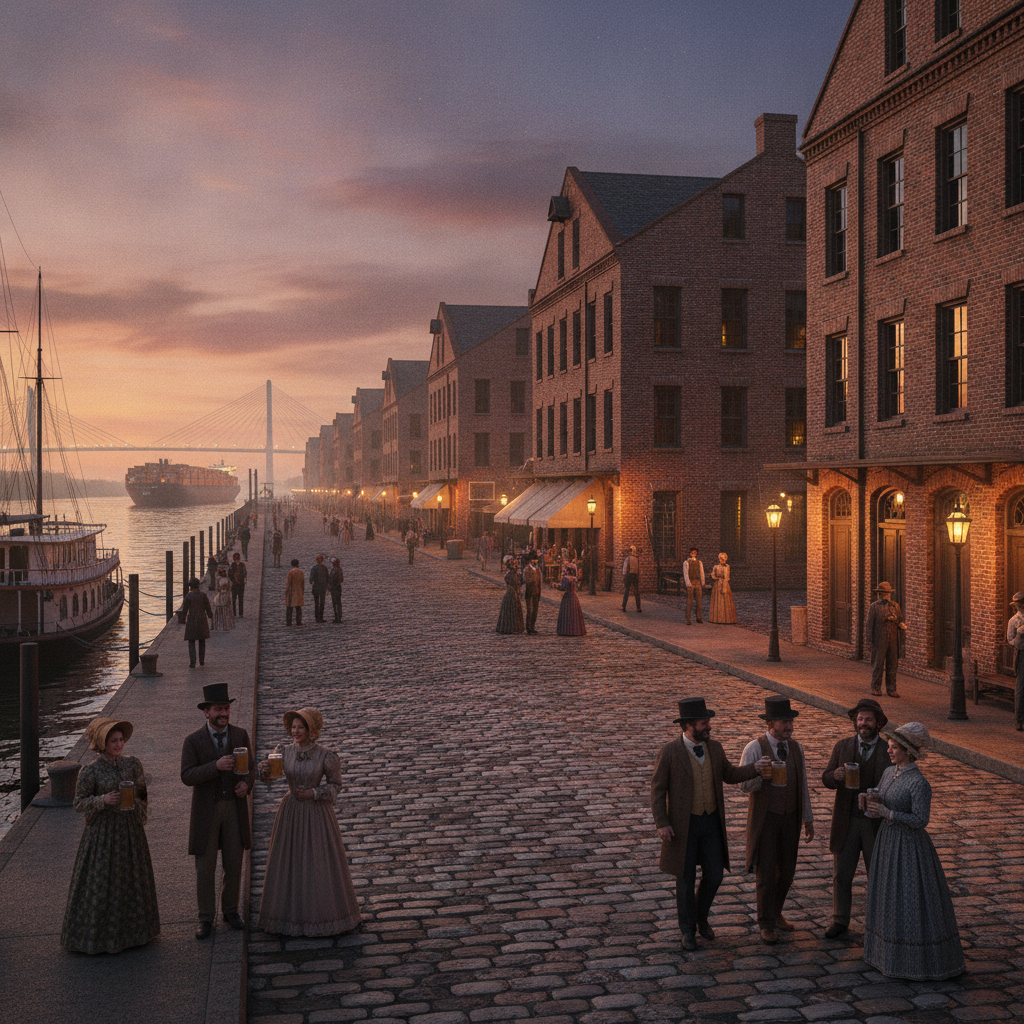
Savannah R4: Spanish moss (bromeliad not parasite absorbs moisture from air, nesting habitat for 3 bird species, Ford Model T 12,000 tons annually for seat cushions, City of Savannah manages growth in squares), Savannah squares in detail (Chippewa Square Forrest Gump bench now History Museum, Oglethorpe statue Daniel Chester French sculptor Lincoln Memorial, Monterey Square Pulaski monument Mercer House, Johnson Square 1733 first square Nathanael Greene monument), Factors Walk waterfront (cotton factor system 2.5% commission, cobblestones New England granite ballast, River Street cotton warehouses now bars restaurants, Talmadge Bridge 56m clearance container ships), Craft beer bar culture (open container law Historic District plastic cups, Moon River Brewing 1821 City Hotel most haunted bar US ghost James Stark, American Prohibition Museum only US museum Prohibition, Service Brewing veteran-founded), Georgia nature (Okefenokee 440,000ha 11,000 alligators blackwater amber tea tannic acids, Little St. Simons 30 guests bald eagles loggerhead, Georgia Bight 2,200 loggerhead nests per year), SCAD galleries (SCAD Museum of Art 1853 Gothic Revival depot, Telfair Museums oldest Southern public art 1886 Bird Girl bronze, Savannah Fashion Week student collections)
Savannah R2-R4: African American heritage (Sherman Savannah December 21 1864 Christmas gift, Special Field Order 15 January 1865 40 acres and a mule revoked Johnson October 1865, First African Baptist 1773 oldest North American Black Baptist congregation, Underground Railroad West African breathing holes), Tybee Island (lighthouse 1736 second oldest US station, 1958 nuclear B-47 Mark 15 bomb never recovered, Jekyll Island Club 1886-1942 Rockefellers Morgans, 1910 Jekyll Island secret meeting drafted Federal Reserve Act), SCAD (15,000 students largest US art university, 70+ historic buildings restored, Museum of Art 1853 Gothic Revival railway depot, First Fridays Gallery Crawl), Antebellum architecture (Green-Meldrim House Sherman HQ 1864, Isaiah Davenport House 1820 saved 1955 by Historic Savannah Foundation, Owens-Thomas House 1816 finest US Regency, Cathedral of St. John the Baptist 1873 French Gothic), Nightlife ghost tours (open container law Historic District, River Street cotton warehouses, Kehoe House most haunted Savannah, top 3 most haunted US, Savannah Stopover music festival SXSW stop), Practical (St. Patrick's Day 400,000 participants second US, spring azaleas best season, Starland District Back in the Day Bakery, SAV airport direct Atlanta Charlotte)
Savannah: Preservation Legacy, Harbor Power and Living Neighborhoods
Savannah: Art, Faith, Trade and the Georgia Coast