Savannah R4: Spanish moss (bromeliad not parasite absorbs moisture from air, nesting habitat for 3 bird species, Ford Model T 12,000 tons annually for seat cushions, City of Savannah manages growth in squares), Savannah squares in detail (Chippewa Square Forrest Gump bench now History Museum, Oglethorpe statue Daniel Chester French sculptor Lincoln Memorial, Monterey Square Pulaski monument Mercer House, Johnson Square 1733 first square Nathanael Greene monument), Factors Walk waterfront (cotton factor system 2.5% commission, cobblestones New England granite ballast, River Street cotton warehouses now bars restaurants, Talmadge Bridge 56m clearance container ships), Craft beer bar culture (open container law Historic District plastic cups, Moon River Brewing 1821 City Hotel most haunted bar US ghost James Stark, American Prohibition Museum only US museum Prohibition, Service Brewing veteran-founded), Georgia nature (Okefenokee 440,000ha 11,000 alligators blackwater amber tea tannic acids, Little St. Simons 30 guests bald eagles loggerhead, Georgia Bight 2,200 loggerhead nests per year), SCAD galleries (SCAD Museum of Art 1853 Gothic Revival depot, Telfair Museums oldest Southern public art 1886 Bird Girl bronze, Savannah Fashion Week student collections)
Savannah R4: Spanish moss (Tillandsia usneoides bromeliad absorbs from air not parasite, nesting yellow warblers Baltimore orioles parula, Ford 12,000 tons annually for Model T seats 1910s-1930s, City of Savannah manages growth in squares), squares detail (Chippewa Forrest Gump bench moved to History Museum, Oglethorpe statue Daniel Chester French Lincoln Memorial sculptor, Monterey Pulaski monument Polish cavalry hero died October 9 1779, Johnson 1733 first square Nathanael Greene, Madison Green-Meldrim Sherman HQ Jasper monument), Factors Walk (cotton factor 2.5% commission credit intermediary, River Street cobblestones New England granite ship ballast, warehouses now bars, Talmadge Bridge 56m clearance), craft beer (open container law unique Historic District, Moon River Brewing 1821 City Hotel most haunted ghost James Stark, American Prohibition Museum only US Prohibition museum, Service Brewing veteran-founded 2014), Georgia nature (Okefenokee 440,000ha 11,000 alligators amber blackwater tannic acids, Little St. Simons 30 guests bald eagles, Georgia Bight 2,200 loggerhead nests most active East Coast north Florida), SCAD galleries (Museum of Art 1853 Gothic Revival Central Georgia Railway depot, Telfair 1886 oldest Southern public art Bird Girl bronze, Savannah Fashion Week student collections).
- 1
Savannah's Spanish Moss - Biology and Cultural Significance
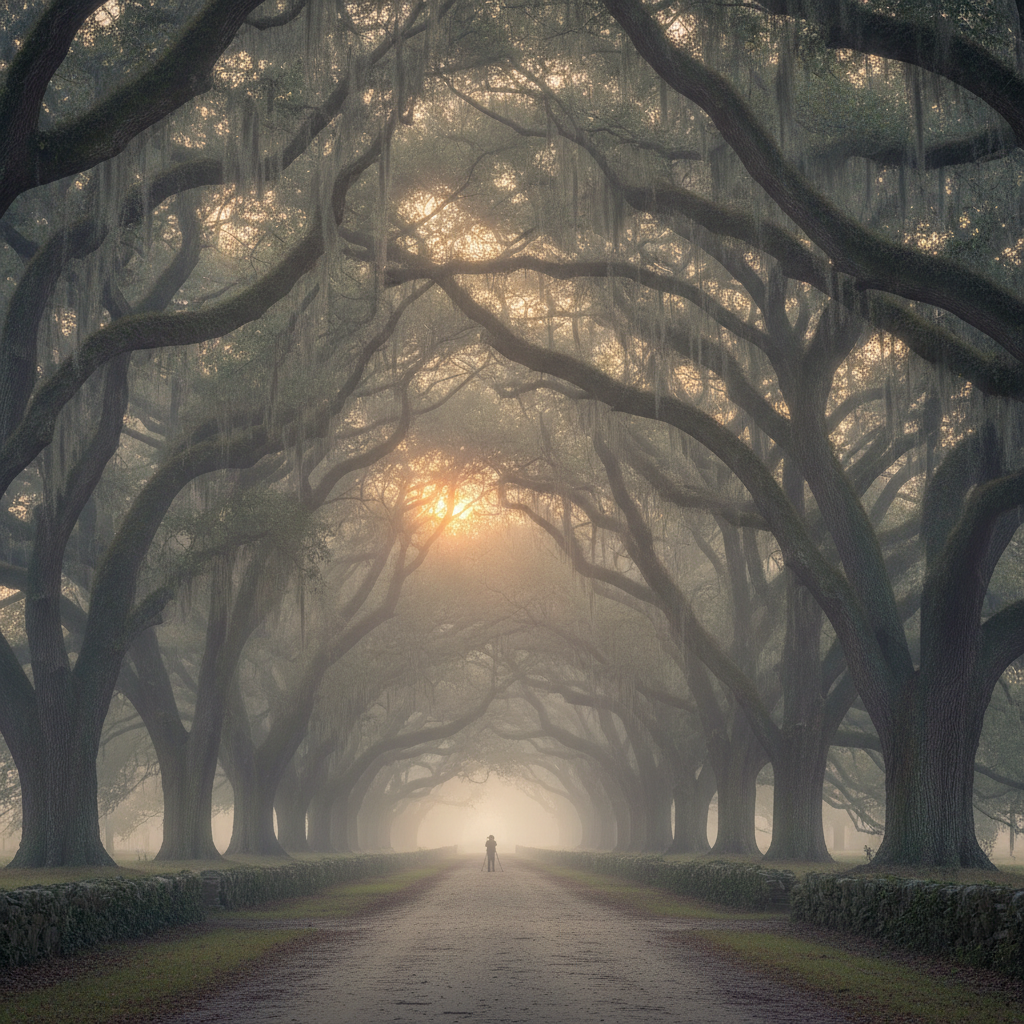
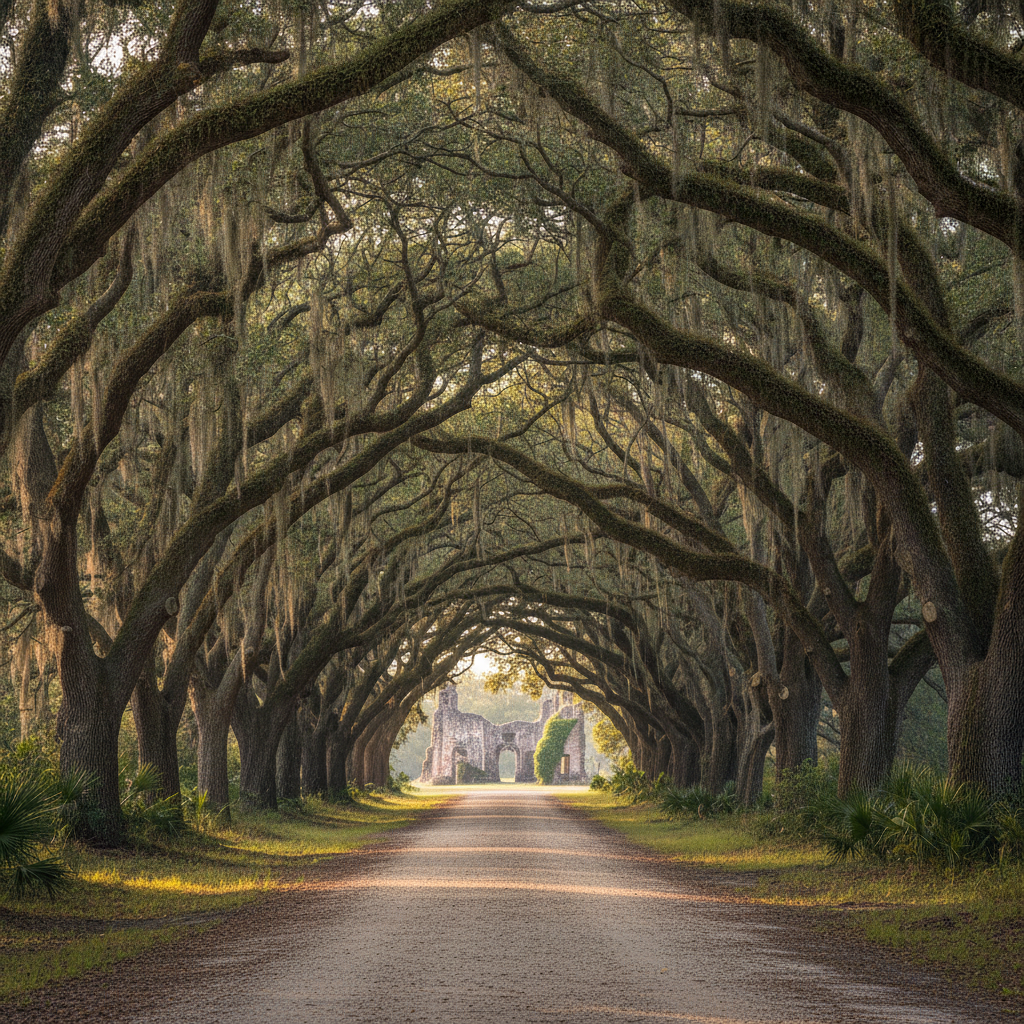
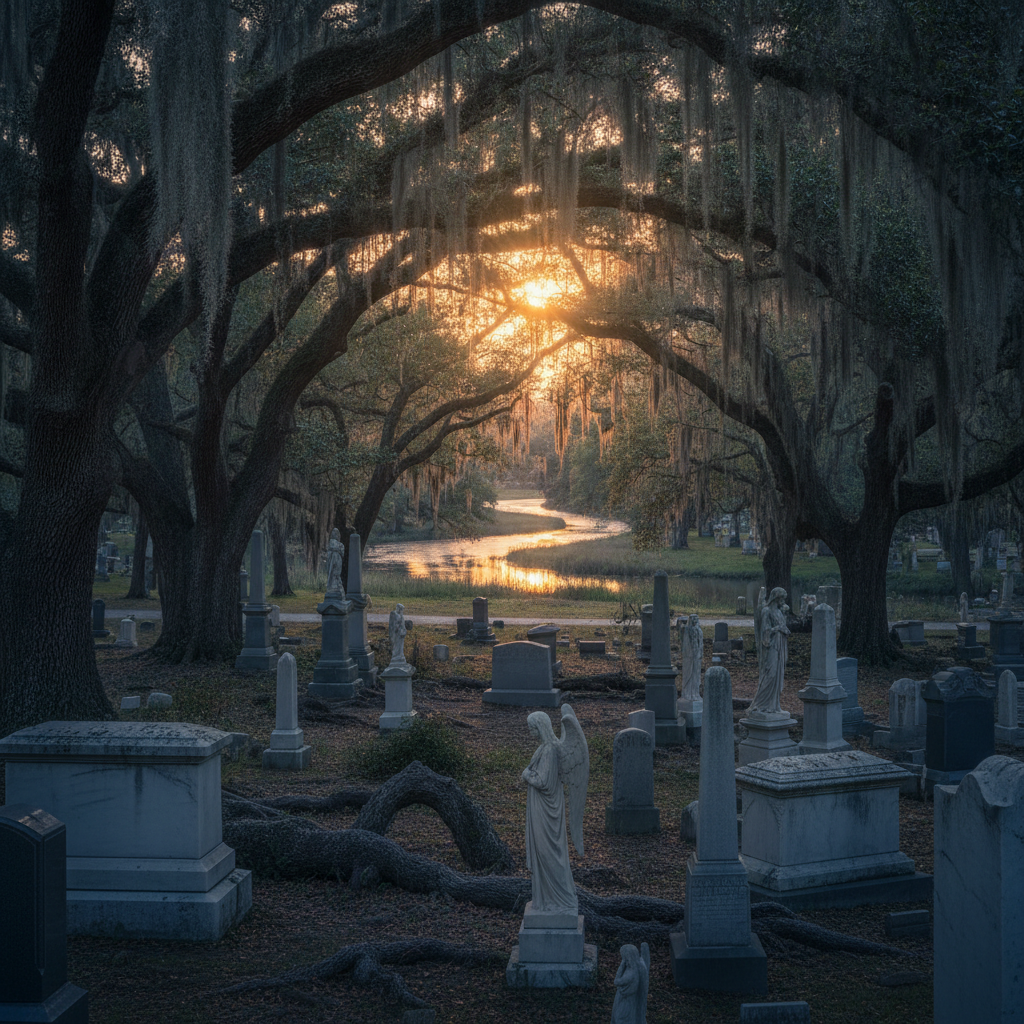
Spanish moss biology: Spanish moss (Tillandsia usneoides) is not a moss, not Spanish, and not a parasite — it is an epiphytic bromeliad (a member of the pineapple family) that attaches to tree branches for structural support but absorbs all moisture, nutrients, and carbon dioxide from the air and rain. Spanish moss grows throughout the Gulf Coast and Atlantic Coastal Plain from Virginia to Argentina, but is most abundant and most iconic in the Lowcountry and Savannah area, where the combination of high humidity, warm temperatures, and the abundant host of live oak trees creates ideal growing conditions. The ecological role of Spanish moss: the moss provides nesting habitat for at least 3 species of bird (yellow warblers, Baltimore orioles, and parula warblers nest inside Spanish moss clumps), shelter for numerous insects and spiders, and food for certain deer and cattle. The cultural history of Spanish moss in Savannah: Spanish moss was harvested in massive quantities throughout the South Carolina and Georgia Lowcountry for use as furniture stuffing (particularly in car seats — Ford used approximately 12,000 tons of Spanish moss annually from the Savannah area for Model T and Model A seat cushions in the 1910s-1930s), mattress filling, and thermal insulation in building construction. The Savannah historic district and Spanish moss: the moss is so integral to the visual character of Savannah that the City of Savannah actively manages Spanish moss growth on the trees in the squares and parks, trimming it to maintain the trees while preserving the characteristic appearance of the squares.
- 2
The Savannah Squares in Detail - Chippewa to Monterey
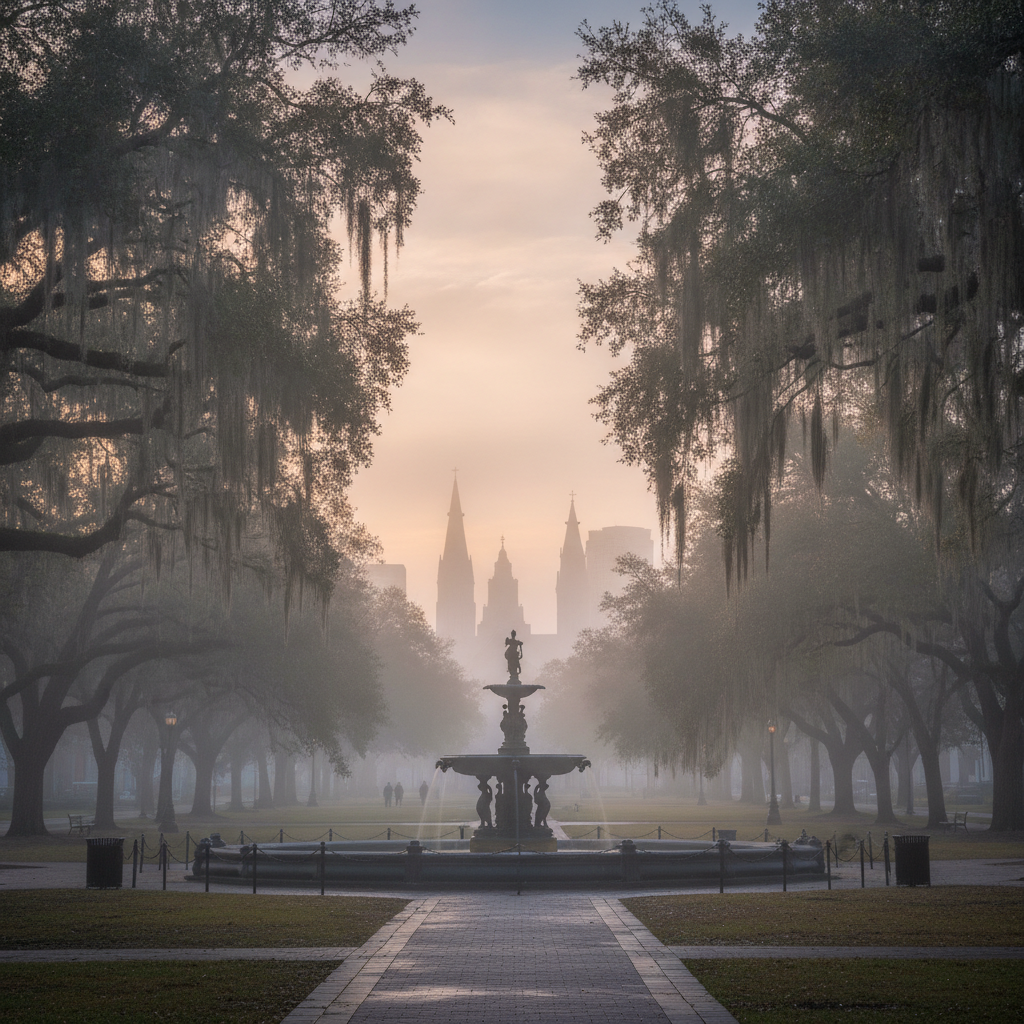
The Savannah squares in detail: each of the 22 surviving Savannah squares has its own history, monuments, and surrounding architecture that rewards individual exploration. Chippewa Square (at Bull Street and Perry Street): the square where the Forrest Gump bench scenes were filmed (the bench is now in the Savannah History Museum), with the bronze statue of General James Oglethorpe (the founder of Georgia, designed by Daniel Chester French, the sculptor of the Lincoln Memorial) at the center. Wright Square (at Bull Street and State Street): the square with the monument to William Washington Gordon (the founder of the Central of Georgia Railway), where the first court in Georgia was held in 1733. Johnson Square (the first square established by Oglethorpe in 1733, at Bull Street and Bay Street): the largest and most formal of the Savannah squares, with the monument to Revolutionary War General Nathanael Greene (who died at his Mulberry Grove plantation near Savannah in 1786, shortly after the war). Monterey Square (at Bull Street and Taylor Street): the square with the monument to Count Casimir Pulaski (the Polish cavalry general who died at the siege of Savannah, October 9, 1779, one of two foreign-born heroes of the American Revolution — the other being Lafayette — to die in combat in the American cause), and the Mercer House (the setting of Midnight in the Garden of Good and Evil). Madison Square (at Bull Street and Harris Street): the square with the Green-Meldrim House (Sherman's headquarters) and the monument to Sergeant William Jasper (who raised the American flag at the Battle of Fort Moultrie in June 1776, one of the first significant American victories of the Revolutionary War).
- 3
The Savannah Waterfront and the Cotton Trade
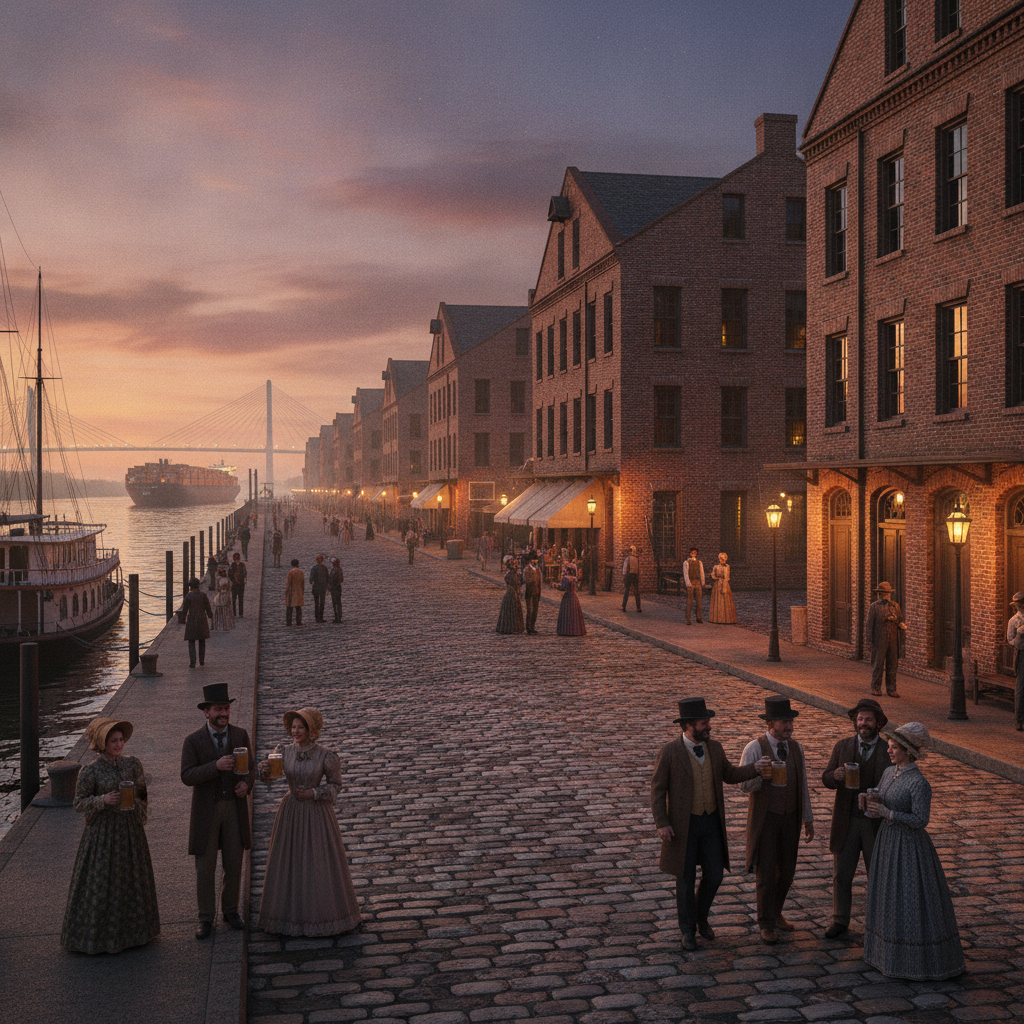
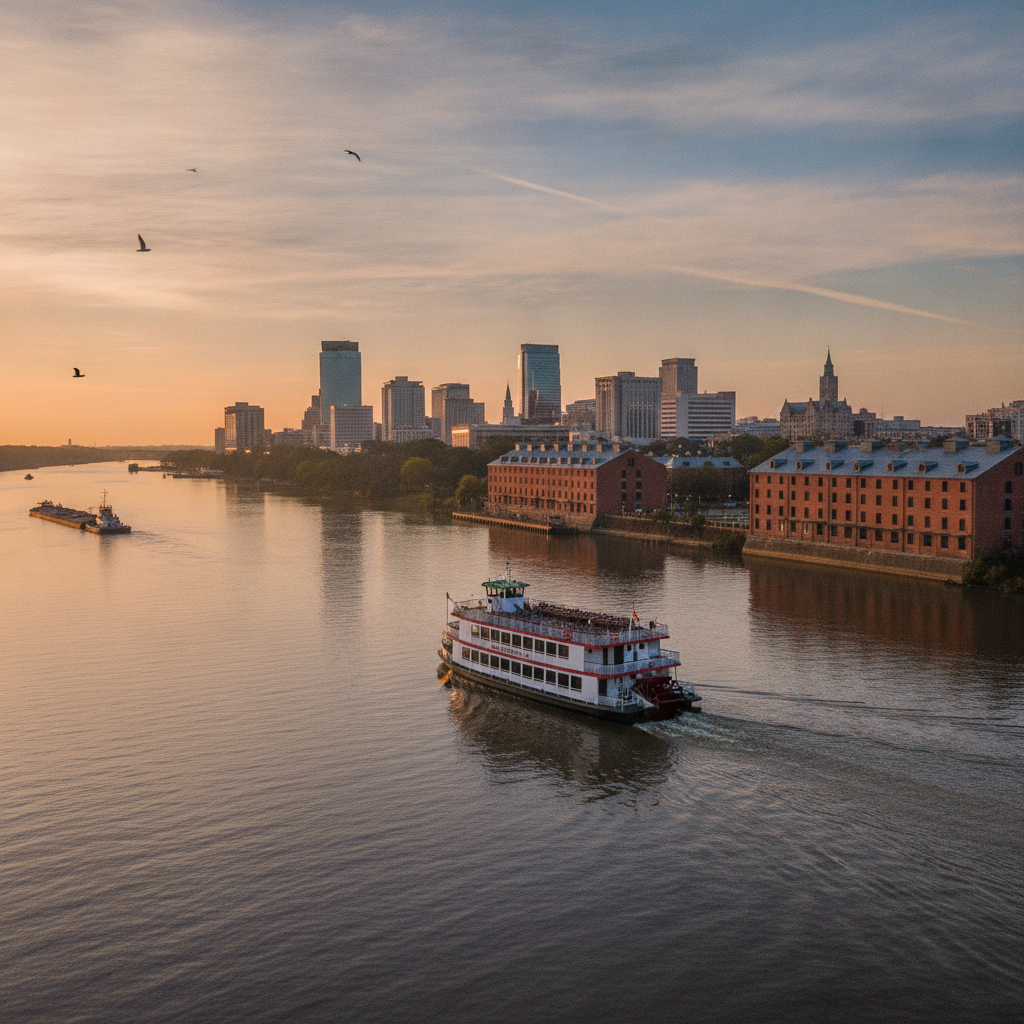
Factors Walk and the Savannah waterfront: the 1850s-1880s brick warehouse complex along the Savannah River (from Bay Street down the iron ramps and bridges to River Street, which runs at river level): the most historically evocative commercial streetscape in Savannah, where the cotton factors (the commodity traders who brokered cotton sales between plantation owners and English textile mills) conducted business from offices above the warehouses. The cotton factor system: in the antebellum South, the cotton factor was the essential intermediary between the plantation owner (who needed credit to finance the next crop and access to markets) and the Liverpool or New York buyers (who needed reliable supply). The factor provided credit against the next cotton crop, arranged shipping, negotiated prices, and took a commission of approximately 2.5% on all transactions — making the most successful factors among the wealthiest men in Savannah. The cotton warehouses of River Street: the cobblestone street of River Street, paved with ship ballast stones (granite blocks brought from New England as ballast in ships that returned south laden with cotton), runs along the south bank of the Savannah River below the bluff of the Historic District, with the original cotton compression and storage warehouses (now bars, restaurants, and candy shops) lining the north side. The Savannah River Walk: the continuous waterfront promenade along the Savannah River, with views of the container ships arriving from the Port of Savannah and the Talmadge Memorial Bridge (the cable-stayed bridge carrying US 17 over the Savannah River, completed 1991, with a 56-meter clearance for the massive container ships serving the Port of Savannah).
- 4
Savannah's Craft Beer and Bar Culture
Savannah craft beer and cocktail scene: Savannah's unique open container law (which allows drinks in plastic cups on the streets of the Historic District) has created one of the most distinctive and convivial outdoor bar cultures of any small American city, with residents and visitors freely moving between bars with drinks in hand on warm evenings. Service Brewing Company (at 574 Indian Street, downtown Savannah): the first craft brewery in Savannah since Prohibition, founded in 2014 by veterans in honor of the military services (Savannah has a large military community from the nearby Fort Stewart and Hunter Army Airfield). Southbound Brewing Company (at 107 W 35th Street, Savannah): the second major Savannah craft brewery, now distributing throughout Georgia and the Southeast. Moon River Brewing Company (at 21 W Bay Street, downtown Savannah, founded 1999): the original craft brewery of Savannah, located in the 1821 City Hotel building and consistently listed as one of the most haunted bars in the United States (the ghost of James Stark, who was killed in an altercation in the hotel in the 1820s, is the most frequently reported apparition). The Savannah cocktail culture: the Prohibition-era legal restrictions on alcohol in Georgia (Georgia had statewide Prohibition from 1907 to 1935) produced a strong speakeasy culture in Savannah, whose echoes in the contemporary craft cocktail scene are visible in bars like The Collins Quarter (at 151 Bull Street), Artillery (at 307 Bull Street), and The American Prohibition Museum (at 209 W St. Julian Street, the only museum in the United States dedicated to the Prohibition era, with exhibits on bootleggers, speakeasies, and the temperance movement).
- 5
Georgia's Natural Wonders near Savannah
Georgia's natural wonders accessible from Savannah: Savannah's position at the intersection of the Atlantic coast, the Sea Islands, the ACE Basin estuaries, and the roads leading to the Cumberland Plateau makes it one of the best bases for exploring the natural wonders of the Georgia coast and interior. Okefenokee National Wildlife Refuge (at 4700 Okefenokee SW, Folkston, Georgia, 120 km south of Savannah): the largest blackwater swamp in North America (approximately 440,000 hectares), named by the Seminole Oce-finau-cau (land of the trembling earth), with 11,000 American alligators (one of the highest density alligator populations in the world), sandhill cranes (which winter in the Okefenokee in flocks of hundreds of thousands), and a wilderness canoe trail system through the open water prairies and tree islands. The swamp habitat: the water of the Okefenokee is colored the deep amber-brown of strong tea by the tannic acids released by the decomposing sphagnum moss and cypress leaves — the color that gives the name blackwater swamp. Little St. Simons Island (accessible only by private ferry from St. Simons Island, 80 km south of Savannah): the privately owned wilderness island with only 30 overnight guests permitted at any time, with loggerhead sea turtle nesting beaches, nesting bald eagles, and the Hampton River Lodge (the only accommodation on the island). The Georgia Bight: the concave curve of the Georgia-South Carolina coastline that concentrates Atlantic longshore currents, making the Georgia-South Carolina coast the location of the most active sea turtle nesting beaches on the East Coast north of Florida (approximately 2,200 loggerhead nests per year in Georgia).
- 6
Savannah Art Galleries and SCAD Creative District
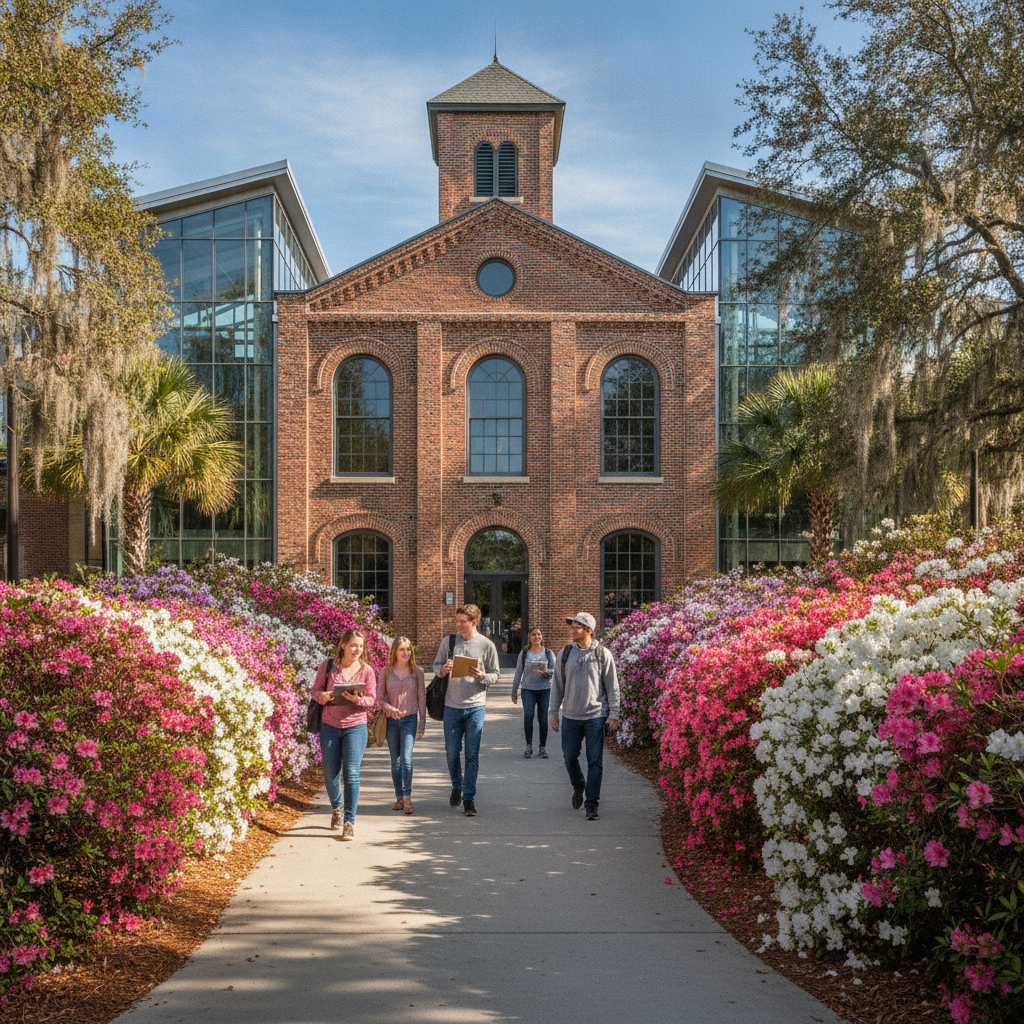
The SCAD creative ecosystem in Savannah: beyond the university itself, SCAD has catalyzed the creation of one of the most concentrated independent creative economies of any small American city, with graphic design studios, film production companies, fashion designers, and digital media agencies clustered in the Historic District and the surrounding neighborhoods. The SCAD Museum of Art (at 601 Turner Blvd, in the restored 1853 Central of Georgia Railway Gothic Revival depot): the primary contemporary art museum of SCAD, with a permanent collection focused on fashion, architecture, and design, and a major program of contemporary and historical exhibitions. The Telfair Museums: the three-site museum complex (the Telfair Academy at 121 Barnard Street, the Jepson Center at 207 W York Street, and the Owens-Thomas House at 124 Abercorn Street): the oldest public art museum in the American South (founded 1886), with the permanent collection including the Bird Girl bronze original (moved from Bonaventure Cemetery), American portraiture, and the collection of Savannah-related decorative arts. Independent galleries in Savannah: the Gallery Espresso (at 234 Bull Street, the gallery and coffee shop at the heart of Savannah's independent art scene), and the Roots Up Gallery (at 1782 Montgomery Street, Cuyler-Brownsville neighborhood, the gallery focused on folk art, outsider art, and the Gullah Geechee craft traditions). The Savannah Fashion Week: the annual fashion presentation organized by SCAD students and faculty, showcasing student and emerging designer collections at venues throughout the Historic District — one of the most respected student fashion events in the United States.
Walk this route with audio
Stories play automatically as you reach each stop — no tapping needed.
More in savannah
Savannah: Oglethorpe Plan (1733 founded 12th and last original colony, 22 of 24 original squares surviving, most intact 18th-century urban planning US, Forsyth Park 1858 fountain, SCAD 15,000 students revitalized historic buildings), Midnight in the Garden of Good and Evil (Berendt book 1994 216 weeks NYT bestseller longest nonfiction, Mercer House Jim Williams shooting, Chablis Lady drag performer, Johnny Mercer 1,500 songs Moon River Oscar 1961 Breakfast at Tiffany's), Bonaventure Cemetery (live oak allees Spanish moss, Little Gracie Watson 1889 most visited grave, Bird Girl statue moved to Telfair Museums, Telfair Museums oldest Southern public art museum, Owens-Thomas House 1816 finest US Regency architecture), Savannah food (Olde Pink House 1771 James Habersham Georgian mansion, Pirate's House 1734 oldest building Georgia shanghaied sailors tunnel Treasure Island, Mrs. Wilkes Dining Room 1943 communal soul food), Film history (Forrest Gump 1994 Chippewa Square bench now Savannah History Museum, Midnight movie Clint Eastwood 1997, Savannah Film Festival SCAD October), Practical (Historic District 2.5 sqkm National Historic Landmark walkable, Tybee Island 30km lighthouse 1736 second oldest US site, Jekyll Island Rockefellers Morgans, Cumberland Island wild horses Carnegie ruins)
Savannah: Literary City, Victorian Elegance and Oglethorpe Grid
Savannah R2-R4: African American heritage (Sherman Savannah December 21 1864 Christmas gift, Special Field Order 15 January 1865 40 acres and a mule revoked Johnson October 1865, First African Baptist 1773 oldest North American Black Baptist congregation, Underground Railroad West African breathing holes), Tybee Island (lighthouse 1736 second oldest US station, 1958 nuclear B-47 Mark 15 bomb never recovered, Jekyll Island Club 1886-1942 Rockefellers Morgans, 1910 Jekyll Island secret meeting drafted Federal Reserve Act), SCAD (15,000 students largest US art university, 70+ historic buildings restored, Museum of Art 1853 Gothic Revival railway depot, First Fridays Gallery Crawl), Antebellum architecture (Green-Meldrim House Sherman HQ 1864, Isaiah Davenport House 1820 saved 1955 by Historic Savannah Foundation, Owens-Thomas House 1816 finest US Regency, Cathedral of St. John the Baptist 1873 French Gothic), Nightlife ghost tours (open container law Historic District, River Street cotton warehouses, Kehoe House most haunted Savannah, top 3 most haunted US, Savannah Stopover music festival SXSW stop), Practical (St. Patrick's Day 400,000 participants second US, spring azaleas best season, Starland District Back in the Day Bakery, SAV airport direct Atlanta Charlotte)
Savannah: Preservation Legacy, Harbor Power and Living Neighborhoods
Savannah: Art, Faith, Trade and the Georgia Coast