The Uros: Life on the Floating Islands
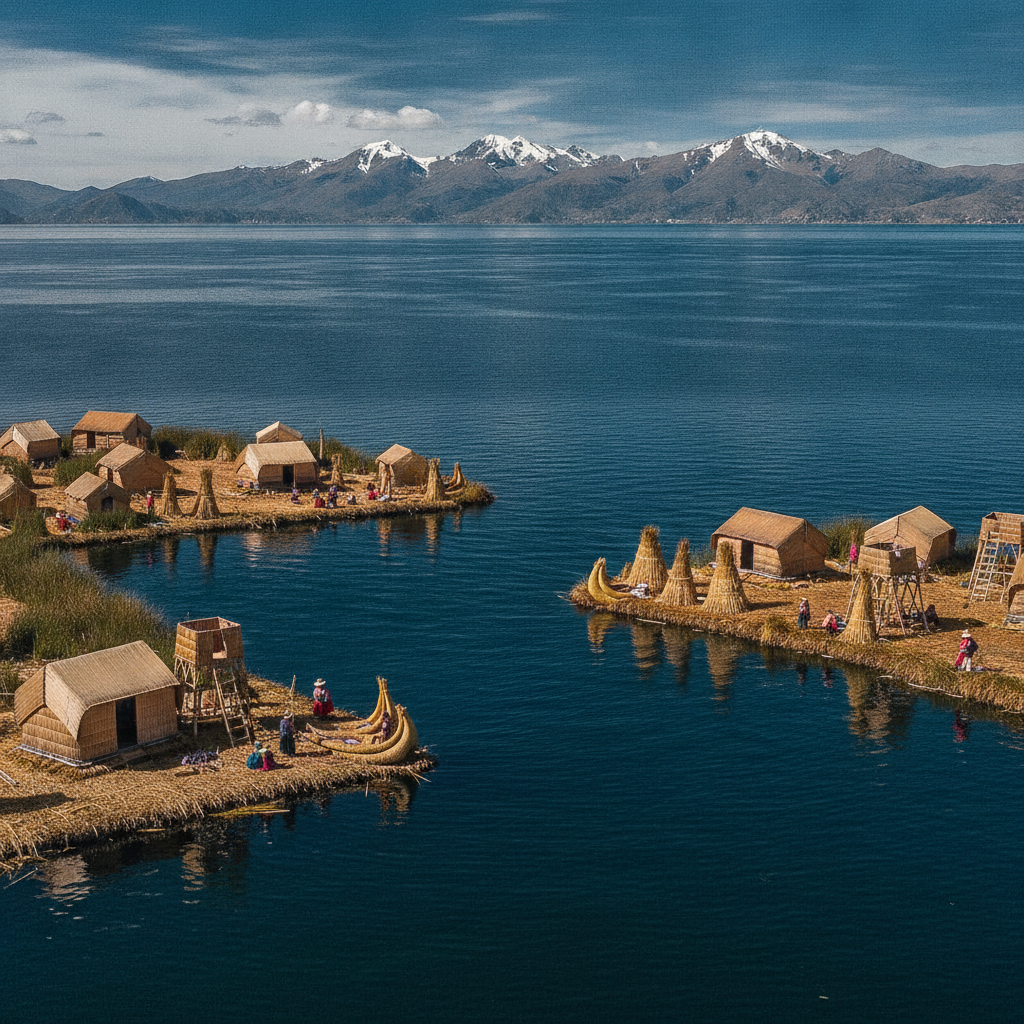
The Uros people of Lake Titicaca have lived on floating islands made entirely from totora reeds for centuries; their unique culture — adapted to life on water in one of the world's most extreme environments — is maintained by the lake's approximate 2,000 Uros community members
- 1
Reed Island Construction
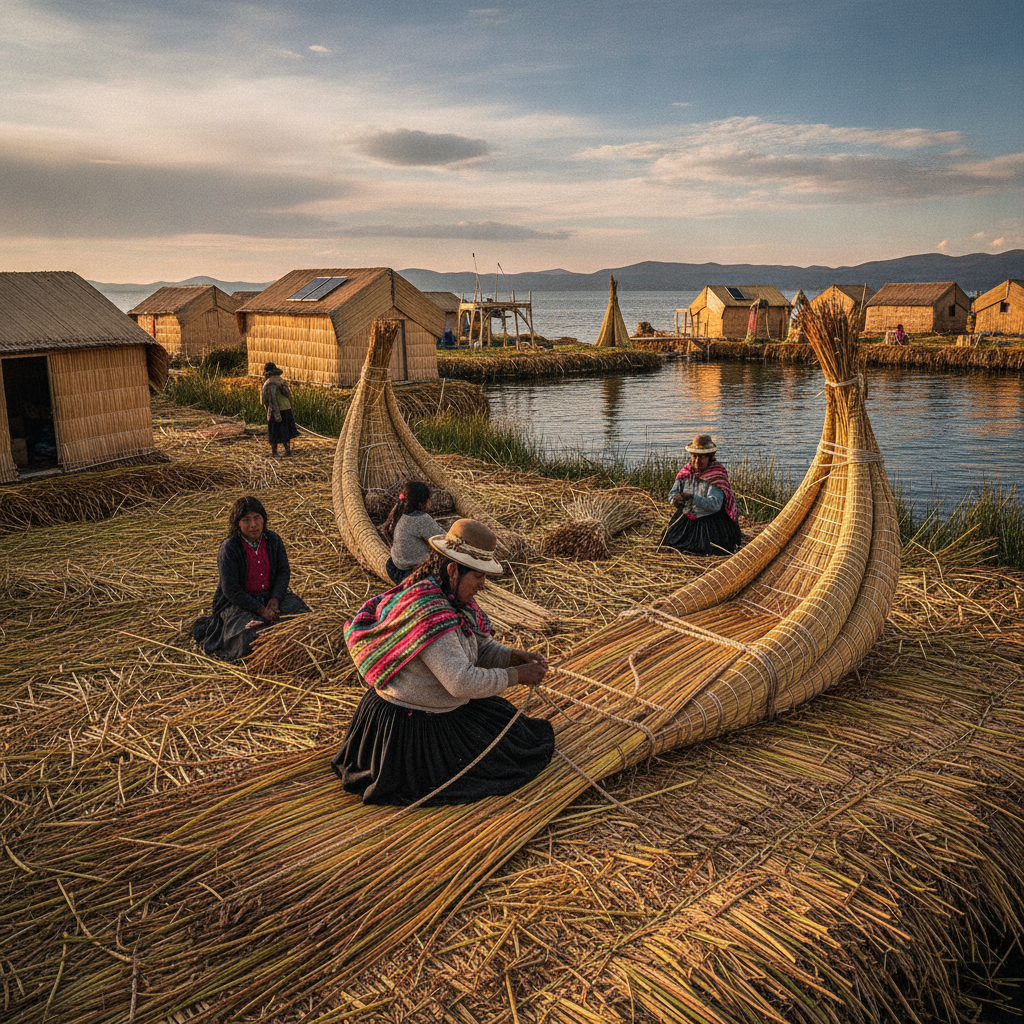
A Uros island is built by layering toto reeds — the bottom layers are cut from the lakebed (the floating root mass, called chua), then fresh reeds are placed on top; the islands require fresh reeds every 15 days as the bottom layers rot; a new island takes about 6 months to build
- 2
Totora Reed Boats
The Uros build their traditional boats (balsas) entirely from totora reeds - bundles of dried reeds tied with rope to the distinctive swept-up prow; the balsa are the lake's traditional jet skis; it requires daily maintenance and lasts about 6 months; the boat building tradition is maintained by Uro's families
- 3
Uros Origins
The Uros identify themselves as a pre-Inca people who fled to the lake to escape the expansion of the Inca Empire; they claim to have "black blood" (a metaphor for cold-blooded adaptation to the lake at high altitude); their language (Uro-Chipaya) is almost extinct, replaced by Aymara and Spanish
- 4
Lake Diet
The traditional Uros diet is based on totora reeds (eaten raw), sea fish (carachi, trucha) and sea birds (ducks, coots) caught on the lake; the reeds provide carbohydrates and vitamin C; the fish provides protein; the diet is supplemented with potatoes and other goods traded with communities on the mainland
- 5
Solar Energy and Radio
The contemporary Uros islands have solar panels that power lights, televisions and charging stations; the larger islands have a school, a health post and radio communications; the tension between maintaining traditional culture and access to modern services is navigated differently by each island community
- 6
Tourism economy
Tourism is now the primary source of income for most Uros communities; the morning boat trip from Puno to the floating islands is one of Peru's most popular tourist activities; the challenge of maintaining cultural authenticity while dealing with mass tourism is the central challenge facing the Uros today
Walk this route with audio
Stories play automatically as you reach each stop — no tapping needed.