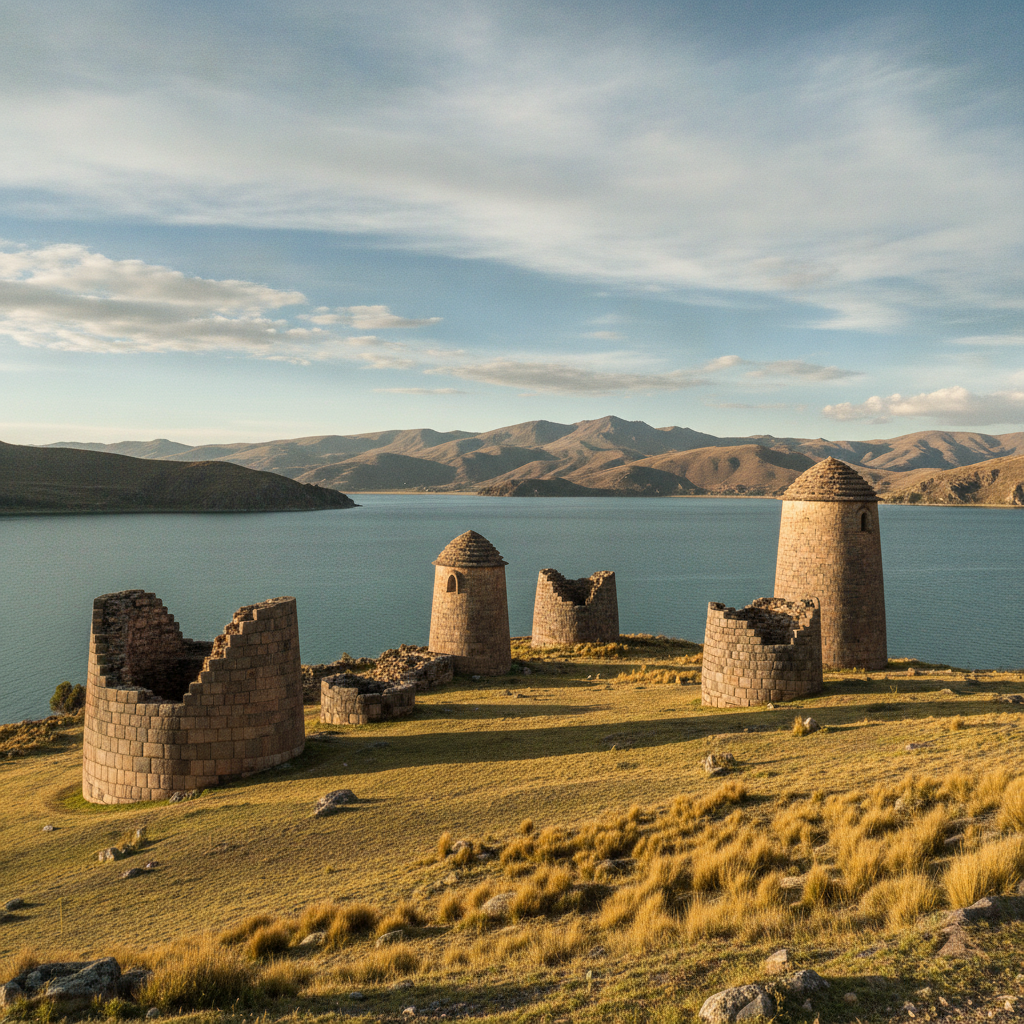
Sillustani: Pre-Inca Towers of the Dead
Sillustani — a peninsula jutting into the Lake Umayo above the Titicaca basin — has the most impressive concentration of chullpas (pre-Inca funerary towers) in the Andes; the cylindrical towers, built by the Colla culture before the Inca conquest, held the mummified remains of the nobility
- 1
Colla culture
The Colla were a powerful Aymara-speaking people who dominated the Lake Titicaca basin before the Inca conquest of the region in the 15th century; Colla built Sillustani's tower as a funerary monument for their nobility; The Incas later conquered Colla and incorporated the Titicaca Basin into Tawantinsuyu
- 2
Tower Construction
Sillustani chullpas are cylindrical towers up to 12 m high built of precisely fitted stone; the towers are wider at the top than at the base — a construction challenge even by modern standards; the interior housed several mummies of the noble lineage with their grave goods
- 3
Lake Umayo Setting
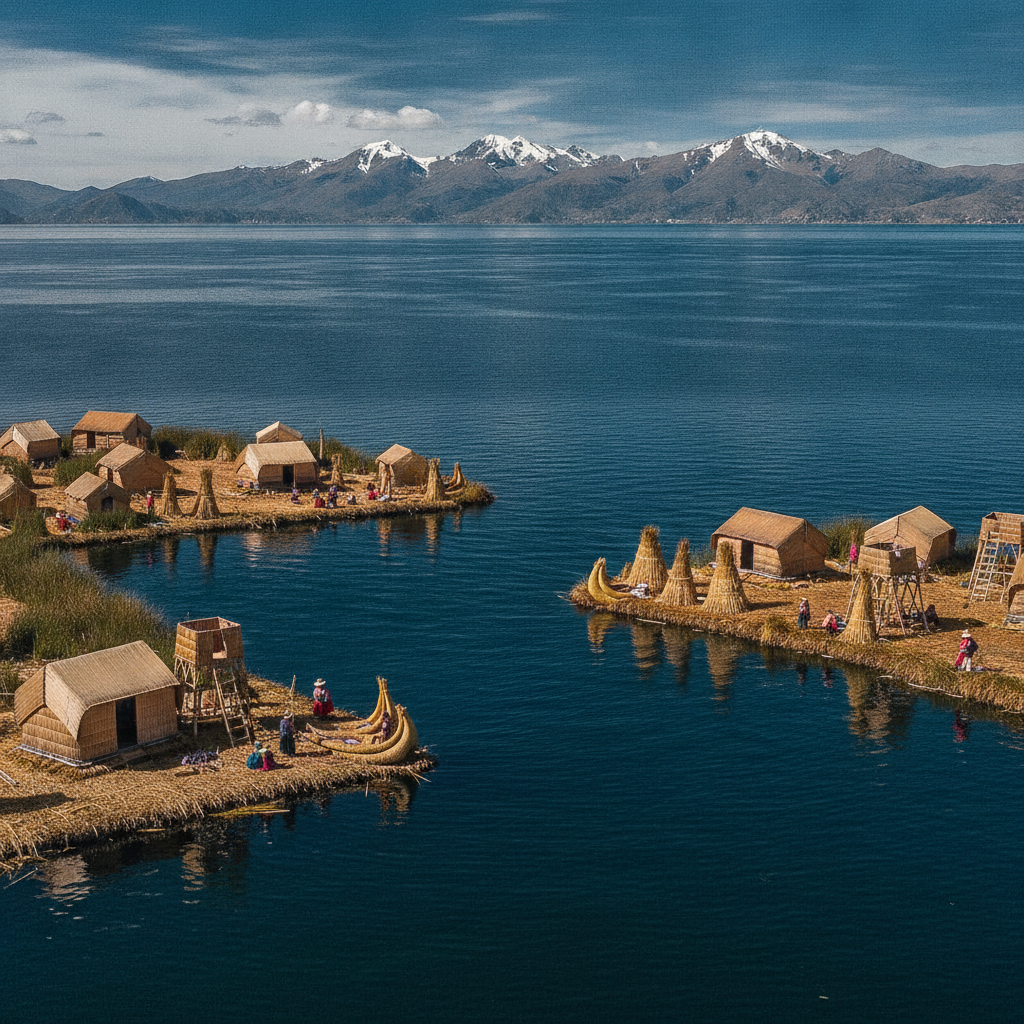
The Sillustani Peninsula extends into Lake Umayo - a smaller lake connected to Titicaca; the towers stand on the lakeshore against a background of water, sky and distant mountains; the atmospheric setting at sunset (when the towers glow in orange light) is extraordinary
- 4
Inca and Pre-Inca Towers
Sillustani has both pre-Inca (Colla) and Inca period chullpas; The Inca tower is immediately identifiable by its more precisely fitted stone (the famous Inca trapezoidal technique); the comparison between the two building traditions is visible in a single place
- 5
Ödla offers tradition
The local tradition of offering a lizard (a symbol of fertility and good luck) before entering a chullpa is maintained by visitors and local guides; the practice reflects the syncretic spiritual life of altiplano communities that blend Andean animism with Catholic faith
- 6
View of the Altiplano
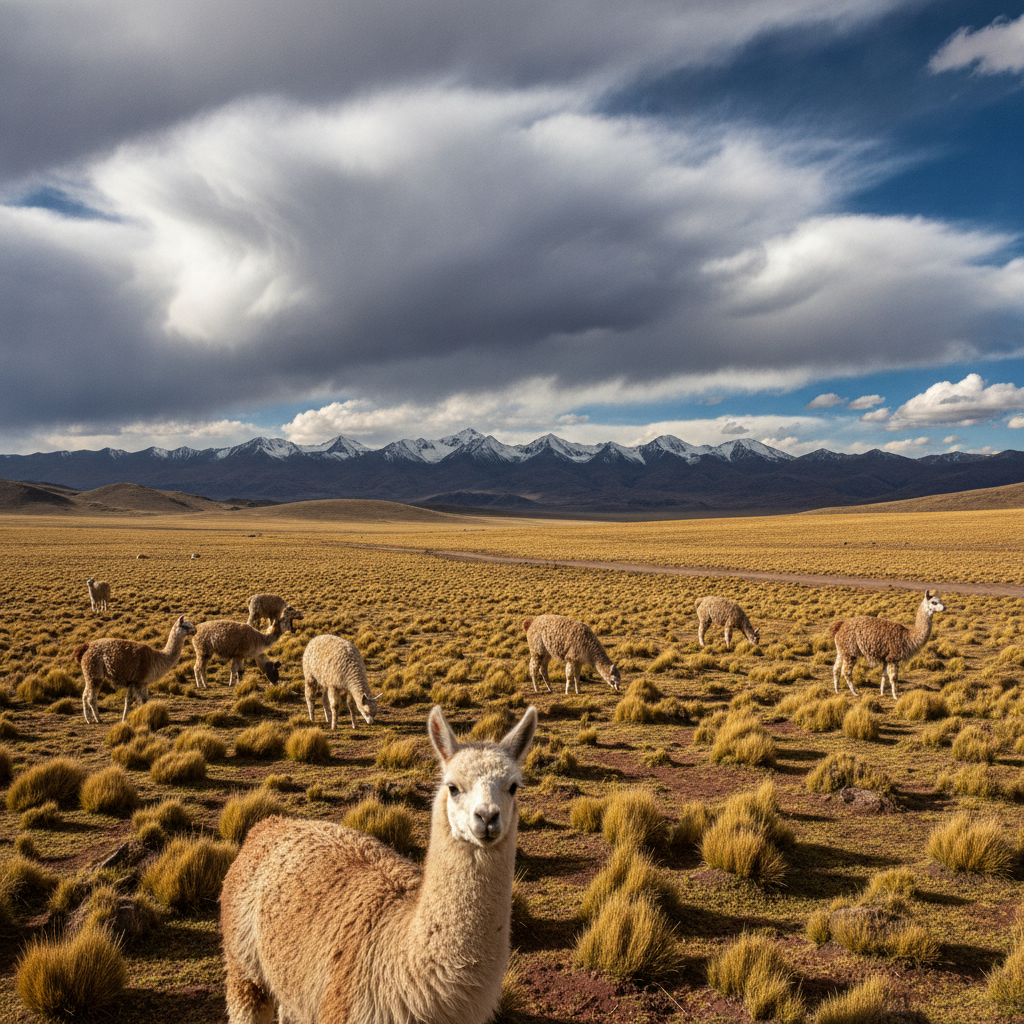
The Sillustani Peninsula viewpoint offers panoramic views of both Lake Umayo and the altiplano beyond; the towers in the foreground, the water in the middle distance and the vast open sky behind create a landscape composition that has been photographed by all visitors since the site was opened to tourism
Walk this route with audio
Stories play automatically as you reach each stop — no tapping needed.