Taquile Island: Men Who Knit
Taquile Island on Lake Titicaca is celebrated for an extraordinary reversal of textile gender roles — the island's men do all the knitting; the complex symbolism encoded in Taquile's textiles was declared UNESCO Intangible Cultural Heritage of Humanity
- 1
Knitting tradition for men
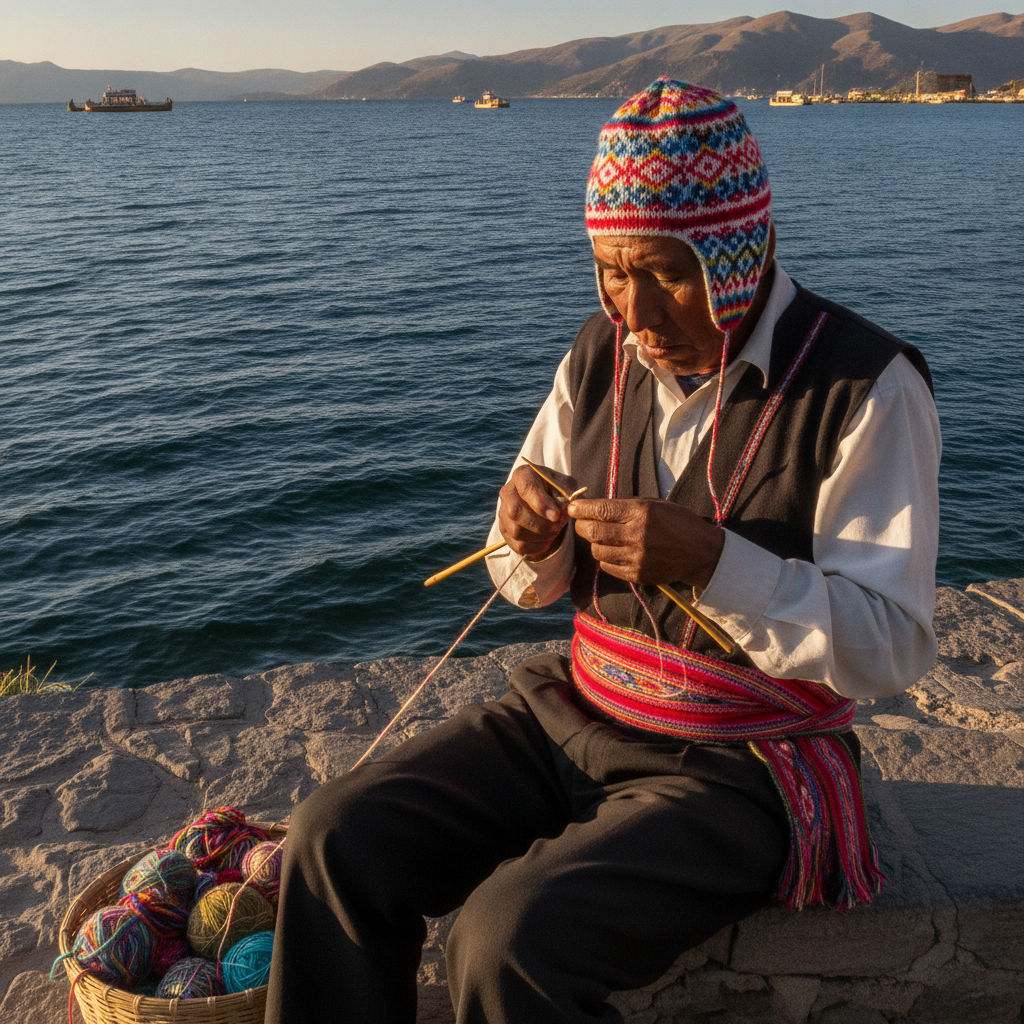
At Taquile, knitting is an exclusively male activity — boys learn to knit from the age of 8; the knitting is done constantly (while walking, waiting, conversing) and the skill level is extraordinarily high; a Taquile man's social value is judged in part by the quality of his knitting
- 2
Chullu Hat Symbolism
Chullu - the traditional knitted cap from the Andean island - on Taquile has a specific meaning; the chuchu chullu (double-brimmed hat worn by married men) versus the single-brimmed chullu (worn by unmarried men) communicates the wearer's status; the patterns on the hat encode the wearer's community affiliation and personal history
- 3
Textile cooperative
Taquile has a community cooperative that sells textiles directly to visitors, ensuring that the proceeds go directly to the island's families; the cooperative was formed to prevent middlemen from capturing the value of the weavers' work; the cooperative model has been studied as a successful example of domestic tourism management
- 4
Iceland Social Organization
Taquile is governed by a traditional Andean community council system (based on rotating leadership) that has managed the island's society without a police force or prison for generations; the island is often cited as an example of self-governing indigenous people
- 5
Boat crossing
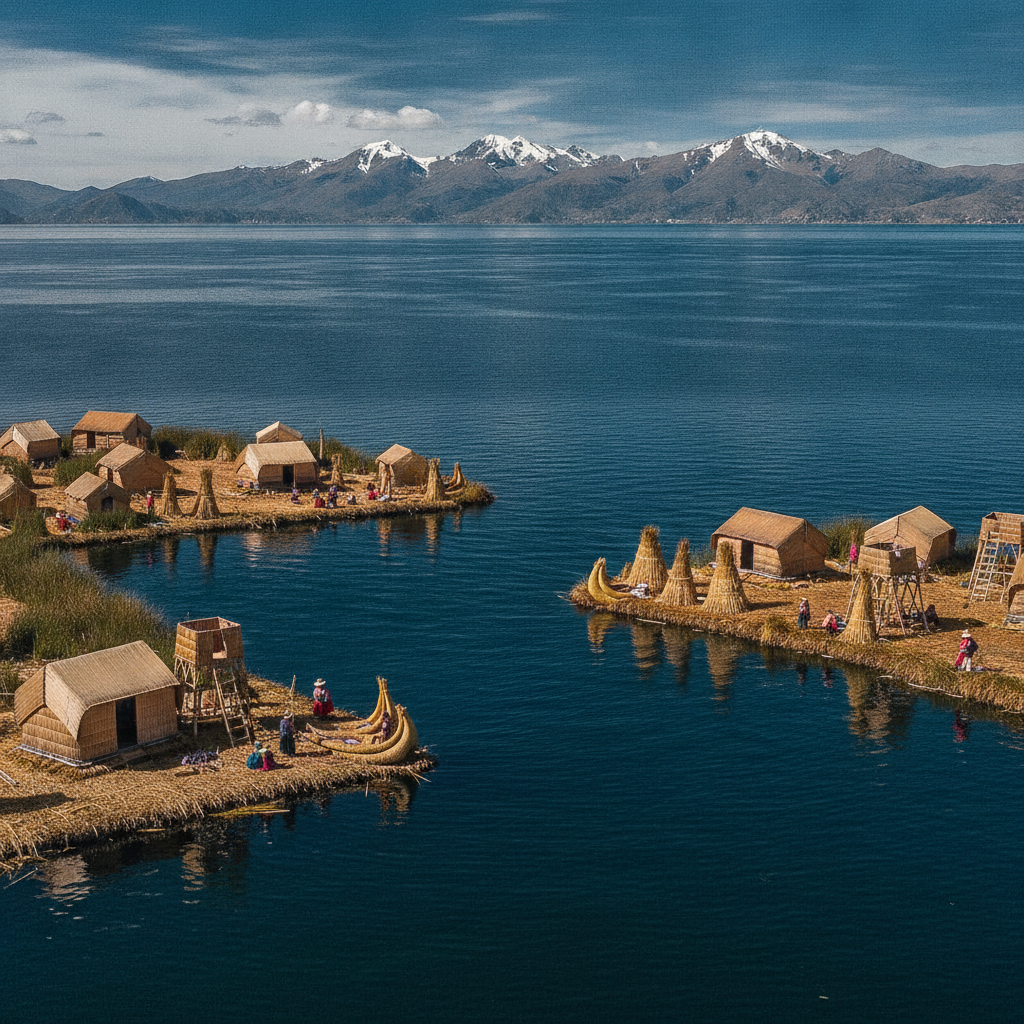
The 3-hour boat ride from Puno to Taquile across the deep blue Titicaca is an experience in itself - the expansive size of the lake, the clarity of the light aloft, the silhouettes of the reed islands and the Bolivian Andes on the southern horizon make the journey as rewarding as the destination
- 6
Festival Calendar
Taquile's festival calendar – including the June 24 Inti Raymi and August 1 Pachamama ceremonies – is the occasion for the most elaborate textile display; the festival costumes, accumulated over years of weaving, are produced for these events; the visual spectacle of the costumed society is the fullest expression of Taquile's textile culture
Walk this route with audio
Stories play automatically as you reach each stop — no tapping needed.