Potosí Department: Lagoons, Geysers, and the Salt Flat
The Potosí department contains some of Bolivia's most dramatic landscapes — the Reserva Eduardo Avaroa with its coloured lagoons, flamingos, and active geysers, and the access to the Salar de Uyuni (the world's largest salt flat)
- 1
Reserva Eduardo Avaroa
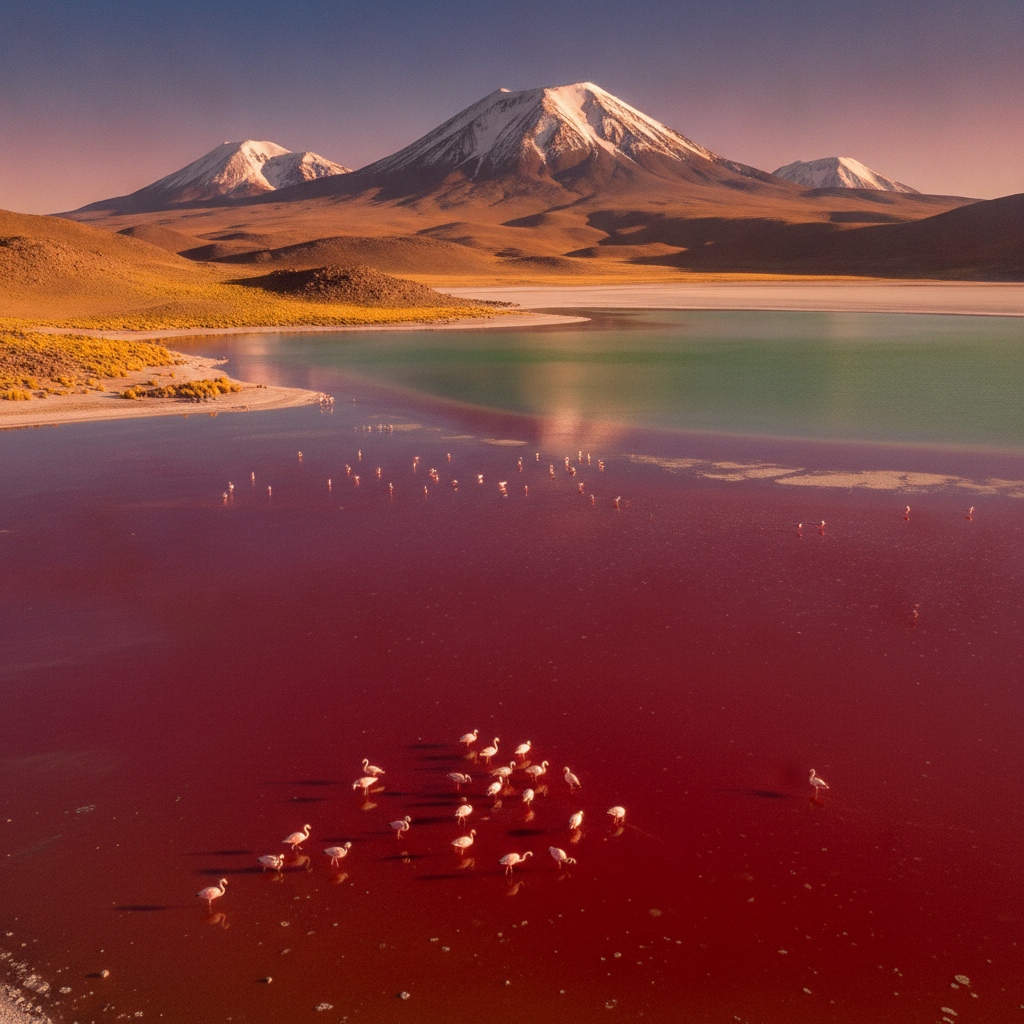
Reserva Eduardo Avaroa — in the extreme southwest of the department of Potosí near the Chilean border — is Bolivia's most visited nature reserve; the reserve's altiplano landscape includes Laguna Colorada (red from algae and minerals), Laguna Verde (emerald from copper and arsenic), active geysers and flamingo colonies
- 2
Laguna Colorada Flamingos
Laguna Colorada - at 4,278 m - is a shallow salt lake colored blood red by cyanobacteria and iron minerals; approximately 10,000 James's flamingos feed on the lagoon's algae during the Bolivian summer; the contrast between the red water, the white salt crust and the pink flamingos is one of the most extraordinary natural color combinations on earth
- 3
Sol de Mañana Geysers
The Sol de Mañana Geyser Field - at 4,850m, one of the world's highest active geyser fields - erupts with steam, sulphurous gases and boiling mud pools in a lunar volcanic landscape; the geysers are most active in the morning chill; the combination of extreme altitude, volcanic activity and the stark altiplano landscape is otherworldly
- 4
Salar de Uyuni Access
Salar de Uyuni — at 10,582 km², the world's largest salt flat — is accessible from Potosí (and most easily from the town of Uyuni, 3 hours from Potosí); The perfect flat white surface of Salar (a remnant of a prehistoric lake), the reflection of the sky in the thin layer of water during the wet season and the giant cacti on the island of Incahuasi are Bolivia's most famous natural spectacle
- 5
Altiplano volcanic chain
Potosí Department's southwestern border is defined by the Bolivian Volcanic Chain—a series of active and dormant volcanoes including Licancabur (5,916 m), Ollague (5,868 m, active), and Aucanquilcha; the volcanic landscape of the high altiplano, with its geothermal activity and mineral-rich lagoons, is one of the world's most geologically active regions
- 6
3-Day Altiplano Circuit
The standard tour from Potosí (or Uyuni) to Reserva Eduardo Avaroa covers 700km of altiplano track in 3 days, sleeping in simple refuges at 4,000-5,000m altitude; the tour covers the Salar, the colored lagoons, the geysers and ends (or starts) at the Chilean border; the itinerary is one of South America's classic land adventures
Walk this route with audio
Stories play automatically as you reach each stop — no tapping needed.
More in Potosí
Potosí Silver: The Craft of the World's Silver Capital
Potosí: The Mountain That Ate Men
Potosí Region: Altiplano Culture and the Bowler Hat
Potosí: The World's Richest Colonial City
Inside Cerro Rico: The Active Mine Experience
