Petra Bedouin: The Bdul Tribe, the Cave Dwelling Heritage, the Desert Hospitality Tradition, and the Bedouin Cultural Identity
The Petra Bedouin route covers the Bdul tribe as the most historically connected single Bedouin community to the Petra heritage, the cave dwelling heritage, the desert hospitality tradition, and the Bedouin cultural identity in contemporary Jordan.
- 1
Bdul Tribe: The Cave Dwellers of Petra
The Bdul (the Converted, the Nabataean Christian Berbers who converted to Islam), the Bedouin tribe that lived in the Petra cave tombs until 1985 when the Jordanian government relocated them to the purpose-built village of Umm Sayhoun, are the most directly historically connected single human community to the Petra heritage and the tribe that most genuinely claims descent from the original Nabataean inhabitants. The Bdul resistance to the 1985 relocation is the most documented single Bedouin community displacement controversy in Jordan.
- 2
Cave Life in Petra: The 20th Century Cave Dwellers
The Bdul cave life in the Petra tombs (the most unusual single 20th century human occupation of an ancient monument, with families living in the carved Nabataean tombs that are the most dramatically ancient single human dwellings in the 20th century inhabited world) continued until the most insistent single Jordanian government relocation program finally moved the last cave residents in 1985. The cave dwelling practice was the most archaeologically challenging single modern occupation to manage within a UNESCO World Heritage Site.
- 3
Desert Hospitality: The Bedouin Tea Tradition
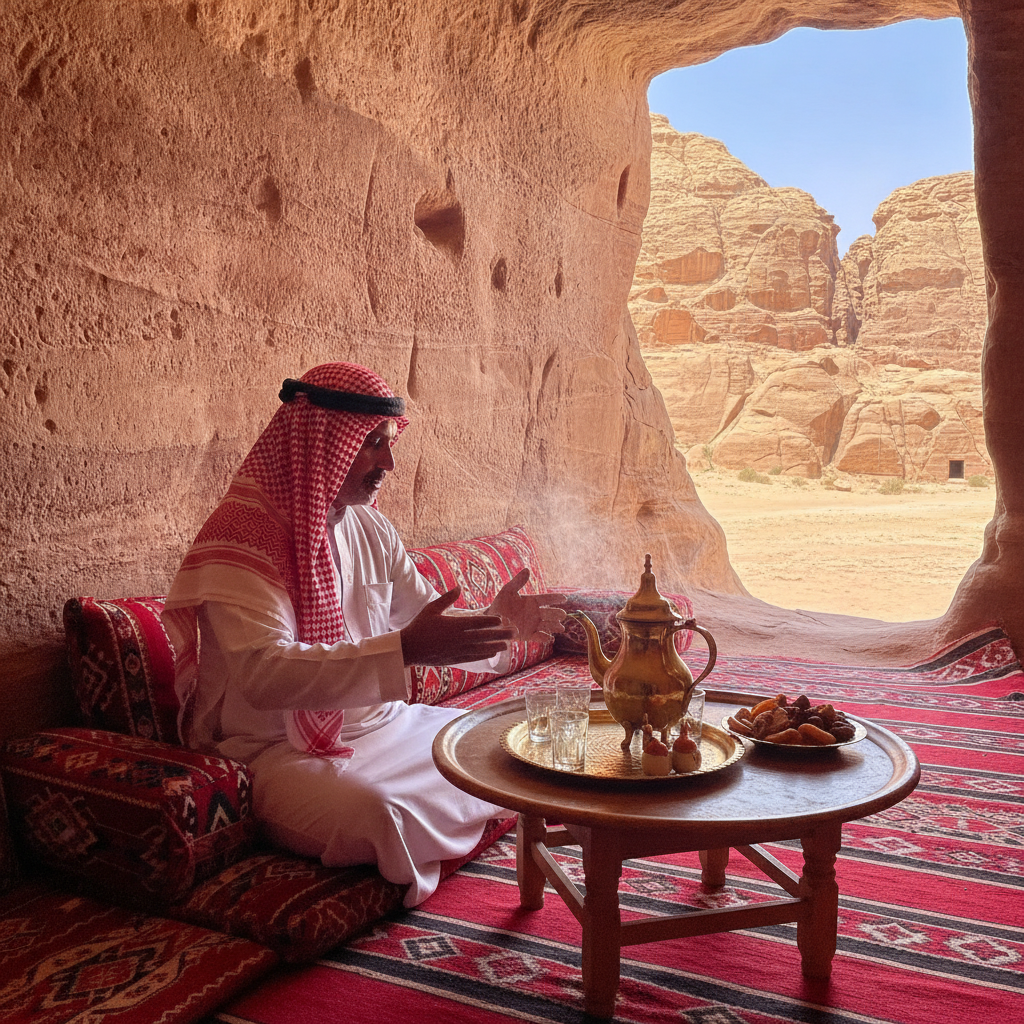
The Bedouin desert hospitality (the diafa, the most socially obligatory single Arab desert social obligation where the guest must be offered the most abundant single hospitality possible regardless of the host poverty) is demonstrated in the Petra area at the Bdul tea stalls throughout the park where the glass of sweet sage tea (the most characteristically Jordanian single herbal tea) is the most universally offered single social gesture to the Petra visitor. The Bedouin hospitality is the most emotionally affecting single human interaction available in the Petra experience.
- 4
Umm Sayhoun Village: The Relocated Community
Umm Sayhoun, the purpose-built village where the Jordanian government relocated the Bdul cave dwellers in 1985, is the most socially complicated single Petra heritage outcome because the community that was most directly connected to the living Petra site was the most completely removed from it. The Umm Sayhoun craft market and the Bdul-operated tourist horse concession within the park are the most economically significant single Bdul community income sources.
- 5
Petra Nights with the Bedouin: The Desert Camp
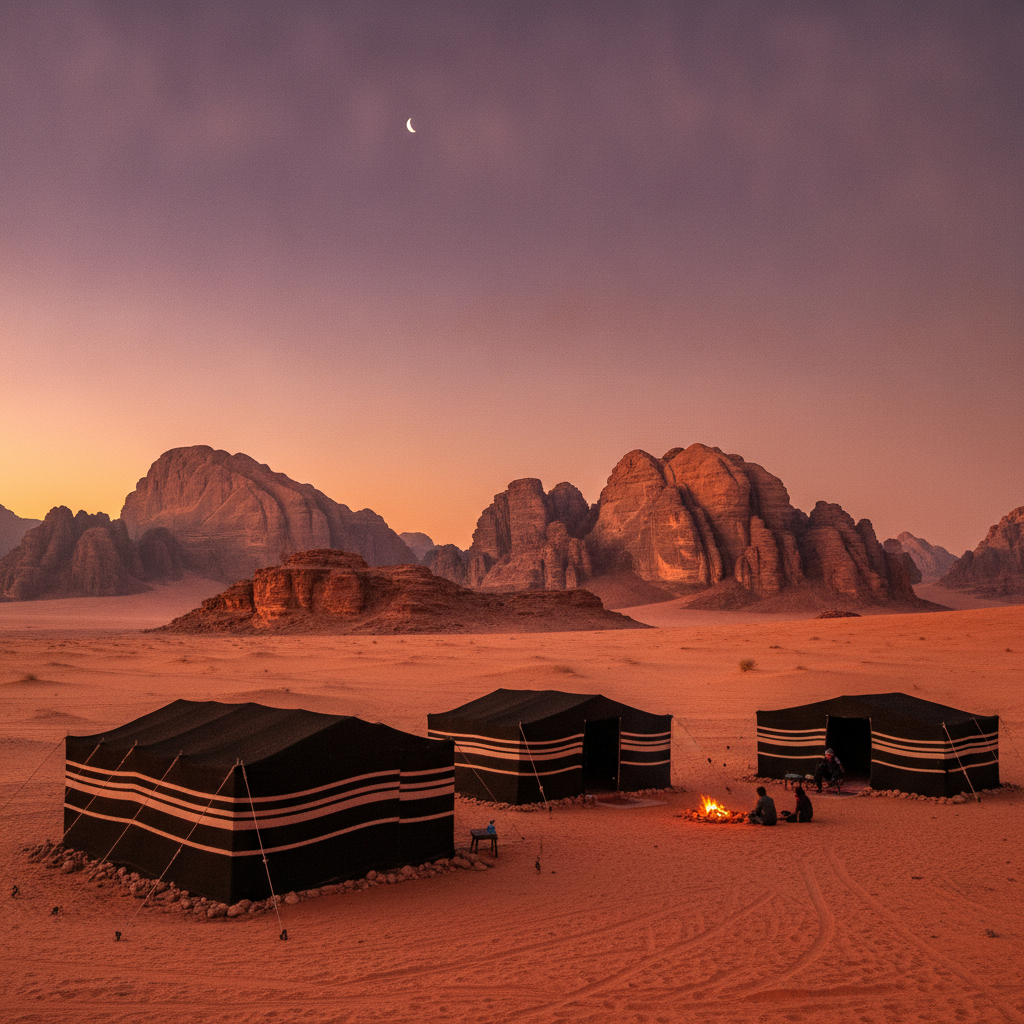
The Petra area Bedouin desert camp experience (the most atmospherically complete single Jordan overnight activity with the campfire dinner, the Bedouin music on the rababa one-string fiddle, and the most star-filled single Jordan night sky at the Rum al-Bahr or the Wadi Sabra camp sites) is the most culturally immersive single Petra accommodation alternative to the Wadi Musa town hotel and the activity most recommended for the visitor who wants the most direct single Bedouin cultural contact.
- 6
Bedouin Craft: The Woven Camel Bag
The Petra Bedouin craft tradition of the handwoven camel bag (the khorj, the most practically functional single Bedouin textile designed for the camel saddle packing), the embroidered cushion cover (the most decorative single Bedouin domestic textile using the most intensely colored single Jordanian needlework), and the silver Bedouin jewelry (the most directly Nabataean-heritage single Jordan craft tradition in the most continuous single jewelry making lineage) are the most authentically Bedouin single Jordan craft purchases available in the Petra area.
Walk this route with audio
Stories play automatically as you reach each stop — no tapping needed.
More in Petra
Petra Day Trips: Little Petra Free, Wadi Rum's Martian Landscape & Dana Canyon Trek
Petra Essential: The Siq Canyon, the Treasury Al-Khazneh, the Street of Facades, the High Place of Sacrifice, the Monastery Ad-Deir, and the Nabataean Capital
Petra's Jordan: The King's Highway, Byzantine Mosaics & the Grand Canyon of Wadi Mujib
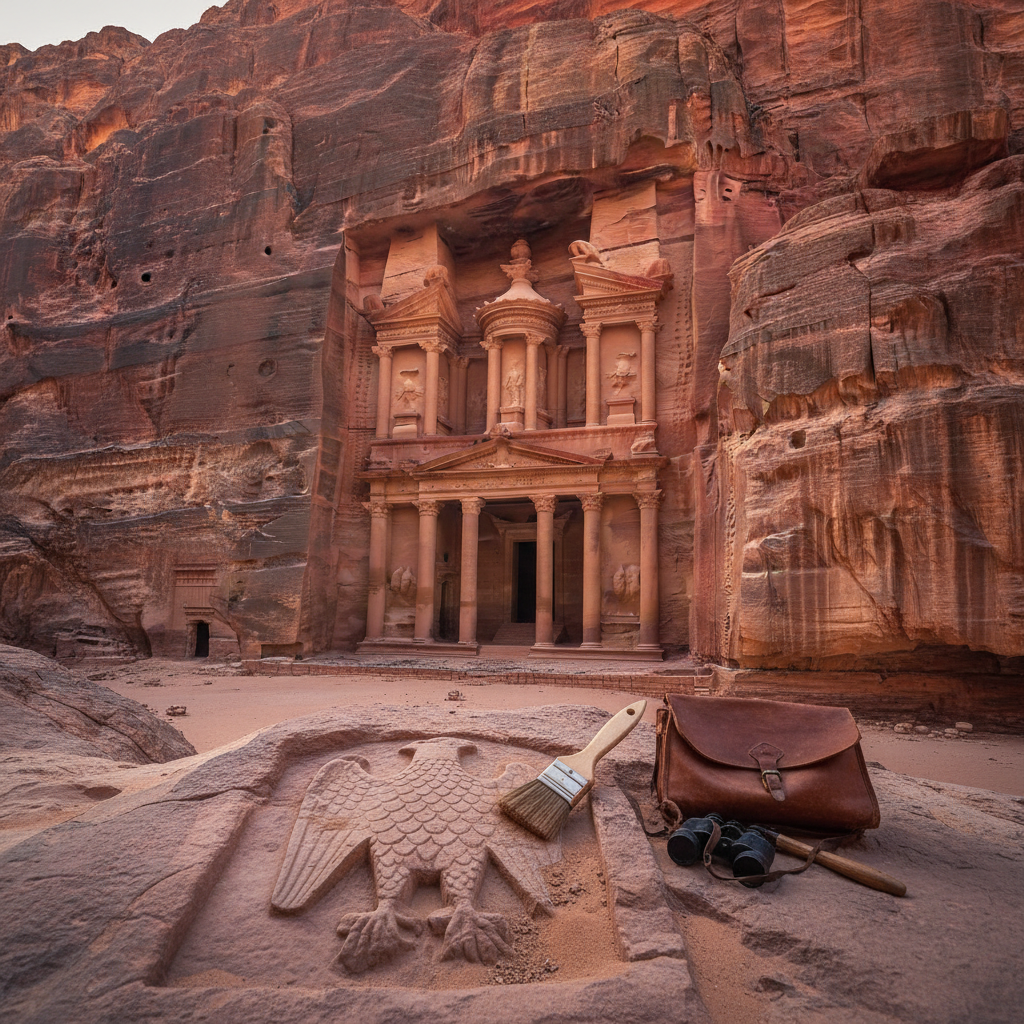
Petra Deep Dive: Only 15% Excavated, the Nabataean Water System & Indiana Jones

Petra Geology: The Rose-Red Sandstone Colors, the Nabataean Water Engineering, the Desert Ecology, and the Natural Environment
