Petra Day Trips: Little Petra Free, Wadi Rum's Martian Landscape & Dana Canyon Trek
Extend Petra into Jordan's full southern landscape—Little Petra's painted Nabataean ceiling free to enter with almost no visitors, the Bedouin tribe who lived in the carved tombs until the 1980s, Wadi Rum's rose-red desert filmed for The Martian and Dune Part Two, the Dana Biosphere's 3-day canyon trek through four bio-zones, and Aqaba's northernmost coral reefs on the Red Sea.
- 1
Little Petra – Siq al-Barid
Siq al-Barid (Little Petra), 8 km north of the main Petra site, is a free-access miniature version of the main city—a narrow canyon containing Nabataean carved facades, a biclinium with painted ceiling frescoes (the only surviving Nabataean painted ceiling), and a rock-cut triclinium. Little Petra was likely the agricultural and commercial suburb of the main city. It receives a fraction of Petra's visitors and can be explored in 1–2 hours; visiting early morning gives the place almost entirely to yourself.
- 2
High Place of Sacrifice & Petra's High Routes
The High Place of Sacrifice (Al-Madbah)—a flat rock platform with carved altars at Petra's highest accessible ridge—is reached by a 45-minute climb from near the Treasury. The platform was used for Nabataean religious ceremonies; two standing obelisks (10 metres high) are carved directly from the ridge. The descent via the Wadi Farasa route passes the Garden Tomb, the Roman Soldier Tomb (with painted interior), and the Lion Monument—the best alternative circuit through Petra's less-visited southern areas.
- 3
The Bedouin of Petra & Their History
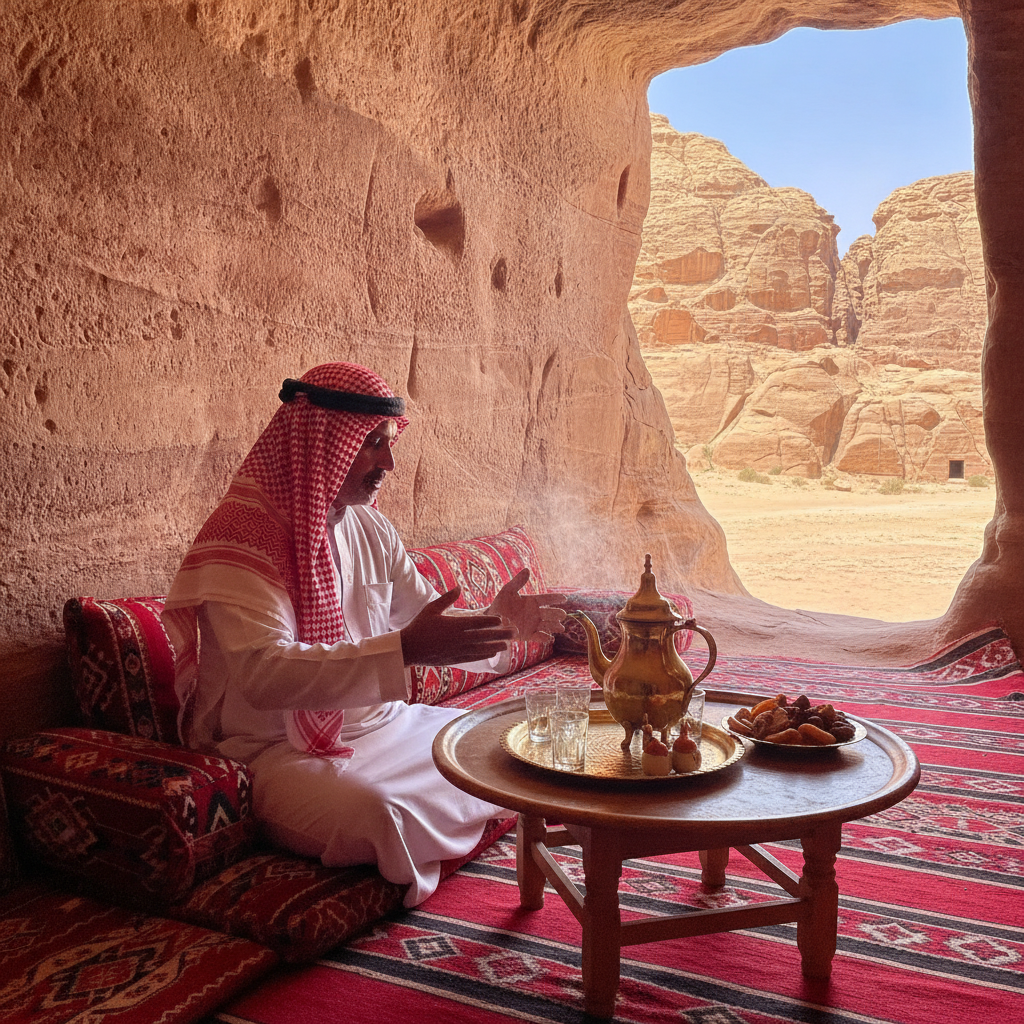
The Bdoul Bedouin tribe lived inside the Petra archaeological site in the carved tombs and caves until their relocation to the new village of Umm Sayhoun in the 1980s (when UNESCO inscription was being prepared). Many Bdoul still work in Petra as horse, donkey, and camel handlers; others run the informal tea stalls and souvenir stands within the site. The Bdoul's traditional knowledge of Petra's geography—hidden springs, secondary paths, and cave systems—is passed down through families and not documented anywhere.
- 4
Wadi Rum – The Desert from Petra
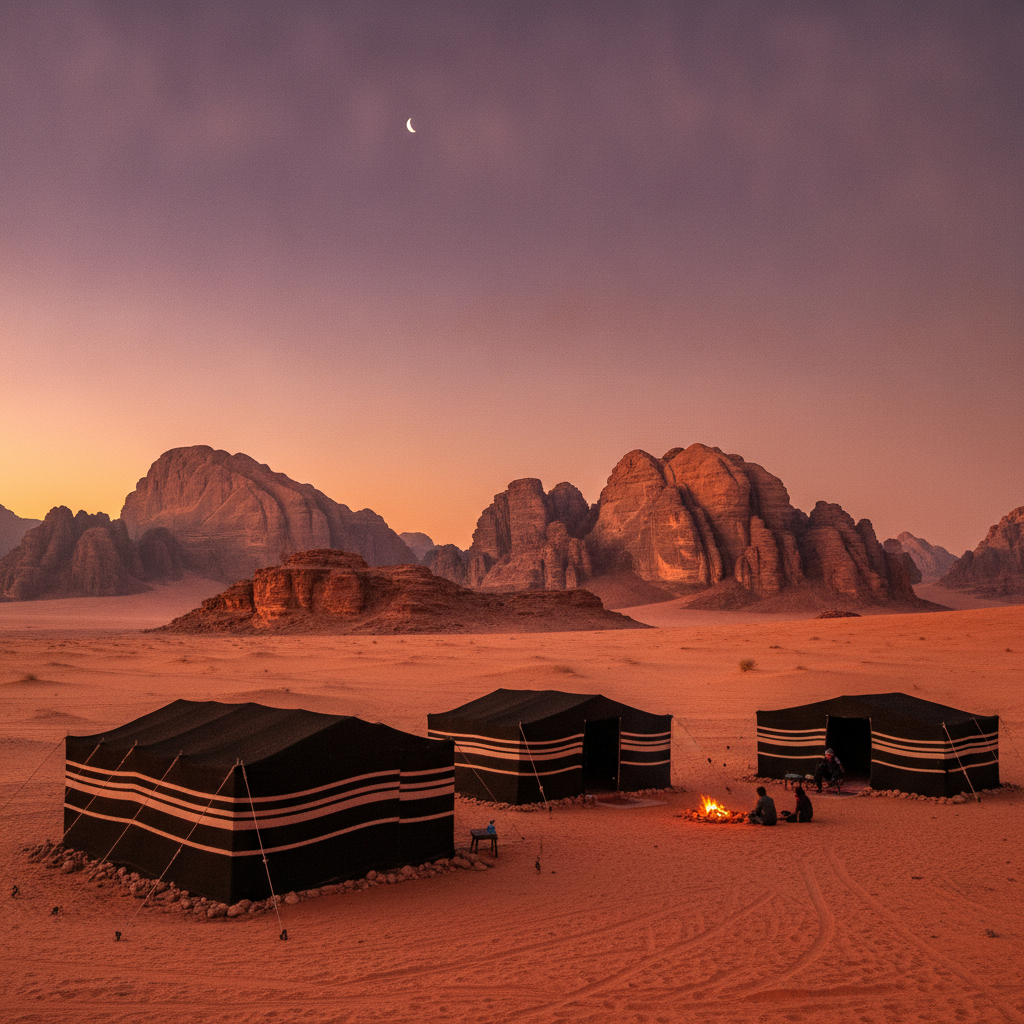
Wadi Rum, 100 km south of Petra, is Jordan's most spectacular desert landscape—a valley of rose-red sandstone mountains and wind-carved arches used as the filming location for The Martian, Lawrence of Arabia (partially), Dune Part Two, and Rogue One. The Jordan Pass includes Wadi Rum vehicle and guide fees. Overnight stays in Bedouin camps (with dinner, stargazing, and dawn camel ride) are the most popular option. The 3-hour drive from Petra passes through dramatic Jordanian desert with minimal stops.
- 5
Dana Biosphere Reserve
Dana Biosphere Reserve, 50 km north of Petra, is Jordan's largest nature reserve—a dramatic canyon dropping from 1,500 metres at the rim village of Dana to 50 metres at the Dead Sea. The reserve contains four bio-zones (Mediterranean, Irano-Turanian, Saharo-Arabian, and Sudanian) and over 800 plant species, 215 bird species, and rare populations of sand cats, wolves, and ibex. The Dana to Feynan multi-day trek (3 days) through the canyon is the finest hiking in Jordan and among the best in the Middle East.
- 6
Aqaba & the Red Sea from Petra
Aqaba, 130 km south of Petra on the Red Sea coast, offers exceptional coral reef snorkelling and diving—the northernmost coral reefs in the world, accessible from the beach within 50 metres of the shore. Aqaba's reef is in better condition than Egypt's Sinai reefs due to less intensive tourism. The Israel-Aqaba border crossing (Wadi Araba/Yitzhak Rabin) is 5 km north of central Aqaba and connects to Eilat; many travellers combine Petra and Wadi Rum with Israeli itineraries via this crossing.
Walk this route with audio
Stories play automatically as you reach each stop — no tapping needed.
More in Petra
Petra Essential: The Siq Canyon, the Treasury Al-Khazneh, the Street of Facades, the High Place of Sacrifice, the Monastery Ad-Deir, and the Nabataean Capital
Petra's Jordan: The King's Highway, Byzantine Mosaics & the Grand Canyon of Wadi Mujib
Petra Deep Dive: Only 15% Excavated, the Nabataean Water System & Indiana Jones

Petra Geology: The Rose-Red Sandstone Colors, the Nabataean Water Engineering, the Desert Ecology, and the Natural Environment
Petra Bedouin: The Bdul Tribe, the Cave Dwelling Heritage, the Desert Hospitality Tradition, and the Bedouin Cultural Identity
