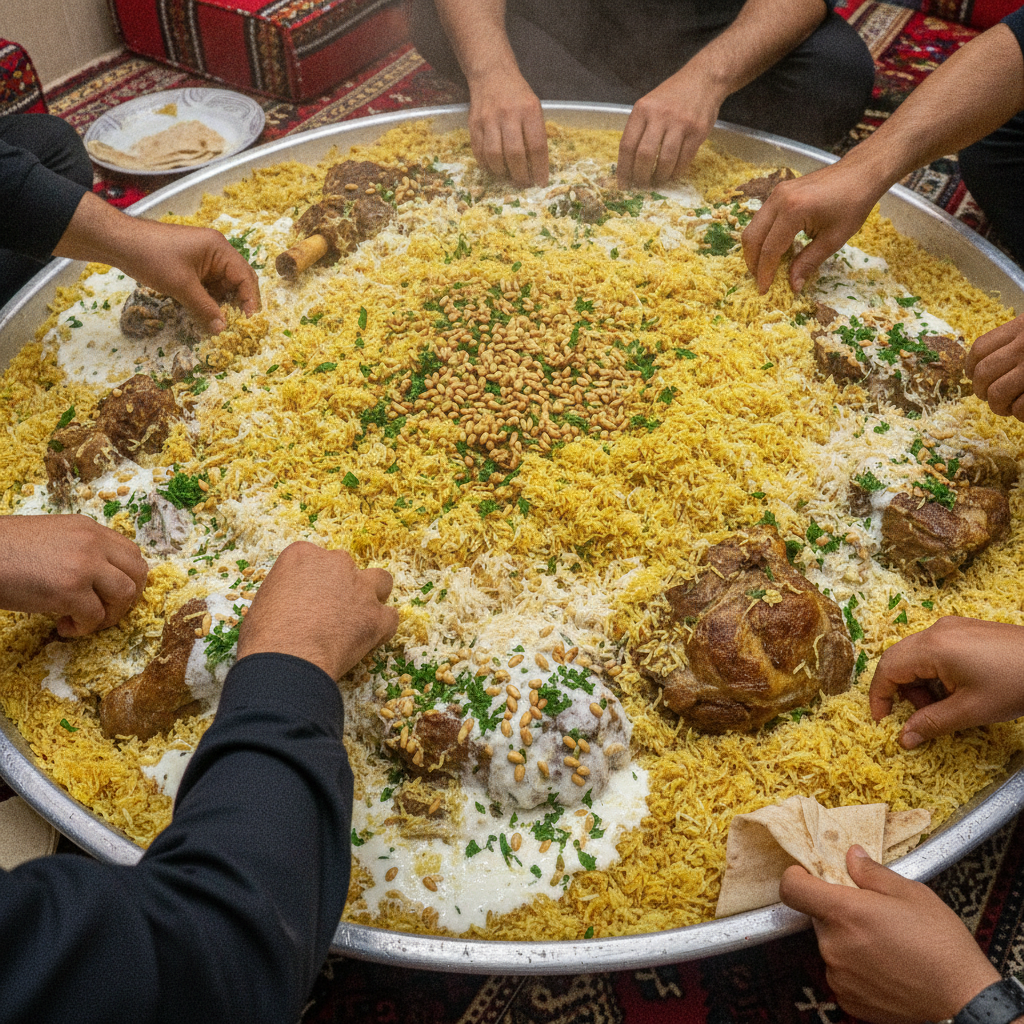


Amman's Food & Culture: Mansaf by Hand, Palestinian Knafeh & Rome's Best Ruins at Jerash
Taste Jordan's layered culinary identity—mansaf lamb in fermented yogurt eaten standing by hand, knafeh brought by Palestinian refugees and now the city's definitive dessert, the Jabal Weibdeh arts district with the Arab world's best collection of contemporary art, floating in the Dead Sea 1 hour from the capital, and the intact oval forum of Jerash where 56 Roman columns still stand.

Amman Day Trips: Jerash Roman City, Ajloun Castle, the Dead Sea Float, and the Madaba Mosaic Map
The Amman day trip route covers Jerash as the most completely preserved single Roman provincial city in the Middle East, Ajloun Castle as the most dramatically positioned single Ayyubid fortress in Jordan, the Dead Sea as the lowest point on earth, and the Madaba Byzantine mosaic map.

Amman's Living Culture: Syrian Restaurants, Wild Jordan Café & a Diplomatic Crossroads
Amman at its most human—University Street's shawarma stands feeding Jordanian students until 2 am, Syrian refugee restaurateurs bringing Damascus mezze and Aleppo pistachio pastries, the Wild Jordan Café's timber deck above the Roman Theatre where organic food funds nature reserves, Palestinian tatreez embroidery workshops, and an Arab capital that maintains peace with Israel while hosting the largest Palestinian diaspora population in the world.

Amman Essential: The Citadel with the Temple of Hercules, the Roman Theatre, the Umayyad Palace, Rainbow Street, and the Downtown Medley of Ancient and Modern Jordan
The Amman essential circuit covers the Citadel (Jabal al-Qala) as the most historically layered single hill in Jordan, the Temple of Hercules, the Umayyad Palace, the Roman Theatre as the most completely preserved single ancient theatre in Jordan, Rainbow Street as the most socially animated single Amman neighborhood, and the downtown cultural circuit.

Amman History: The Ammonite Rabbath Ammon, the Hellenistic Philadelphia, the Roman Gerasa, the Byzantine City, the Umayyad Capital, and the Modern Jordanian Capital
The Amman history route covers the Ammonite Rabbath Ammon as the most frequently mentioned ancient Transjordanian city in the Bible, the Hellenistic-Roman Philadelphia, the Byzantine Christian city, the Umayyad administrative center, and the modern Hashemite capital.

Amman Modern: The Contemporary Architecture, the Abdoun Residential Suburb, the Sweifieh Commercial District, the Jabal Amman Arts Scene, and Modern Jordanian Life
The Amman modern route covers the contemporary architecture, the Abdoun and Sweifieh residential and commercial districts, the Jabal Amman arts and cafe scene, and the modern Jordanian lifestyle in the most rapidly growing single Arab capital.

Amman's Layers: 9,000-Year-Old Statues, the Hashemite Royals & the Palestinian Gold Souk
Discover Amman's extraordinary depth—the 7500 BC Ain Ghazal plaster statues (the world's oldest monumental human sculpture found during road construction in 1983), the Hashemite Royal Family's direct descent from the Prophet Muhammad, Jordan's 400,000-strong indigenous Christian community, the Darat al-Funun contemporary art residency in a 1920s villa, and the downtown gold souk where prices are set by daily gold rates.

Amman Practical: Queen Alia International Airport, the City Transport, the Accommodation in Downtown vs Abdoun, the Optimal Timing, and the Jordan Hub Strategy
The Amman practical route covers the Queen Alia International Airport as the most strategically positioned single Levant hub airport, the city transport, the accommodation in downtown vs Abdoun, the optimal spring and autumn timing, and the Amman as Jordan circuit hub strategy.

Amman Food: The Legendary Hummus Circuit, the Mansaf Ceremonial Experience, the Downtown Street Food, the Mezze Culture, and the Amman Restaurant Scene
The Amman food route covers the hummus circuit as the most competitive single Arab hummus market, the mansaf as the most ceremonially significant Jordanian food, the downtown street food, the mezze culture, and the complete Amman restaurant scene.

Amman Culture: The Jordan Museum, the Dead Sea Scrolls Fragment, the Nabataean Collection, the Folklore Museum, and the Amman Heritage Circuit
The Amman culture route covers the Jordan Museum as the most comprehensively modern single national museum in the Arab world, the Dead Sea Scrolls fragment, the Nabataean archaeological collection, the Folklore Museum, and the Amman heritage circuit.

Amman Essentials: Roman Theatre in the City Centre, Rainbow Street Cafés & the Citadel
Explore the Middle East's most underrated capital—a 6,000-seat Roman theatre surrounded by modern streets, three millennia of civilisation compressed onto the Citadel hill, Rainbow Street's 1950s buildings turned café and bookshop district, the Jordan Museum's Dead Sea Scrolls copper scroll listing 64 undiscovered treasure locations, and Hashem Restaurant's hummus that has fed everyone from labourers to King Hussein since the 1950s.

Beyond Amman: Umayyad Frescoes in the Desert, Saladin's Castle & the Jordan Valley Rift
Explore Jordan from Amman's hub—UNESCO Qasr Amra's 8th-century frescoes of bathing women and six defeated kings in a desert pleasure palace, Umm Qais's black basalt Roman theatre above the Sea of Galilee with three countries visible, Saladin's Ajloun Castle above Jordan's last oak forest, and the UNESCO Baptism Site of Jesus on the Jordan River with almost no visitors.

Amman Practical Guide: Jordan Pass, Careem App & Using the Capital as Your Jordan Base
Navigate Jordan from Amman efficiently—buy the Jordan Pass online before arrival (covers airport visa and Petra entry), use Careem for all city transport in a car-designed city, limestone-clad accommodation from luxury Four Seasons to Rainbow Street boutiques, and plan your Jordan circuit: Jerash (1 hr), Dead Sea (1 hr), Petra (3 hrs), Wadi Rum (4 hrs) all reachable from Amman.

Amman Nights: The Performing Arts Scene, the Gallery Circuit, the Music Venues, the Cultural Events, and the Most Cosmopolitan Arab Capital Nightlife
The Amman nights route covers the Royal Cultural Centre as the most important single Jordanian performing arts venue, the gallery circuit, the music venues, the cultural events calendar, and the Amman nightlife as the most cosmopolitan single Arab capital evening culture.