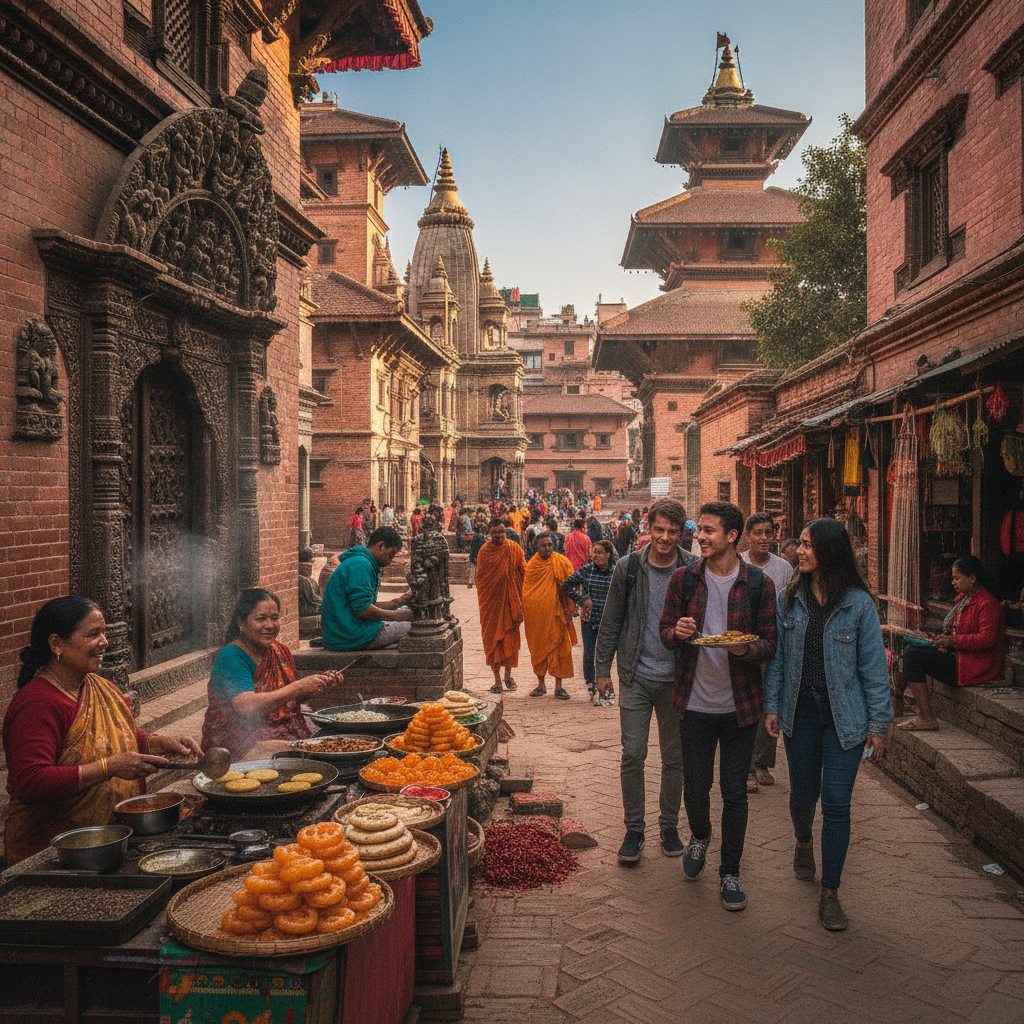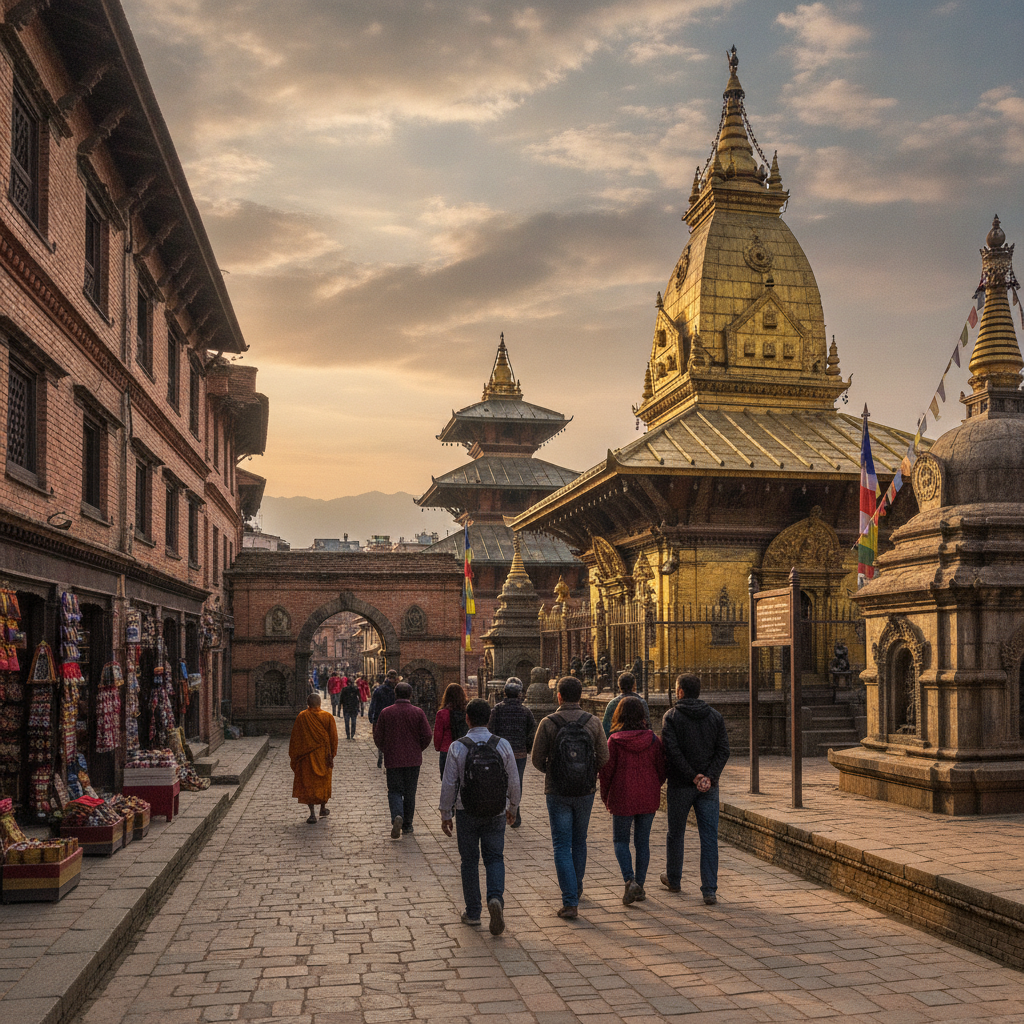
Patan Golden Temple & Buddhist Heritage Walk
Discover Patan's Buddhist soul — Patan is the most Buddhist of the three medieval cities of the Kathmandu valley, the Golden Temple (Hiranya Varna Mahavihara), the Mahabouddha temple, and the network of Buddhist courtyards creating the most completely accessible single Buddhist heritage circuit in Nepal.
- 1
Hiranya Varna Mahavihara
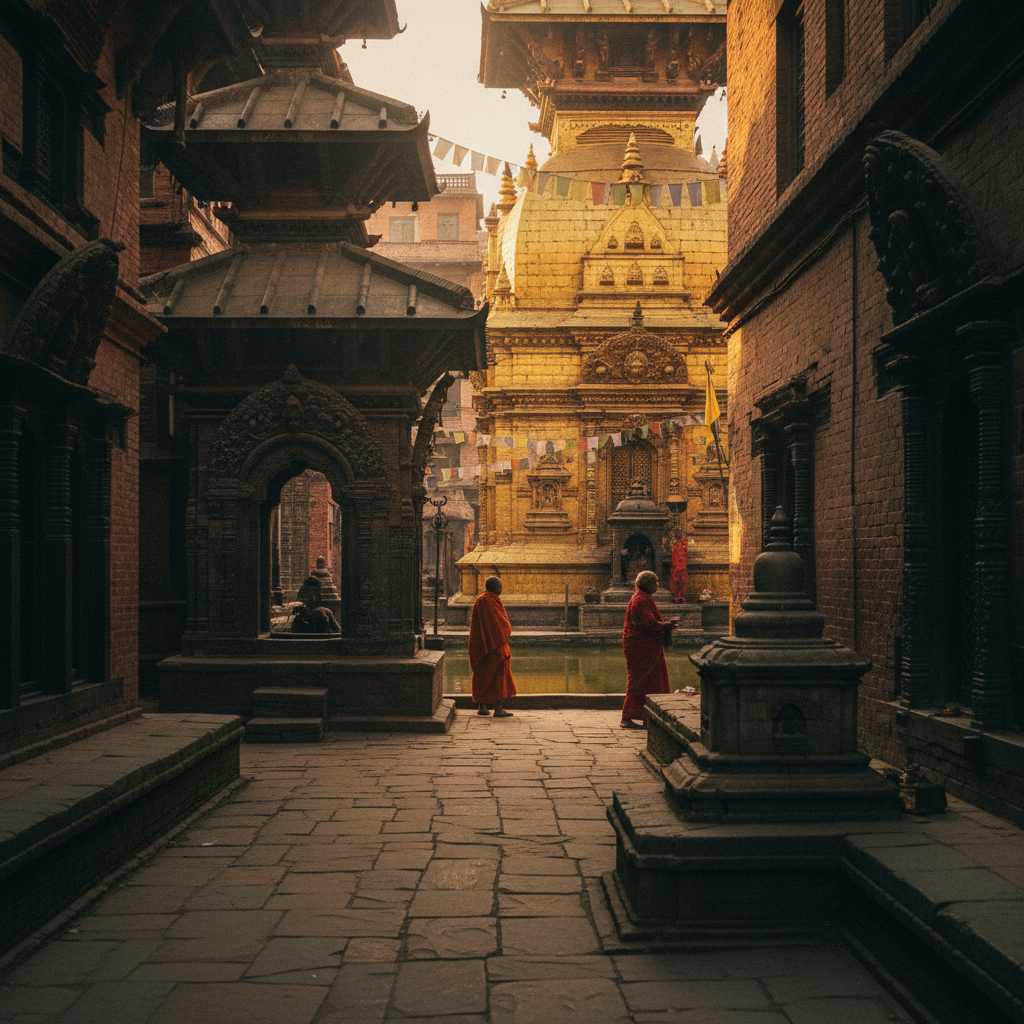
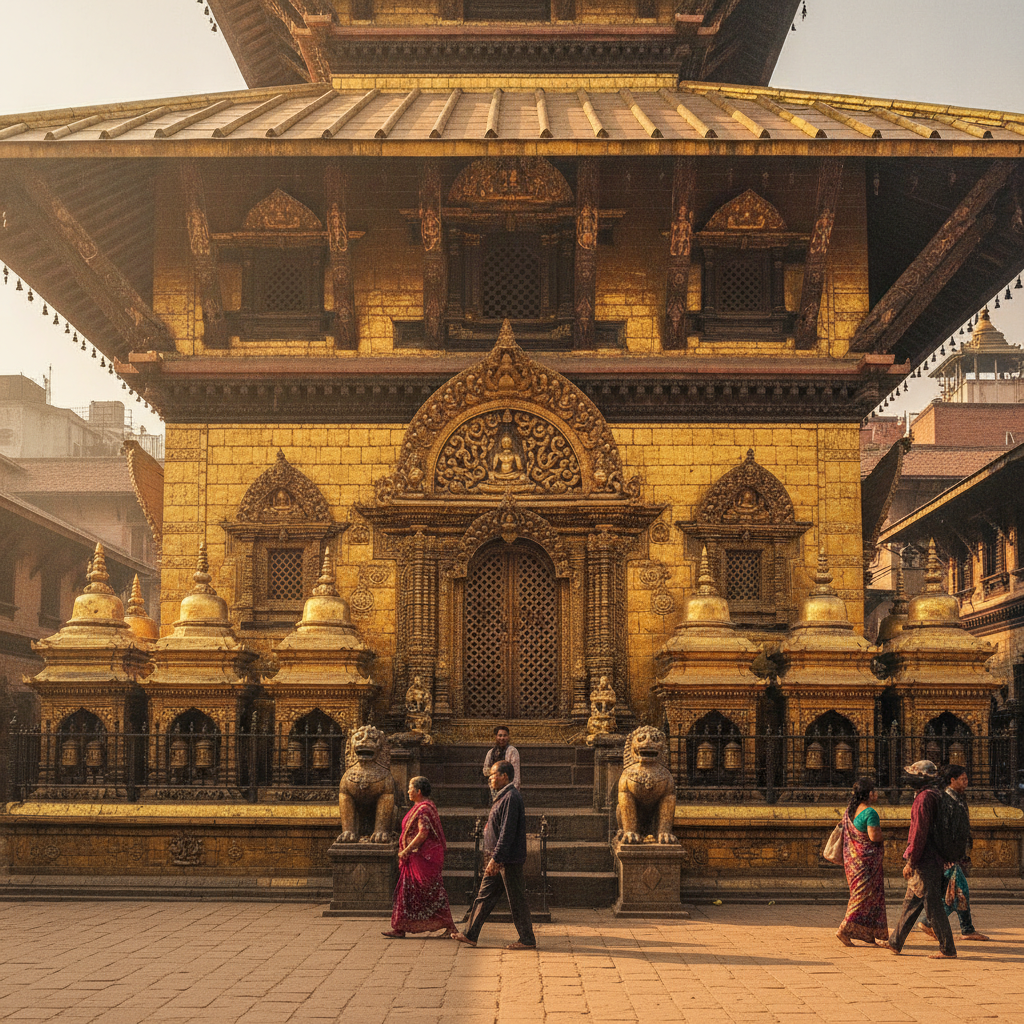
The Hiranya Varna Mahavihara — the Golden Temple — (the most completely gilded single Buddhist monastery accessible in Nepal, the three-tiered pagoda temple of which every surface of the main shrine and the surrounding courtyard structures is covered in the most elaborately decorated single collection of gilded copper repousse work accessible in the Kathmandu valley) is the most visually spectacular single Buddhist heritage building accessible in Patan — the temple's specific character (the golden gate, the golden torana above the shrine entrance, and the gilded animals and the Buddhist symbols covering the temple's exterior creating the most opulently decorated single religious space accessible in Nepal's Buddhist heritage circuit) and the temple's active monastery function (the Newari Buddhist community's daily activity visible in the courtyard — the monks' morning and evening puja, the children learning the Buddhist texts, and the lay devotees circling the central shrine in the clockwise circumambulation that keeps the temple the most continuously-actively-used single heritage monastery in Patan) create the most completely Newar-Buddhist-tradition-experiencing single temple visit accessible in the valley.
- 2
Mahabouddha Temple
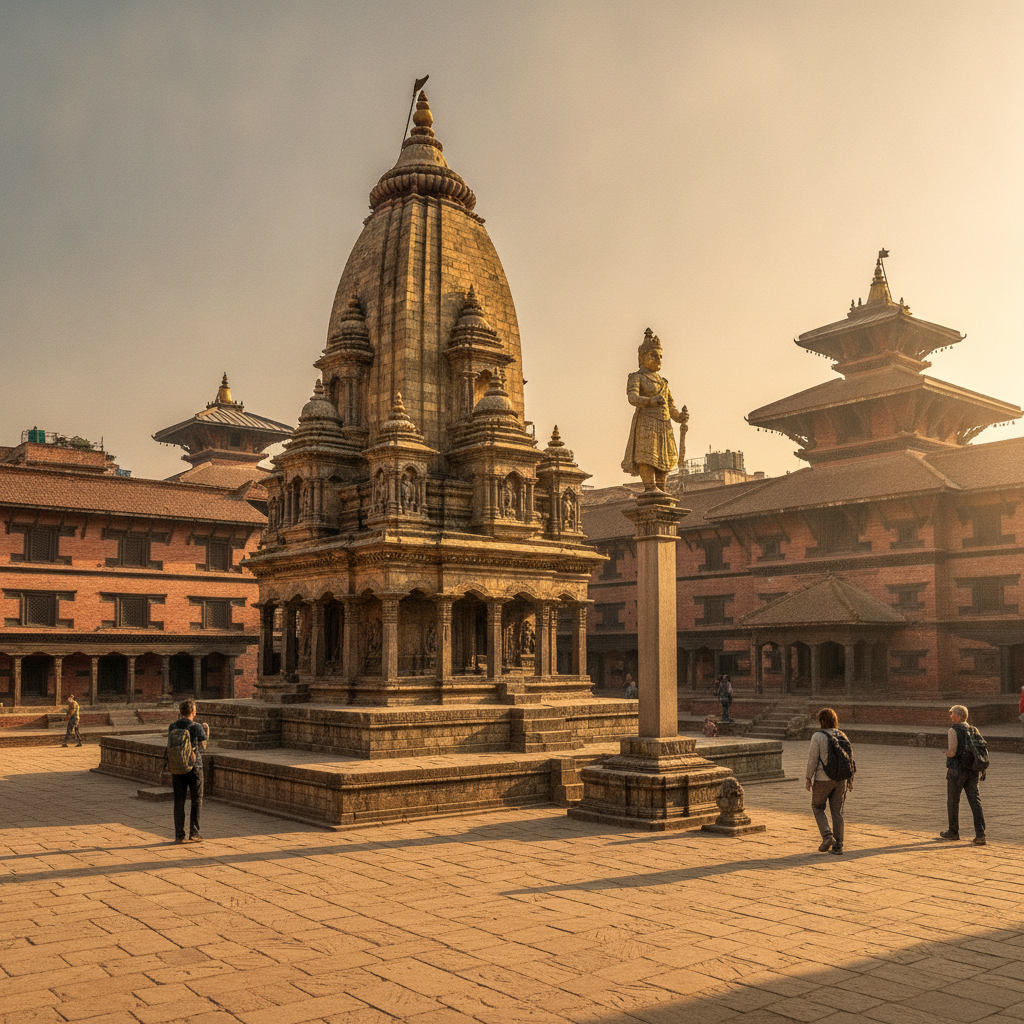
The Mahabouddha Temple in Patan's southern quarter (the shikhara-style tower covered with terracotta tiles each containing the image of the seated Buddha — the most Buddha-image-proliferatively decorated single structure accessible in Nepal, with thousands of individual Buddha images covering every surface of the tower in the most deliberately repetitive single sacred decoration accessible in the Nepal Buddhist heritage) is the most archaeologically interesting single Buddhist structure accessible in Patan — the temple's unusual form (the North Indian shikhara style in brick and terracotta, entirely unlike the surrounding Newari pagoda architecture, the most architecturally incongruous single temple accessible in the Kathmandu valley's Buddhist heritage) and the temple's earthquake history (the 1934 earthquake that collapsed the original structure, the subsequent reconstruction from the original pieces that left a smaller version of the original with the surplus tiles used to construct the adjacent Minanath temple — the most directly earthquake-history-legible single heritage reconstruction accessible in Nepal) create the most architecturally fascinating single Buddhist temple visit available in Patan.
- 3
Kwa Bahal Monastery
The Kwa Bahal monastery in central Patan (one of the most ancient continuously active Buddhist monastery courtyards accessible in Patan, the Newari Buddhist bahal courtyard that is the most characteristic single architectural type of Buddhist practice in the valley — the courtyard monastery with the resident Buddhist community maintaining the daily rituals in the most spatially intimate single religious space accessible in the Kathmandu valley) is the most directly community-worship-observing single Buddhist encounter accessible in Patan — the bahal's architectural character (the four-sided courtyard with the shrine at the centre, the painted woodwork visible on the upper gallery, and the Buddhist iconography of the doorway carvings creating the most completely monastery-experience-enclosing single architectural space accessible in Nepal's Buddhist heritage) and the community's ritual activity (the morning and the evening puja led by the resident Vajracharya priest — the hereditary Buddhist priesthood of the Newar community whose lineage-transmitted ritual knowledge is the most directly traditional-Buddhist-practice-preserving single institution accessible in Nepal) create the most authentically traditional single Buddhist monastic encounter available in Patan.
- 4
Uku Bahal Monastery
The Uku Bahal monastery courtyard in southern Patan (one of the oldest Buddhist monastery courtyards in the valley, famous for the gilded roof and the exceptional quality of the medieval metalwork visible in the courtyard's ceremonial objects — the most artistically impressive single metalwork collection accessible in any Patan bahal) is the most artistically rewarding single Buddhist heritage courtyard accessible in the city — the Uku Bahal's specific treasures (the central shrine's gilded peacock at the roof edge — the most frequently photographed single decorative element accessible in the Patan bahal network — and the collection of medieval bronze ritual objects visible in the courtyard creating the most directly Newari-Buddhist-artistic single encounter accessible in the monastery circuit) and the courtyard's specific atmosphere (the daily devotional activity of the Uku Bahal's residential community, the older women circling the central shrine in the circumambulation that marks the most rhythmically meditative single daily devotional practice accessible in the Buddhist bahal) create the most historically significant single monastery courtyard visit accessible in the Patan Buddhist heritage circuit.
- 5
Buddhist Thanka Art Quarter
The Buddhist thanka painting quarter in central Patan (the area around the Golden Temple where the traditional Newari Buddhist thanka painters maintain their studios, the most accessible single concentration of traditional Buddhist scroll painting accessible in Nepal — the painters visible working on the current commissions in the open-fronted studios adjacent to the bahal courtyards) is the most directly traditional-art-encounter-enabling single location accessible in the Patan heritage circuit — the thanka painters' specific technique (the preparation of the natural mineral pigments, the application of the gold powder to the Buddha image at the most precisely skilled single artistic step accessible in the Newari painting tradition, and the geometric grid that structures the composition of the most formally demanding single painting type accessible in Nepal's living art heritage) and the studios' commercial character (the completed thankas available for purchase directly from the studios that produced them, the most directly artist-to-buyer single art transaction accessible in Nepal's traditional art market) create the most completely art-process-informing single cultural encounter available in the Patan Buddhist quarter.
- 6
Ashoka Stupas Walk
The four Ashoka stupas at the cardinal directions of Patan (the four mound stupas attributed to the Mauryan Emperor Ashoka's 3rd century BCE visit to the valley, marking the most ancient single Buddhist monument accessible in the Kathmandu valley and the foundation of Patan's Buddhist identity) is the most historically significant single Buddhist heritage walk accessible in the city — the stupas' specific historical status (the attribution to Ashoka's personal construction making them the oldest single Buddhist monuments accessible in Nepal, though the dating is disputed by archaeologists, the stupas remain the most symbolically foundational single Buddhist structures in Patan's religious identity) and the southern Ashoka stupa's neighbourhood character (the community life visible around the stupa base — the children playing on the stupa's terrace, the devotees circling in the afternoon, and the neighbourhood market activity creating the most organically daily-life-integrated single heritage monument accessible in Patan) create the most historically-grounded single Buddhist heritage conclusion to the Patan walking circuit.
Walk this route with audio
Stories play automatically as you reach each stop — no tapping needed.