Patan Rato Machhindranath Chariot Festival Walk
Experience Patan's greatest festival — the Rato Machhindranath Jatra is the longest single chariot festival accessible in Nepal, the four-month procession of the rain-bringing deity's massive wooden chariot through the lanes of Patan representing the most community-mobilising single religious event accessible in the Kathmandu valley.
- 1
Chariot Construction Site
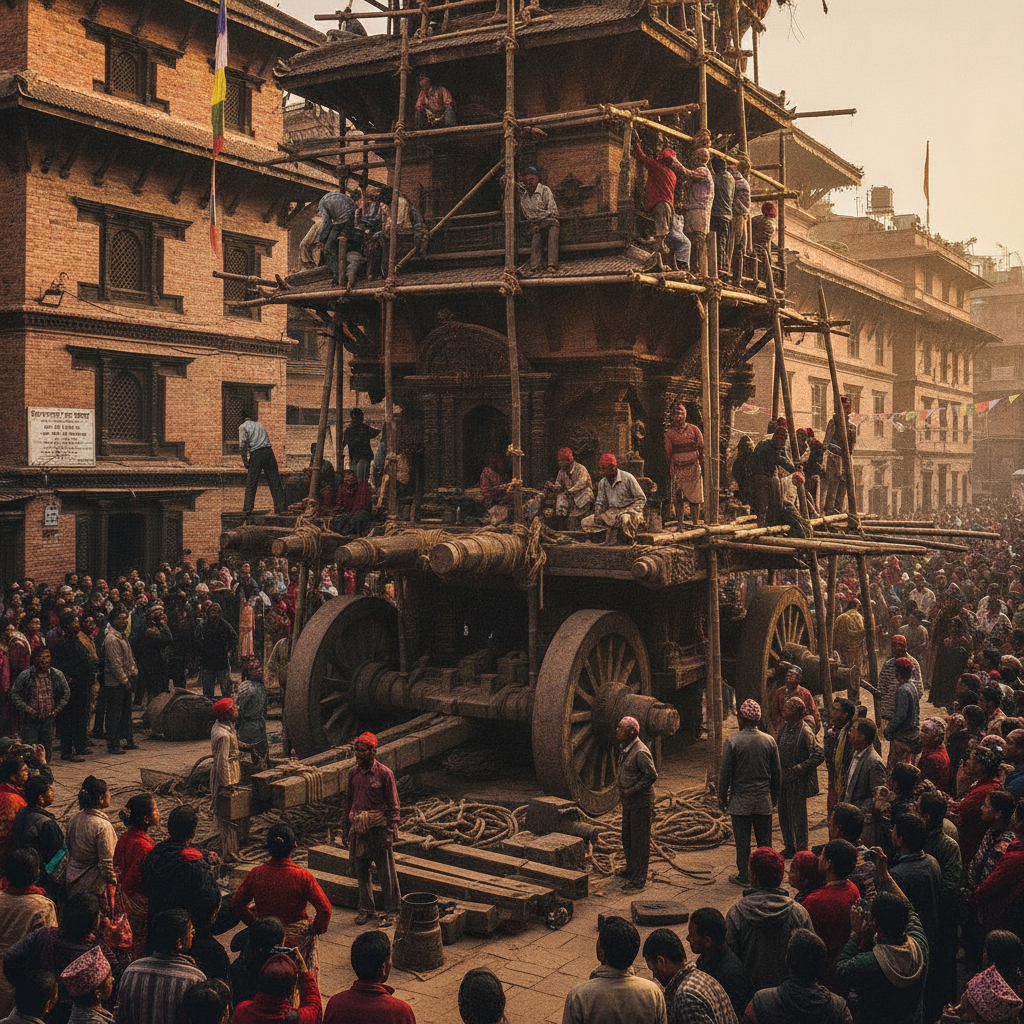
The Rato Machhindranath chariot construction site (the location where the massive wooden chariot is constructed from scratch each year — the most technically impressive single traditional woodwork accessible in Nepal, the 15-metre tall wheeled tower built from the un-nailed traditional wooden assembly that is disassembled and rebuilt each year by the Newar community's traditional craftsmen) is the most directly traditional-engineering-observing single festival encounter accessible in Patan — the chariot's construction (the selection of the appropriate wood, the raising of the central pole, the addition of the successive levels of the chariot's tower, and the decoration with the fresh grass thatch and the ritual objects that are the most directly symbolically loaded single construction process accessible in Nepal's festival tradition) and the construction community (the specific caste groups whose hereditary responsibility includes each aspect of the chariot preparation, the most directly traditional-social-organisation-demonstrating single community collaboration accessible in Nepal's living festival heritage) create the most completely traditional-craft-and-social-organisation-observing single festival encounter available in Patan.
- 2
Machhindranath Temple
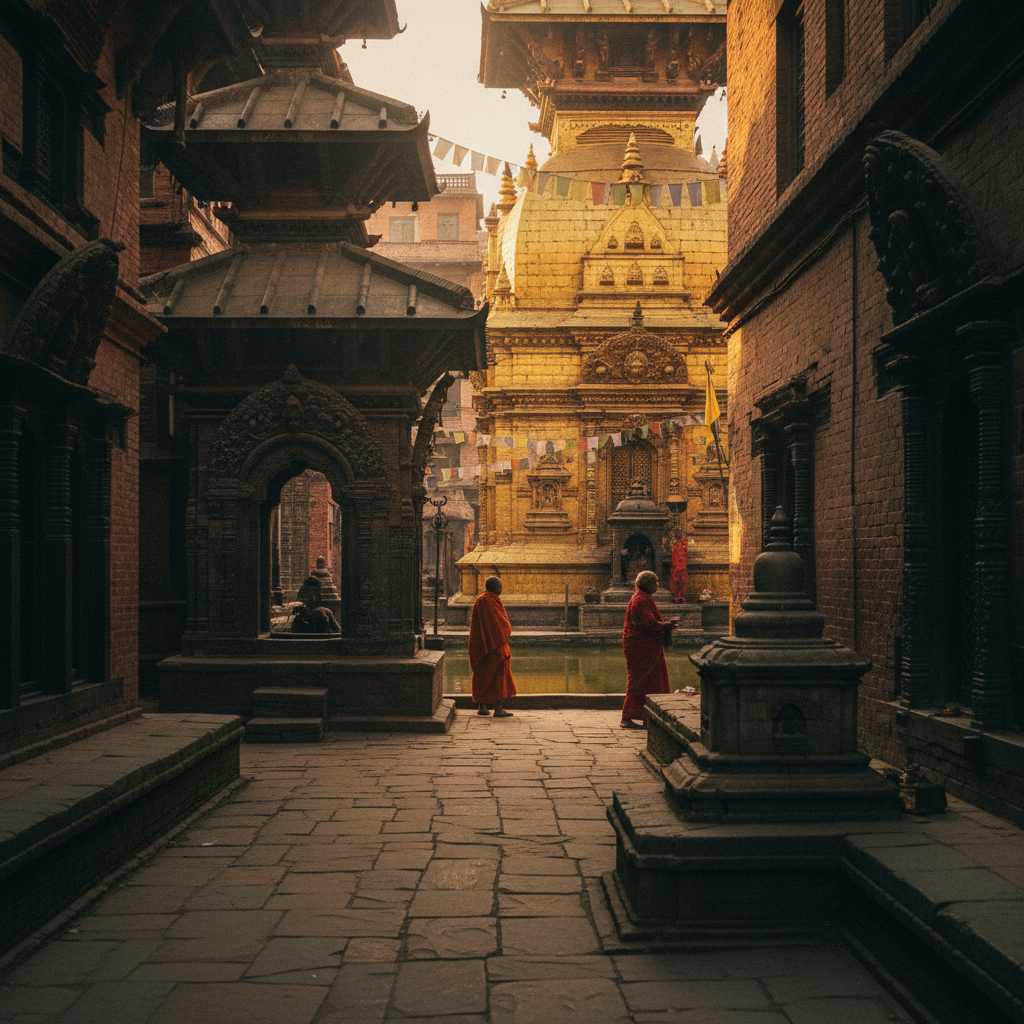
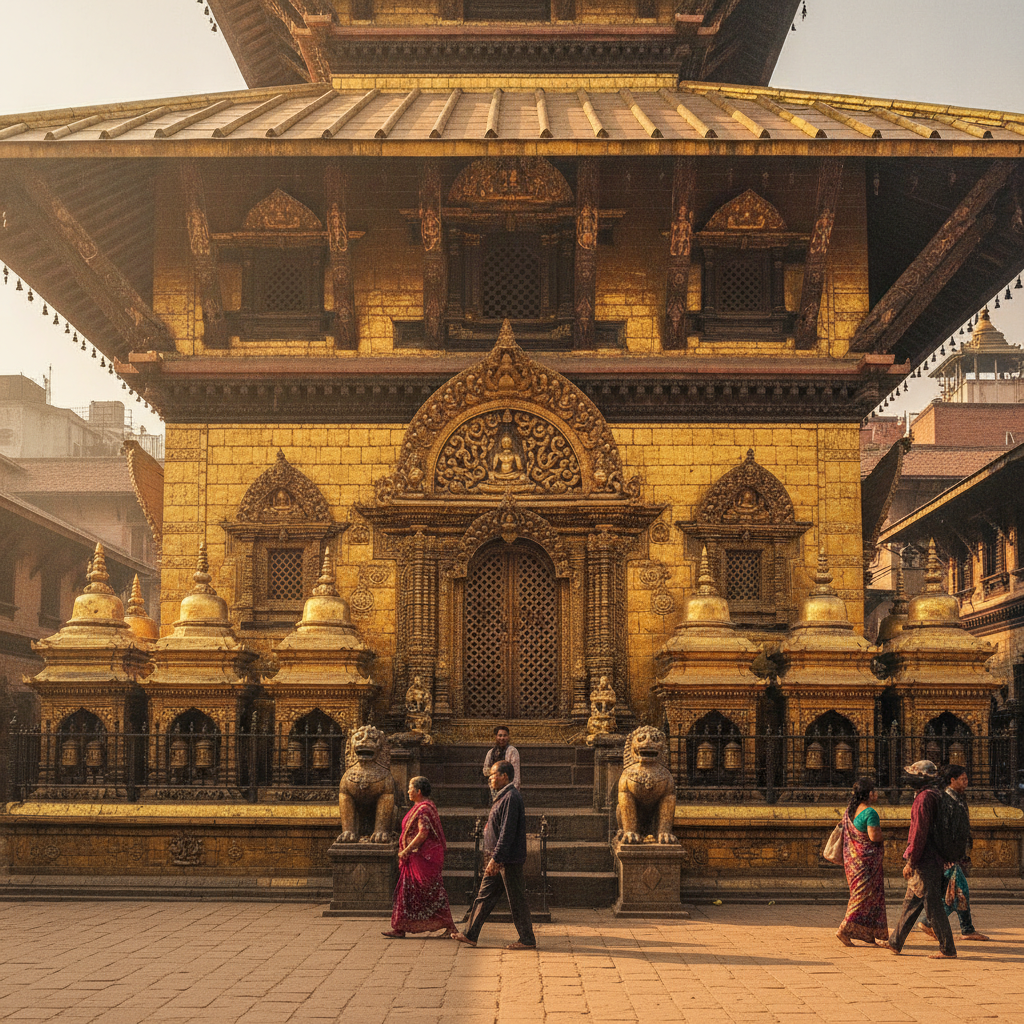
The Rato Machhindranath temple in the Lagankhel area of Patan (the home temple of the most important single deity in the Newar farmer community's religious calendar, the Red Lord of Rain whose annual chariot festival guarantees the monsoon's arrival in the most cosmologically important single rain-solicitation ritual accessible in Nepal) is the most directly agricultural-community-religiously-significant single temple accessible in Patan — the temple's specific character (the courtyard with the smaller shrines, the accumulated votive offerings visible in the most archaeological-layering single temple complex accessible in Patan outside the Durbar Square, and the resident priestly community maintaining the daily puja of the most socially essential single deity accessible in the Newar agricultural world) and the temple's festival departure point (the chariot procession beginning from this temple and the deity image installed in the chariot to travel through the streets of Patan for the four-month festival duration, the departure ceremony the most ritually complex single event accessible in the Patan festival calendar) create the most directly deity-and-community-religiously-integrated single temple visit accessible in the city.
- 3
Festival Procession Route
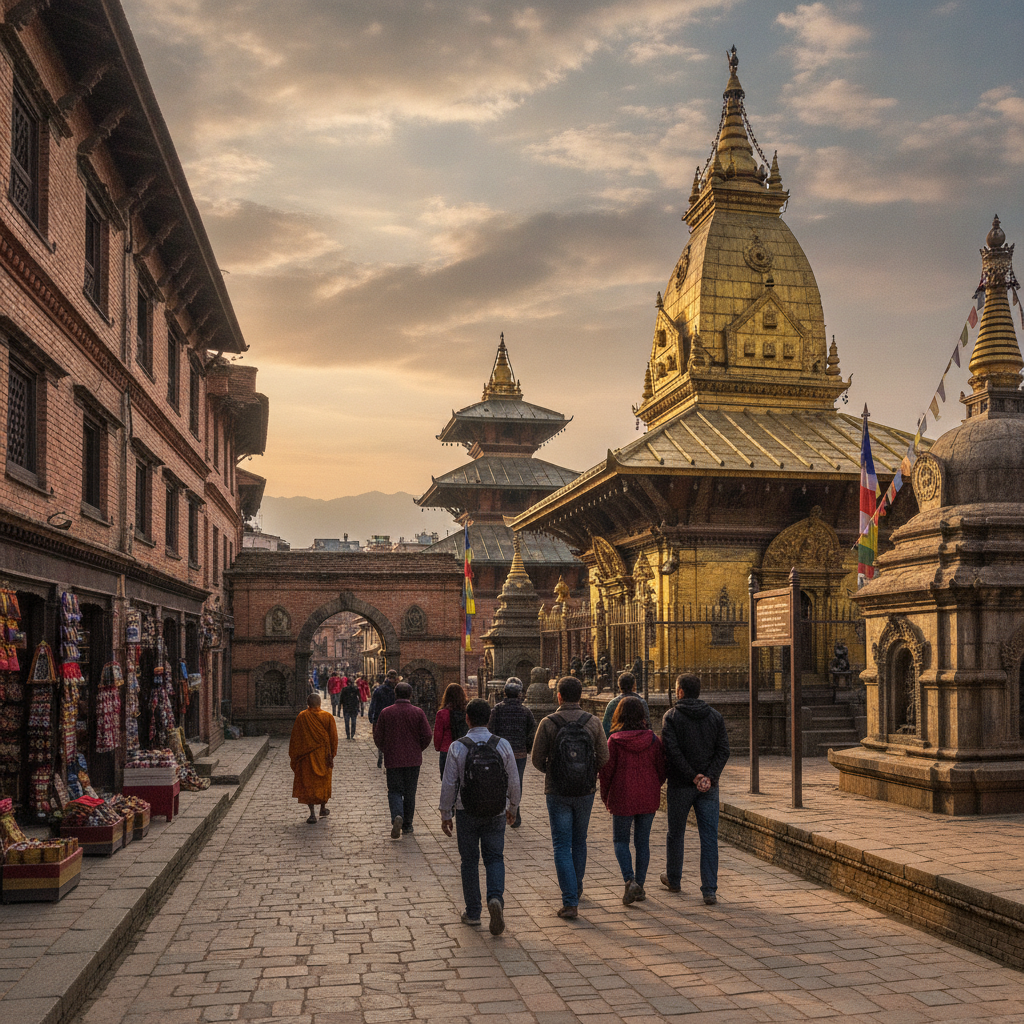
The Rato Machhindranath chariot procession route through Patan (the traditional path of the four-wheeled wooden chariot as it is pulled by ropes through the lanes of the city over the four-month festival period, the most geographically extensive single chariot festival route accessible in Nepal — the chariot visiting each of the major squares and the neighbourhood shrines of the old city in the most completely city-encompassing single festival circuit accessible in the Kathmandu valley) is the most community-participation-requiring single traditional festival route accessible in Nepal — the route's community activation (each neighbourhood responsible for pulling the chariot through their section of the route, the most directly community-geographically-specific single participation in the festival accessible in the Newari social organisation) and the route's temporary festival installations (the bamboo arches decorated with flowers and the ritual objects erected over the chariot's path, the neighbourhood flags and the festival decorations transforming the everyday lanes into the most festively decorated single traditional urban environment accessible in Nepal) create the most community-festival-immersive single walking route available in the Kathmandu valley heritage cities.
- 4
Bisket Jatra Neighbourhood
The Bisket Jatra neighbourhood festival atmosphere in Patan (the Nepali New Year festival that is the most community-wide single celebration accessible in the city, the traditional games, the cultural performances, and the neighbourhood feast preparations visible throughout the residential lanes of the old city on the festival days of April) is the most community-celebratorily animated single festival environment accessible in Nepal's heritage cities — the Bisket celebration's specific activities (the tug of war between the upper and the lower parts of the old city that is the most physically active single community festival competition accessible in Nepal, the traditional music groups performing in each neighbourhood square, and the preparation of the traditional festival foods in the household kitchens that is the most olfactorily-festival-indicating single activity visible in the residential lanes) and the festival's specific significance (the New Year's arrival marked at the exact moment when the tall bamboo pole erected in the main square is pulled down, the most precisely timed single traditional event accessible in the Nepal festival calendar) create the most completely community-festival-life-experiencing single celebration encounter available in Patan.
- 5
Kumari Procession Stop
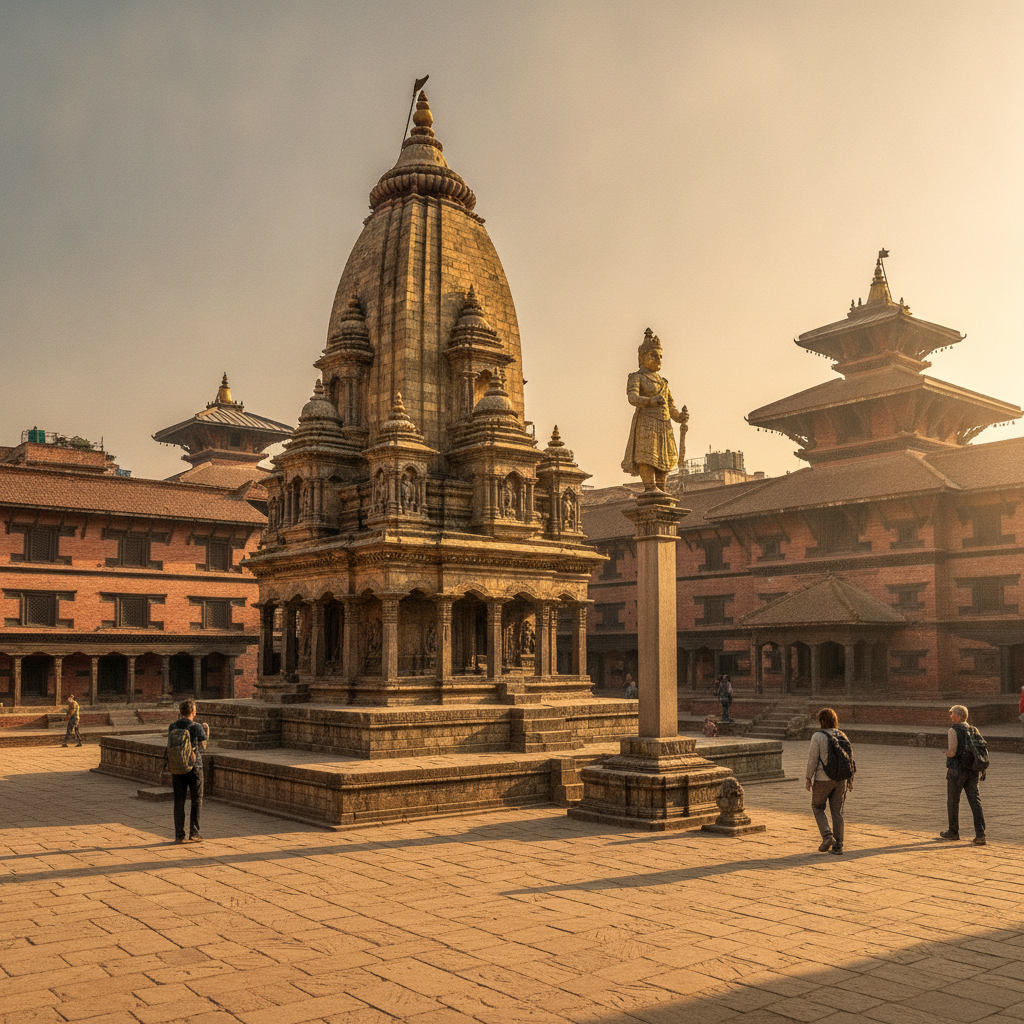
The Kumari procession stop in the Patan Durbar Square (the appearance of the Patan living goddess — the Kumari — during the major festivals at the royal square, the young girl chosen as the human embodiment of the goddess Taleju carried in the gilded palanquin to receive the community's devotional offering at the most ritually climactic single moment accessible in the Patan festival calendar) is the most exclusively visible single religious event accessible in the Kathmandu valley's festival circuit — the Kumari's specific festival appearance (the young girl in the traditional red and gold dress, the third eye drawn on her forehead, and the white-painted feet that must not touch the ground creating the most visually distinctive single religious figure accessible in Nepal's living goddess tradition) and the community's response (the silence that falls in the crowded festival square at the Kumari's appearance, the community's collective devotion the most emotionally powerful single moment accessible in any Nepal festival event) create the most spiritually charged single festival encounter available in the Patan Durbar Square.
- 6
Festival Food Street
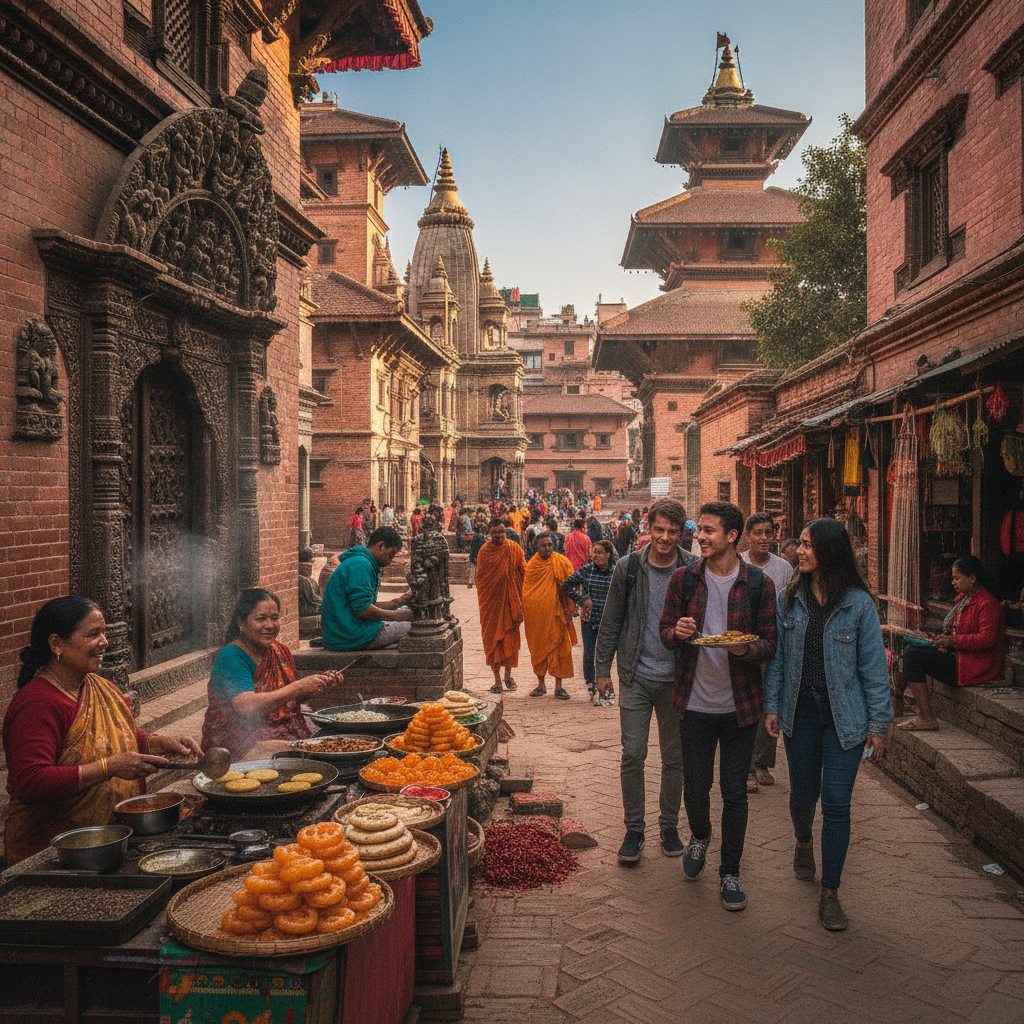
The festival food street in Patan during the major Jatra celebrations (the most completely festival-food-market-active single street accessible in the city during the Rato Machhindranath, the Bisket, and the other major Newari festivals — the traditional festival foods visible in the stalls along the festival route, the most festival-specifically-available single food products accessible in Nepal) is the most seasonally distinctive single food encounter accessible in the Patan heritage area — the festival foods' specific character (the yomari dough dumplings filled with the sweet chaku filling visible during the Yomari Punhi festival, the kwati bean soup served during the Janai Purnima, and the various other festival-specific foods that are the most calendar-tied single food items accessible in the Newari culinary tradition) and the festival street's social atmosphere (the community gathered for the communal eating that accompanies every major Newari festival, the most directly community-meal-sharing single food encounter accessible in Nepal's traditional urban festival life) create the most completely festival-food-culturally-experiencing single market visit available in the Patan heritage circuit.
Walk this route with audio
Stories play automatically as you reach each stop — no tapping needed.