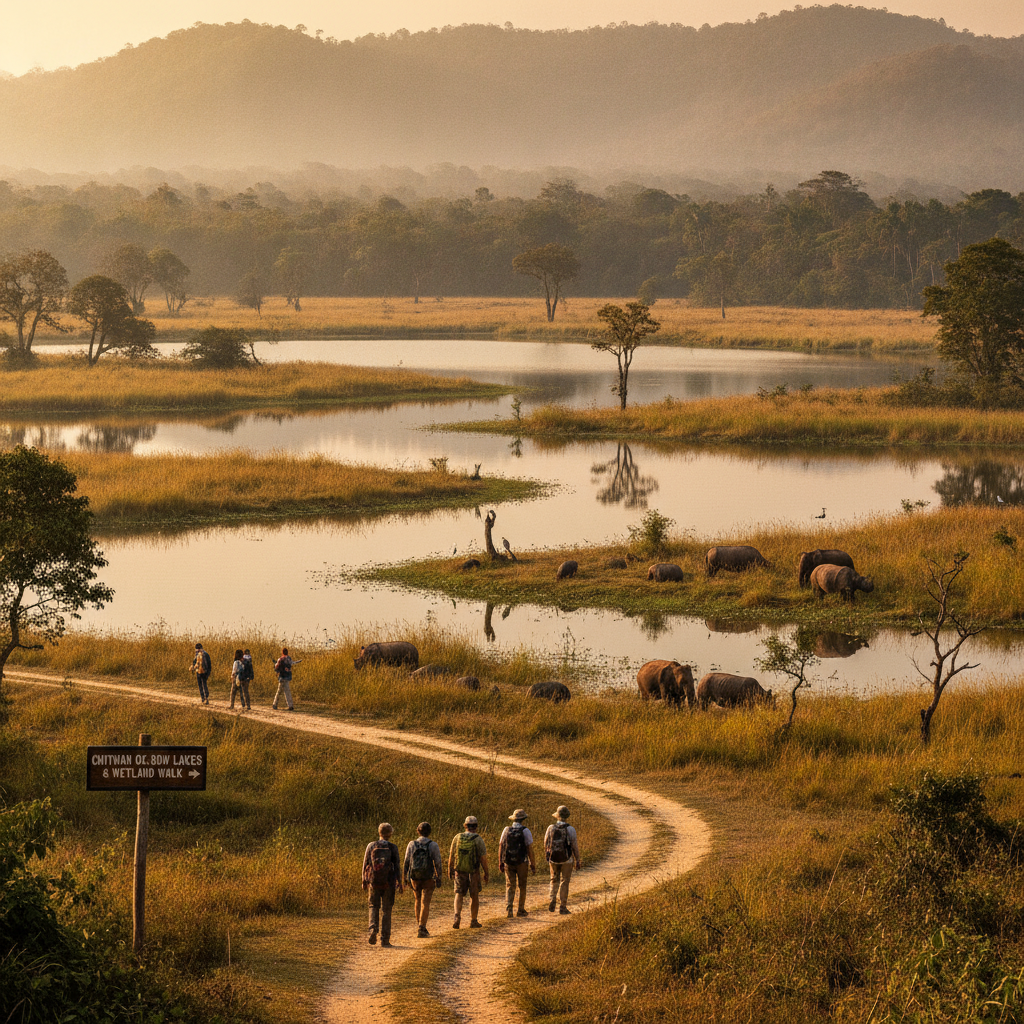
Chitwan Ox-Bow Lakes & Wetland Walk
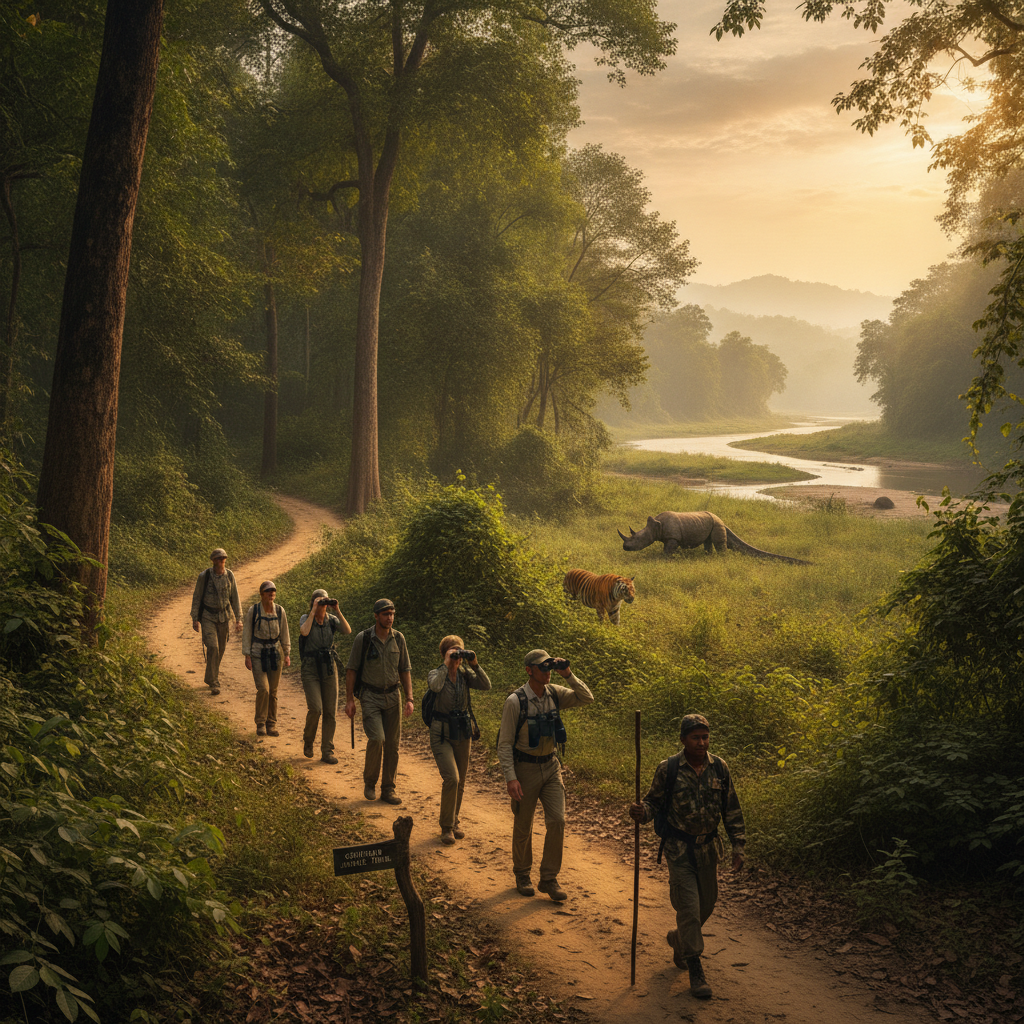
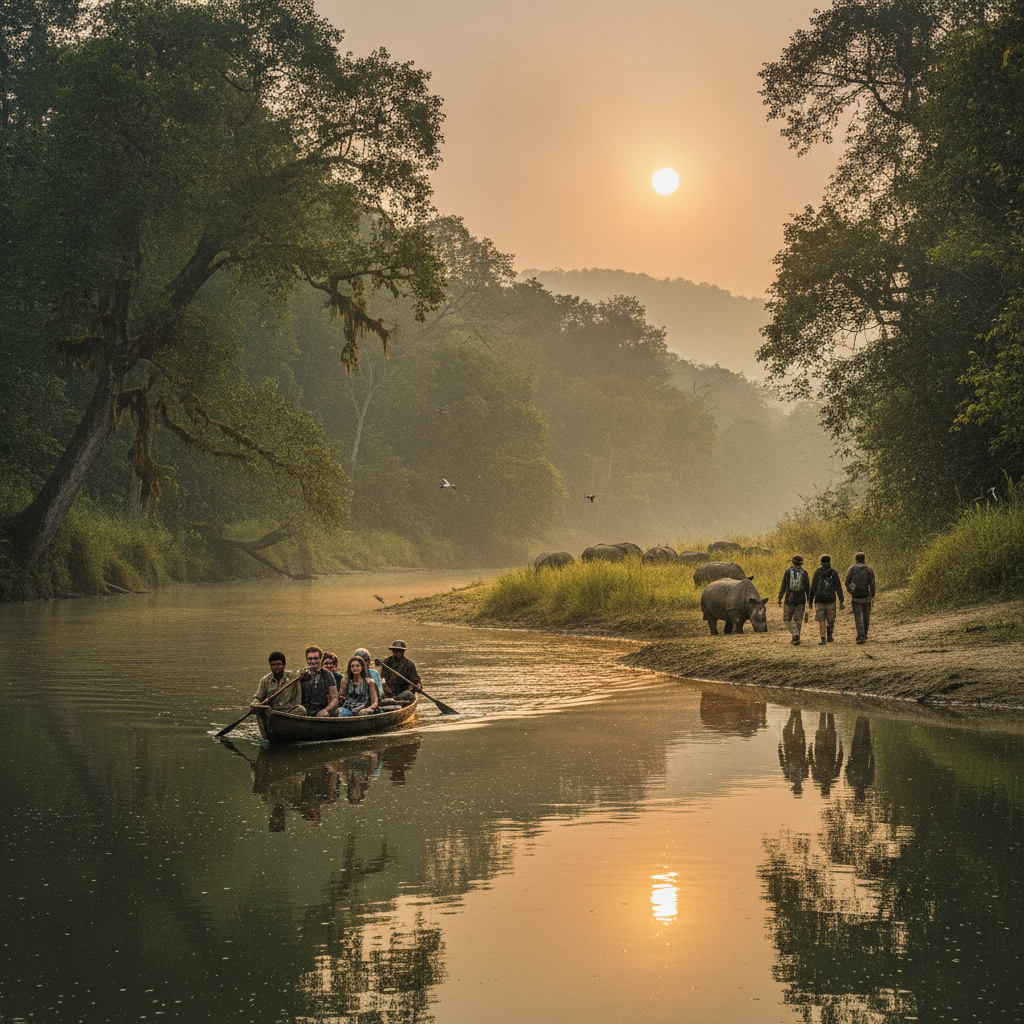
Explore Chitwan's hidden wetlands — the ox-bow lakes and the seasonal pools within Chitwan National Park are the least-visited yet most ecologically productive single habitats in the Terai, supporting the gharial breeding population, the rare freshwater dolphin, and the most waterbird-species-rich single water system accessible in Nepal.
- 1
Beeshazaar Lake
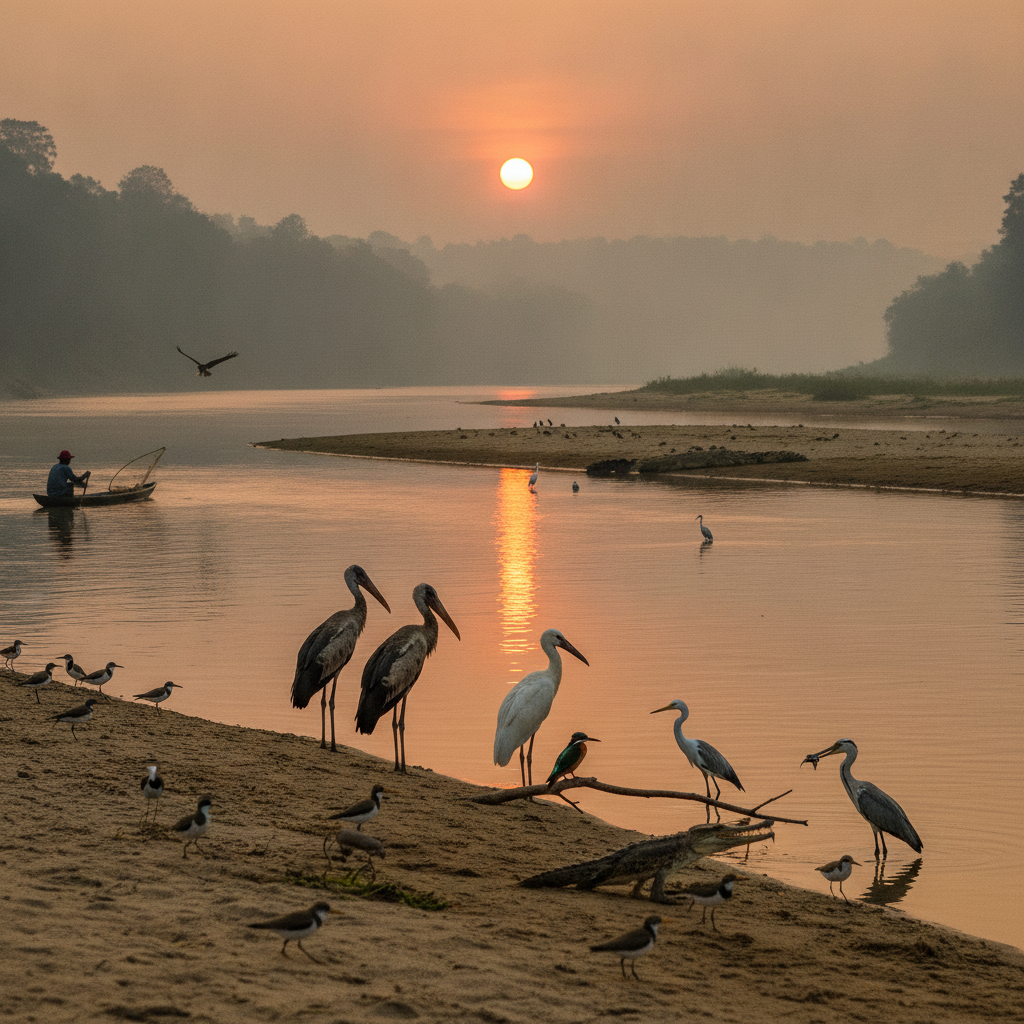
Beeshazaar Lake (the largest ox-bow lake complex accessible within the Chitwan national park system, a former channel of the Narayani River now isolated as the most ecologically significant single freshwater wetland accessible in Nepal's national park territory) is the most wildlife-concentrated single water body accessible in the Terai — the lake's wildlife community (the gharial crocodiles for which the Beeshazaar complex provides the most important single nesting habitat accessible in Nepal, the over 300 species of birds recorded at the lake system, and the rare Gangetic River dolphin occasionally visible in the deeper sections) and the lake's habitat diversity (the open water sections with the fish populations that support the gharial and the otter, the reed beds that provide the nesting cover for the waterbirds, and the grassland margin that connects the lake to the surrounding sal forest) create the most completely wetland-ecosystem-surveying single walk accessible in the Chitwan national park. The lake's early morning light (the mist rising from the water surface as the sun reaches the open water, the morning bird activity at its most concentrated in the first two hours after sunrise, and the gharial visible on the most recently warmed sections of the bank) is the most wildlife-encounter-productive single hour accessible at the Beeshazaar lake walk.
- 2
Gangetic Dolphin Pool
The Gangetic River dolphin pool at the confluence of the Rapti and the Narayani rivers within the Chitwan national park (the deep-water section where the rare Platanista gangetica — the blind freshwater dolphin of the Ganges-Brahmaputra river system — is occasionally observed rolling at the surface in the late afternoon) is the most conservation-critically significant single wildlife encounter accessible in Nepal — the dolphin's status (the Gangetic River dolphin classified as Endangered by the IUCN, with a total wild population estimated at fewer than 3,500 individuals, and the Chitwan section of the Narayani River supporting the most accessible single Nepal population of this species) and the encounter's rarity (the dolphin sighting probability in the Chitwan river section varying from occasional in the dry season when the animals are concentrated in the deepest pools to more difficult in the monsoon when the high water disperses the population into the wider floodplain) create the most specifically conservation-awareness-generating single wildlife encounter accessible in Nepal. The confluence pool's other wildlife (the smooth-coated otter visible fishing in the same pool as the dolphins in the most directly predator-coexistence-demonstrating single wildlife scene accessible in Nepal, the otter's playful fishing activity contrasting with the dolphin's deliberate echolocation-guided movement through the deep water) is the most ecologically complex single freshwater wildlife encounter accessible in Nepal.
- 3
Heron Nesting Colony
The heron and egret nesting colony at the Chitwan ox-bow lake margins (the most numerically impressive single bird concentration accessible in Nepal — the mixed-species heronry where the Purple Heron, the Grey Heron, the Little Egret, and the Intermediate Egret nest in the same reed bed and tree stand, the noise and the activity of the colony audible from 300 metres and the nesting birds visible in the most continuously active single bird behaviour accessible in Nepal) is the most ornithologically spectacular single colonial bird encounter accessible in the country — the colony's dynamics (the various stages of the nesting cycle visible simultaneously in the active heronry — the nest-building adults carrying the sticks, the incubating adults covering the eggs, the chick-feeding adults arriving with fish from the river, and the fledgling practice flights from the colony trees) and the colony's proximity (the heron nesting colony's accessibility from the ox-bow lake trail, the nesting trees adjacent to the path that allows the most detailed observation of the individual birds' behaviour accessible without disturbing the colony) create the most behaviourally informative single colonial bird encounter accessible in Nepal's national park system.
- 4
Mugger Basking Pool
The mugger crocodile basking pool at the Chitwan wetland (the shallow pool where the marsh mugger — Crocodylus palustris — basks in the morning sun, the broader-snouted generalised predator visible at close range from the raised path adjacent to the ox-bow lake system) is the most directly reptile-behaviourally instructive single encounter accessible during the Chitwan wetland walk — the mugger's basking behaviour (the mouth-open thermoregulation visible in the early morning when the animal maximises the warming sun's contact with the blood-rich mouth lining to raise the body temperature, creating the most biologically-explanatory single large reptile behaviour accessible in Nepal) and the mugger's scale at close range (the adult male mugger reaching 4 metres in length, the most massive single reptile visible at close range accessible in Nepal's protected area system) provide the most directly biology-demonstrating single wildlife encounter accessible at the Chitwan wetland complex. The mugger's role in the wetland ecosystem (the apex predator of the ox-bow lake's fish community, its presence visible in the fish-depleted zones adjacent to its territory and the most productive single fish zones accessible in the sections of the lake furthest from the mugger basking areas) creates the most directly predator-ecosystem-impact-demonstrating single wildlife encounter accessible in Nepal.
- 5
Lotus Lake Photography
The lotus lake at Chitwan (the ox-bow lake section where the Indian lotus — Nelumbo nucifera — covers the water surface in the most visually spectacular single flowering display accessible in Nepal, the pink flowers rising above the large grey-green leaves in the most photogenically composed single natural scene accessible in the Chitwan national park during the July-September flowering season) is the most photographically productive single nature location accessible in Nepal's lowland national park — the lotus display's specific visual quality (the flower's distinctive form — the layers of petals converging to the central seed pod — visible in various stages of opening across the same lake surface, from the tightly closed bud to the fully open flower and the old seed pod visible in the same scene providing the most complete single life-cycle botanical display accessible in Nepal) and the lotus lake's bird community (the jacanas walking on the lotus leaves, the purple heron standing motionless between the lotus stems, and the kingfisher perched on the lotus seed pod creating the most compositionally wildlife-integrated single natural photography opportunity accessible in Nepal) make the Chitwan lotus lake the most multi-dimensionally rewarding single nature photography destination accessible in the country.
- 6
Otter Family Encounter
The smooth-coated otter family at the Chitwan wetland (the otter groups most reliably visible in the Rapti River and the connecting ox-bow lakes in the late morning, the family groups of 4-10 individuals fishing cooperatively in the most socially complex single predator foraging behaviour accessible in Nepal) is the most behaviourally fascinating single mammal encounter accessible during the Chitwan wetland walk — the otter family's fishing method (the cooperative herding of fish shoals towards the shallows, the coordinated diving and surfacing that is the most visibly collaborative single predator hunting strategy accessible in Nepal) and the family group's social behaviour (the play behaviour visible between the fishing bouts — the most entertaining single natural behaviour accessible in Nepal, the otters' obvious enjoyment of the play activity creating the most directly anthropomorphically engaging single wildlife encounter accessible in the national park system) create the most emotionally engaging single wildlife spectacle accessible at any Nepal wetland destination. The smooth-coated otter's conservation status in Nepal (the species dependent on the clean water and the undisturbed riverbank that the Chitwan national park provides, the most directly habitat-protected single mammal species accessible in the Nepal lowland conservation area) makes the Chitwan otter encounter the most conservation-contextually significant single playful wildlife experience accessible in Nepal.
Walk this route with audio
Stories play automatically as you reach each stop — no tapping needed.