Chitwan National Park Jungle Safari Walk
Explore the wild heart of Chitwan — the UNESCO World Heritage national park in the Terai lowlands of southern Nepal protects the greatest concentration of one-horned rhinoceroses and Bengal tigers accessible in any South Asian national park, with the jungle safari the most iconic single wildlife encounter available in Nepal.
- 1
Sauraha Safari Gate
The Sauraha village safari gate (the main visitor entry point into the Chitwan National Park buffer zone, where the licensed naturalist guides brief the visitors on the park rules, the safety protocols, and the wildlife encounter expectations before the morning jungle walk begins) is the most practically important single starting point for the Chitwan wildlife experience — the gate's briefing area (the meeting point where the guide introduces the group to the morning's route, the recent wildlife sightings shared by the park rangers, and the emergency procedures explained for the rhinoceros, the elephant, and the sloth bear encounters that are the most dangerous single wildlife scenarios accessible in the Terai jungle) creates the most safety-informed single wildlife experience introduction accessible in Nepal. The gate's atmosphere in the early morning (the mist still rising from the Rapti River visible beyond the park boundary, the bird calls already audible from the sal forest beyond the gate, and the other visitor groups also beginning their morning safari) is the most anticipatorily wildlife-charged single moment accessible at the Chitwan national park experience.
- 2
One-Horned Rhino Grasslands
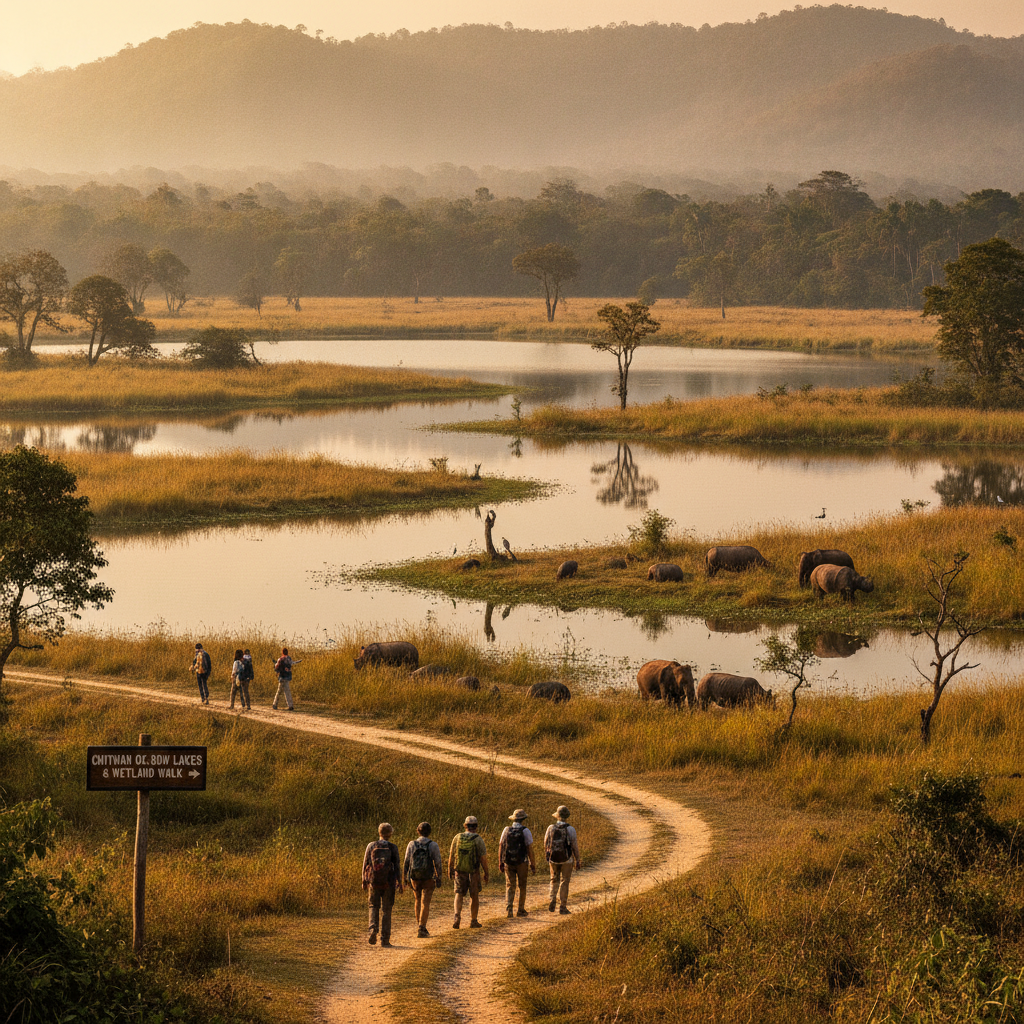
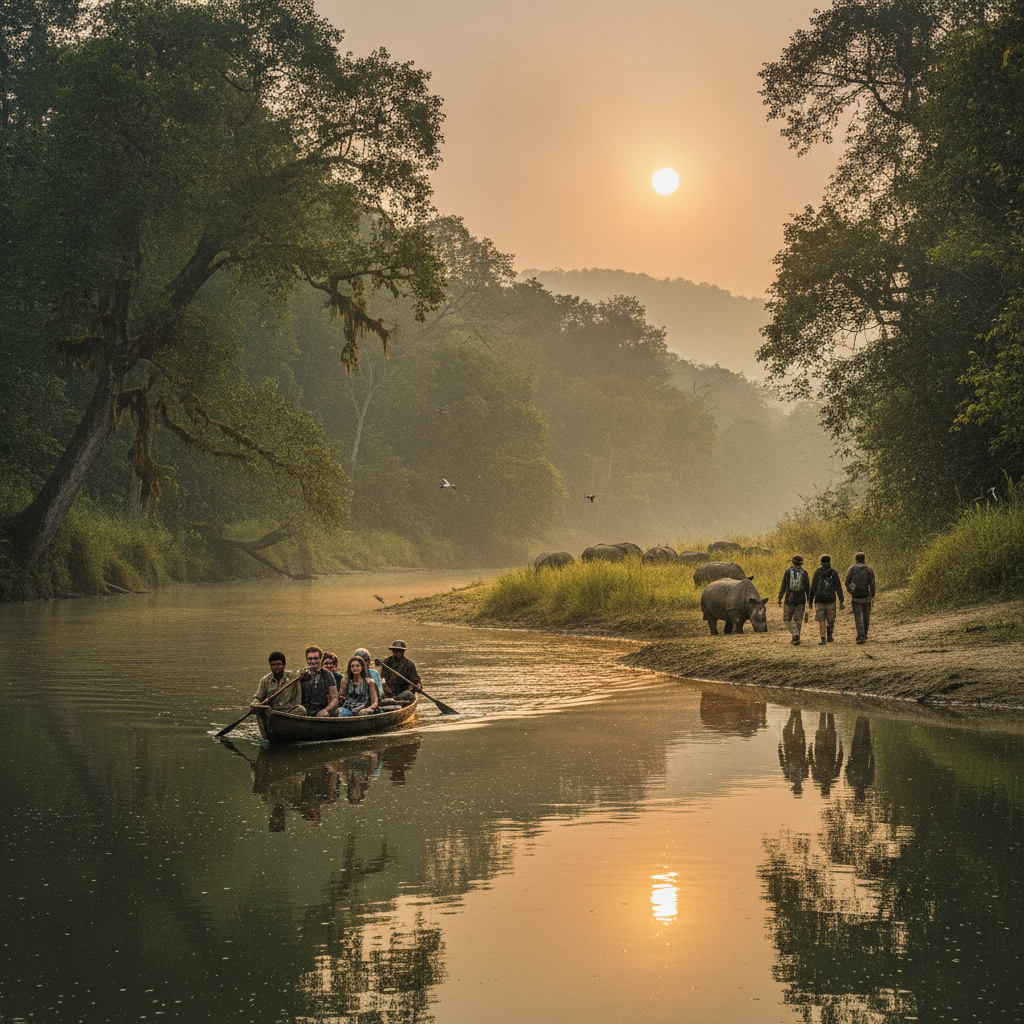
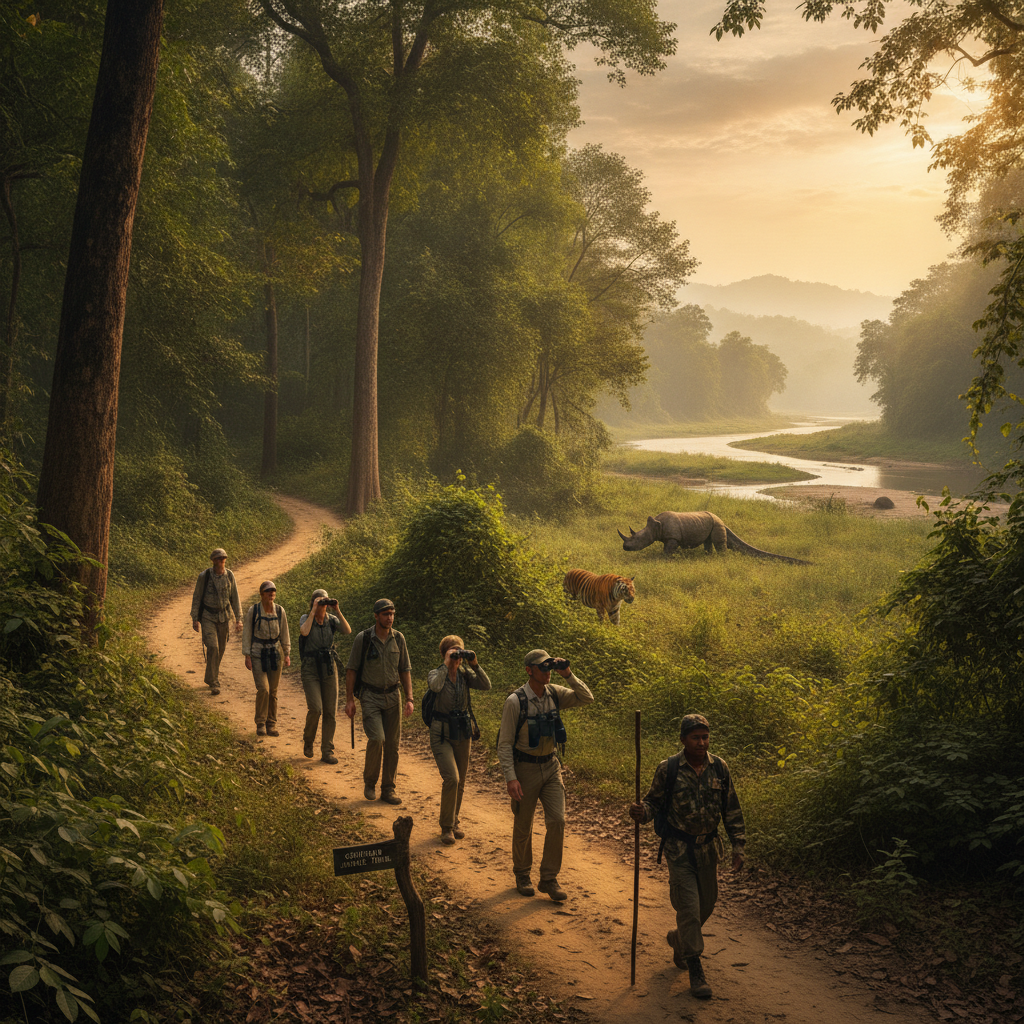
The one-horned rhinoceros grasslands inside Chitwan National Park (the tall elephant grass meadows of the Terai where the Indian one-horned rhinoceros — Rhinoceros unicornis — grazes in the early morning and the late afternoon, the great grey prehistoric-looking animals visible at close range in the grassland clearings that are the most dramatically wildlife-rich single habitat accessible on the Chitwan jungle walk) are the most important single wildlife encounter location accessible in Nepal — the rhinoceros's specific behaviour in the morning (the grazing animals moving slowly through the tall grass, the young calves visible close to their mothers, and the older bulls occasionally raising their heads to scent the approaching humans before moving slowly away or, rarely, standing their ground with the characteristic snort that signals the guide's emergency response) creates the most genuinely wild single large mammal encounter accessible in South Asia. Chitwan's rhinoceros population (approximately 700 individuals — the greatest single concentration of the Indian one-horned rhinoceros accessible in any national park, the result of the most successful single wildlife conservation programme in Nepal's protected area history) makes this grassland the most ecologically significant single wildlife habitat accessible in the country.
- 3
Sal Forest Trail
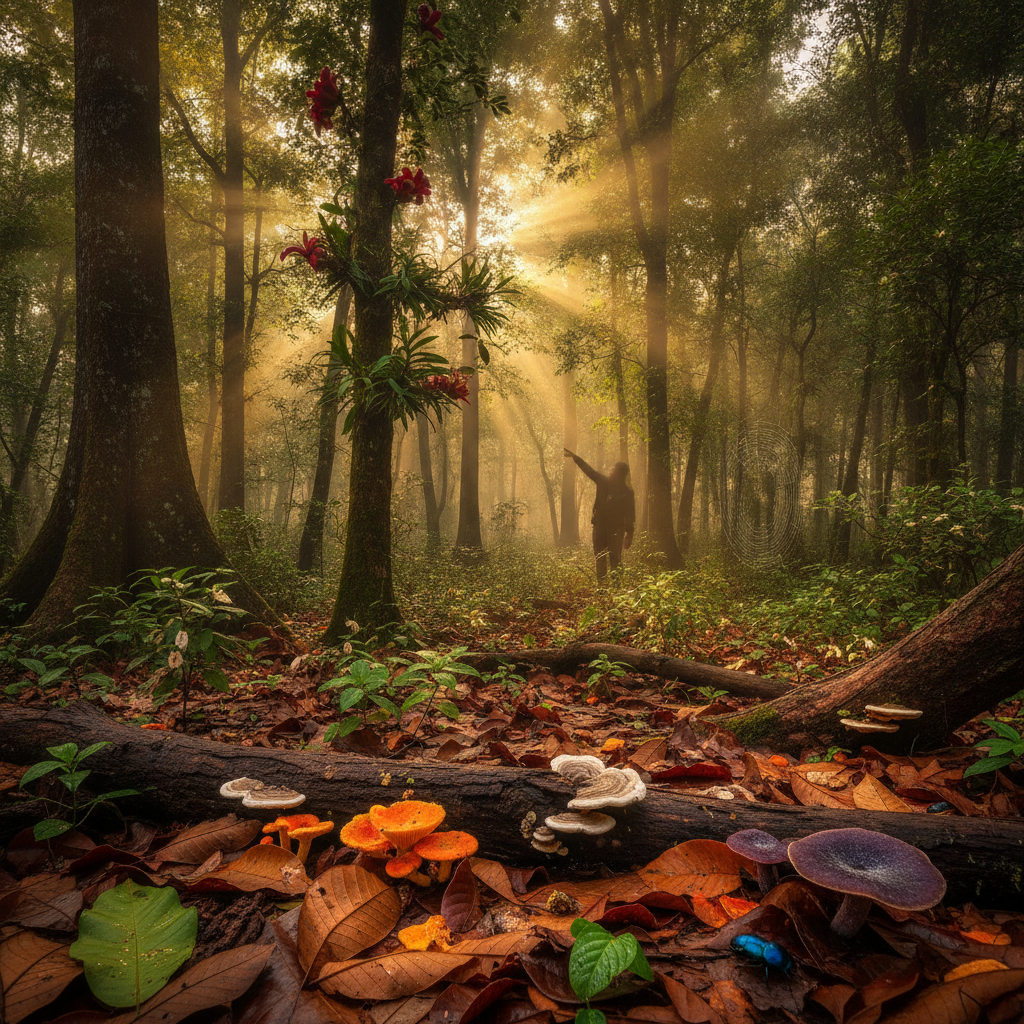
The sal forest trail inside Chitwan (the walking path through the Shorea robusta woodland that covers the majority of the park's core zone, the tall sal trees with their straight trunks and their distinctive large leaves creating the most cathedral-like single forest interior accessible in the Terai) is the most atmospherically jungle-immersive single walking environment accessible in Nepal — the sal forest's character (the filtered light through the high canopy, the undergrowth of smaller trees and the bamboo clumps creating the visibility-limiting dense vegetation that is both the most exciting and the most safety-requiring aspect of the jungle walk, and the forest floor leaf litter that muffles the footsteps but also hides the tiger and the leopard trails that the guide identifies) creates the most completely wild single walking experience accessible at any Nepal nature destination. The forest's bird community (the hornbills, the woodpeckers, and the various flycatcher and warbler species that inhabit the Chitwan sal forest) and the primate community (the rhesus macaques and the langurs visible in the upper canopy and the forest edge) provide the most constantly active single wildlife background accessible during the jungle walk.
- 4
Rapti River Gharial Pool
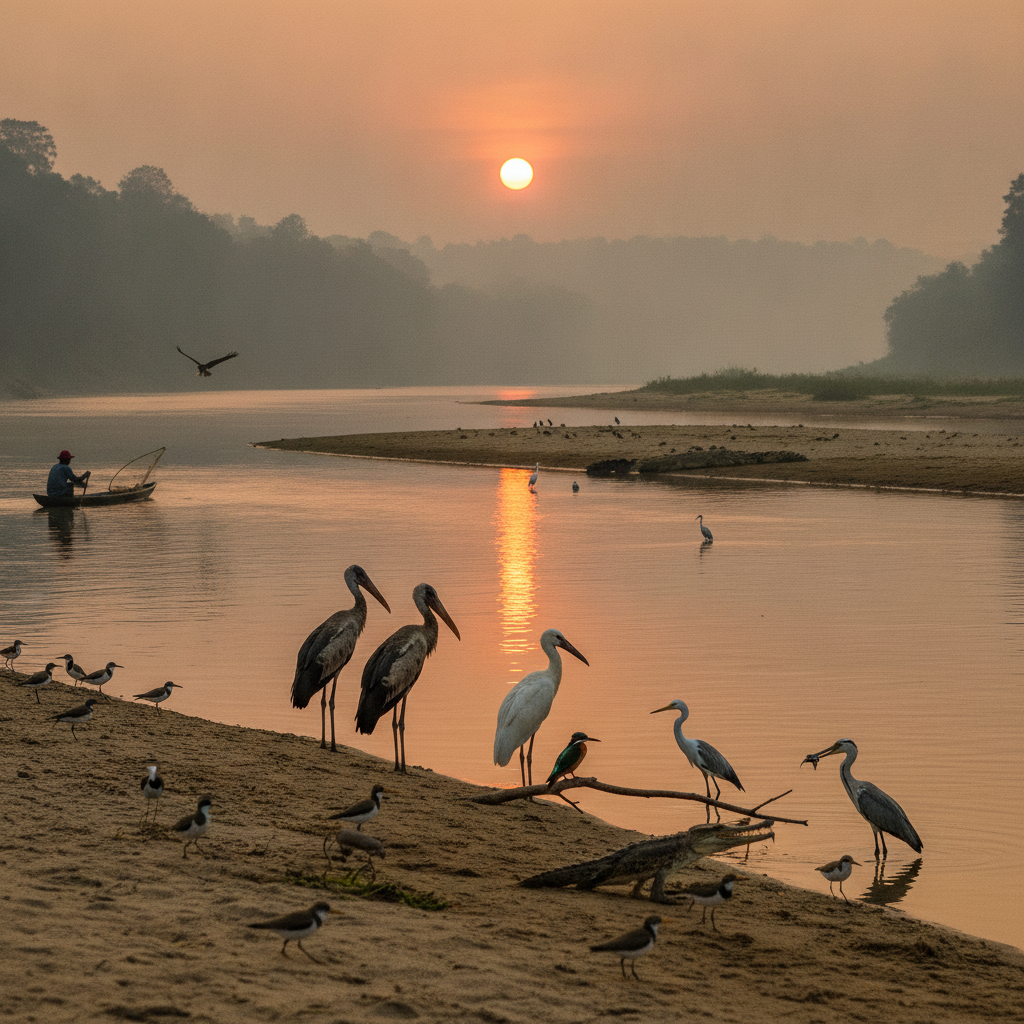
The Rapti River gharial pool (the stretch of the Rapti River along the Chitwan park boundary where the gharial crocodile — Gavialis gangeticus — basks on the sandbanks in the morning, the long narrow-snouted fish-eating crocodilian visible at close range from the riverbank path as the animals sun themselves in the early warmth) is the most directly herpetologically significant single wildlife encounter accessible in Nepal — the gharial's conservation status (the critically endangered species with a global wild population of fewer than 250 mature individuals, and the Rapti and Narayani rivers of Chitwan providing the most important single breeding habitat accessible for the surviving population) makes the Rapti River pool the most conservation-critically important single wildlife viewing location accessible in Nepal. The river pool's bird community (the large flocks of the various heron and egret species, the kingfishers fishing from the overhanging branches above the river, and the osprey and the fish eagle visible over the deeper pools) creates the most bird-species-diverse single location accessible during the Chitwan riverside walk.
- 5
Tiger Tracking Trail
The tiger tracking trail in Chitwan's core zone (the guided walk along the paths most recently used by the park's Bengal tiger population, the guide identifying the pug marks in the soft riverbank mud, the scratch marks on the sal tree trunks, and the scent markings on the grass tufts that document the tiger's territorial activity in the hours before the morning walk) is the most suspensefully wildlife-anticipatory single experience accessible in Nepal — the tracking walk's specific tension (the knowledge that the tigers are present in the forest, the guide's constant reading of the environment for the signs of recent activity, and the possibility — however uncertain — of encountering one of the park's approximately 250 tigers at any turn of the path) creates the most genuinely wild single jungle walking experience accessible in South Asia. The tiger's actual encounter statistics (the sighting rate on foot in Chitwan varying from the occasional single individual visible briefly crossing the path to the rarer extended sighting of a family group resting in the shade, with the majority of walking safaris providing only the signs of tiger presence rather than the animal itself) manage the visitor's expectation while maintaining the most authentically wild single search experience accessible in any Nepal wildlife reserve.
- 6
Sunset Elephant Bath
The evening elephant bathing at the Rapti River (the daily ritual visible from the Sauraha riverside at sunset, where the working elephants of the safari operations are brought to the river for their daily bath — the mahouts and the elephants entering the shallows, the elephants spraying water over themselves and their handlers in the golden evening light) is the most photogenically wildlife-spectacular single event accessible at the Chitwan visitor experience — the elephant bath's visual character (the large animals visible against the setting sun and the jungle backdrop, the water catching the evening light as the elephants spray it, and the mahouts' intimate relationship with the individual animals visible in the touching and the washing activity) and the river setting (the Rapti's wide sandbanks lit by the descending sun, the Chitwan forest visible on the far bank, and the first evening birds beginning their calls) create the most cinematically complete single natural spectacle accessible at the Chitwan national park sunset.
Walk this route with audio
Stories play automatically as you reach each stop — no tapping needed.