Chitwan Flora & Ecology Nature Walk
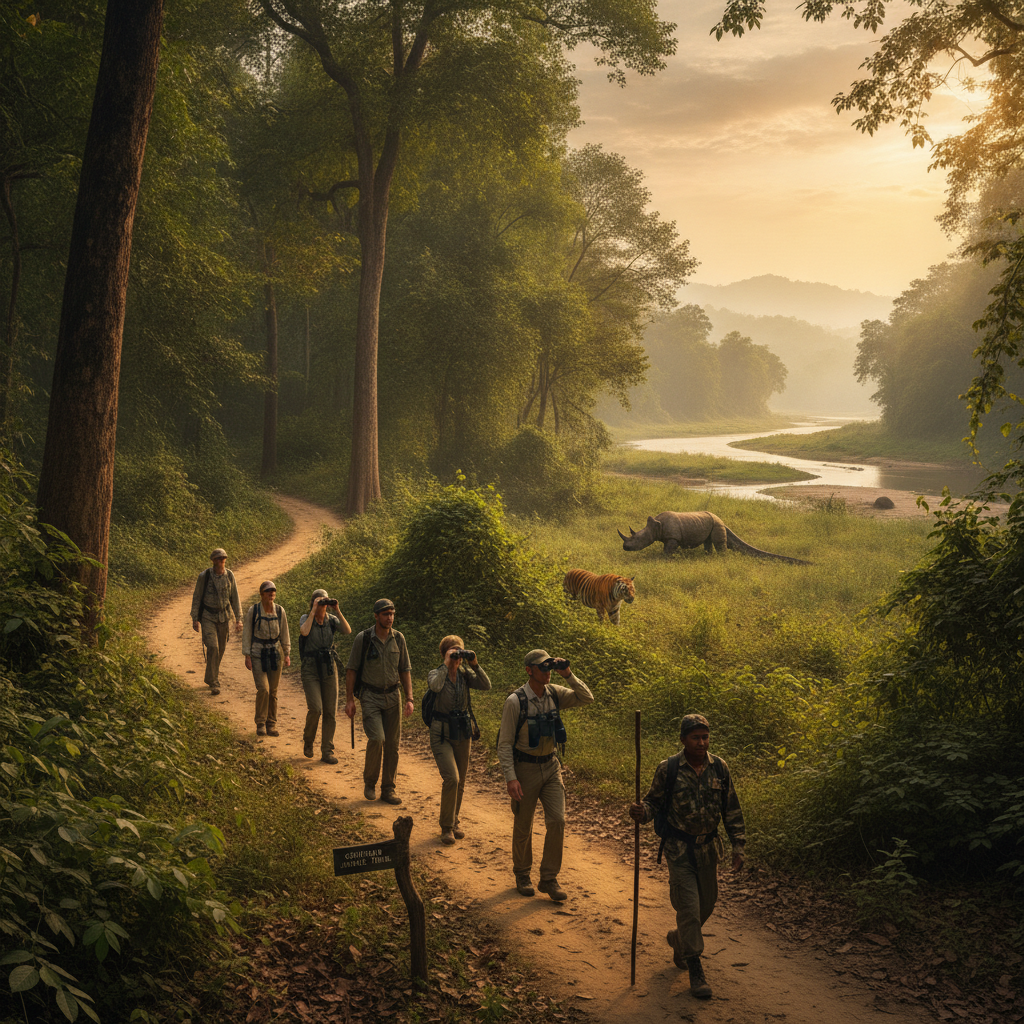
Discover Chitwan's plant world — the extraordinary botanical diversity of the Chitwan national park, from the towering silk-cotton trees of the riverside forest to the rare orchids of the sal woodland and the medicinal plants used by the Tharu community, reveals the ecological foundation beneath the celebrated wildlife.
- 1
Silk-Cotton Tree Giants
The silk-cotton trees (Bombax ceiba) of the Chitwan riverine forest (the massive emergent trees that tower above the Terai forest canopy, their enormous buttressed trunks and their bare-branch crimson flowers in the dry season creating the most visually dramatic single large tree accessible in Nepal's national park system) are the most ecologically central single tree species accessible during the Chitwan nature walk — the silk-cotton's ecological role (the hollow old trees providing the nesting sites for the hornbills and the owls that are among the most sought-after birds in the Chitwan birdwatching list, the flowers providing nectar for the birds and the insects during the February-March flowering before the leaves appear, and the seeds' silk-fibre pods providing nesting material for the birds and hibernation cover for the insects) makes the silk-cotton the most biodiversity-supporting single tree accessible in the Terai forest. The silk-cotton's physical scale (the trunk diameter reaching 2 metres and the tree height reaching 30-40 metres, creating the most imposing single standing natural object visible in the Chitwan forest interior) and the buttress root system (the plank-like root extensions visible at the tree base, the most dramatically engineered single root structure accessible in the Nepal forest system) make the silk-cotton tree the most immediately impressive single botanical encounter accessible during the Chitwan ecology walk.
- 2
Medicinal Plant Garden
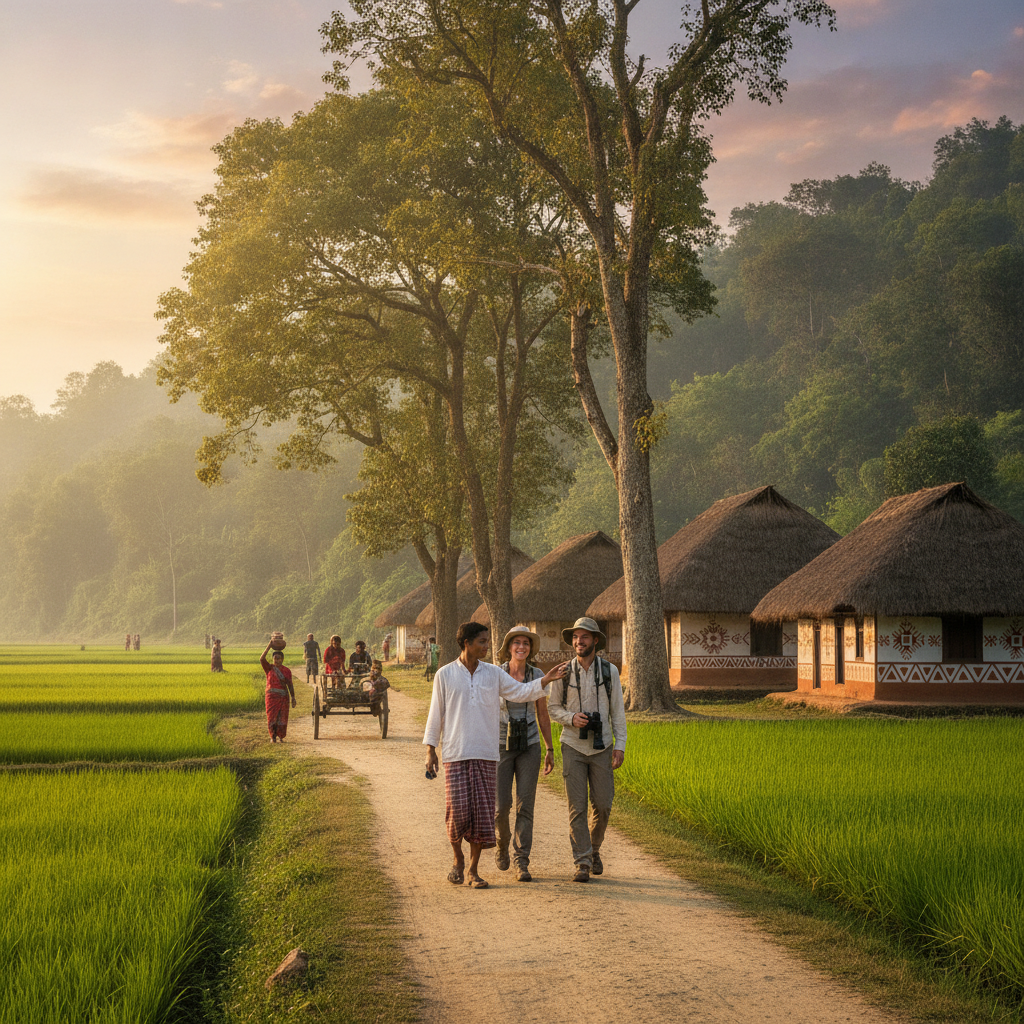
The medicinal plant demonstration at the Chitwan buffer zone (the guided identification of the traditional medicinal plants used by the Tharu community in the forest edge vegetation — the neem tree, the turmeric, the holy basil, and the various other species whose medicinal properties represent the most practically useful single traditional botanical knowledge accessible in the Nepal lowland) is the most directly ethno-botanically informative single encounter accessible during the Chitwan visit — the Tharu herbal medicine system's specific character (the integration of the Ayurvedic tradition with the specifically Terai forest knowledge of the plant species whose medicinal use has been maintained in the Tharu community across the generations of living at the jungle edge) and the plants' contemporary relevance (the continuing use of the traditional remedies alongside modern medicine in the buffer zone communities, the most directly contemporary single traditional knowledge application accessible in Nepal's national park area) create the most practically grounded single botanical encounter accessible at the Chitwan flora walk. The neem tree's specific demonstration (the guide breaking the leaves and the bark to release the bitter aroma that signals the most multi-use single medicinal tree accessible in the Terai, the antibacterial, antifungal, and insect-repelling properties explained by the guide in relation to the Tharu community's traditional use) is the most immediately practically demonstrable single botanical encounter accessible at the Chitwan medicinal plant stop.
- 3
Grass Species Survey
The grass species survey in the Chitwan grasslands (the identification of the dominant grass species in the tall grass meadows — the elephant grass Saccharum spontaneum and the tiger grass Thysanolaena latifolia that are the most ecologically significant single grass species accessible in the Terai, along with the khus-khus grass Vetiveria zizanioides and the various other species that together create the most botanically diverse single grass-dominated habitat accessible in Nepal) is the most directly ecology-foundational single nature walk encounter accessible at Chitwan — the elephant grass's ecological role (the 4-5 metre tall grass that provides the cover and the food for the rhinoceros, the tiger's hunting habitat, and the Bengal florican's breeding territory, making the most wildlife-supporting single grass species accessible in Nepal) and the grassland management's conservation significance (the controlled burning programme that maintains the grass diversity and prevents the woody species from succeeding to forest — the most directly conservation-management-demonstrating single habitat accessible in Nepal's protected area) explain the most ecologically complex single vegetation management accessible in the Nepal national park system.
- 4
Wetland Edge Flora
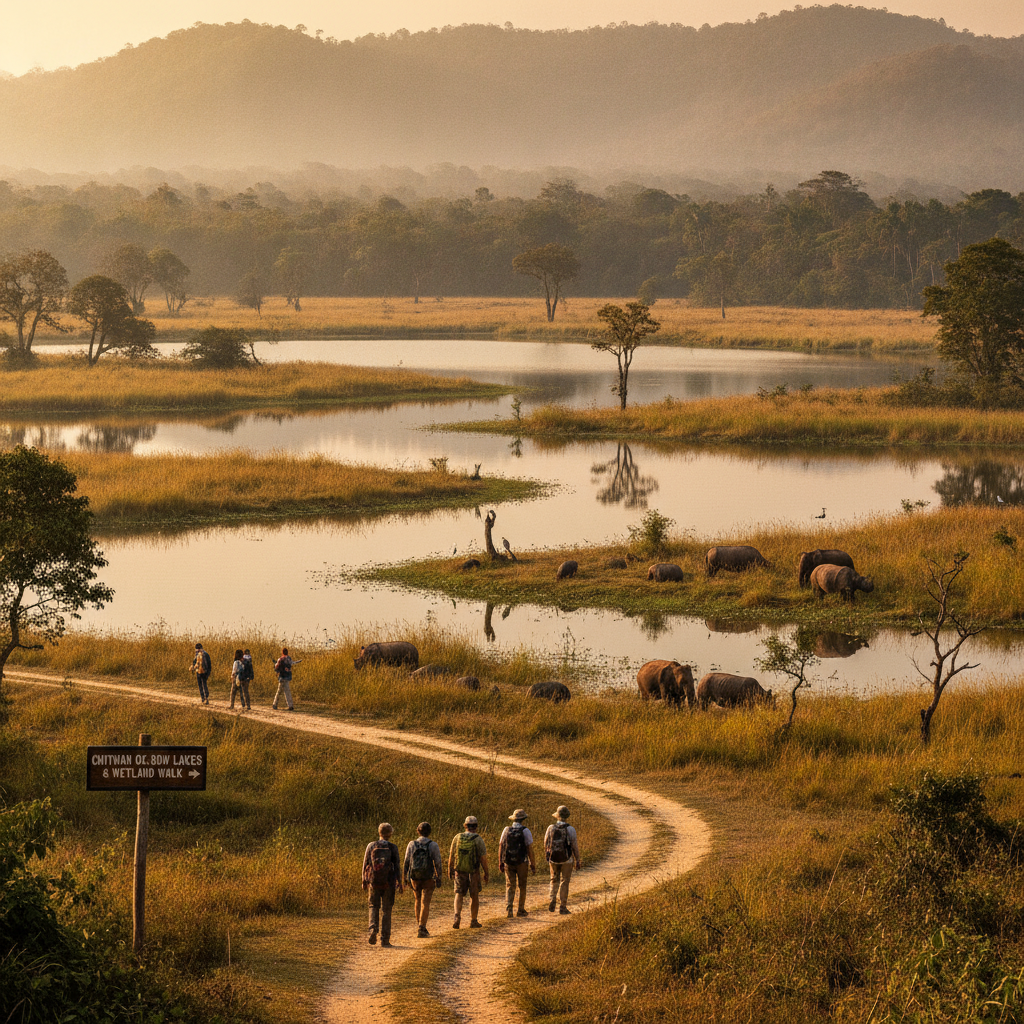
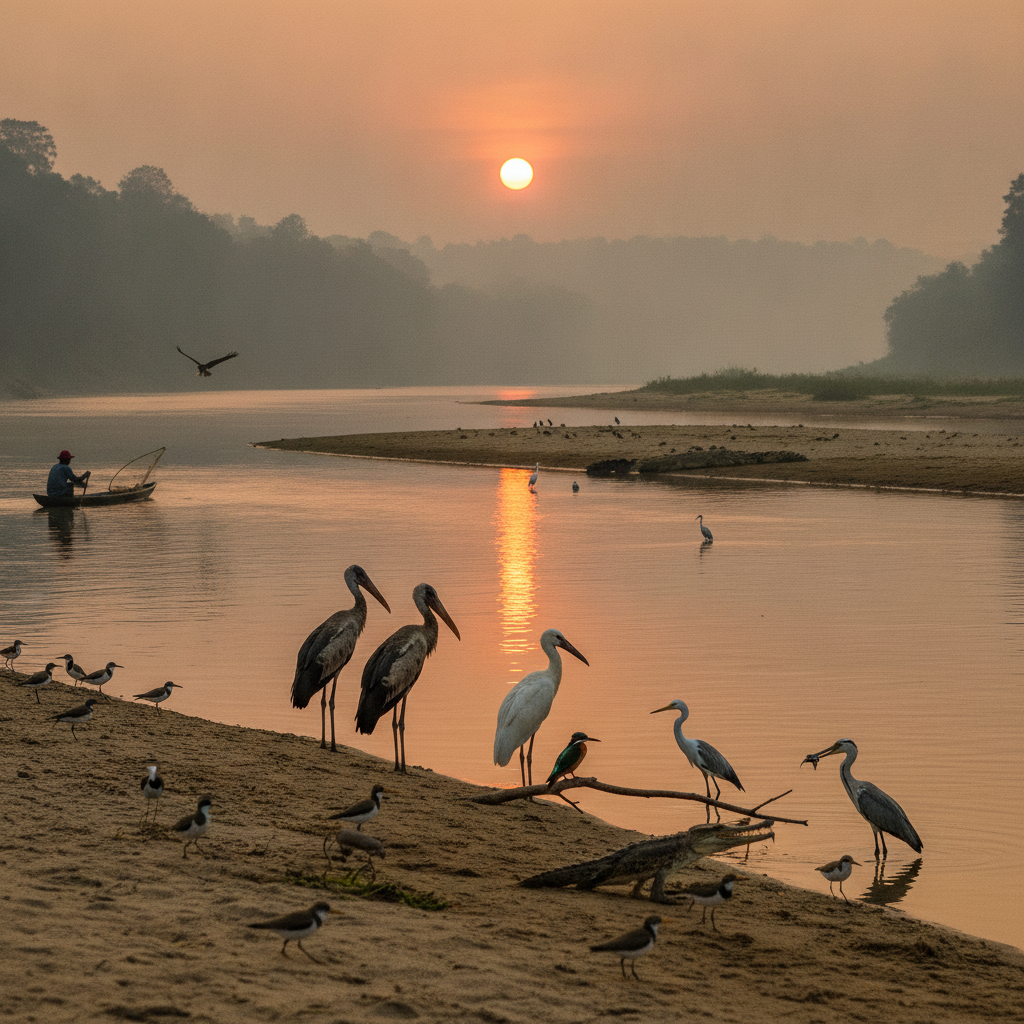
The wetland edge flora at the Chitwan ox-bow lakes (the dense vegetation at the transition between the open water and the terrestrial forest — the water hyacinth, the lotus, and the various sedge and rush species that create the most botanically diverse single aquatic-terrestrial interface accessible in Nepal's national park system) is the most ecologically complex single botanical community accessible during the Chitwan nature walk — the wetland vegetation's ecological functions (the water hyacinth's water quality filtering role, the lotus's seed pods providing food for the birds and the aquatic invertebrates, and the emergent sedge vegetation providing the nesting sites for the waterbirds and the cover for the gharial's egg-laying activity) and the wetland edge's medicinal plant community (the malabar nut — Adhatoda vasica — the most important single Terai respiratory medicine accessible in the Tharu traditional pharmacopoeia, visible as the most abundant single shrub at the wetland margins) create the most directly functional single botanical community accessible in Nepal. The lotus's cultural significance (the sacred status of the lotus in both the Hindu and the Buddhist traditions — the most universally revered single flower accessible in Nepal — combined with its most practically ecologically significant single aquatic plant role in the Chitwan wetland) makes the lotus the most culturally-ecologically complete single plant encounter accessible at the Chitwan ox-bow lake.
- 5
Sal Forest Canopy
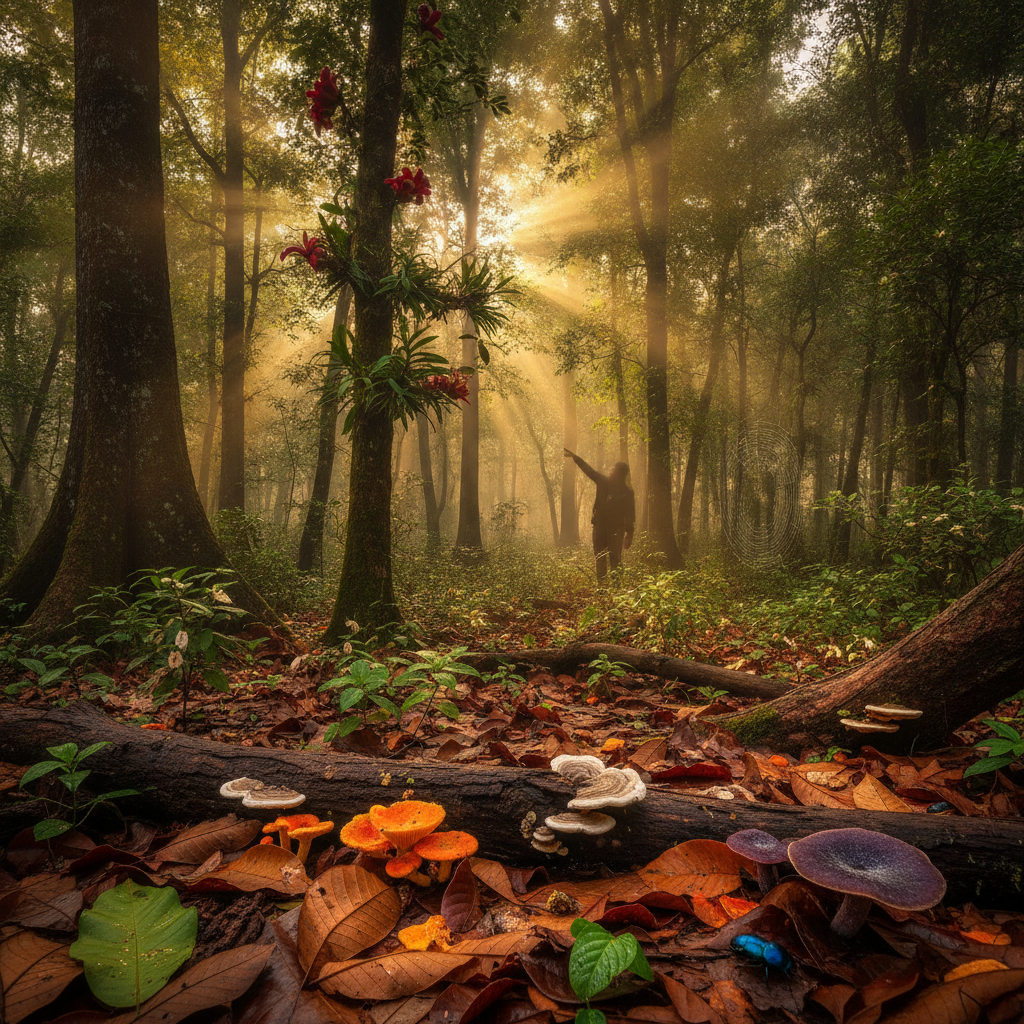
The sal forest canopy study (the observation of the dominant Shorea robusta tree's architecture, the interlocking canopy that creates the most consistently shaded single forest floor accessible in the Terai, and the epiphytic plants — the ferns, the mosses, and the occasional orchid visible on the trunk and the branches of the mature sal trees) is the most directly canopy-ecology-informative single botanical encounter accessible during the Chitwan forest walk — the sal tree's ecological significance (the canopy species that creates the specific microclimate of the Chitwan sal forest floor — the reduced temperature, the increased humidity, and the filtered light that create the habitat for the forest floor species) and the sal's economic history (the most commercially valuable single timber tree species accessible in the Terai forest, the historical logging pressure that the national park's establishment ended, and the evidence of old-growth trees surviving within the park's core zone) reveal the most directly conservation-success-demonstrating single forest type accessible in Nepal. The sal canopy's bird community (the various species that are specifically adapted to the sal forest canopy structure — the drongos visible perched on the exposed dead branches, the treepies moving through the interlocking canopy, and the hornbills' large wingbeats audible above the canopy) is the most directly botanical-ecology-linked single bird community encounter accessible in the Chitwan sal forest.
- 6
Buffer Zone Plant Trail
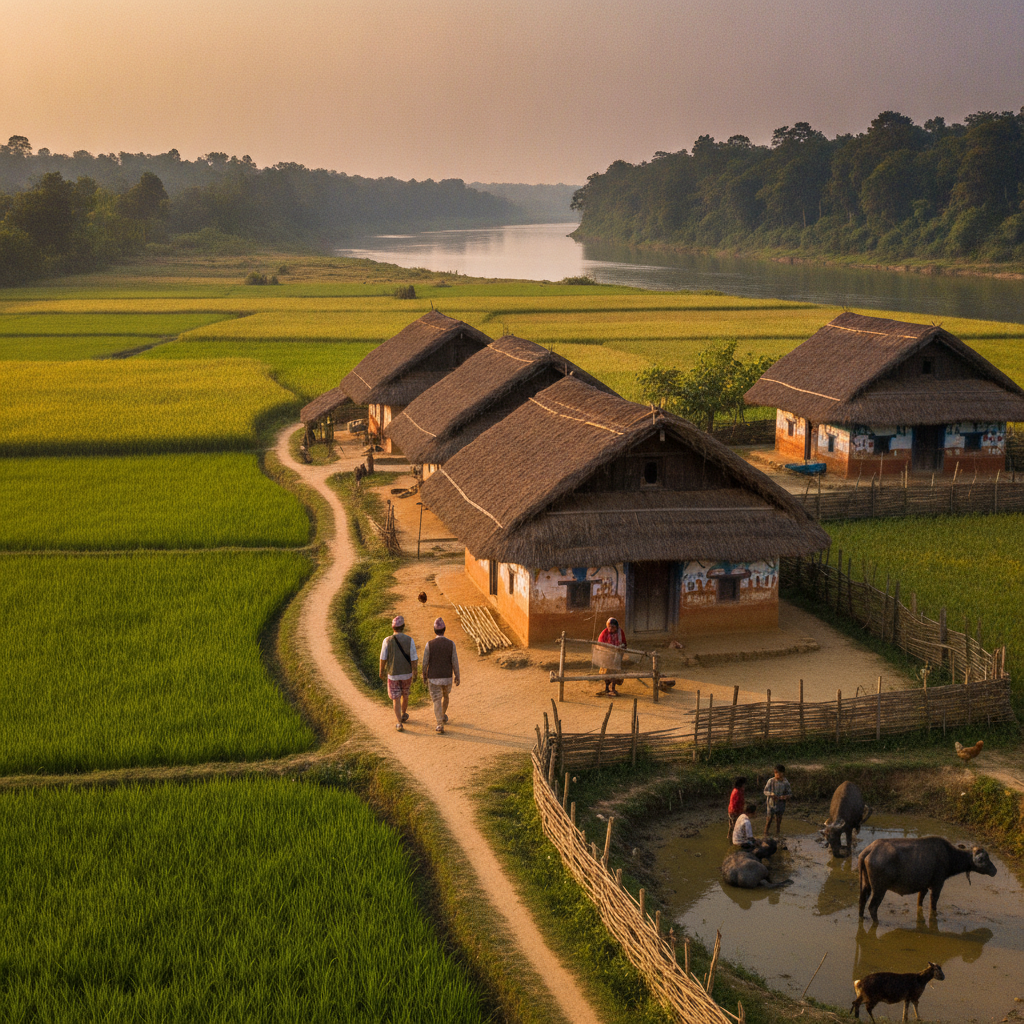
The buffer zone plant trail at the Chitwan national park boundary (the walking route through the transition zone between the national park core and the agricultural land of the buffer zone community, where the wild plant community of the forest edge mixes with the cultivated species of the Tharu farming system) is the most directly human-nature-interface-demonstrating single botanical walk accessible in Nepal — the buffer zone's specific plant community (the wild fig trees providing the fruit that is the most important single food source for the fruit bats, the langurs, and the birds that move between the forest and the buffer zone, alongside the Tharu community's planted trees — the mango, the jackfruit, and the banana that are the most important single cultivated fruit species accessible in the buffer zone homesteads) and the wild-cultivated plant interface (the forest edge species — the lantana, the common Indian mulberry, and the various grass species that are the most visually indicator species of the transition between the managed and the unmanaged vegetation) create the most completely human-ecological single plant community accessible during the Chitwan buffer zone nature walk. The trail's combined wildlife encounter probability (the buffer zone's position as the most wildlife-movement-active single corridor accessible between the national park core and the surrounding habitat) makes the buffer zone plant trail the most consistently combined botanical-and-wildlife-encounter single nature walk accessible at the Chitwan destination.
Walk this route with audio
Stories play automatically as you reach each stop — no tapping needed.