Roman Catania
Discover the Roman city of Catina beneath the baroque surface of Catania where the Roman amphitheater in Piazza Stesicoro, the Roman theater, the Odeon, the Roman baths, and the subterranean city of Liotru beneath the modern streets reveal the extraordinary archaeological depth below one of Sicily most dynamic modern cities.
- 1
Roman Amphitheater
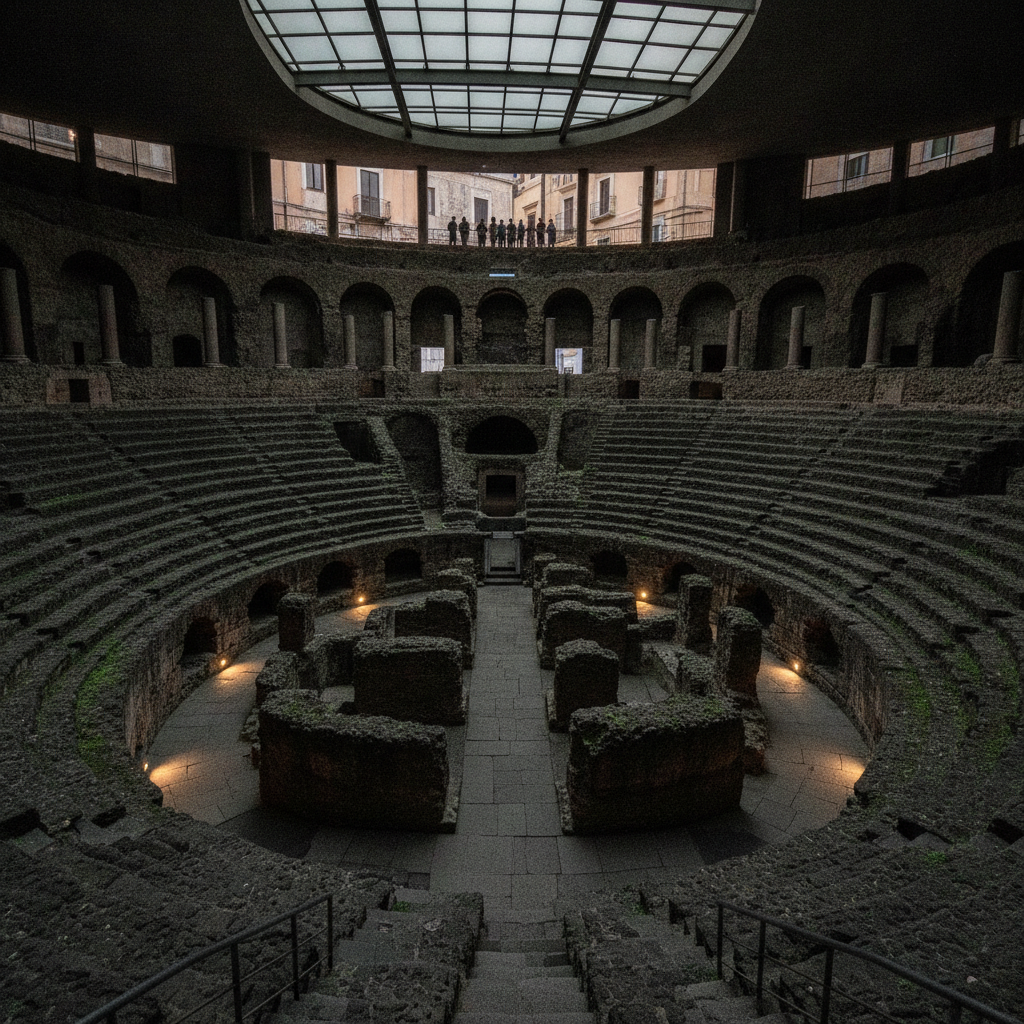
See the Roman amphitheater in Piazza Stesicoro, the second largest in Italy after the Colosseum with a capacity of 15000 spectators, partially excavated in the piazza where the visible arc of the arena seating curves through the modern urban fabric, the rest of the 2nd century structure buried beneath the baroque city built on top of it.
- 2
Roman Theater
Visit the Roman theater of Catania near Via dei Crociferi where the 2nd century theater partially excavated on the slope of the ancient city is one of the best preserved Roman theaters in Sicily, the adjacent Odeon used for musical performances and rhetorical contests providing a complete picture of the Roman entertainment complex in the ancient city.
- 3
Underground Catania
Explore the underground city of Catania through the guided tours of the subterranean lava rivers, the ancient waterways, and the archaeological remains preserved below street level where the Amenano river that runs underground through the city, the Greek walls, and the Roman infrastructure create a subterranean city as complex as the one above.
- 4
Greek Heritage
Find the traces of the Greek city of Katane where the 5th century BC city founded by Chalcidian colonists from Naxos produced the lyric poet Stesichoros and the lawgiver Charondas, the Greek layer beneath the Roman beneath the baroque creating the deepest archaeological stratification in Sicily after Syracuse.
- 5
Roman Baths
Visit the Roman baths near the central station where the extensive bathing complex demonstrates the scale of Roman investment in the infrastructure of Catina, the city having been an important Roman municipium for several centuries before the Byzantine period and the subsequent Arab and Norman conquests that transformed its character.
- 6
Museo Civico
Visit the Museo Civico at Castello Ursino where the medieval castle built by Frederick II in 1239 houses the civic art collection including Greek, Roman, and medieval artifacts from the Catania area, the castle itself one of the finest examples of Swabian military architecture in Sicily and a witness to the successive waves of conquerors who shaped the city.
Walk this route with audio
Stories play automatically as you reach each stop — no tapping needed.