Ayutthaya Outer Temples & Walled City Walk
Explore Ayutthaya beyond the central ruins — the temples outside the main historical park and the remains of the city walls and fortifications reveal the full scale of the Ayutthaya kingdom's capital.
- 1
City Wall and Fortress Remains
The remains of the Ayutthaya city walls and the earth ramparts that defended the island city are partially visible in the northern and western sections of the historical park — the city's defensive perimeter (approximately 12km in circumference, defended by a combination of the three surrounding rivers and the constructed earthworks with their cannon emplacements) failed in 1767 after the 14-month Burmese siege, and the ruins of the defensive structures provide evidence of the scale of the military engineering invested in protecting the capital. The fortification remains include several bastions (the cannon towers at the wall corners) and the sluice gates that controlled the water flow into the city's canal system, revealing the integration of water management and military defence that characterised the Ayutthaya island city.
- 2
Wat Phutthaisawan Complex
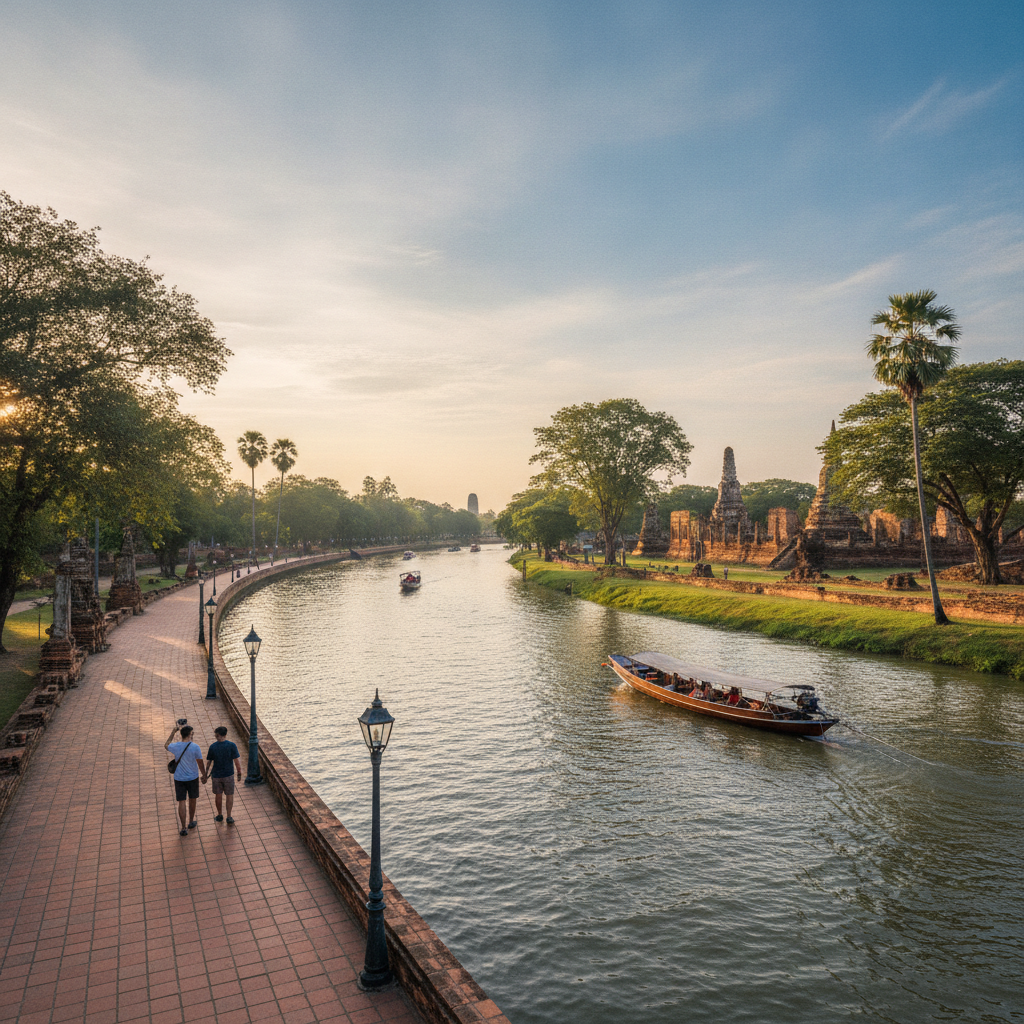
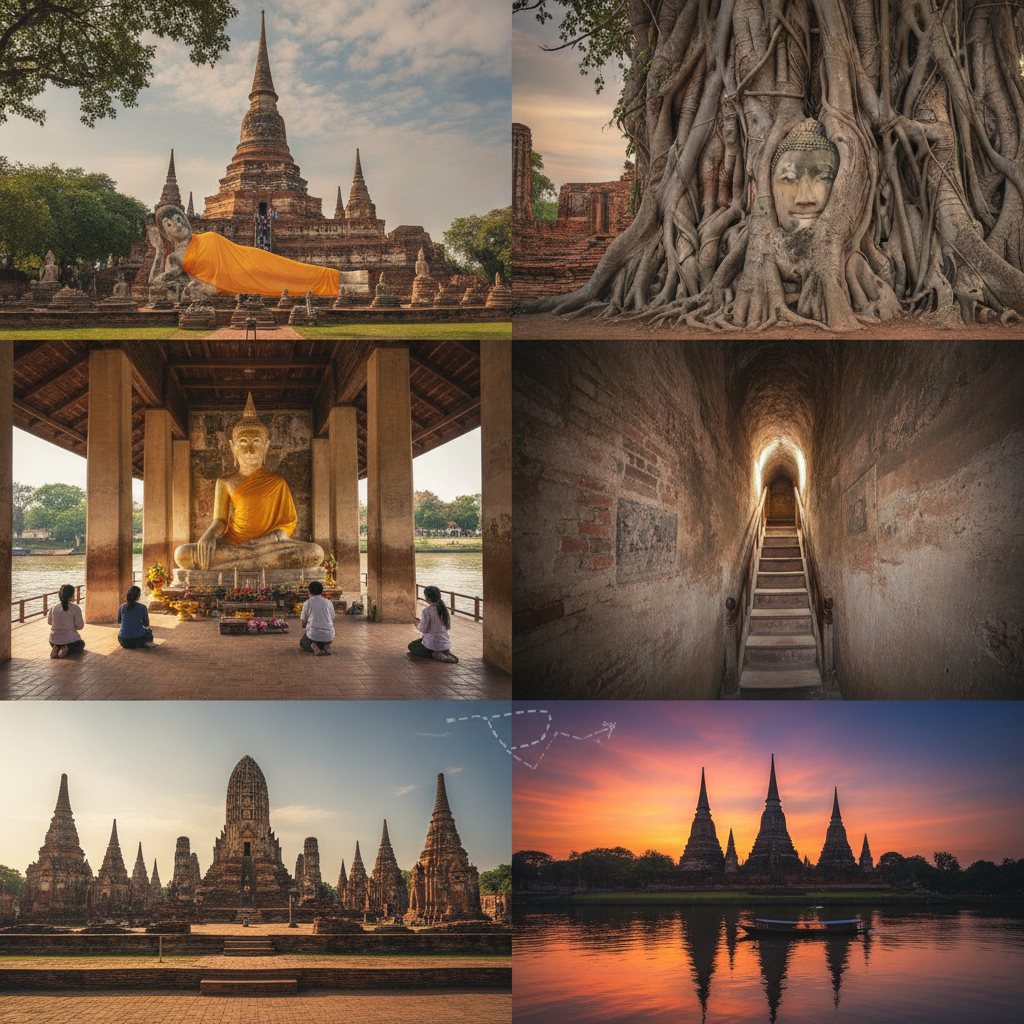
Wat Phutthaisawan on the southern shore is one of the oldest temple sites in the Ayutthaya historical area, dating to the earliest years of the kingdom — the reclining Buddha image (Phra Phutthaisawan) housed in the temple's vihara is one of the few original Ayutthaya period reclining Buddhas still in situ in the historical city. The temple's riverside position makes it accessible by river boat and provides the most spectacular view from the river of any of the Ayutthaya temple sites, with the large chedi and the prang visible above the riverbank vegetation creating the iconic river approach image of the ruined city.
- 3
St. Joseph's Catholic Cathedral
St. Joseph's Catholic Cathedral in the Portuguese settlement area southeast of the island is the oldest Christian building in Thailand — the Catholic church established by the Portuguese missionaries in the 16th century and rebuilt in the current neoclassical style in the 19th century documents the extraordinary religious pluralism of the Ayutthaya capital, where Christian, Muslim, Hindu, and Buddhist communities coexisted under the tolerant administration of the Thai kings. The cathedral's active parish (the oldest continuously operating Catholic congregation in Thailand) and the adjacent Portuguese-period cemetery (where the inscriptions document the multinational character of the merchant community) provide the most accessible encounter with the historical cosmopolitanism that made Ayutthaya the most internationally connected city in pre-modern Southeast Asia.
- 4
Japanese Village Memorial
The Japanese merchant quarter at the eastern entrance to the city (near the Pa Sak River crossing) is marked by the memorial to Yamada Nagamasa, the Japanese adventurer who became the most influential foreign commander in the Ayutthaya court in the early 17th century — the Japanese community of 1,500 residents in Ayutthaya at its peak (1610-1630) provided the kingdom with military expertise (the Japanese ronin and masterless samurai who joined the Ayutthaya royal guard were the most skilled individual fighters available in Southeast Asia) and commercial connections to the Edo period Japan trade. The memorial and the adjacent small museum document the Japanese community's role in the Ayutthaya kingdom at the specific historical moment when Japanese maritime trade was at its peak before the Tokugawa isolation policy ended it.
- 5
Ayutthaya Historical Study Centre
The Ayutthaya Historical Study Centre adjacent to the historical park provides the most scholarly and most comprehensive overview of the kingdom's history available to visitors — the centre's exhibitions cover the full chronological span of the Ayutthaya period (1351-1767), the archaeological excavations that have revealed the city's extent and character, the international trading connections that made the city a cosmopolitan hub, and the legacy of the Ayutthaya period for contemporary Thai culture and identity. The centre's collection of maps (the European cartographers' maps of Ayutthaya in the 17th century that document the city's extent and the foreign visitors' quarters) and the diplomatic documents (the exchanges between the Ayutthaya court and the European trading companies) provide the most directly historical documentation of the city at its peak.
- 6
Chedi Luang Fort
The Chedi Luang fort and the adjacent museum complex in the northern section of the historical park island provide the most accessible overview of the defensive infrastructure of the Ayutthaya city — the museum's collection of cannon (the various sizes of bronze and iron cannon used to defend the city's walls, some of these weapons being among the largest cannon cast in Southeast Asia), the military artefacts, and the maps of the city's fortifications provide a military history complement to the religious archaeology of the temple ruins. The cannon collection documents the integration of firearms technology into the Ayutthaya military tradition from the 16th century onward, transforming the kingdom's defensive and offensive capabilities and making the temple compound fortification walls the key military infrastructure of the mature Ayutthaya kingdom.
Walk this route with audio
Stories play automatically as you reach each stop — no tapping needed.