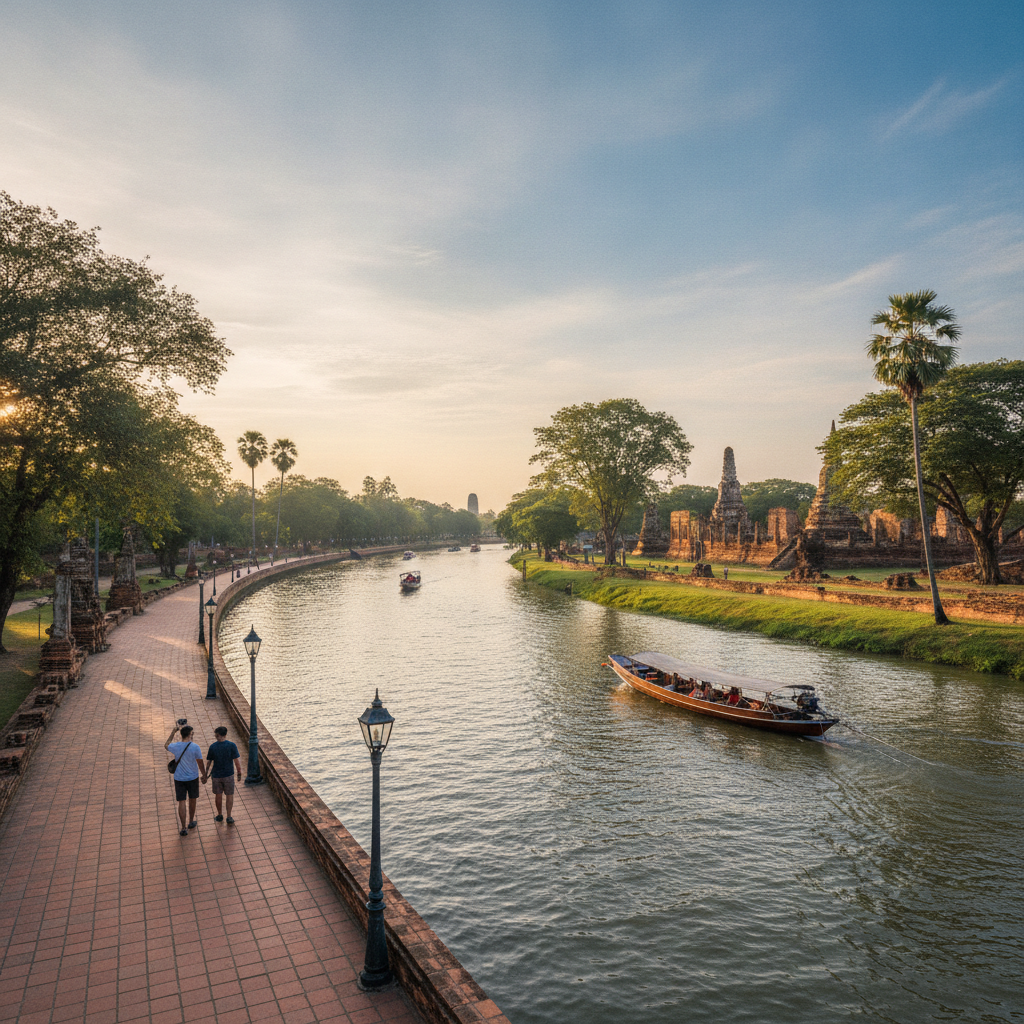
Ayutthaya Elephant & Military History Walk
Explore Ayutthaya's military heritage — the kingdom's history is dominated by the wars with Burma (17 major conflicts over 200 years), the elephant battles that determined royal succession, and the military innovations that made Ayutthaya one of the most powerful states in Southeast Asia.
- 1
King Naresuan Memorial
King Naresuan the Great (reigning 1590-1605) is the most celebrated military hero of the Ayutthaya kingdom — the king who led the successful liberation of the kingdom from Burmese overlordship (after Ayutthaya's subjugation following the 1569 defeat) and who killed the Burmese crown prince in a personal elephant duel in 1592 is venerated throughout Thailand as the symbol of Thai military courage and independence. The Wat Yai Chai Mongkhon chedi built to commemorate Naresuan's elephant duel victory and the numerous statues, films, and cultural celebrations dedicated to his memory demonstrate the continued importance of his story to Thai national identity. The elephant duel tradition (two kings or crown princes settling a war by single combat on elephant back) was the most dramatic expression of the Ayutthaya period's military culture.
- 2
Burmese Sack Memorial
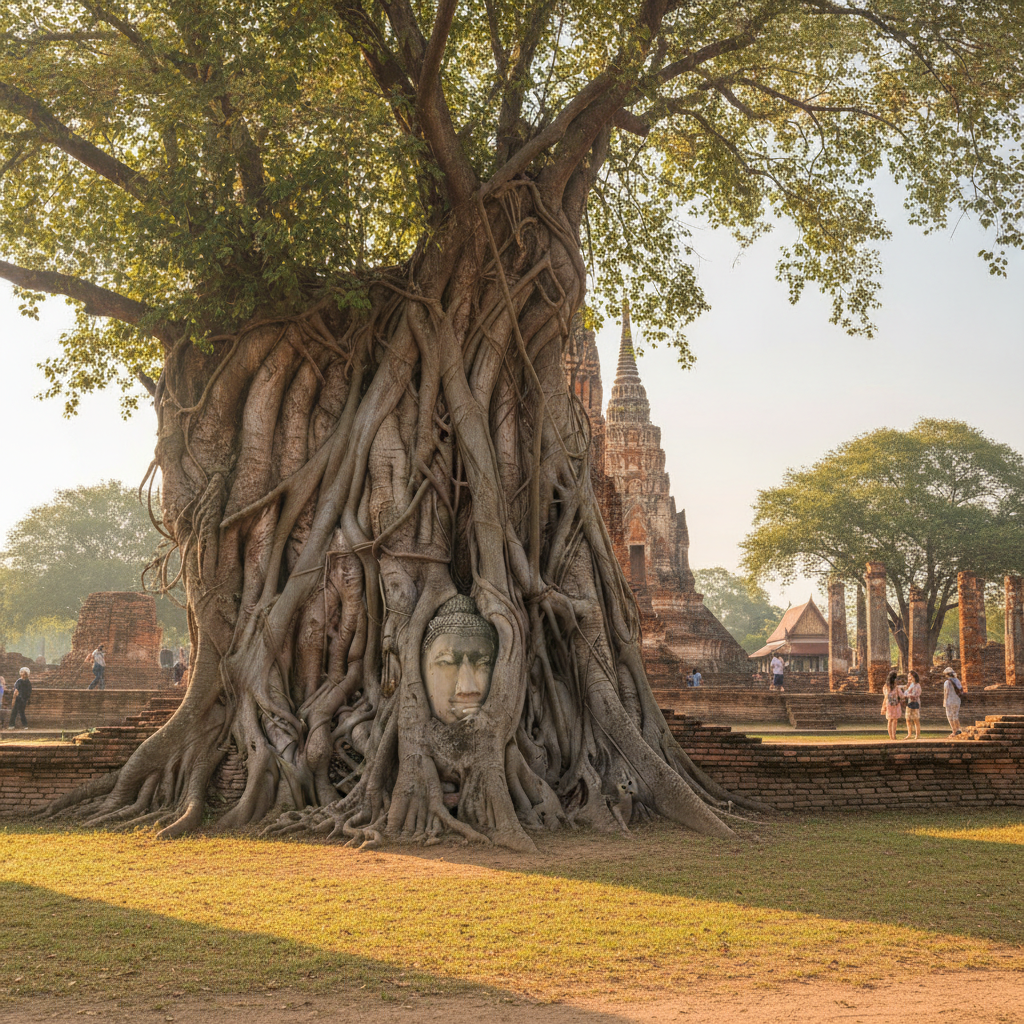
The destruction of Ayutthaya by the Burmese army in April 1767 (after a 14-month siege) is the defining trauma of Thai historical memory — the Burmese forces under King Hsinbyushin systematically burned the city, melted down the golden Buddha images for the metal, smashed the temple buildings, and deported approximately 30,000 survivors (including the royal family and the court) to Burma as slaves. The ruined state of the Ayutthaya temple complex visible today (the headless Buddha images, the toppled prangs, and the burned brick walls) is primarily the result of this 1767 sack rather than the natural decay of centuries, and the deliberate destruction visible in the damaged temple remains gives the Ayutthaya ruins a specifically violent historical resonance different from the decay of other ancient sites. The historical park's ruined character is simultaneously the result of historical tragedy and the source of the city's extraordinary visual power.
- 3
Royal Palace Grounds
The Grand Palace compound (Wang Luang) in the northern section of the historical park central zone was the administrative and residential heart of the Ayutthaya kingdom for four centuries — the palace (burned and demolished so completely in 1767 that only the foundation outlines and the adjacent Wat Phra Sri Sanphet remain) was one of the most extensively developed royal compounds in Southeast Asia, with the audience halls, the women's quarters, the royal chapel, and the elephant stables all enclosed within the palace walls. The scale of the foundation remains (visible in the raised earthworks and the brick outlines exposed by the archaeological excavations) provides a sense of the original palace's size and the organisational complexity of the royal administration that it housed.
- 4
War Elephant Training Ground
The elephant kraal north of the historical park central zone was the centre of the Ayutthaya kingdom's most important military resource — the annual elephant roundups that captured wild elephants from the forests north of the city and brought them to the kraal for training as war elephants were major ceremonial and administrative events. The training of war elephants (teaching the animals to charge enemy formations, to accept the noise and confusion of battle, and to carry the mahout and the soldiers in the howdah above the elephant's back) was a specialist skill that produced the most expensive and most prestigious military asset in the pre-gunpowder Southeast Asian warfare system. The Ayutthaya kings' military strength was measured by the number of white elephants they possessed (the albino elephant being a symbol of cosmic power), and the discovery of a white elephant in the forest was a major auspicious event in the royal calendar.
- 5
Wat Na Phra Mane Active Temple
Wat Na Phra Mane across the Lopburi River from the historical park's northern edge is one of the few large temple complexes that survived the 1767 Burmese destruction — the temple's survival (attributed to its use by the Burmese military as a headquarters during the siege, which protected it from the deliberate destruction applied to the other royal temples) means it retains the original architectural features that have been lost at the damaged sites. The Davaravati period stone Buddha image housed in the temple's main hall (one of the oldest Buddhist sculptures in Thailand, dating to the 6th-9th century) provides the earliest layer of the religious history of the Ayutthaya plain, predating the Thai Buddhist tradition by several centuries.
- 6
Ayutthaya Wax Museum
The Ayutthaya historical wax museum in the new town area provides the most accessible narrative introduction to the Ayutthaya kingdom's history for visitors who want a contextual framework before exploring the temple ruins — the displays of scenes from the kingdom's history (the royal court ceremonies, the elephant battles, the foreign diplomatic encounters, and the 1767 destruction) use the combination of wax figures, historical artifacts, and environmental staging to create an immersive historical narrative that complements the purely archaeological experience of the temple ruins. The museum's depiction of the 17th-century Ayutthaya at its international trading peak (the foreign merchants, the diplomatic missions, and the court's cosmopolitan character) provides the most complete visual representation of the historical city at the height of its power.
Walk this route with audio
Stories play automatically as you reach each stop — no tapping needed.