Beyond Amman: Umayyad Frescoes in the Desert, Saladin's Castle & the Jordan Valley Rift
Explore Jordan from Amman's hub—UNESCO Qasr Amra's 8th-century frescoes of bathing women and six defeated kings in a desert pleasure palace, Umm Qais's black basalt Roman theatre above the Sea of Galilee with three countries visible, Saladin's Ajloun Castle above Jordan's last oak forest, and the UNESCO Baptism Site of Jesus on the Jordan River with almost no visitors.
- 1
The Desert Castles – Umayyad Pleasure Palaces
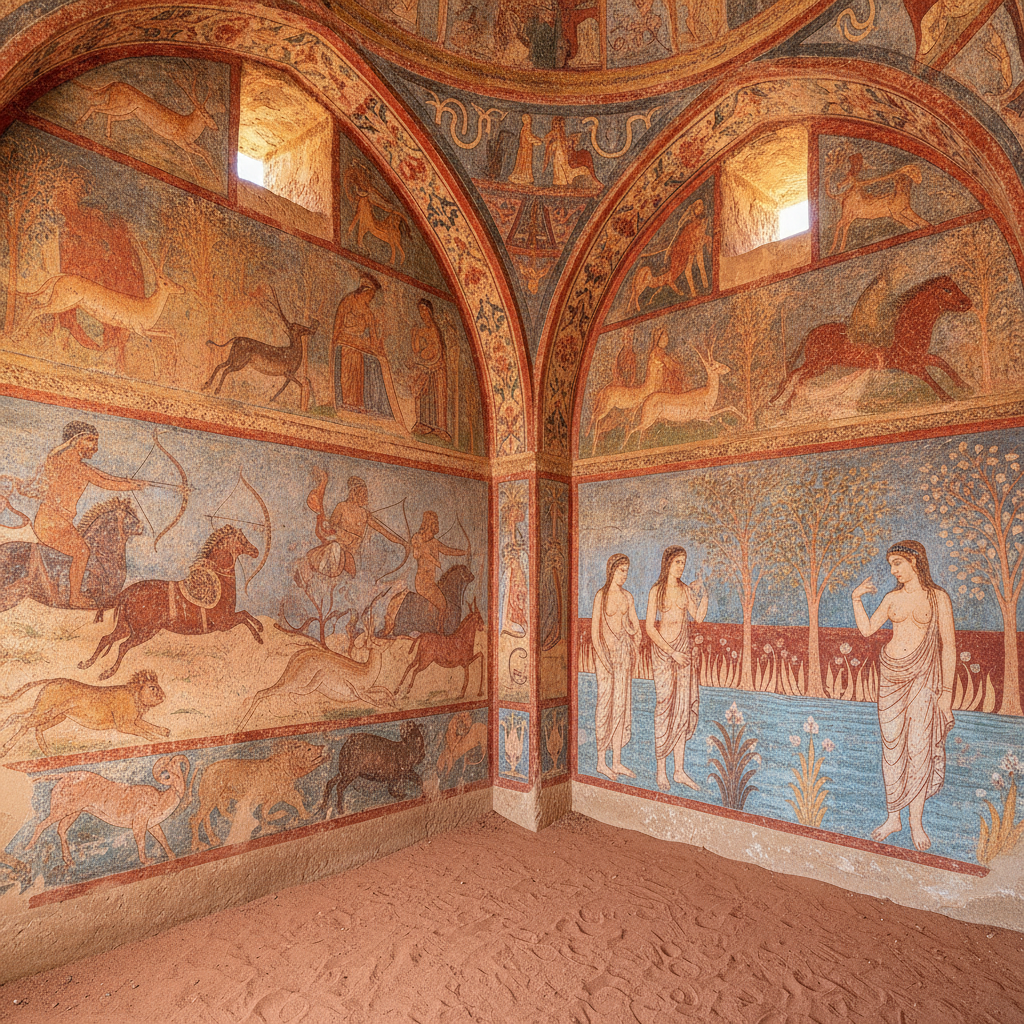
Jordan's Desert Castles—a chain of early Islamic (Umayyad, 7th–8th century AD) structures east of Amman in the Jordanian desert—are among the most extraordinary and least visited Islamic heritage sites in the world. Qasr Amra (UNESCO World Heritage) contains the most remarkable Umayyad frescoes in existence: bathing women, hunting scenes, and the 'Six Kings' fresco showing the rulers who the Umayyad Caliph had defeated. Qasr Kharana (a caravanserai or pleasure palace) and Qasr Azraq (Lawrence of Arabia's desert headquarters) round out the circuit.
- 2
Umm Qais – Greek-Roman City Above the Sea of Galilee
Umm Qais (ancient Gadara), 110 km north of Amman in the northwest corner of Jordan, is a dramatic Greco-Roman ruin site above the confluence of the Sea of Galilee, the Jordan Valley, and the Golan Heights—three countries visible from the hilltop. The city's black basalt theatre, colonnaded street, mausoleum, and museums are set within a still-inhabited modern village of the same name. The site is the least visited of Jordan's major Roman cities and rewards the journey for the panoramic view alone.
- 3
Ajloun Castle & the Northern Highlands
Ajloun Castle (Qal'at ar-Rabad), 75 km north of Amman, was built in 1184 by the Kurdish general Izz al-Din Usama (a relative of Saladin) to control the Jordan Valley crossing and counter the Crusader fortresses. The castle's views over the Jordan Valley towards Palestine are extraordinary; the surrounding Ajloun Forest Reserve (operated by the Royal Society for the Conservation of Nature) offers hiking through the only significant oak forest remaining in Jordan, with red squirrels, roe deer, and (rarely) wolves.
- 4
Wadi Mujib & the Jordan Valley
The Jordan Valley—a section of the Great African Rift Valley running from Turkey to Mozambique—is Jordan's most dramatic geographical feature: a depression dropping 400 metres below sea level along the Jordan River, lined with sub-tropical vegetation and agricultural settlements. The Jordan River crossing at the Sheikh Hussein/Northern Crossing connects to Israel's Beit She'an. The Baptism Site of Jesus (Al-Maghtas, Jordan side of the Jordan River)—a UNESCO World Heritage Site since 2015—is 50 km west of Amman and receives surprisingly few visitors.
- 5
Amman's Nightlife & Arts Scene
Amman's nightlife is more conservative than Beirut or Tel Aviv but more liberal than most Middle Eastern capitals. The bars and rooftop venues of Jabal Amman, Abdali, and the growing Aqaba Street nightlife cluster serve alcohol (Jordan is a constitutionally secular state); the Blue Fig, Rovers Return, and the Cantaloupe rooftop are the most reliably busy. The annual Amman International Film Festival (Awal Film) and the Amman Darat al-Funun contemporary arts programme (in a 1920s villa above downtown) are the city's most significant cultural events.
- 6
Jordan's Refugee History & Amman's Resilience
Jordan has accepted more refugees per capita than almost any country in history: Palestinians (1948, 1967), Lebanese (1975–1990), Gulf War Iraqis (1990–1991), Iraqi War refugees (2003–2010s), and Syrian refugees (2011–present, 750,000+ registered). Amman has absorbed these successive waves while maintaining relative stability—a diplomatic and humanitarian achievement. The Za'atari refugee camp (75 km north of Amman, near Mafraq) houses 80,000 Syrian refugees in what has become Jordan's fourth-largest city, with its own economy, school system, and market streets.
Walk this route with audio
Stories play automatically as you reach each stop — no tapping needed.
More in Amman
Amman's Food & Culture: Mansaf by Hand, Palestinian Knafeh & Rome's Best Ruins at Jerash
Amman Day Trips: Jerash Roman City, Ajloun Castle, the Dead Sea Float, and the Madaba Mosaic Map
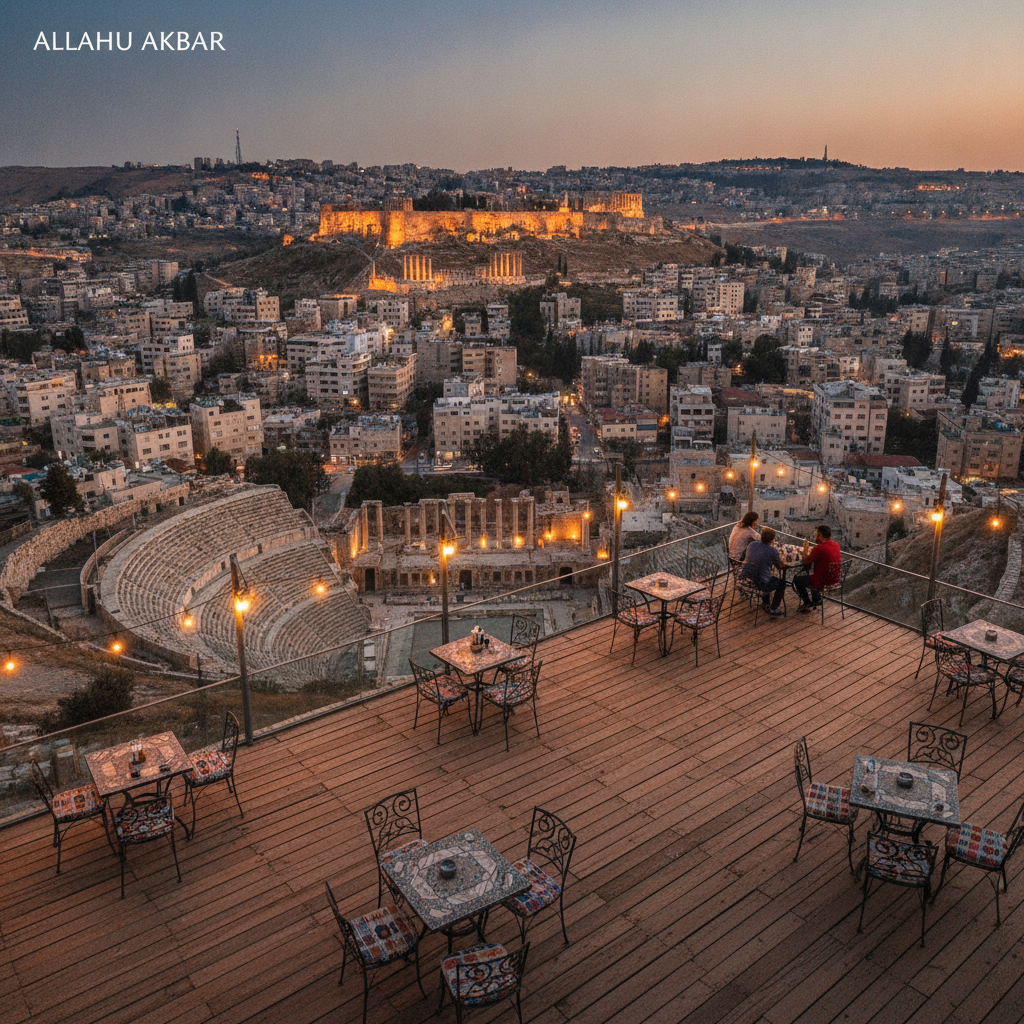
Amman's Living Culture: Syrian Restaurants, Wild Jordan Café & a Diplomatic Crossroads
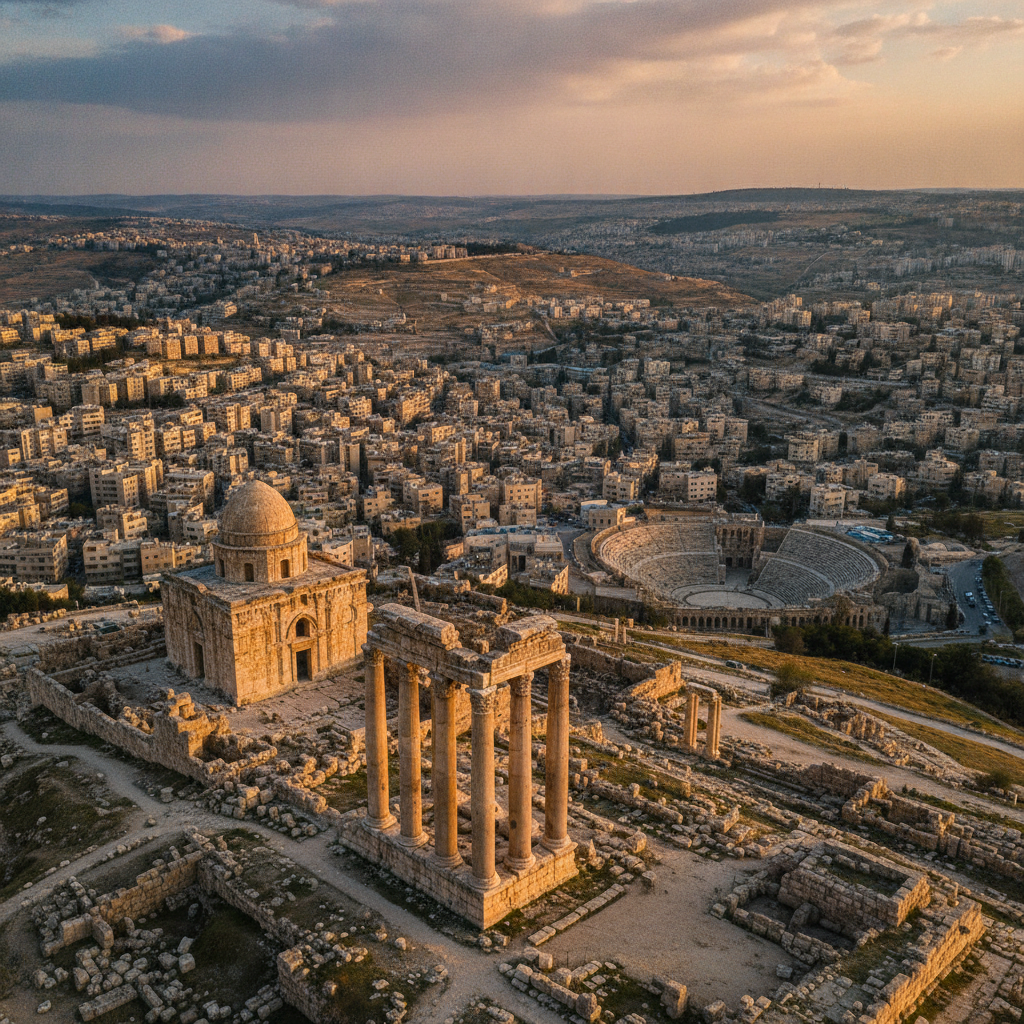
Amman Essential: The Citadel with the Temple of Hercules, the Roman Theatre, the Umayyad Palace, Rainbow Street, and the Downtown Medley of Ancient and Modern Jordan
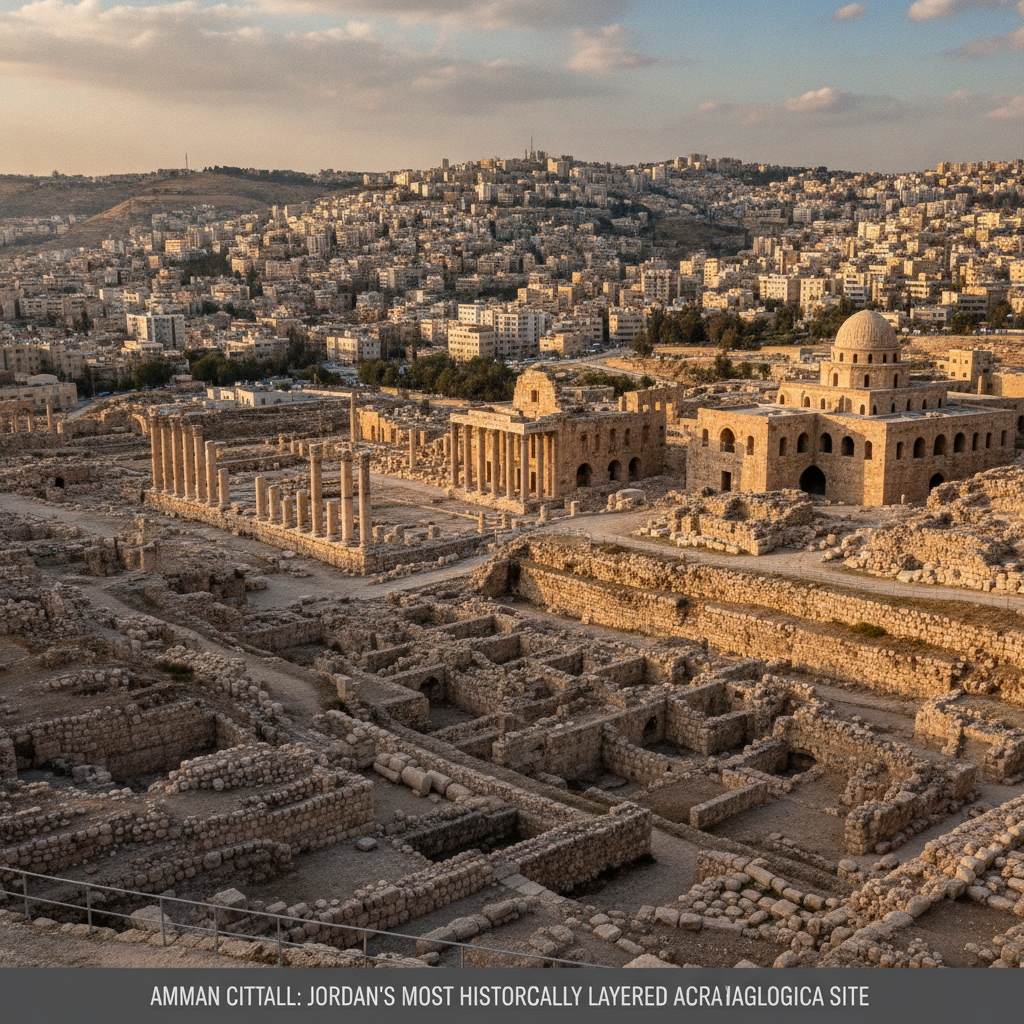
Amman History: The Ammonite Rabbath Ammon, the Hellenistic Philadelphia, the Roman Gerasa, the Byzantine City, the Umayyad Capital, and the Modern Jordanian Capital