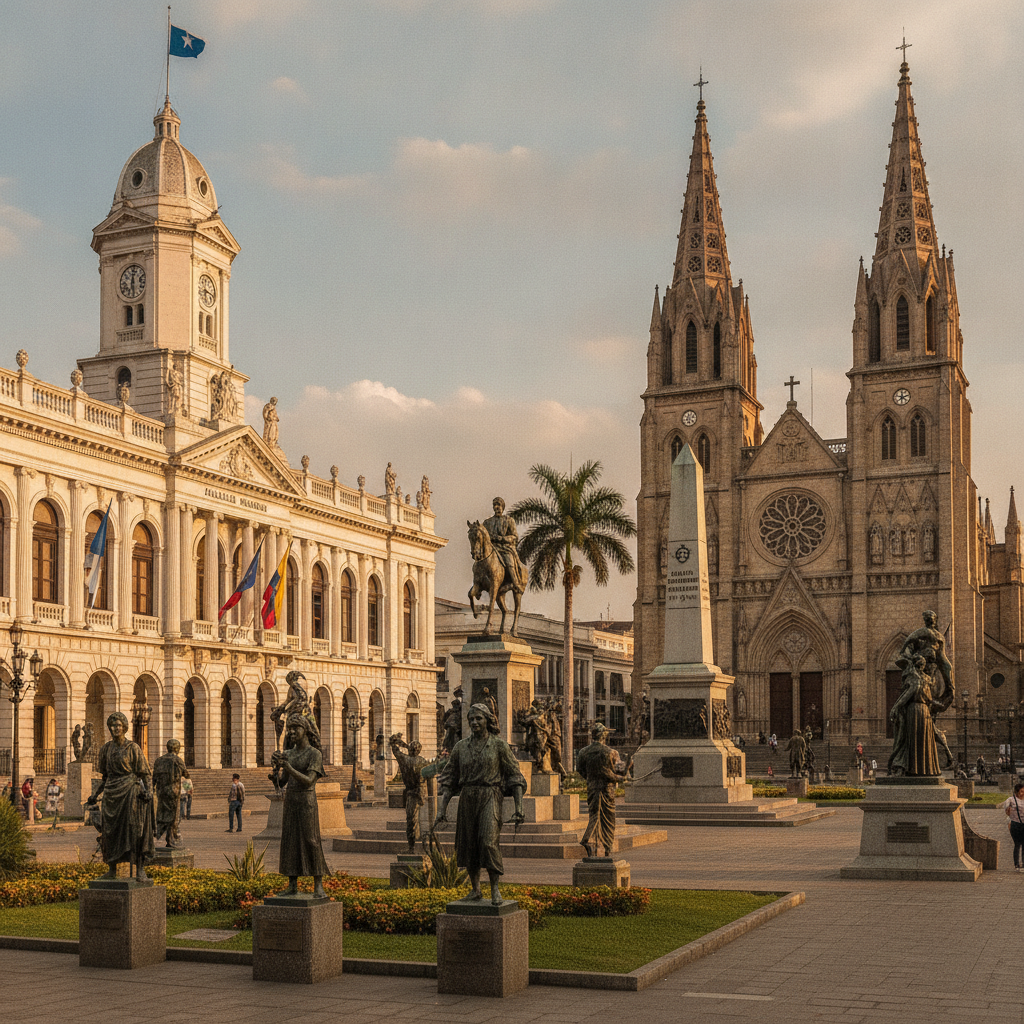


Guayaquil and Independence: The Liberators' Meeting Point
Guayaquil declared independence from Spain on 9 October 1820 — one of the first South American cities to do so; the city's role in the independence struggle and the 1822 meeting between Bolívar and San Martín make it a pivotal location in Latin American history

Guayaquil After Dark: Urdesa, Samborondón & Port City Energy
Guayaquil's nightlife reflects its commercial energy — the Urdesa and Samborondón districts have excellent restaurants, cocktail bars, and live music venues; the tropical heat and the port city culture make evenings in Guayaquil vibrant and relaxed

Guayaquil: Gateway to the Galápagos Islands
All Galápagos-bound travellers pass through Guayaquil — the city serves as the gateway to the world's greatest living laboratory of evolution; the airport, the pre-Galápagos preparations, and the Guayaquil context for understanding the islands make the gateway significant

Guayaquil Mangroves: The Forest at the City's Edge
The mangrove reserves surrounding Guayaquil — the Manglares El Salado and the Guayas estuary — protect one of the world's largest mangrove systems accessible from a major city; the biodiversity, the fishing communities, and the ecological services of the mangroves are extraordinary

Las Peñas: Guayaquil's Bohemian Hilltop Heritage
Las Peñas — Guayaquil's oldest neighbourhood, climbing Cerro Santa Ana — has colourful wooden colonial houses, art galleries, and cafes on its famous 444-step staircase; it is the most atmospheric corner of Ecuador's largest city

Guayaquil: Gateway to Ecuador's Fine-Flavour Cacao
Ecuador is the world's leading producer of fine-flavour cacao — the Nacional variety (also called Arriba) from the Guayas basin is the most sought-after chocolate-making bean in the world; Guayaquil has been the cacao export port since the 18th century

Guayaquil Port: Ecuador's Commercial Heartbeat
Guayaquil is Ecuador's largest city and main port — 70% of Ecuador's imports and exports pass through the Guayas River port; the city's commercial energy, its immigrant history, and its role as gateway to the Galápagos define its identity

Malecón 2000: Guayaquil's Great Waterfront Renewal
The Malecón 2000 — a 2.5 km riverfront park built on the Guayas River bank — transformed Guayaquil from a neglected port into South America's most ambitious urban renewal story; the park is now the city's social heart