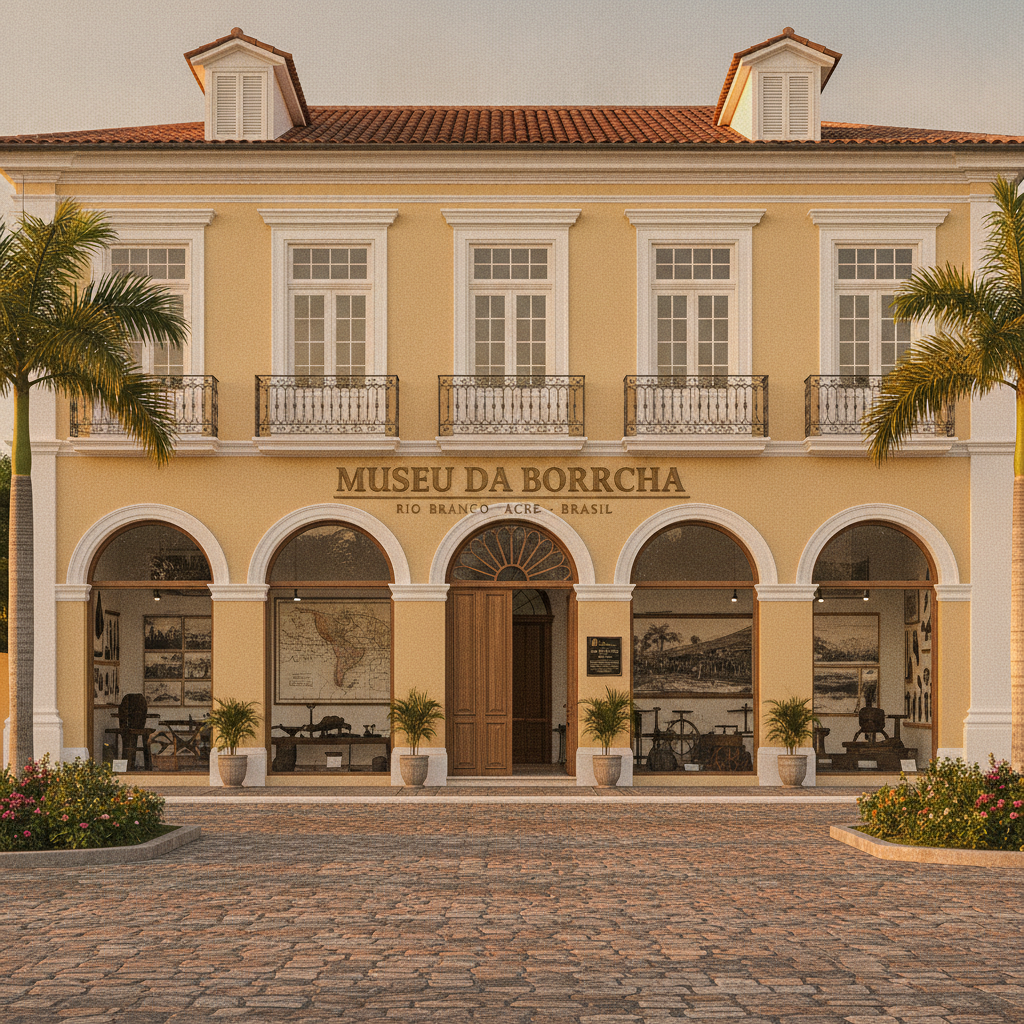


Rio Branco's Cultural Scene: Museums, Identity & Forest Art
Rio Branco has a cultural scene built around forest identity — the rubber museum, the indigenous art, and the contemporary artists who work with Amazon themes create a distinctly Acrean cultural voice

Acre's Amazon: Brazil's Most Intact Western Forest
Acre maintains over 80% of its original Amazon forest — the rubber tapper and indigenous communities whose livelihoods depend on the standing forest have been its most effective defenders

Amazon Geoglyphs: Pre-Columbian Cities Hidden in Acre's Forest
The deforestation of Acre revealed thousands of geoglyphs — large geometric earthworks of pre-Columbian origin — proving that the Amazon was home to complex civilisations long before European contact

Juruá River: Acre's Remote Amazon Heartland
The Juruá River in western Acre — accessible only by small plane or long river journey — is one of the Amazon's most isolated regions; rubber tapper communities, indigenous peoples, and intact forest define the deep interior

Acre's Amazon Table: Forest Foods & Rubber Tapper Cuisine
Rio Branco's food is shaped by the forest — the rubber tappers who lived from the forest developed a cuisine of extraordinary knowledge; forest fruits, river fish, and wild ingredients define Acre's table

Acre's Rubber Boom Legacy: History, Art & Forest Economy
The Amazon rubber boom (1880-1912) made Acre briefly wealthy — the Palácio Rio Branco, the opera house, and the infrastructure built on rubber money are the physical legacy of a boom that ended with Asian plantation competition

Chico Mendes: The Amazon's Greatest Martyr & Rio Branco's Hero
Rio Branco is the capital of Acre — the state where rubber tapper Chico Mendes lived and died; his assassination in 1988 became the Amazon's defining environmental moment and a global conservation turning point

Assis Brasil: Three-Country Border at Acre's Western Tip
The Assis Brasil frontier town at Acre's tip is where Brazil, Peru, and Bolivia meet — the tri-border crossing is one of South America's most remote and the Amazon-Andes cultural divide is sharply visible