Vientiane Museum & Cultural Heritage Walk
Explore Vientiane's museums — the Lao National Museum, the COPE Visitor Centre, and the traditional arts venues of the capital provide the most comprehensive survey of Lao history, culture, and the country's complex 20th-century political experience accessible in a single urban walk.
- 1
Lao National Museum
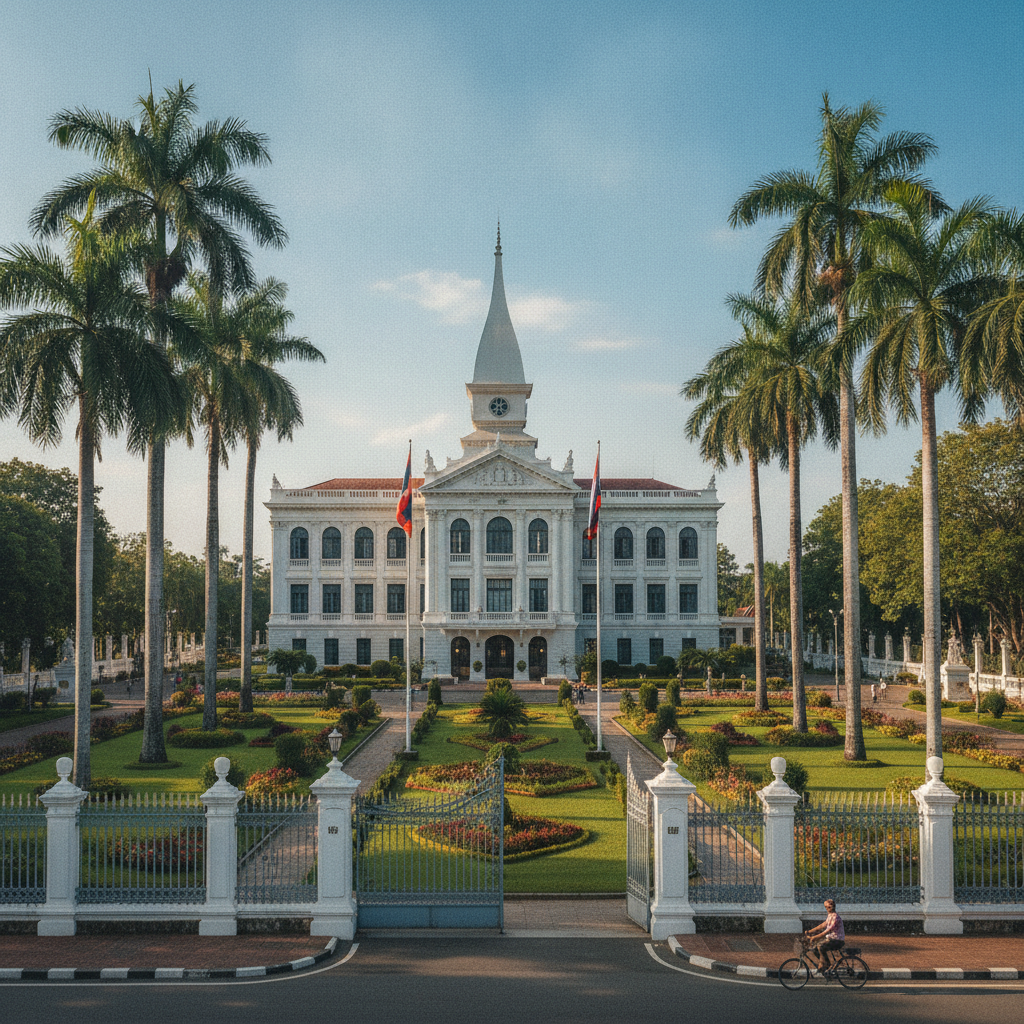
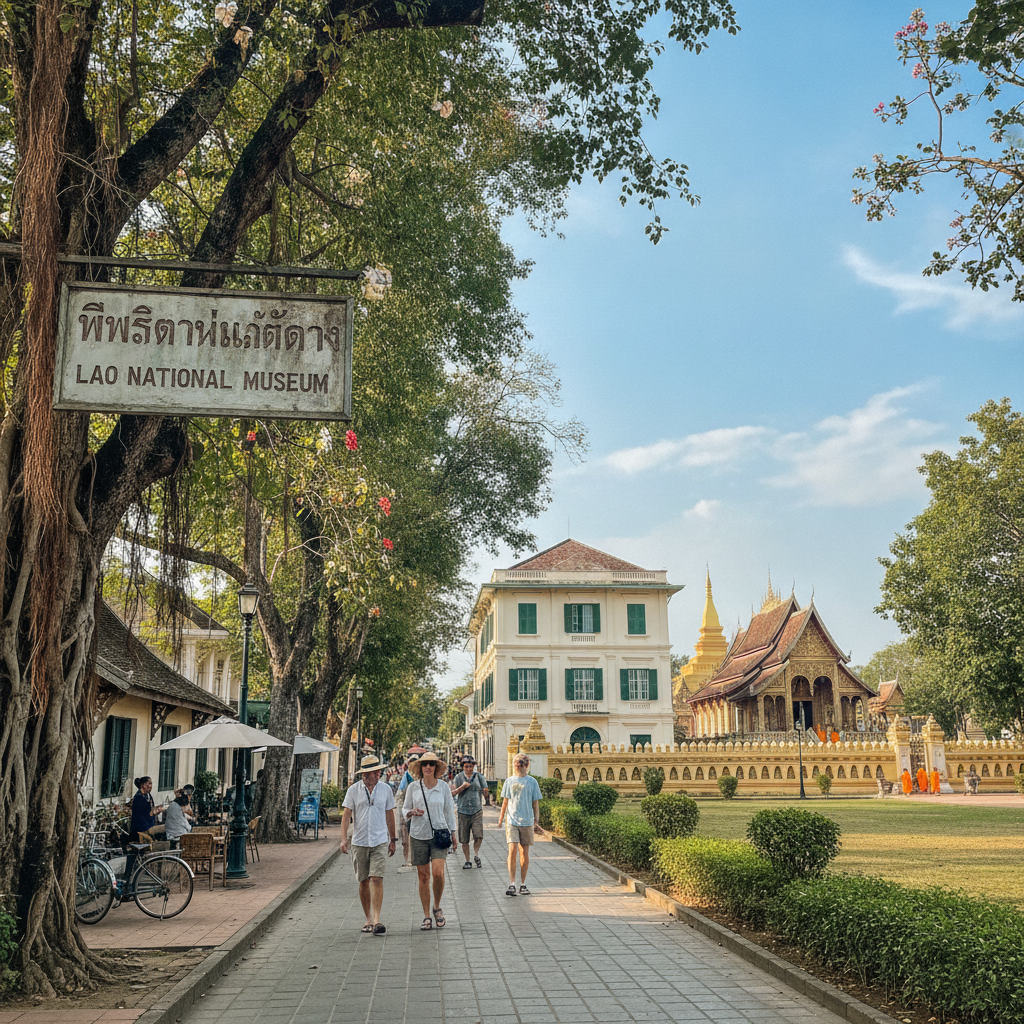
The Lao National Museum (former Lao Revolutionary Museum) in the colonial Mansion Jame building in the central Vientiane district is the primary historical museum of the Lao PDR — the collection (the prehistoric artefacts from the Xieng Khouang Plain of Jars culture, the Lan Xang kingdom period Buddhist art, the French colonial period documentation, and the extensive Revolutionary War and Pathet Lao resistance exhibits) provides the most comprehensive single-site survey of Lao history accessible in the country. The museum's framing of the 20th-century history (the French colonial period presented as the oppression against which the Lao revolutionary movement fought, the American bombing campaign's documentation, and the 1975 liberation as the triumphant conclusion of the revolutionary struggle) reflects the Lao People's Revolutionary Party's historical narrative in a form that provides essential context for understanding the contemporary Lao state.
- 2
Traditional Arts Theatre
The Lao National Cultural Hall and the traditional arts performances accessible at the Vientiane cultural venues (the classical Lao dance, the shadow puppet theatre, and the lam vong folk dance performances that constitute the traditional Lao performing arts accessible to the tourist audience) provide the most complete survey of the Lao performing arts tradition accessible in the capital — the Lao classical dance tradition (closely related to the Khmer and Thai royal court dance traditions, with the stylised hand movements, the elaborate costumes, and the mythological narratives drawn from the Hindu epics adapted into the Lao cultural vocabulary) is the most formally distinctive performance accessible in Vientiane. The lam vong folk dance (the Lao circle dance performed at social and festive occasions, with the characteristic graceful slow movement of the hands and arms that is the most accessible Lao traditional dance form for foreign visitors to appreciate) is the most directly participatory performance encounter available at the Vientiane cultural events.
- 3
Lao Textile Museum
The Carol Cassidy Lao Textiles gallery (the studio and gallery in a renovated colonial villa in the northern Vientiane villa district) represents the most comprehensively documented Lao silk weaving tradition accessible in the capital — the studio's continuation of the traditional Lao court weaving tradition (the complex ikat and supplementary weft patterns developed in the Lao royal courts before the 1975 revolution disrupted the patronage system) in contemporary production creates the most direct encounter with the living Lao textile heritage. The studio's documentation of the traditional patterns (the mythological and cosmological imagery in the weaving, the regional variations in colour and pattern between the different Lao weaving communities, and the technical vocabulary of the traditional loom) provides the most academically serious introduction to Lao textile culture accessible in Vientiane.
- 4
Lao National Library
The Lao National Library in the colonial district of Vientiane (the repository of the Lao manuscript tradition — the palm-leaf manuscripts of the Buddhist canonical texts, the secular historical chronicles, and the cosmological texts that constitute the most important documentary heritage of the pre-revolutionary Lao civilisation) houses the most significant collection of traditional Lao written culture accessible in the country. The palm-leaf manuscript tradition (the texts written on dried palm leaves using a stylus, then coated with lacquer to preserve them, and stored in the decorated wooden manuscript chests that are among the most beautiful objects in the Lao artistic tradition) is accessible through the library's reading room and the exhibitions of selected manuscripts that the library organises for the visiting scholarly and tourist audience.
- 5
Vientiane Wat Phu Khao Kaew
Wat Phu Khao Kaew (Green Mountain Temple) in the western Vientiane area is a less-visited but historically significant temple — the site's Angkorian period remains (the foundations and fragments of an earlier Khmer religious structure visible beneath and beside the later Lao Buddhist temple buildings) document the Angkorian Empire's administrative presence in the Vientiane basin during the 11th-13th centuries, before the establishment of the Lan Xang kingdom. The Angkorian layer beneath the later Buddhist temple (a common pattern throughout the Mekong valley, where the Khmer administrative infrastructure was superseded by the Lao Buddhist kingdom's religious buildings) provides the deepest historical time depth accessible in the Vientiane urban temple environment.
- 6
Vat Inpeng Temple
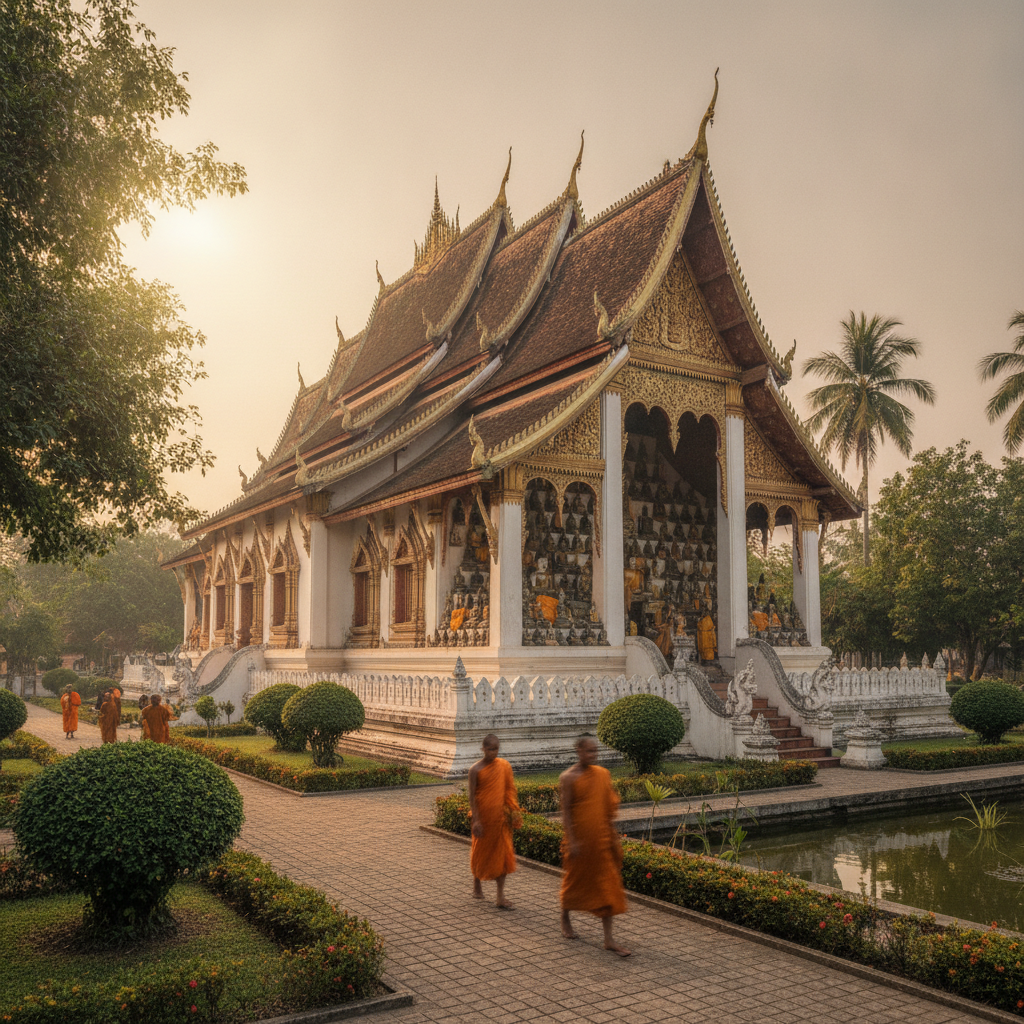
Wat Inpeng in the central Vientiane temple district is one of the most architecturally refined active temples in the city — the temple's main sanctuary (the sim, the ordination hall with the distinctive multi-tiered roof and the elegant proportions of the classic Vientiane temple style) is considered among the finest examples of the local architectural tradition accessible in the capital. The temple's position within the residential block (rather than on the main road, reached through a narrow lane from the street) gives it an atmosphere of seclusion and authentic community use that distinguishes it from the more tourist-oriented major temples at Wat Sisaket and Haw Phra Kaew. The morning merit-making activity at Wat Inpeng (the local residents arriving with flowers and food offerings for the monks as part of the daily devotional routine) is the most undisturbed encounter with the daily Buddhist practice of the Vientiane residential community accessible in the central city area.
Walk this route with audio
Stories play automatically as you reach each stop — no tapping needed.