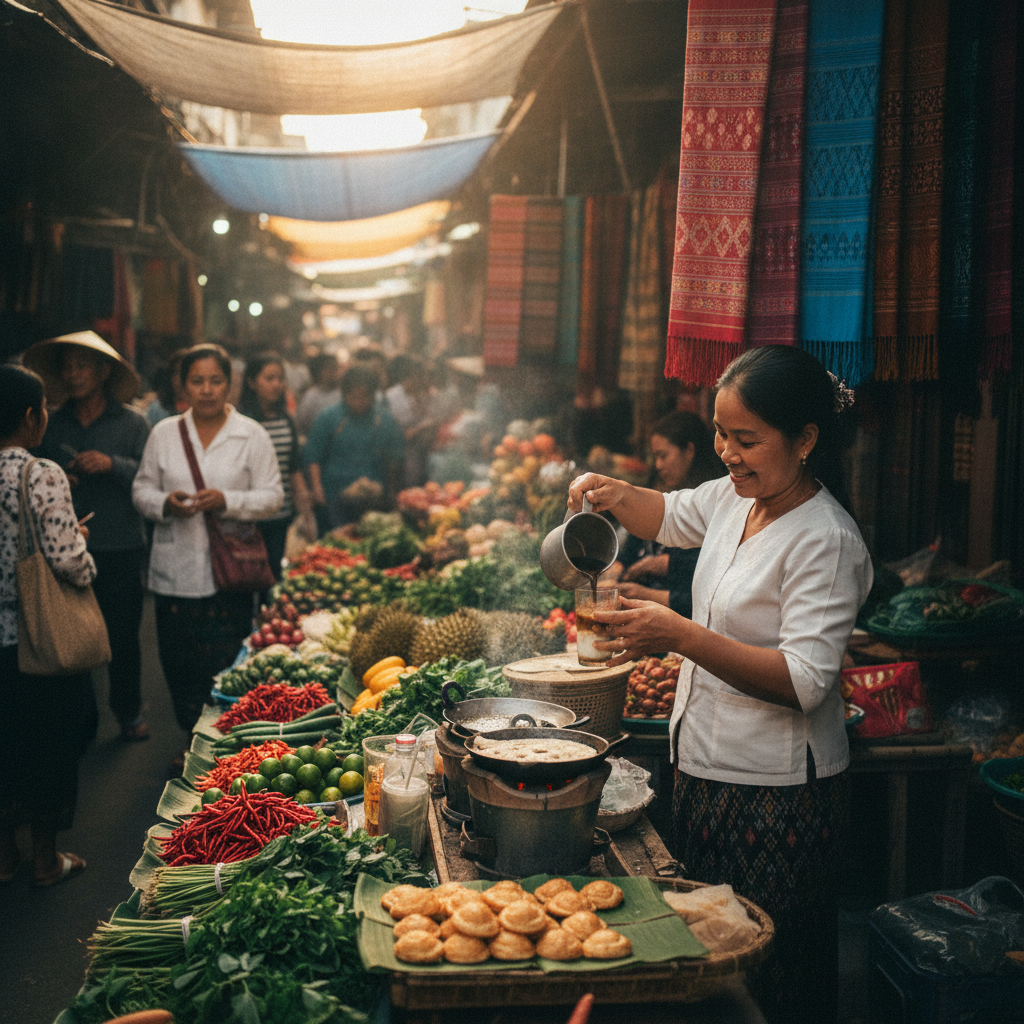
Vientiane Market & Lao Food Walk
Eat through Vientiane — the Lao capital's food culture is the most distinctive in mainland Southeast Asia, with its sticky rice, larb, and the morning Mekong fish market creating a culinary tradition that is deeply rooted in the Mekong River ecology and the Lao Buddhist agricultural calendar.
- 1
Talat Sao Morning Market
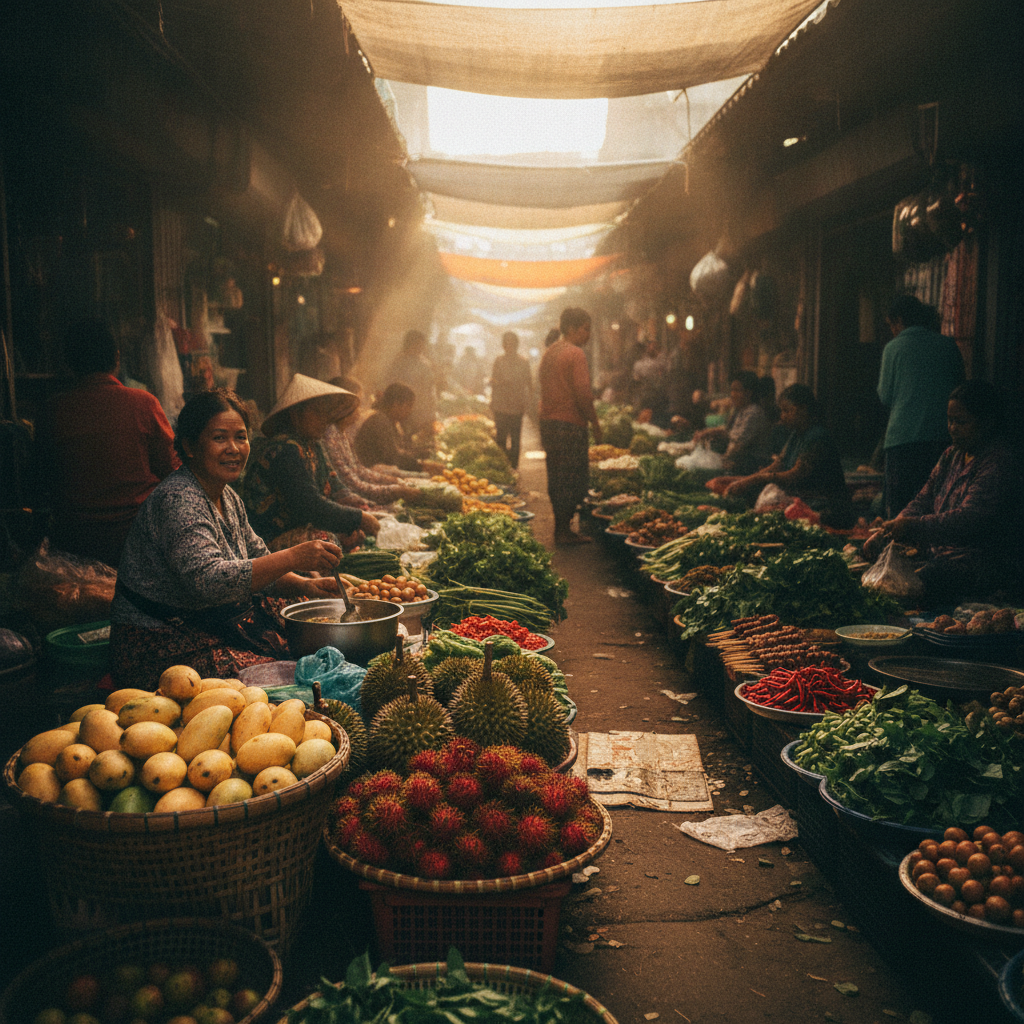
Talat Sao (Morning Market) is the largest market in Vientiane and the primary shopping destination for the city's population — the market complex (the original covered market building plus the newer multi-storey shopping centre behind it) houses the most comprehensive range of Lao handicrafts (the silk weaving, the silver jewellery, the carved wooden objects, and the handwoven textiles of the various Lao ethnic groups), the electronic goods, the clothing, and the fresh produce available in the capital. The market's ground floor (the food section, the fresh fish, the vegetables, and the prepared food stalls that constitute the most comprehensive food market accessible in the Lao capital) is the most important reference point for understanding the daily food provisioning of the Vientiane household.
- 2
Sticky Rice Culture
The Lao relationship with sticky rice (khao niao) is the most distinctive culinary identity in Southeast Asia — Laos is the only country in the world where sticky rice (glutinous rice) is the primary staple (eaten at all meals, used as the primary utensil for eating (the hand-formed ball of sticky rice used to scoop up the accompanying dishes), and consumed in the characteristic conical bamboo basket (the tip khao) that is the most recognisable Lao food object. The sticky rice culture's social dimension (the sharing of the sticky rice basket at the communal table, the significance of the rice to Lao Buddhist merit-making, and the role of the rice varieties in the ethnic identity of the highland Lao communities) makes the simple act of eating sticky rice the most culturally rich food experience accessible in Laos. The best morning sticky rice in Vientiane is available at the market food stalls that begin service from 5am.
- 3
Mekong Fish Market Dawn
The dawn fish market at the Mekong riverside (the market that assembles on the river bank from 4am when the overnight fishermen return with their catch from the Mekong and its tributaries) is the most important single food event in the Vientiane daily calendar — the Mekong fish (the giant Mekong catfish, the various carp species, the featherback fish, and the smaller species that constitute the primary protein of the Lao diet) are sold directly from the fishing boats to the market buyers who resell throughout the city. The Mekong fishery's importance to Lao food security (freshwater fish providing the majority of animal protein for the rural Lao population, consumed fresh, dried, fermented as padaek, and in the fish sauce preparations of the Lao kitchen) is most directly observable at the pre-dawn riverside market.
- 4
Khao Piak Noodle Shop
The khao piak sen noodle shops in the Vientiane morning food streets (the thick rice noodle soup that is the most beloved Lao breakfast food, served in a rich chicken or pork broth with the fresh herbs, the bean sprouts, and the dried chilli flakes) are the most important single food culture encounter in the Lao capital — the khao piak sen differs from the Vietnamese pho and the Thai boat noodle in its use of the thick, soft rice noodles (made fresh daily from the rice flour dough, with a texture that absorbs the broth differently from the thin noodles of the neighbouring countries' soups) and the particular Lao herb combination (the sawtooth coriander, the spring onion, and the dried padaek broth base that gives the Lao soup its distinctive fermented fish undertone). The best khao piak sen in Vientiane is served in the neighbourhood noodle shops that open from 6am and close when the pots are empty, typically by 10am.
- 5
Lao Larb Lunch
Larb (laap, the minced meat salad with fresh herbs, toasted ground rice, and lime juice) is the national dish of Laos and the most culturally significant food in the Lao culinary tradition — the Lao larb (the original form of the dish that has been adapted into the Thai minced meat salad, but retaining the raw or rare meat versions that are the most distinctively Lao preparations) is most authentically encountered in the Vientiane local restaurants that serve the Lao worker's lunch. The larb's preparation (the hand-minced meat (typically chicken, pork, or river fish), the toasted rice powder that provides the characteristic nutty flavour and textural contrast, the fresh mint and sawtooth coriander, and the bitter green vegetables that are characteristic of the Lao larb) is most reliably available at the market-area restaurants that serve the traditional Lao midday meal from 11am to 1pm.
- 6
Khop Chai Deu Restaurant
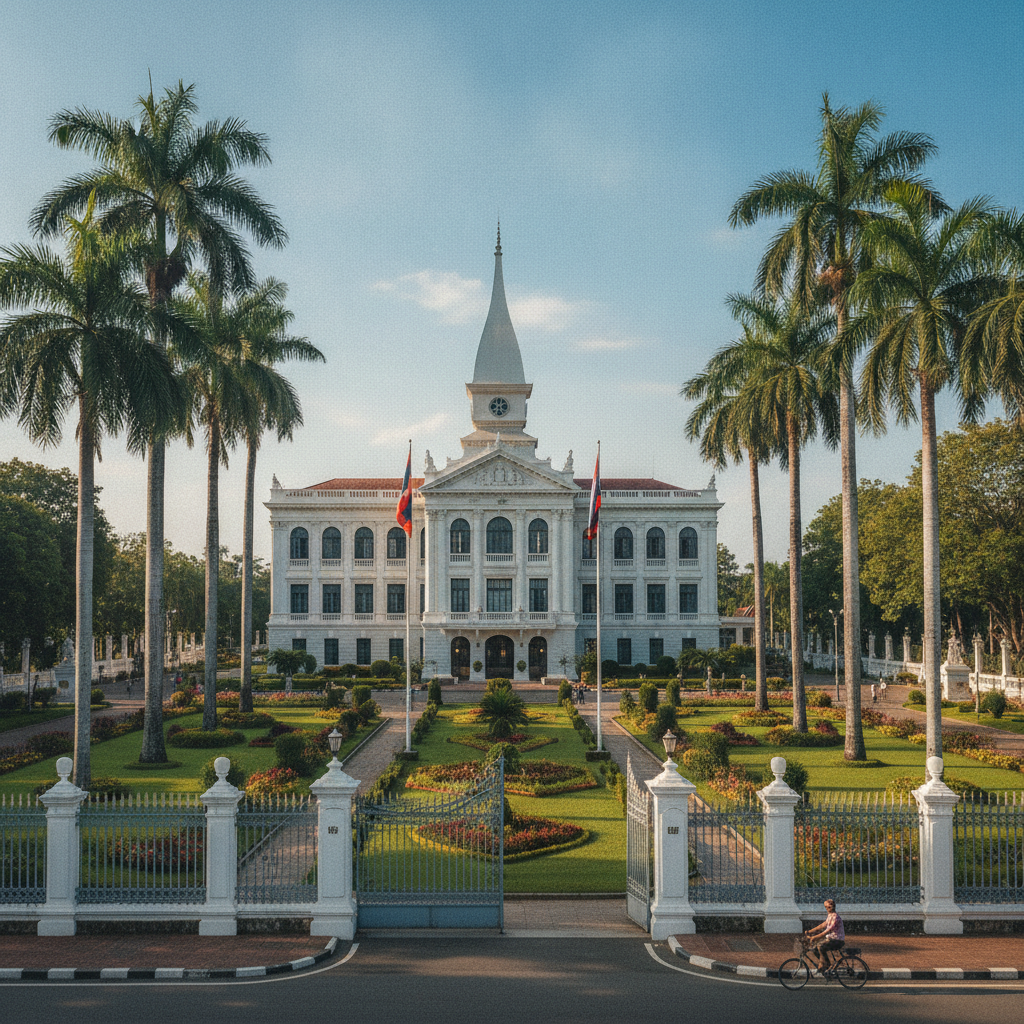
The restaurant and bar district around the Nam Phou fountain (the concentration of restaurants in the colonial shophouses and villas of the central Vientiane area serving the expatriate community, the government workers, and the tourist population) provides the most comprehensive survey of the Vientiane food scene accessible in a single walkable area — the range from the French-influenced Lao cuisine (the restaurant menus that combine the French classical technique with the Lao ingredients and spice vocabulary) to the authentic street-style Lao food at the casual canteen level to the international food catering to the foreign resident community makes the Nam Phou area the most representative single food district in the capital. The evening dining culture at the outdoor terrace restaurants (the tables set out on the colonial building forecourts, the ceiling fans turning above the open-sided dining rooms, and the Mekong River visible at the end of the avenue) is the most atmospherically Vientiane dining experience accessible.
Walk this route with audio
Stories play automatically as you reach each stop — no tapping needed.