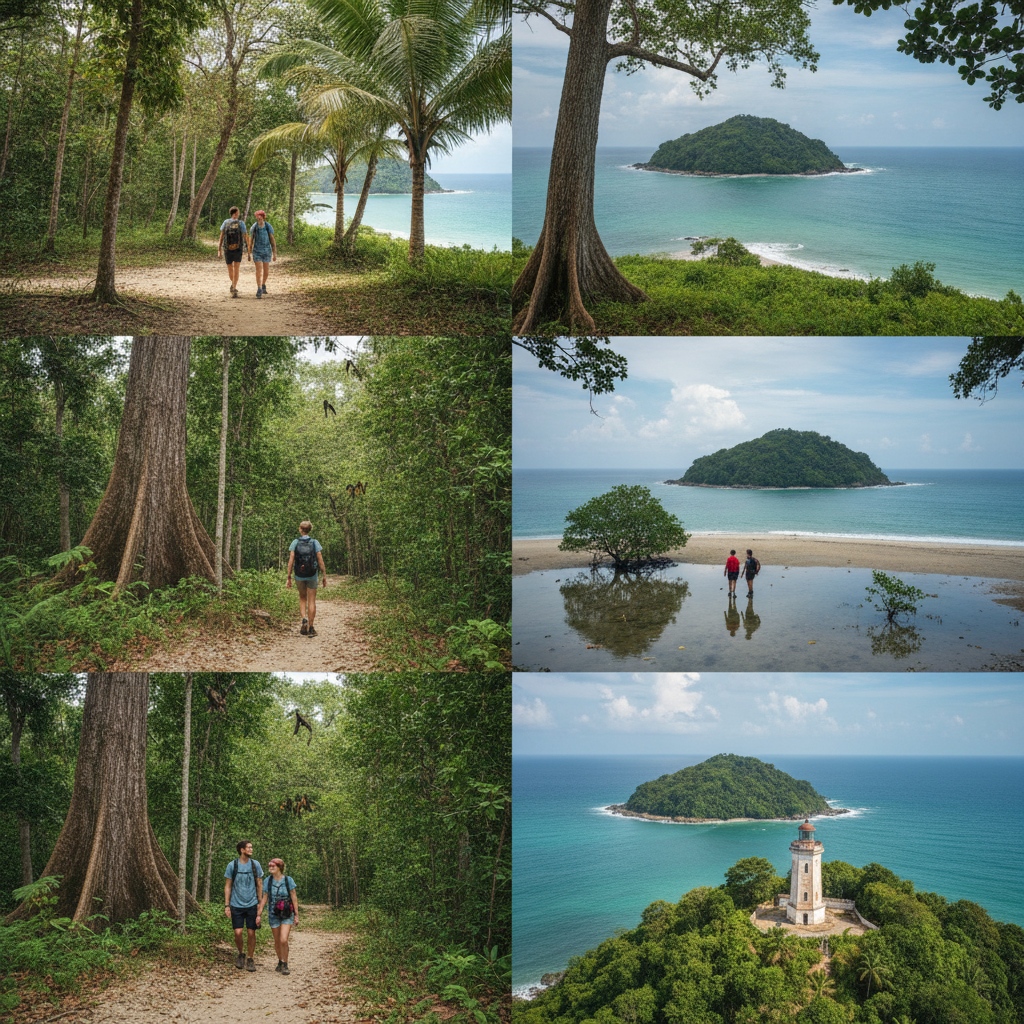
Redang Island Jungle Trek & Nature Walk
Trek through Redang's forested interior — the granite hills of Pulau Redang (rising to 356 metres at the island's highest point) are covered in primary and secondary forest that has never been cleared for agriculture, providing one of the most intact island forest ecosystems accessible from a Terengganu marine park island.
- 1
Redang Jungle Trail System
The trail system connecting Redang's west coast resort beaches to the eastern shore and to the island's interior passes through primary forest that contrasts dramatically with the marine environment most visitors come to experience — the trail through the dipterocarp forest with its towering trees, the giant strangler figs, and the understorey of ferns, gingers, and climbing plants provides a terrestrial wildlife encounter complementary to the marine park. The monitor lizards that rustle in the leaf litter, the hornbills visible above the canopy, and the long-tailed macaques that move through the middle canopy are the most commonly seen wildlife on the Redang jungle trails.
- 2
Hilltop Viewpoint Walk
The trail to Redang's hilltop viewpoint above Pasir Panjang Beach climbs through secondary forest to a clearing with views of the main bay, the offshore coral garden visible through the clear water below, and the southern reach of Redang's coastline with the distant shapes of Lang Tengah and Perhentian visible on the horizon. The 45-minute walk to the viewpoint is the most physical activity available on Redang outside the water and provides a different perspective on the island's landscape and scale than the beach and boat-based activities that occupy most visitors' time.
- 3
Redang Bird Life
Redang's forested hills support a resident bird community that includes several species making the island an interesting birdwatching site for visitors who look beyond the beach — the Pied Hornbill, the Oriental Pied Hornbill, and the distinctive calls of the various sunbird species are the most conspicuous avian presences in the forest edges and beach fringes around the resort area. The White-bellied Sea Eagle, which nests on Redang and uses the island's waters as hunting territory, is the most magnificent bird visible from the resort beach, with the eagle's soaring patrols above the bay providing a wildlife spectacle visible without entering the forest.
- 4
Mangrove Trail Redang
The mangrove areas on the sheltered side of Redang's headlands provide the most accessible terrestrial nature walk outside the main jungle trail — the mangrove exploration by kayak or on foot along the mangrove boardwalk (where available) demonstrates the mangrove ecosystem's structure (the salt-tolerant mangrove trees with their aerial prop roots, the soft anaerobic mud that supports the decomposer communities, and the juvenile fish visible in the clear mangrove water) in a setting that connects the mangrove's ecological role to the health of the adjacent coral reef.
- 5
Redang Botanical Diversity
The forest of Redang's hills supports a botanical community typical of granite island forests in the South China Sea — the tree species (dominated by members of the Dipterocarpaceae family, the Myrtaceae, and the Moraceae including numerous fig species) provide the fruit resources that support the hornbill, pigeon, and macaque populations, while the understorey plants (orchids, gingers, and the trailing rattans) demonstrate the full complexity of the lowland tropical forest even on an island of limited area. The botanically distinctive coastal strand vegetation at the forest-beach interface (Casuarina trees, sea hibiscus, pandanus) creates a transitional zone between the marine and terrestrial ecosystems.
- 6
Redang Conservation Challenges
Redang faces the classic small-island conservation paradox — the marine environment that makes it one of Southeast Asia's premier dive destinations is simultaneously under pressure from the tourism that funds the conservation infrastructure. The key challenges include managing the volume of snorkelers who can physically damage coral through accidental contact, controlling the wastewater from resort operations that can increase nutrient levels in the marine park water, and addressing the impacts of sea-level rise and coral bleaching events associated with climate change. The Redang Marine Park Conservation Fund, supported by visitor fees, funds the monitoring and management programmes that maintain the reef quality on which the entire tourism economy depends.
Walk this route with audio
Stories play automatically as you reach each stop — no tapping needed.