
Rabat Practical: The Mohammed V Airport Connection, the Direct Train to Casablanca, the Medina Riad Accommodation, the Optimal Visit Duration, and the Departure Summary
The Rabat practical route covers the Mohammed V Casablanca Airport connection, the Al Boraq high-speed train to Marrakech, the direct train to Fes, the medina riad as the most atmospheric single Rabat accommodation, the optimal 2-day visit duration, and the departure summary.
- 1
Mohammed V Airport: The Casablanca-Rabat Gateway
The Mohammed V International Airport in Casablanca, 90 kilometers from Rabat and connected by the direct ONCF train (35 minutes from the airport railway station below the terminal to Casablanca, then 45 minutes to Rabat), serves as the most efficiently connected single international gateway for the Rabat visitor. The Al Boraq high-speed rail (launched 2018, the first high-speed rail in Africa) connects Casablanca to Tangier (2 hours 10 minutes), passing through the Rabat-Agdal station and making Rabat the most directly connected single Moroccan city to the north Morocco cities by high-speed rail.
- 2
Direct Train to Fes: The Imperial Cities Connection
The ONCF direct train from Rabat to Fes (3 hours 15 minutes, 7 services daily) is the most convenient single public transport link between the Moroccan capital and the spiritual capital, completing the most historically charged single intercity train journey in Morocco through the Saiss agricultural plain and the Sebou river valley. The Rabat to Fes train journey allows the most time-efficient single Morocco imperial cities connection without a private vehicle and the train timing (first train from Rabat at 6:45am, arrival in Fes at 9:55am) is the most productive single early morning departure for the Rabat-based Morocco explorer.
- 3
Rabat Riad Accommodation: The Medina Choice
The Rabat medina riad accommodation, the most competitively priced single riad option in the Moroccan capital with the average riad price 30-40% below the equivalent Marrakech standard, includes the Riad Kalaa, the Dar al-Batoul, and the Riad Jawad as the most consistently reviewed single Rabat medina accommodation for the mid-range traveler. The medina riad in Rabat is the most atmospherically authentic single Moroccan capital accommodation because the Rabat medina serves the local population rather than the tourist visitor and the riad guest is the most naturally embedded single visitor in the genuine Moroccan urban residential community.
- 4
Optimal Visit Duration: The 2-3 Day Rabat Plan
The optimal Rabat visit duration of 2-3 days covers the Hassan Tower-Mohammed V Mausoleum (Day 1 morning), the Chellah necropolis (Day 1 afternoon), the Kasbah Oudaias and the medina souk (Day 2 morning), the Museum of Archaeology and the Mohammed VI Museum (Day 2 afternoon), and the Sale medina day trip (Day 3). The 2-day minimum allows the most content-complete single Rabat essential circuit and the 3-day extension allows the Sale medina and the Chellah garden afternoon that reward the most unhurried single Rabat visitor.
- 5
Rabat as Morocco Circuit Base: The Hub Strategy
Rabat as the Morocco circuit base strategy (using Rabat as the central hub for day trips to Meknes-Volubilis-Moulay Idriss in the east, Casablanca in the south, and Larache-Asilah in the north) offers the most geographically efficient single Moroccan day-trip hub for the visitor who wants the most diverse single day-trip range from a single base. The Rabat hub strategy is the most recommended single Moroccan city base for the visitor with 5-7 days who wants the imperial city, the Atlantic coast, the day-trip archaeology, and the modern Moroccan capital in the most compact single geographic circuit.
- 6
Rabat Departure: The Most Complete Moroccan Capital
Rabat rewards the visitor who comes without the Marrakech or the Fes expectation and discovers instead the most complete single expression of the contemporary Moroccan national identity: the Hassan Tower representing the Islamic imperial ambition, the Mohammed V Mausoleum representing the independence and the Alaouite royal continuity, the Ville Nouvelle representing the French colonial legacy, the Chellah representing the Roman-Islamic syncretic heritage, and the Bou Regreg waterfront representing the 21st century African capital ambition. The visitor who leaves Rabat carrying the Hassan Tower image, the Chellah stork nest memory, and the Kasbah Oudaias Atlantic terrace view has experienced the most historically layered single Moroccan capital.
Walk this route with audio
Stories play automatically as you reach each stop — no tapping needed.
More in Rabat

Rabat Culture: The Museum of Archaeology, the Mohammed VI Museum of Modern Art, the Cultural Circuit, and the Rabat Arts Scene

Rabat Medina: The Old City Souk, the Carpet and Craft Market, the Andalusian Quarter Legacy, the Medina Daily Life, and the Traditional Market Character
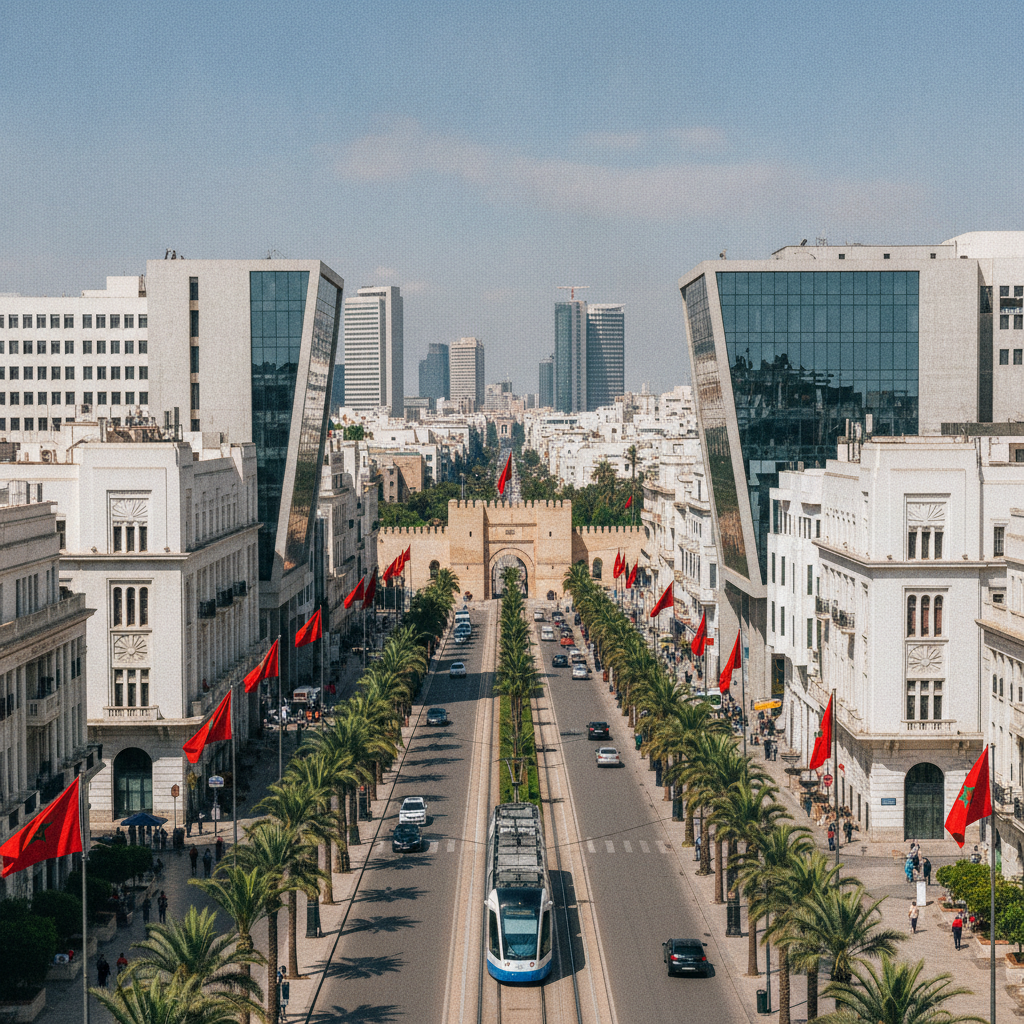
Rabat Modern: The Ville Nouvelle French Architecture, the Avenue Mohammed V Boulevard, the Art Deco Heritage, the Modern Capital Planning, and the Contemporary Rabat Character

Rabat Food: The Malsouka Pastry, the Seafood from the Atlantic, the Diplomatic Restaurant Scene, the Ville Nouvelle Cafe Culture, and the Rabat Culinary Character
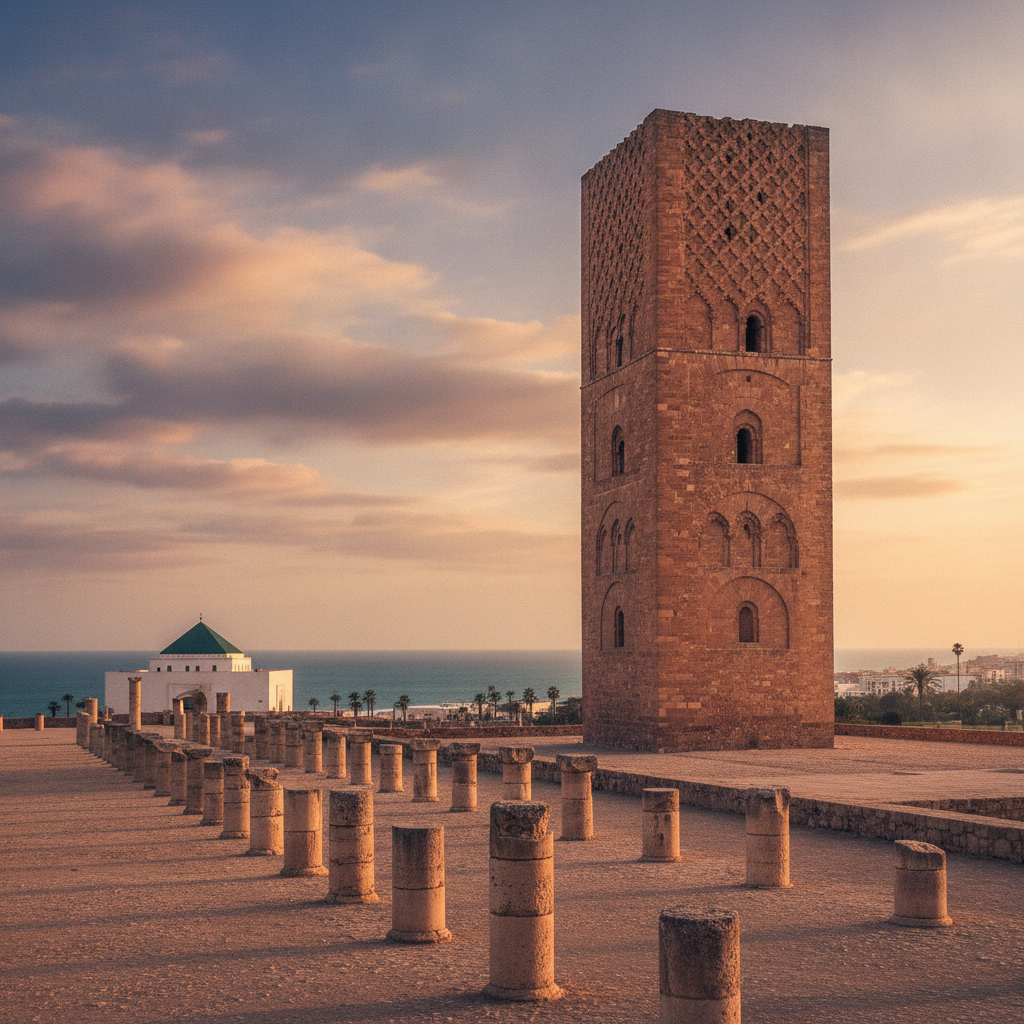
Rabat Essential: The Hassan Tower, the Mohammed V Mausoleum, the Chellah Necropolis, the Kasbah of the Oudaias, the Royal Palace, and the Moroccan Capital Character
