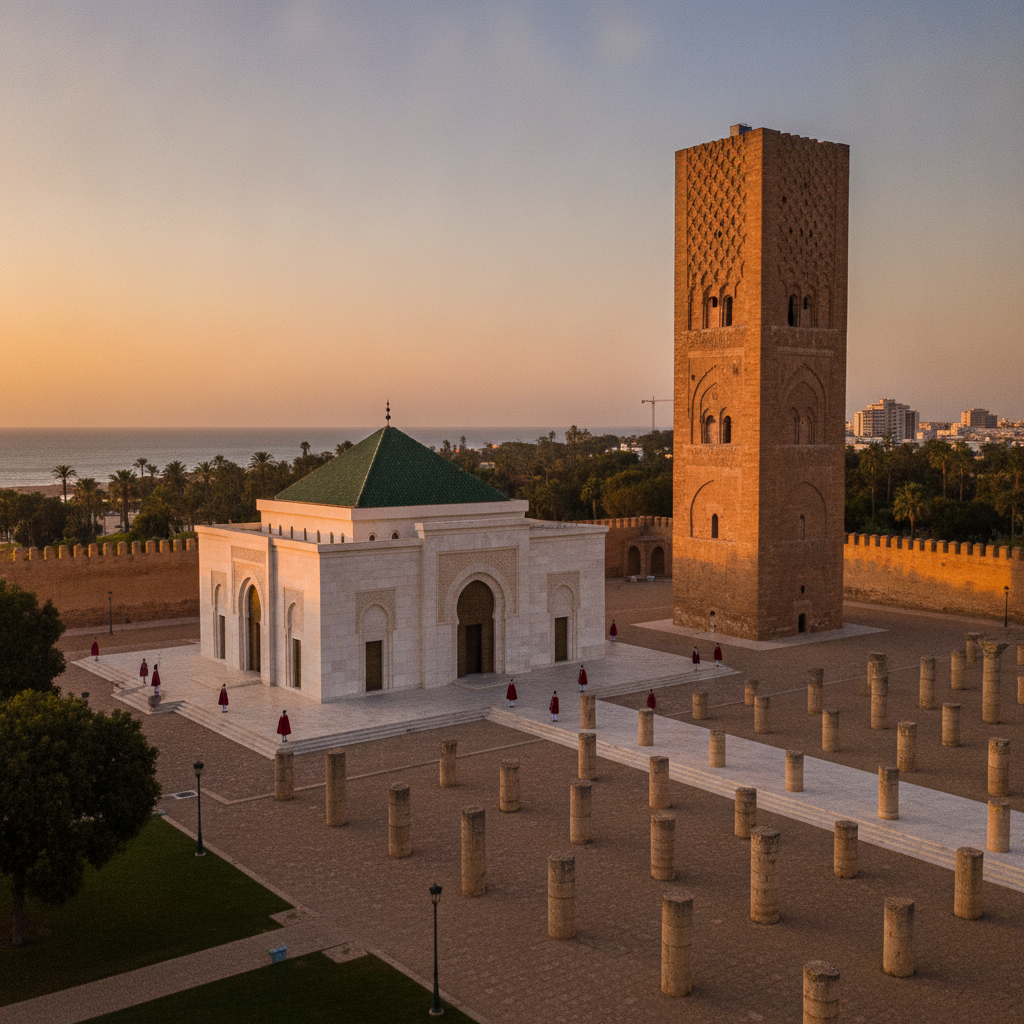
Rabat History: The Almohad Capital, the Sale Pirate Republic, the French Protectorate Choice, the Independence Declaration, and the Modern Capital
The Rabat history route covers the Almohad Sultan Yacoub al-Mansour making Rabat the most ambitious single Almohad building project, the Sale Pirate Republic of the Sallee Rovers, the French choice of Rabat as the Protectorate capital, the 1944 Independence Manifesto at the Hotel Balima, and the modern Moroccan capital from Mohammed V to Mohammed VI.
- 1
Almohad Rabat: The 12th Century Ribat Capital
The Ribat (fortress monastery) of Tit (9th century) that gave Rabat its name was transformed by the Almohad Sultan Yacoub al-Mansour (ruled 1184-1199) into the most ambiguously named capital city in Morocco - Ribat al-Fath (the Victory Ribat) - after the 1195 Battle of Alarcos where the Almohads defeated the largest single Castilian army in the 12th century reconquista. The Almohad building program at Rabat (the Hassan Mosque, the Kasbah of the Oudaias, the city walls) was the most ambitious single Almohad building project in Morocco and the construction program most directly interrupted by the Sultan's 1199 death.
- 2
Sallee Rovers: The Pirate Republic 1619-1816
The Sale-Rabat Pirate Republic (1619-1627), the most formally organized single North African pirate state, was established by the Moriscos expelled from Spain who combined the most sophisticated single European seamanship with the most motivated single anti-Spanish political agenda to create the most commercially successful single Barbary corsair operation. The Sallee Rovers raided as far north as Iceland (1627), the English Channel (1625, capturing the Mount's Bay fishing fleet), and the Newfoundland banks (1635) and enslaved between 20,000 and 40,000 Europeans in the most geographically extensive single Barbary corsair raiding range. Miguel de Cervantes was captured by Algerian corsairs (related tradition) and his Captive Captain tale in Don Quixote is the most literary single contemporary account of the Barbary slave experience.
- 3
French Protectorate Capital: The Lyautey Choice
The French Resident-General Hubert Lyautey chose Rabat over Fes as the Protectorate capital in 1912 for the most strategically sound single colonial administration reason: Fes was the religious and intellectual center of Moroccan Islam and making it the colonial capital would create the most politically explosive single confrontation with the Moroccan religious establishment, while Rabat, the less symbolically charged single city, allowed the most politically prudent single colonial administrative arrangement. The Lyautey Rabat decision created the most lasting single French Protectorate legacy in Morocco: the dual Moroccan capital character combining the colonial administrative city with the traditional Islamic capital.
- 4
1944 Independence Manifesto: The Hotel Balima Declaration
The Istiqlal Independence Manifesto, signed on January 11, 1944 at the Hotel Balima on the Avenue Mohammed V by 66 Moroccan nationalist leaders (including the future Prime Minister Ahmed Balafrej and the Istiqlal party founders), is the most politically significant single document in modern Moroccan history and the public declaration of the independence demand that directly challenged the French Protectorate authority. The Istiqlal (Independence) party founding at Rabat made the city the most politically central single Moroccan independence movement location and the most symbolically charged single capital city in the French Protectorate era.
- 5
Mohammed V and Independence: The Royal Capital
Mohammed V, the Sultan who most effectively transformed the Moroccan independence movement into a royal-nationalist alliance that forced the French to end the Protectorate in 1956, chose Rabat as the capital of independent Morocco rather than the traditional capitals of Fes or Marrakech. The Mohammed V choice preserved the Lyautey urban planning while restoring the Moroccan political sovereignty and created the most symbolically complete single Moroccan political capital arrangement with the palace, the parliament, the ministries, and the diplomatic missions in the most administratively organized single Moroccan city.
- 6
Mohammed VI Rabat: The 21st Century Capital
King Mohammed VI (reigned since 1999) has invested more in the Rabat urban transformation than any single Moroccan monarch since Mohammed V with the Bou Regreg river redevelopment, the Hassan Tower area pedestrianization, the Chellah public garden expansion, the tramway construction, and the Gran Theatre de Rabat (2022, the most technologically advanced single performing arts center in Africa) representing the most comprehensive single Moroccan capital modernization program. The Mohammed VI Rabat investment positions Rabat as the most diplomatically credible and the most internationally presentable single African capital city.
Walk this route with audio
Stories play automatically as you reach each stop — no tapping needed.
More in Rabat

Rabat Culture: The Museum of Archaeology, the Mohammed VI Museum of Modern Art, the Cultural Circuit, and the Rabat Arts Scene

Rabat Medina: The Old City Souk, the Carpet and Craft Market, the Andalusian Quarter Legacy, the Medina Daily Life, and the Traditional Market Character
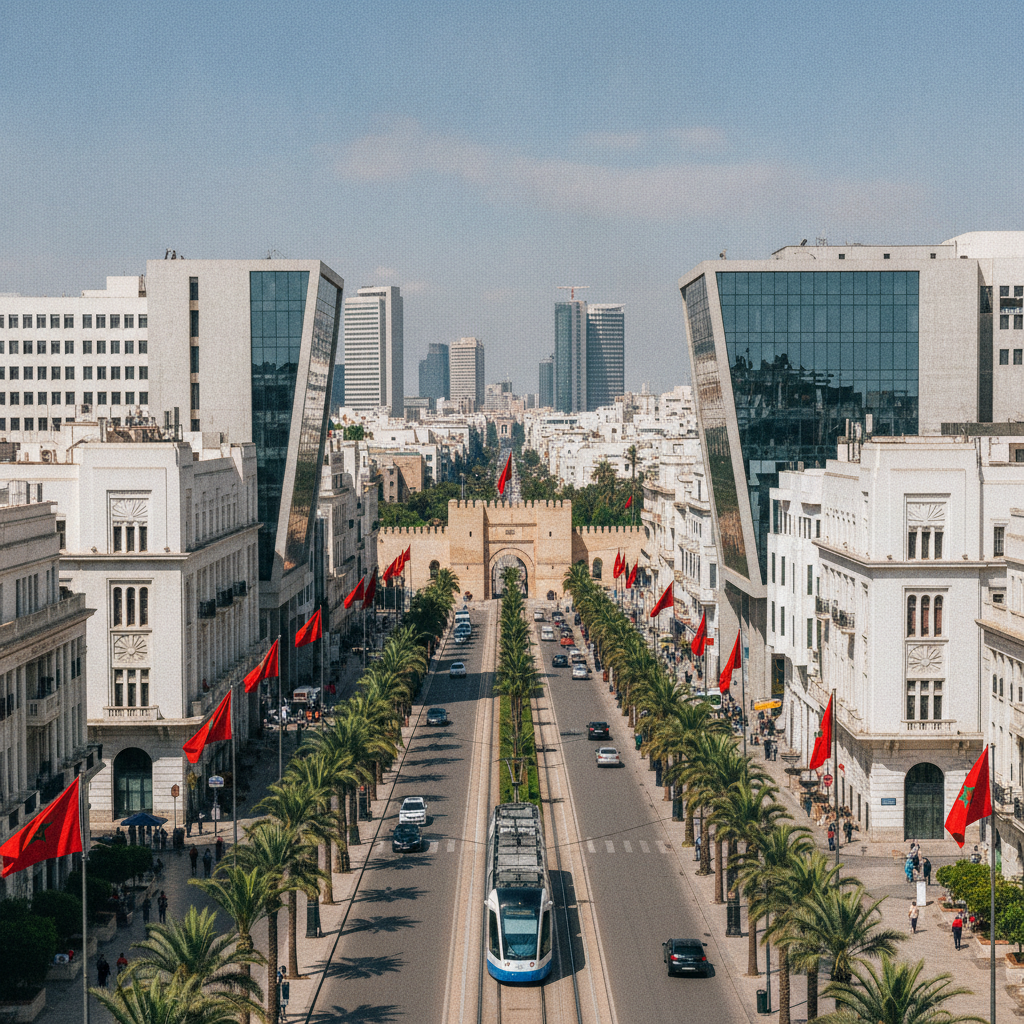
Rabat Modern: The Ville Nouvelle French Architecture, the Avenue Mohammed V Boulevard, the Art Deco Heritage, the Modern Capital Planning, and the Contemporary Rabat Character

Rabat Food: The Malsouka Pastry, the Seafood from the Atlantic, the Diplomatic Restaurant Scene, the Ville Nouvelle Cafe Culture, and the Rabat Culinary Character
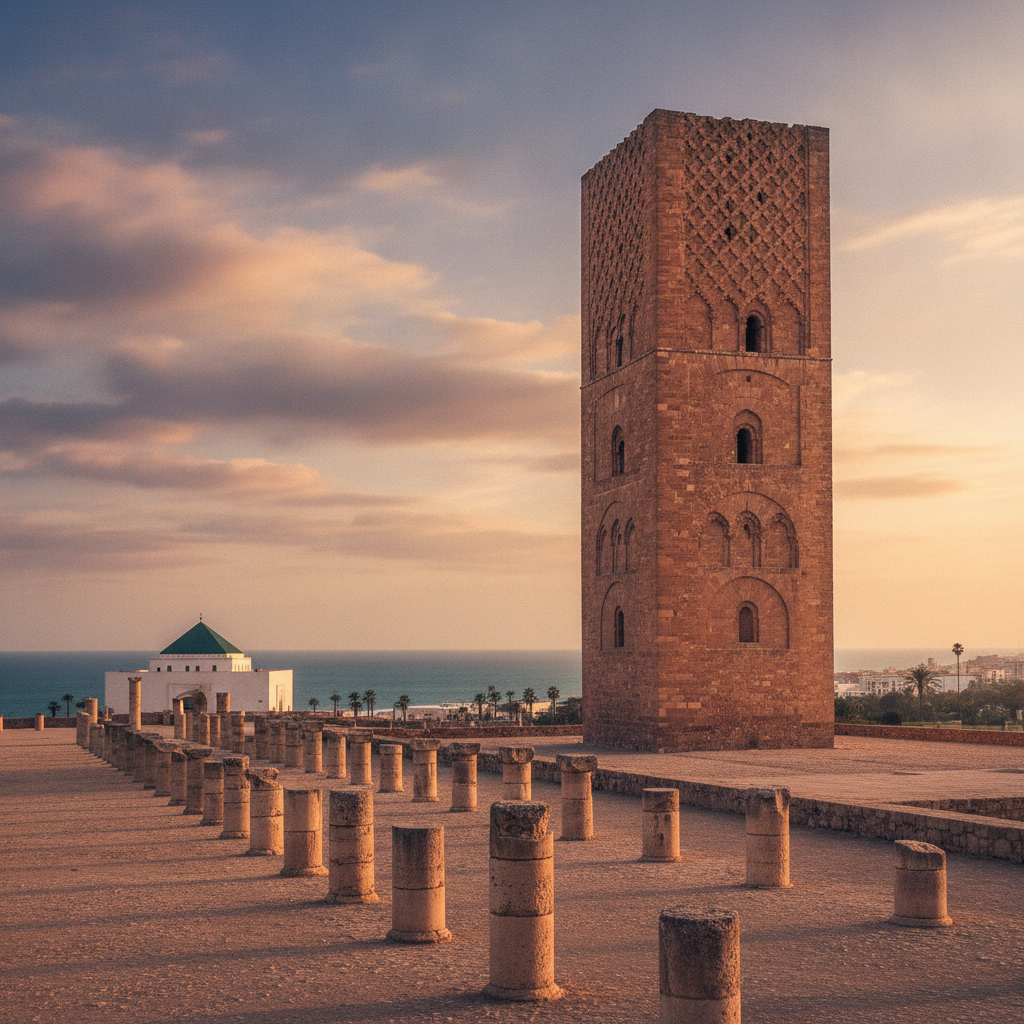
Rabat Essential: The Hassan Tower, the Mohammed V Mausoleum, the Chellah Necropolis, the Kasbah of the Oudaias, the Royal Palace, and the Moroccan Capital Character
