Hierapolis Deep Dive: The Roman Theatre Stage Decoration, the 1,200-Tomb Necropolis, the Martyrium of Saint Philip, the Apollo Temple and Plutonium Death Cave, and the Frontinus Gate
The Hierapolis deep dive covers the 2nd century Roman theatre with its elaborately carved stage building, the largest ancient necropolis in Turkey, the octagonal Martyrium of the Apostle Philip martyred here in 80 AD, the Apollo Temple adjacent to the carbon dioxide Plutonium cave, and the triumphal Frontinus Gate at the north city entrance.
- 1
Hierapolis Theatre: The Mythological Stage Decoration
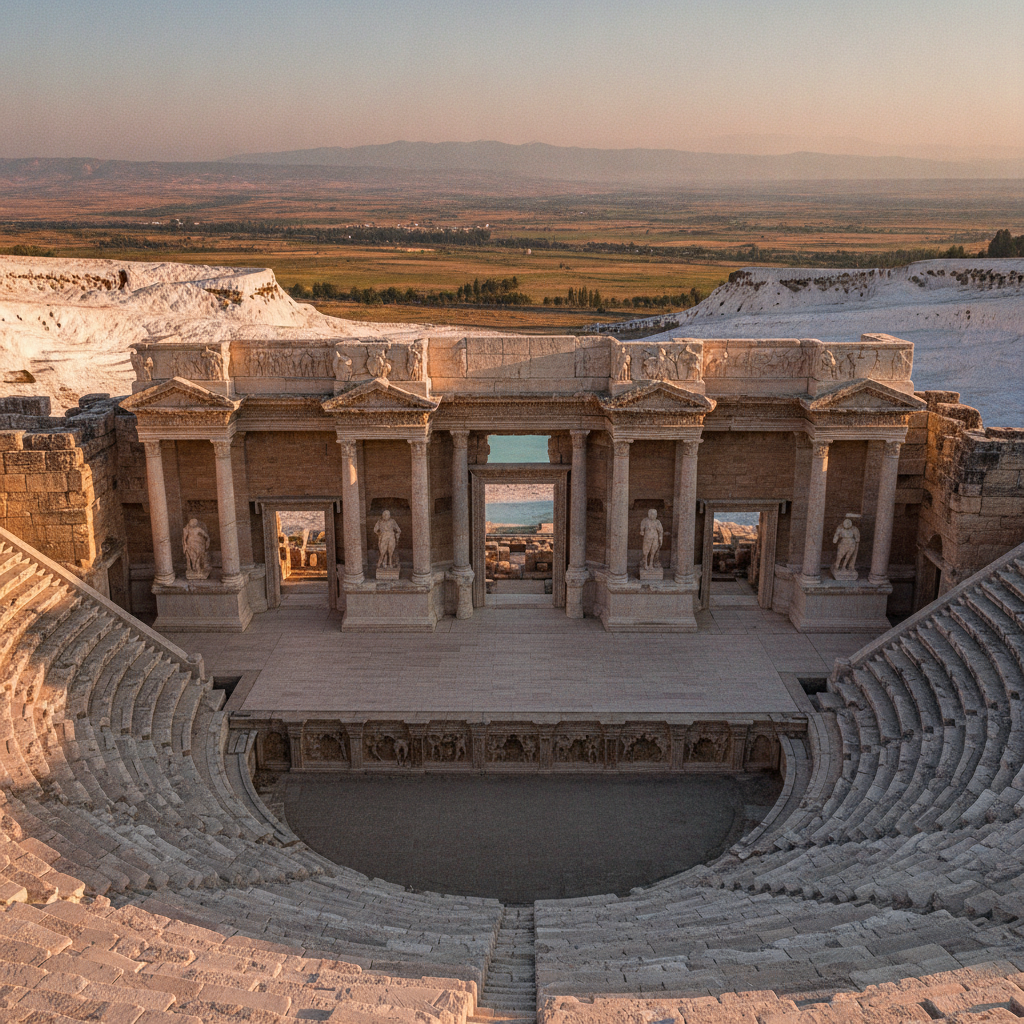
The Hierapolis Roman theatre, built under Hadrian in the 2nd century AD and expanded under Septimius Severus, is the best preserved ancient theatre in southwestern Turkey with the stage building carrying the most elaborately carved mythological relief panels in the Asian provinces. The panels depict the myth of Artemis and Apollo with the Nile river god, the Dionysiac procession, and the imperial family apotheosis in the most complete theatrical stage decoration program surviving in Anatolia. The theatre held 12,000 spectators and was converted to a gladiatorial arena and then a Byzantine fortified enclosure before the Italian excavation restored the stage building in the 1990s.
- 2
Hierapolis Necropolis: The 1,200-Tomb City of the Dead
The Hierapolis necropolis extending 2 kilometers along the north road is the largest ancient burial ground in Turkey with approximately 1,200 tomb monuments in every Roman and early Byzantine funerary form: tumulus mounds, sarcophagi on high podia, temple tombs, and house tombs. The concentration reflects the ancient belief that burial near the healing springs would benefit the afterlife, drawing the sick and the wealthy of the entire Asia province to be interred here. The necropolis walk from the Frontinus Gate through the tomb-lined road is the most atmospherically complete single funerary landscape in Turkey.
- 3
Martyrium of Saint Philip: The Apostle Discovery
The octagonal Martyrium of Saint Philip at Hierapolis, built in the 5th century AD over the site where the apostle was crucified upside down in 80 AD under Domitian, is the most significant early Christian martyrium in Turkey. The 2011 Italian excavation identified the tomb of Philip beneath the martyrium in one of the most important recent archaeological discoveries in Turkey, making Hierapolis the confirmed site of two apostolic graves - Philip above in the martyrium and the Apostle John venerated at the nearby Selcuk basilica. The Martyrium now draws pilgrims from the Catholic and Orthodox communities as the most recently confirmed apostolic tomb site.
- 4
Apollo Temple and Plutonium: The Death Cave
The Apollo Temple religious complex at Hierapolis is adjacent to the Plutonium - the natural carbon dioxide cave that the ancient world understood as the entrance to the underworld and dedicated to Pluto, god of death. The carbon dioxide seeps from the geological fault at concentrations lethal to birds and small animals but the Galli priests of Cybele, understanding the gas behavior, demonstrated their divine protection by surviving at the cave entrance. The geographer Strabo described the Plutonium in the 1st century BC as the most mysteriously dangerous single religious site in Anatolia. The carbon dioxide still seeps from the cave entrance today and small animals still perish there.
- 5
Frontinus Gate: The Proconsul Arch
The Frontinus Gate, the triumphal arch at the north entrance to Hierapolis built in 84 AD by the proconsul Sextus Julius Frontinus - the author of De Aquis, the only surviving ancient Roman engineering manual on the water supply system - is the most historically documented single architectural monument in Hierapolis. The gate inscription identifying Frontinus as the dedicant connects the Hierapolis monument to the most learned Roman administrative official of the Flavian period and the gate opens the 1-kilometer colonnaded Frontinus Street that bisects the ancient city. The arch was the most formal entry point for the aristocratic visitors arriving at the spa city from the north.
- 6
Byzantine Hierapolis: The Christian Transformation
The Byzantine transformation of Hierapolis from a pagan spa city to a Christian pilgrimage destination involved the construction of the 5th century cathedral basilica in the center of the colonnaded street, the veneration of the tomb of Saint Philip, and the conversion of the Apollo Temple precinct to Christian use. The Byzantine city maintained the thermal spring use by building the episcopal complex around the water access points and the pilgrim hostel near the martyrium. The Byzantine Hierapolis represents the most complete single example of a pagan therapeutic city repurposed as a Christian pilgrimage destination in the ancient Mediterranean world.
Walk this route with audio
Stories play automatically as you reach each stop — no tapping needed.
More in Pamukkale

Pamukkale Practical: Transport from Istanbul and Izmir, the Ephesus Circuit, Accommodation Strategy, Optimal Visit Timing, the Day Trip Options, and the Departure Summary
Pamukkale Essential: Cotton Castle Travertine Terraces, Hierapolis Roman Spa City, Cleopatra Sacred Pool, Geological Wonder, Thermal Spring Culture, and the Denizli Gateway
Pamukkale Photography: Sunrise Terrace Walk, Blue Pool Reflections, Hierapolis Theatre Compositions, Aerial Perspectives, Seasonal Changes, and the Ethics of UNESCO Site Photography
Aphrodisias Day Trip: The Roman Sculpture Capital, the World Record Stadium, the Sebasteion Imperial Frieze, the On-Site Museum, the Temple of Aphrodite Conversion, and the Marble Quarry Source
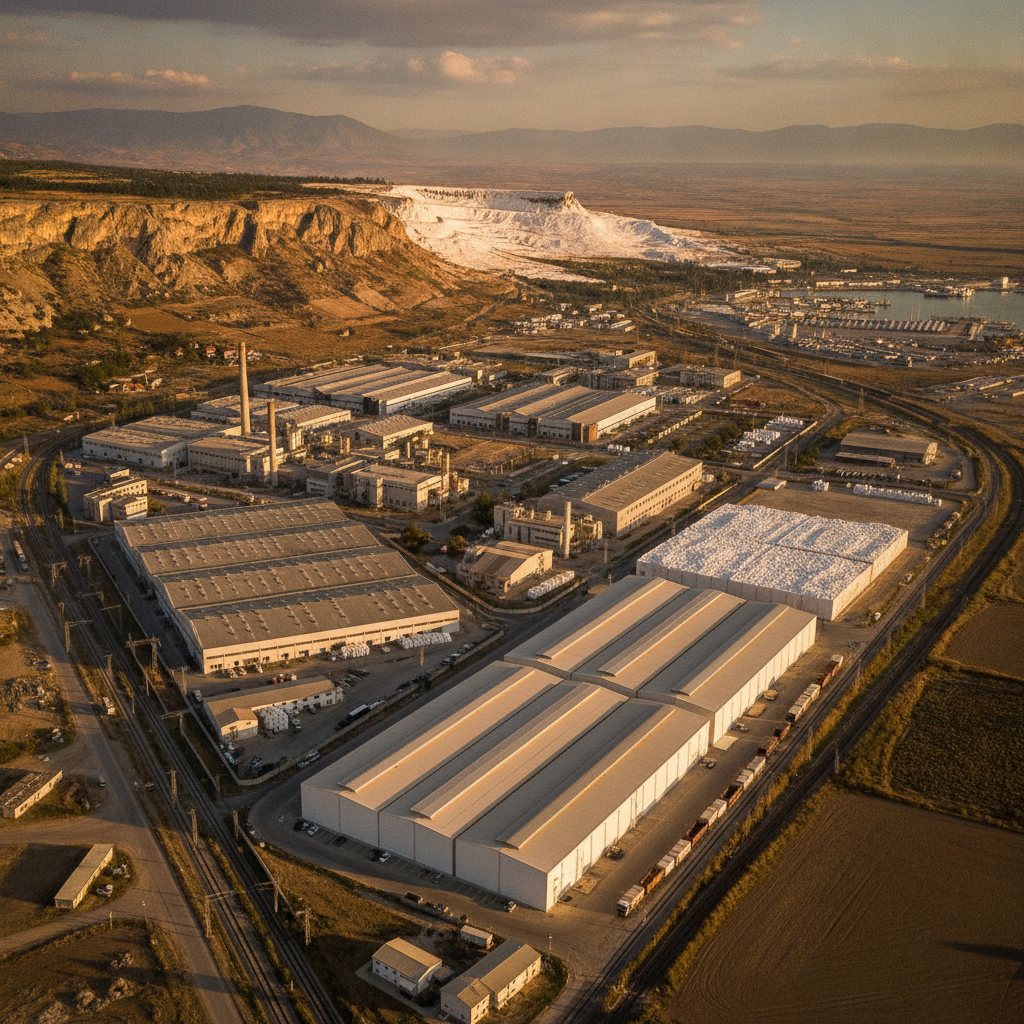
Denizli Province: The Ancient Colossae Site, the Global Textile Industry, the Kaklik Cave Underground Pamukkale, the Lycus Valley Cotton Heritage, and the Modern Denizli City
