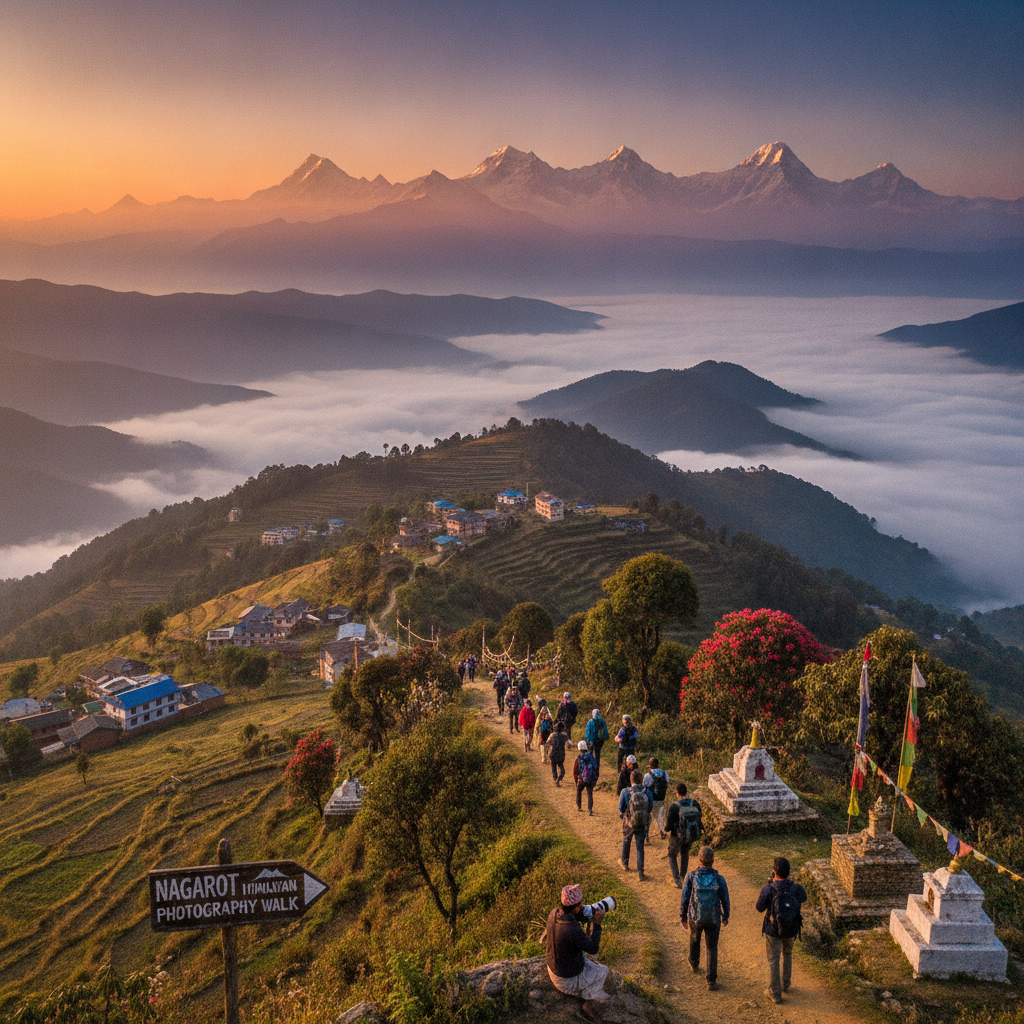
Nagarkot Himalayan Photography Walk
Photograph the world's highest peaks from Nagarkot — the hill station's unobstructed Himalayan panorama and the dramatic light conditions from pre-dawn alpenglow through golden-hour morning light create the most productive single mountain photography location accessible without trekking anywhere in Nepal.
- 1
Pre-Dawn Setup Position
The pre-dawn photography setup at the Nagarkot viewpoint (the positioning before first light to capture the complete darkness-to-dawn sequence, the camera on the tripod pointing northeast toward the Langtang range or northeast toward the Everest group depending on the morning's conditions and the photographer's priority) is the most technically demanding single photography moment accessible at the hill station — the pre-dawn setup's technical requirements (the long exposure in the darkness to capture the first hint of colour in the eastern sky before the peaks are visible, the manual focus on the barely visible mountain silhouettes, and the composition that anticipates the placement of the first light on the specific peak the photographer intends to feature) and the technical conditions of the Nagarkot pre-dawn (the cold reducing the camera battery performance more rapidly than the standard Nepal conditions, the dew point requiring the lens management that prevents fogging in the pre-dawn humidity, and the darkness that makes the viewfinder composition the most technically challenging single photography situation accessible at a Nepal viewpoint) create the most technically instructive single dawn photography experience available in Nepal's hill station circuit.
- 2
Alpenglow Sequence
The alpenglow sequence at Nagarkot (the photography of the deep red-to-orange colour progression on the mountain peaks during the 15-20 minute period before the actual sunrise, the most colour-saturated single photography opportunity accessible in Nepal requiring the most precise timing of any mountain photography available near Kathmandu) is the most technically rewarding single photography sequence accessible at the hill station — the alpenglow's specific photography requirements (the use of the telephoto lens to isolate the individual illuminated peaks against the dark sky, the rapid adjustment of the exposure compensation as the light intensifies from the first faint red to the full orange of the pre-sunrise peak illumination, and the composition choices between the wide panoramic capture of the full range and the tight telephoto isolation of the most colour-intensely lit individual peak) and the sequence's time compression (the 15-20 minute total duration of the pre-sunrise alpenglow making it the most time-urgently photographed single natural event accessible in Nepal, each minute of the sequence producing a distinctly different single colour and intensity) create the most technically demanding and most rewarding single photography sequence accessible at the Nagarkot viewpoint.
- 3
Golden Hour Mountain Light
The golden hour mountain light at Nagarkot (the period from the actual sunrise until approximately one hour later when the low-angled sun creates the most texture-revealing single directional light accessible on the mountain faces, the snow and the glacier features most clearly defined in this oblique illumination) is the most geologically-informative single photography light accessible at the Nagarkot viewpoint — the golden hour's specific effect on the mountain photography (the long shadows in the couloirs and the crevasses of the glacier faces revealing the topographic detail that the harsher mid-day light obscures, the warm colour of the light complementing the cool white and blue of the snow and the ice in the most colour-complementary single natural light-and-subject combination accessible in Nepal's mountain photography) and the golden hour's atmospheric conditions (the first hour after sunrise typically providing the clearest single atmospheric transparency before the diurnal warming builds the haze that reduces the mountain visibility in the mid-morning) create the most technically optimal single mountain photography light accessible at the Nagarkot hill station.
- 4
Valley Mist Photography
The valley mist photography at Nagarkot (the morning photography of the mist layer filling the valleys below the ridge, the white cloud sea with the mountain peaks visible above and the hill station below the cloud base creating the most surreally landscape-layered single photography composition accessible near Kathmandu) is the most artistically distinctive single photography opportunity accessible at the Nagarkot viewpoint — the mist composition's specific elements (the foreground of the Nagarkot ridge edge, the white mist sea in the middle distance concealing the valley settlements, and the Himalayan peaks visible above the mist at the upper edge of the frame creating the most three-layer-composition single Nepal landscape accessible in a single photograph) and the mist's temporal character (the rapidly changing mist as it begins to burn off after sunrise, each 10-minute interval creating a distinctly different composition as the mist level descends and the valley features gradually emerge through the thinning cloud) create the most dynamically varied single photography subject accessible during the Nagarkot morning sequence.
- 5
Village Cultural Portrait
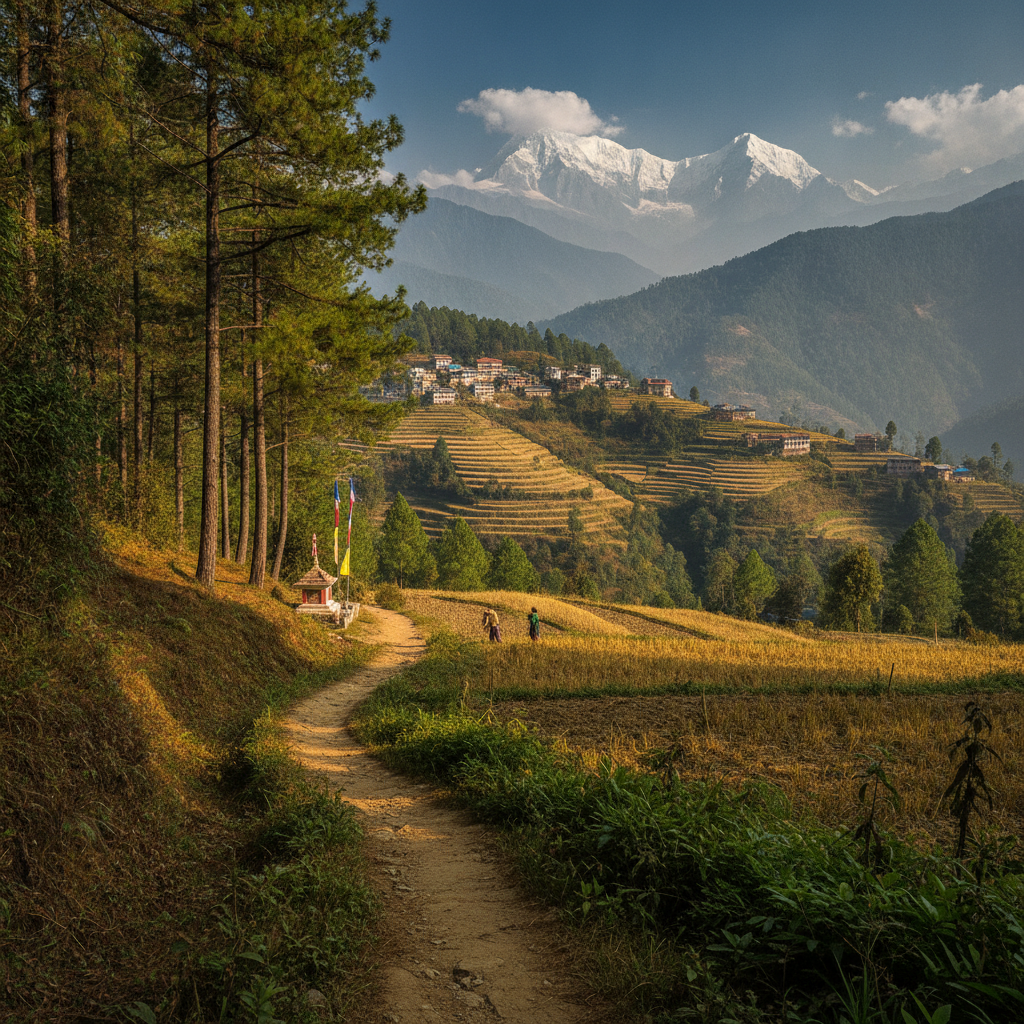
The village cultural portrait photography near Nagarkot (the morning photography of the Tamang community in the villages below the ridge, the farmers departing for the fields in the golden morning light, the women carrying the loads on the traditional doko baskets with the Himalayan panorama behind, and the children walking to school through the terraced landscape creating the most human-scale single mountain photography accessible in Nepal) is the most narratively compelling single photography subject accessible from the Nagarkot hill station — the cultural portrait's specific opportunities (the morning activity that begins before the tourist traffic arrives at the hill station, the most naturally unposed single human activity visible in the Nepal hill community accessible in the first two hours after dawn, when the farmers and the community members are most authentically occupied in their daily tasks) and the compositional context (the mountain backdrop above the village lane, the terraced farmland surrounding the village scene, and the morning light at its most photographically flattering creating the most completely mountain-and-culture-integrating single Nepal photography composition accessible from the Nagarkot day-trip range) create the most humanly engaging single photography subject available at the hill station.
- 6
Sunset Silhouette Session
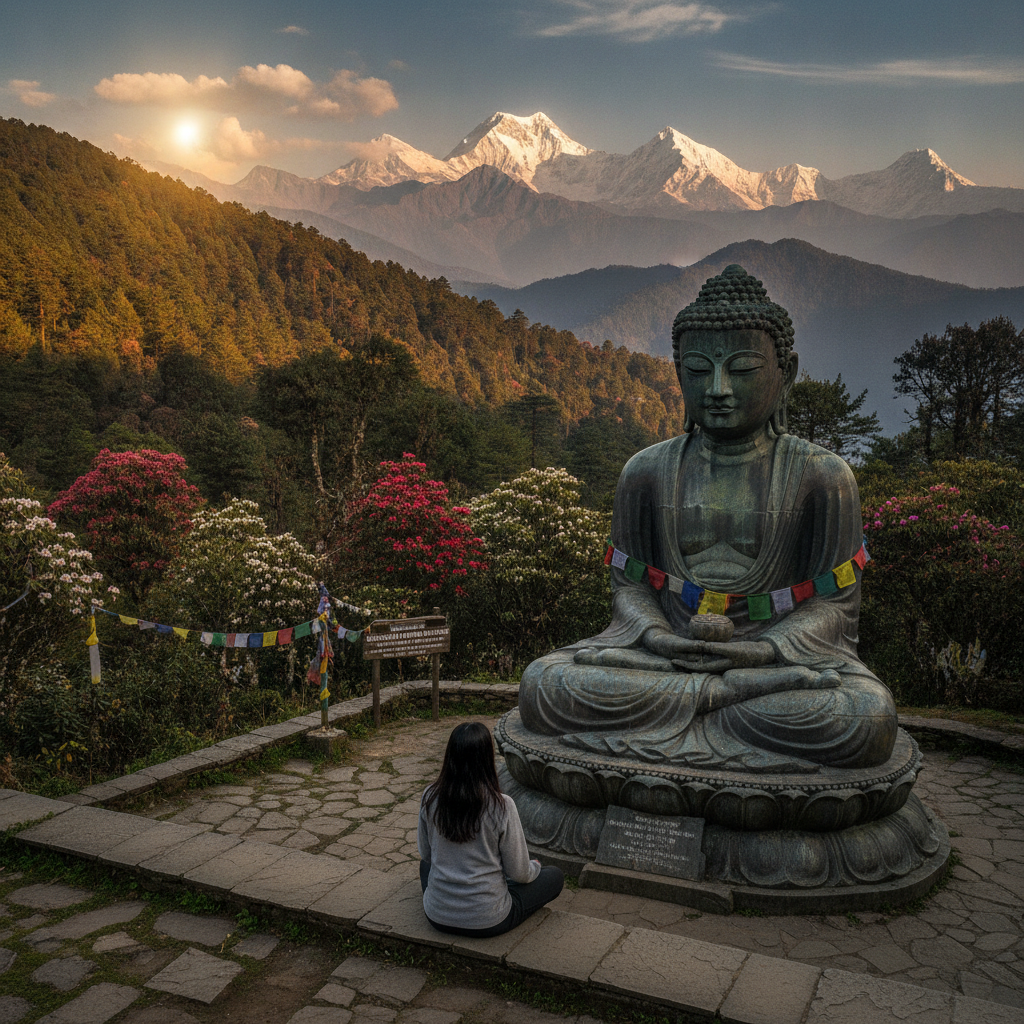
The sunset silhouette photography session at Nagarkot (the evening photography as the sun descends behind the western ridges and the mountain peaks to the north become silhouettes against the darkening sky, the dramatic profile shapes of the Himalayan peaks the most architecturally distinctive single mountain silhouette accessible from any Nepal viewpoint) is the most graphically dramatic single photography opportunity accessible at the hill station — the silhouette session's specific opportunities (the progressive darkening of the sky from the pale blue of the late afternoon through the orange and the red of the sunset to the deep purple and the first stars of the early evening, each stage creating a distinctly different single atmospheric context for the mountain silhouette) and the silhouette session's compositional freedom (the backlit mountains removing the colour and the texture detail from the photography and creating the most graphic single mountain form accessible in Nepal's mountain photography, the sharp edges of the silhouetted peaks visible against the coloured sky creating the most high-contrast single Nepal mountain image accessible from the Nagarkot viewpoint) complete the most photographically complete single mountain day available at the Nepal hill station.
Walk this route with audio
Stories play automatically as you reach each stop — no tapping needed.