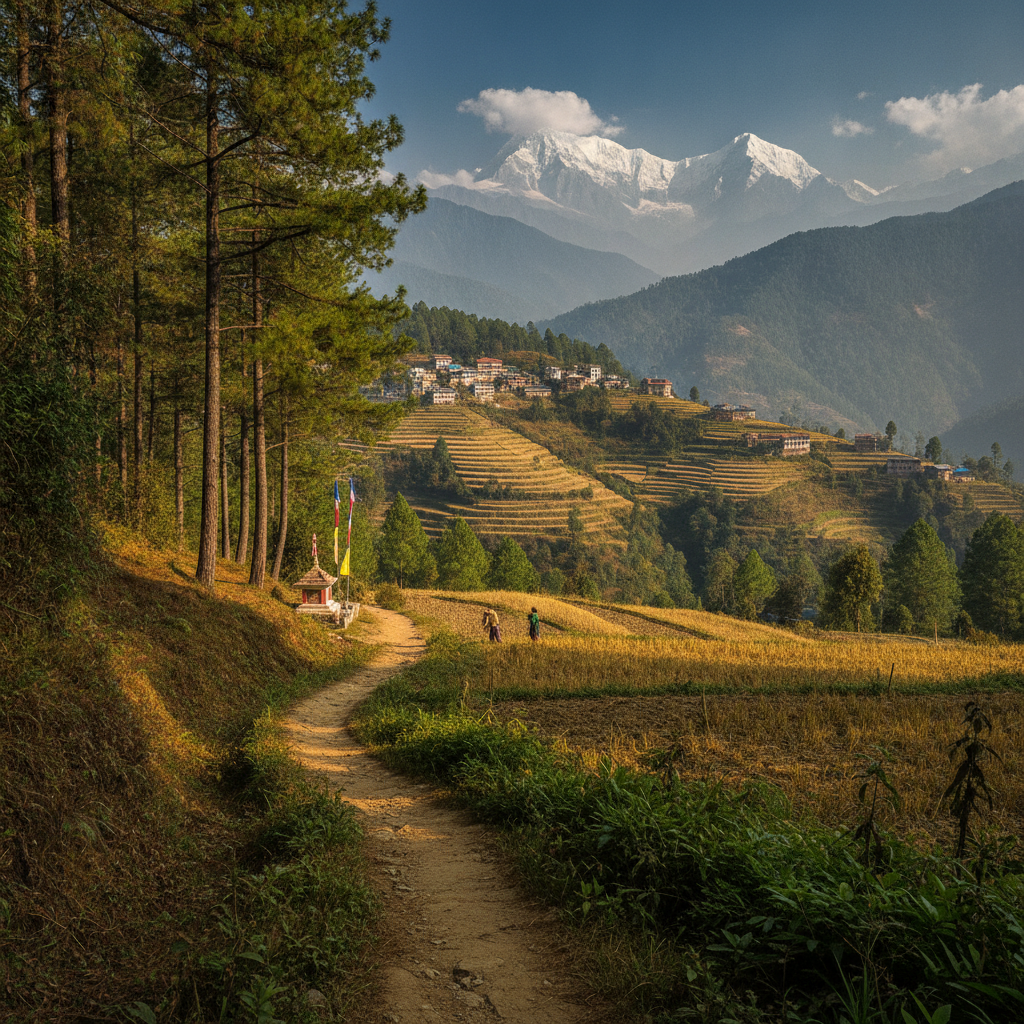
Nagarkot Forest Trail & Village Walk
Trek through Nagarkot's forests — the ridge forests and the terraced village landscapes accessible from the Nagarkot hill station provide the most completely Nepali hill country walking experience accessible within a day trip of Kathmandu, the pine forest paths, the Tamang village visits, and the valley views combining for the most rewarding single day trek.
- 1
Ridge Forest Trail
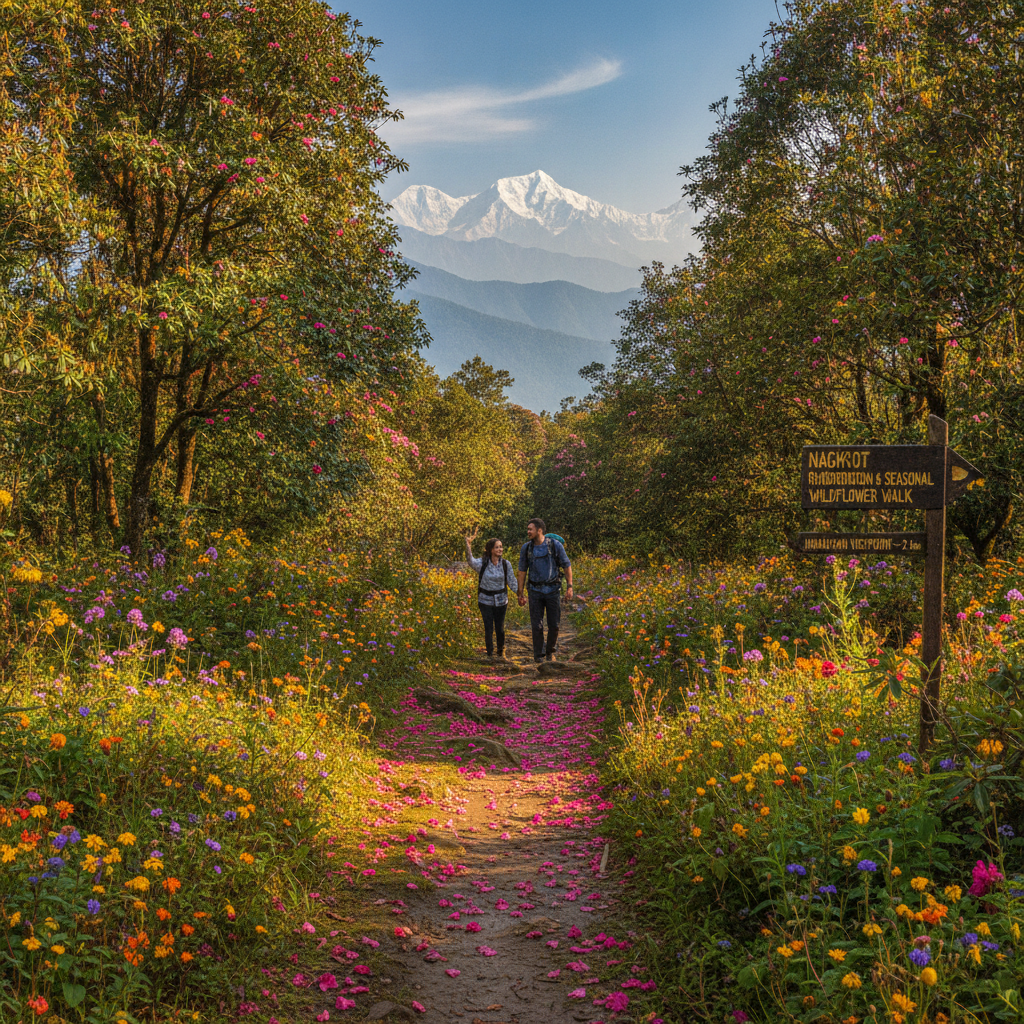
The ridge forest trail at Nagarkot (the path that follows the ridge crest through the pine and rhododendron forest below the viewpoint, the most atmospherically forested single walking route accessible from the hill station's guesthouses without descending to the valley) is the most immediately accessible single nature walk available at the Nagarkot destination — the ridge forest's character (the pine trees creating the most immediately European-feeling single forest interior accessible in the Nepal hills, the rhododendron trees whose flowering season from February to April transforms the ridge path with the most colour-dramatically flowering single tree accessible in Nepal) and the forest's bird community (the Himalayan species of tit, nuthatch, and treecreeper visible in the pine trees, the various flycatcher and warbler species in the rhododendron understorey, and the Himalayan griffon vulture occasionally visible soaring above the ridge edge providing the most dramatic single large bird encounter accessible on the Nagarkot forest walk) create the most completely highland-forest-experiencing single walk accessible from the hill station.
- 2
Tamang Village Visit
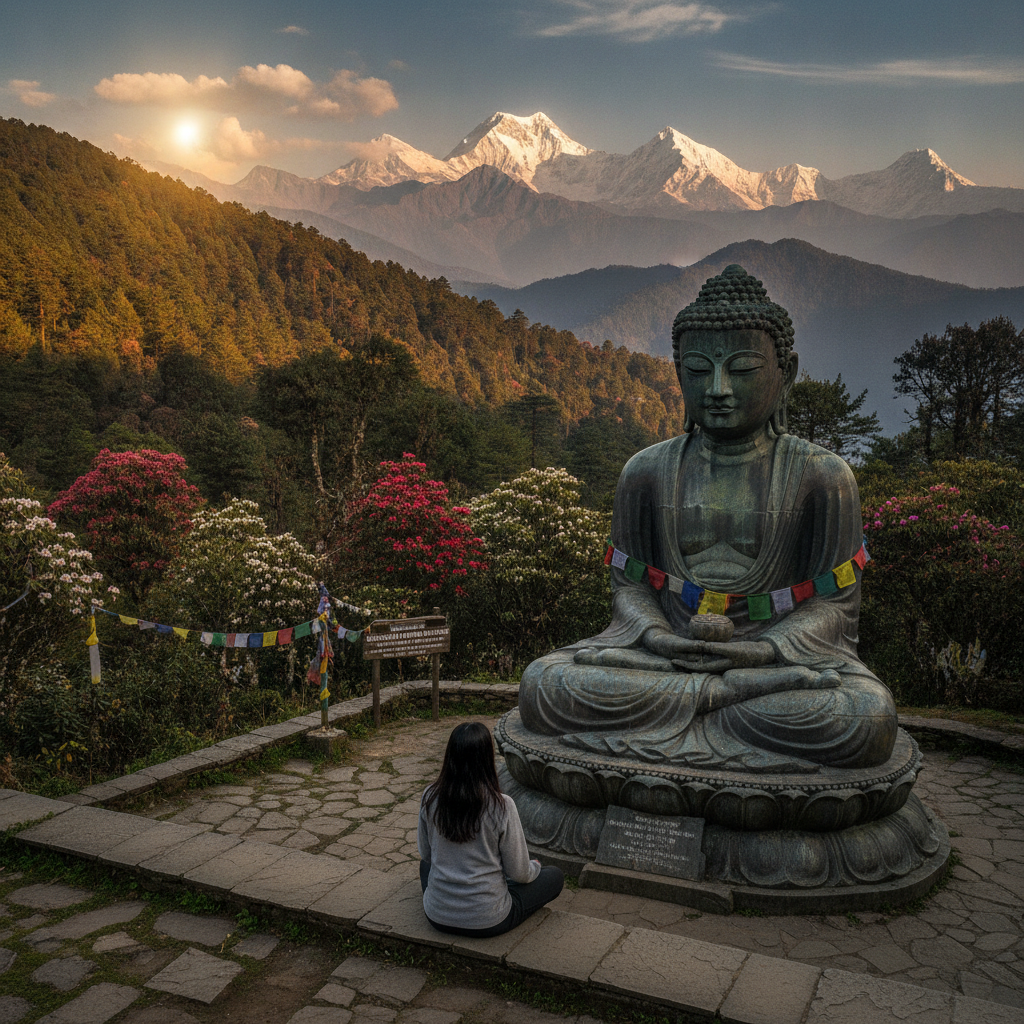
The Tamang village below the Nagarkot ridge (the traditional settlement of the Tamang ethnic community whose villages surround the Nagarkot hill station, the low stone-and-mud houses with the flat roofs, the Buddhist prayer flags on the house corners, and the community's agricultural activity creating the most directly Himalayan-village-authentic single cultural encounter accessible on a day walk from Nagarkot) is the most culturally distinctive single village encounter accessible from the hill station — the Tamang community's specific character (the Buddhist tradition most visible in the household shrine rooms, the mani stone walls lining the village paths with the carved Om Mani Padme Hum mantra, and the women's characteristic dress — the striped apron over the dark blouse and skirt that is the most immediately Tamang-specific single garment accessible in the Nepal hill community) and the village's daily activity (the terraced field work, the livestock management, and the domestic tasks that constitute the most directly observable single Himalayan village life visible from the Nagarkot trekking path) create the most completely community-immersive single cultural encounter accessible within walking distance of the hill station.
- 3
Terraced Farmland Path
The terraced farmland path below Nagarkot (the walking route through the stone-walled agricultural terraces that cascade down the ridge below the forest, the most visually characteristic single Nepali hill landscape accessible from the Nagarkot trail system — the terraces visible from above creating the most geometrically elegant single agricultural landscape accessible in the Nepal hill country) is the most visually rewarding single agricultural walk accessible near the hill station — the terraces' specific character at different seasons (the brilliant green of the rice in the monsoon growing season, the golden harvest visible in October-November, the bare brown of the fallow season in winter, and the emerald wheat growth visible in February creating the most seasonally varied single agricultural colour palette accessible in the Nepal hills) and the terrace walk's physical character (the narrow stone-paved paths between the terrace walls, the irrigation channels visible at the terrace edges, and the farm tools and the livestock creating the most directly agricultural-life-encountering single walk accessible from the Nagarkot hill station) create the most completely landscape-representing single day walk available at the Nepal hill destination.
- 4
Changu Narayan Temple Descent
The descent from Nagarkot to the Changu Narayan temple (the classic Nagarkot day trek that descends through the forest and the terraced farmland to reach the Changu Narayan — the oldest Hindu temple in Nepal, the UNESCO World Heritage Site on a forested hilltop between Nagarkot and Bhaktapur) is the most heritage-rewarding single day walking destination accessible from the Nagarkot ridge — the Changu Narayan temple's specific character (the two-tiered pagoda structure dating from the 4th century CE, the most antiquity-certifiable single temple structure accessible in the Kathmandu valley, the stone carvings of Vishnu in his various manifestations visible in the temple courtyard representing the most artistically significant single collection of early Nepal stone sculpture accessible outside the major museums) and the descent path's character (the 3-4 hour walk from Nagarkot to Changu Narayan through the most completely rural single trail accessible on a day walk from the hill station, the terraced farmland, the forest sections, and the villages creating the most varied single half-day trek accessible near Kathmandu) make the Nagarkot-to-Changu Narayan walk the most culturally rewarding single day trek destination accessible from the hill station.
- 5
Forest Bird Walk
The forest bird walk at Nagarkot (the morning birdwatching walk through the ridge forest in the 2-3 hours after sunrise, when the bird activity is most concentrated and the species diversity of the Nepal mid-hill forest is most completely accessible in the Nagarkot area) is the most birdwatching-productive single morning walk accessible within easy reach of Kathmandu — the forest bird community (the Himalayan species accessible in the Nagarkot forest zone at 2000-2200m elevation — the Eurasian Jay, the Spotted Nutcracker, and the Red-billed Blue Magpie that are the most visually distinctive single corvid species accessible in the Nepal hill forest, visible simultaneously in the pine forest near the ridge) and the forest's migrant species (the winter warblers and the passage migrants that use the Nagarkot forest as a stopover on the spring and autumn migration, the October-November period providing the most diverse single migratory bird encounter accessible at the hill station) create the most species-richly diverse single birdwatching walk accessible within a two-hour drive of Kathmandu.
- 6
Sunset Valley View
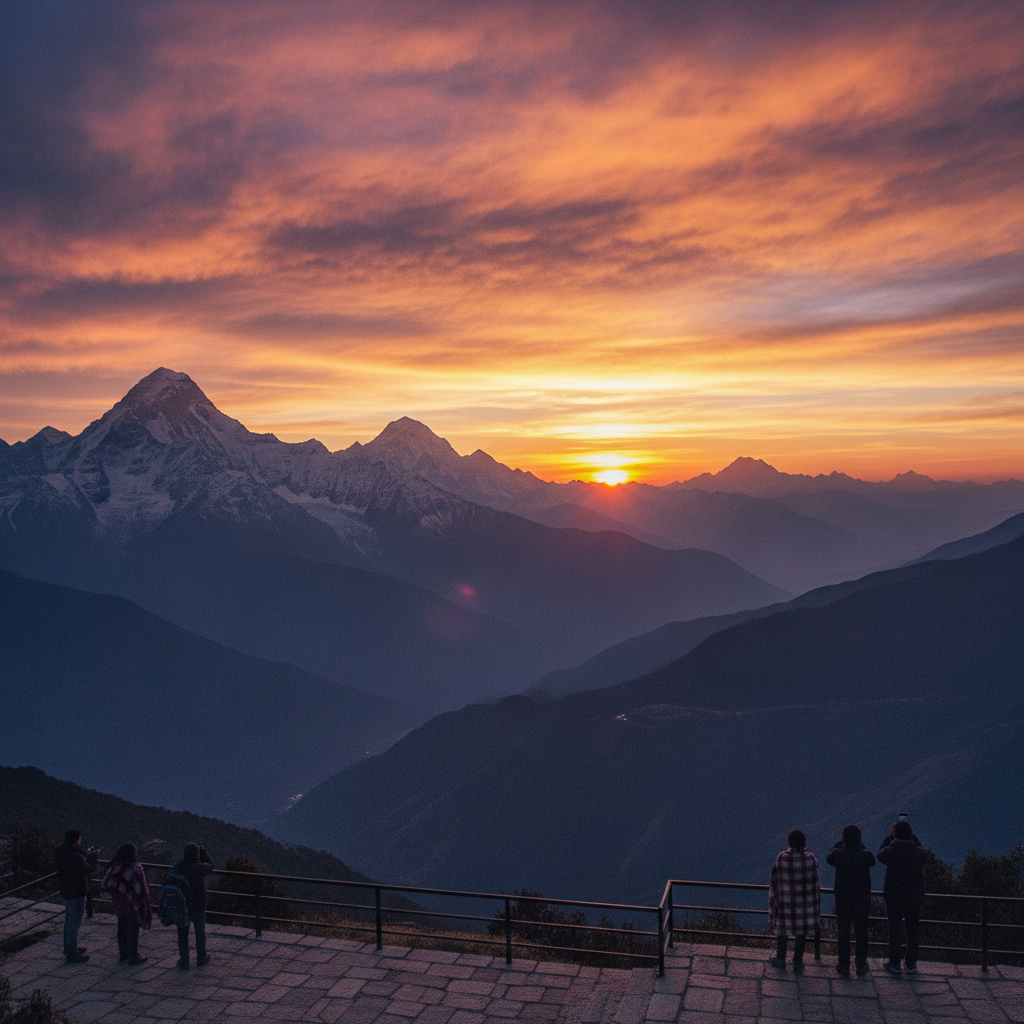
The sunset valley view from the Nagarkot ridge (the evening panorama from the southern-facing sections of the hill station, the Bhaktapur plain and the Kathmandu valley visible below as the sun descends behind the western Himalayan ridges and the valley lights begin to appear) is the most dramatically scale-contrasting single sunset view accessible from any Nepal hill station — the sunset's specific quality at Nagarkot (the warm golden light on the terraced farmland visible below the ridge in the late afternoon, the shadow of the Nagarkot ridge itself advancing across the valley floor as the sun descends, and the city lights of Kathmandu and Bhaktapur beginning to appear in the darkening valley below as the natural light fades) and the evening's atmospheric layering (the valley haze catching the last light and creating the most colour-atmospherically complex single sunset view accessible in the Nepal hills, the blue of the distant ridges contrasting with the warm orange of the illuminated valley floor) create the most completely light-graduated single sunset experience accessible from the Nagarkot hill station. The Himalayan silhouette at sunset (the now-backlit profiles of the peaks visible in the northern sky, the sun's position behind the observer creating the most dramatically contrasted single mountain-sky scene accessible in the Nepal evening) completes the most visually rich single day of mountain and valley views available at the Nagarkot hill destination.
Walk this route with audio
Stories play automatically as you reach each stop — no tapping needed.