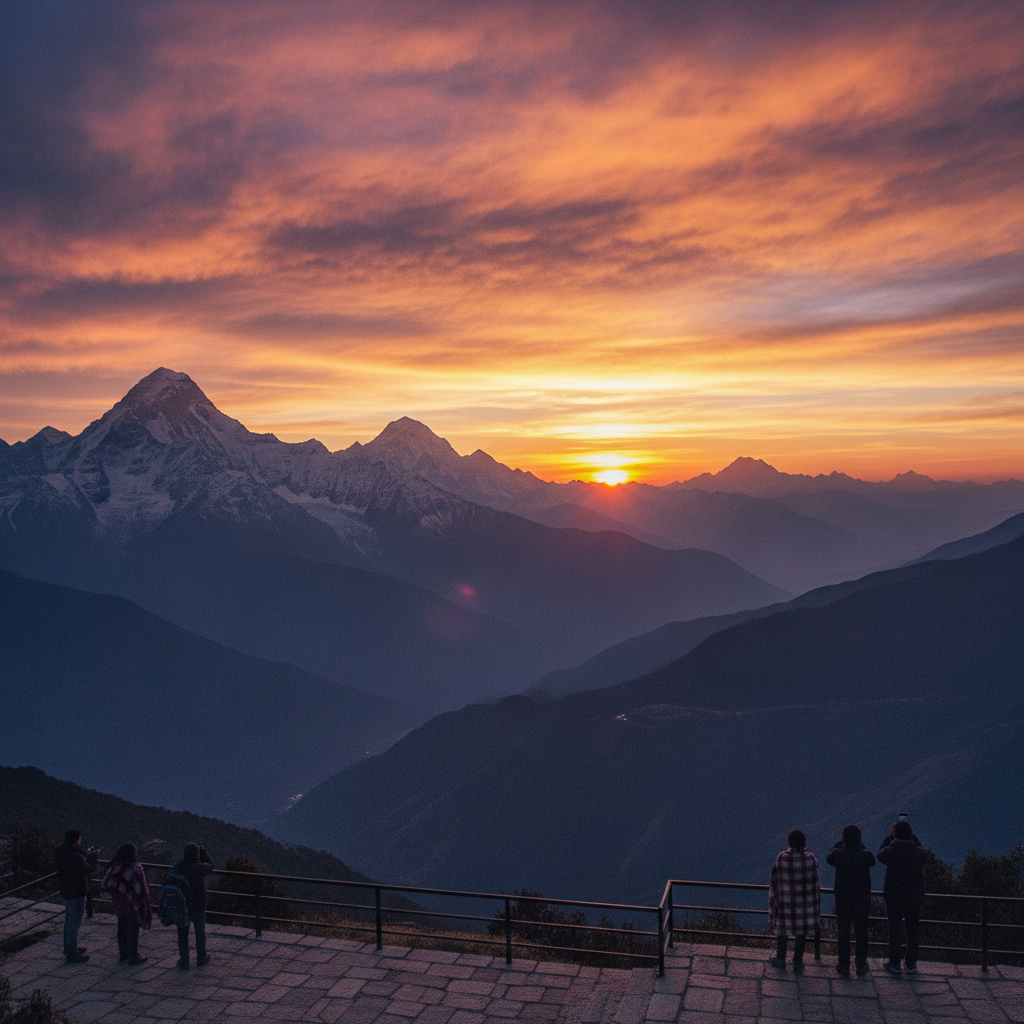
Nagarkot to Bhaktapur Heritage Trek Walk
Trek from the hills to the medieval city — the classic Nagarkot to Bhaktapur walk descends through 1500m of altitude change from the Himalayan viewpoint through the rice terraces, the Newari villages, and the river valley to arrive at the most completely preserved medieval city accessible in Nepal.
- 1
Nagarkot Ridge Departure
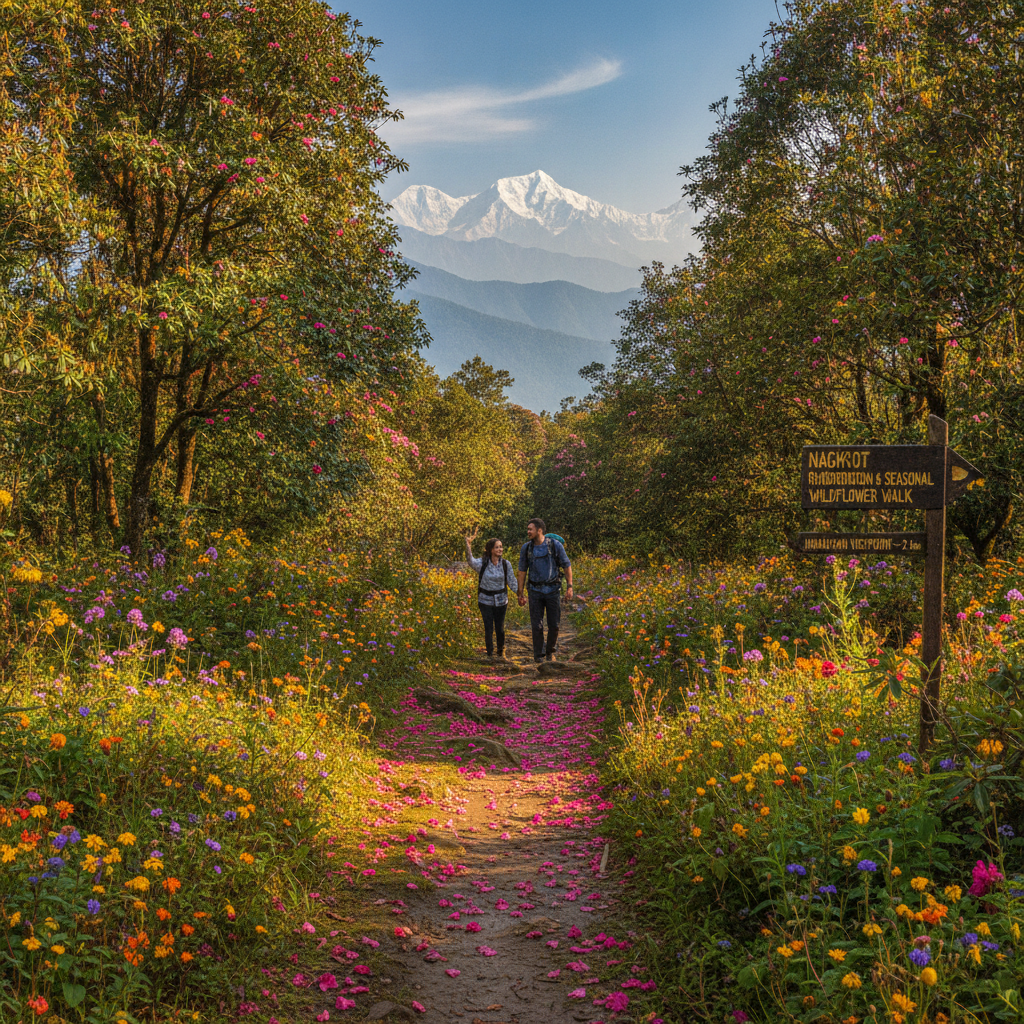
The Nagarkot ridge departure (the start of the descent trek from the hill station viewpoint, the trail beginning with the most panoramically framed single departure of any Nepal day trek — the Himalayan range visible in the north as the path begins its descent through the ridge forest toward the Kathmandu valley far below) is the most visually inspiring single trek start accessible near Kathmandu — the departure point's specific panorama (the full Himalayan arc visible behind the descending trekker as the path enters the forest below the ridge, the mountain view gradually obscured by the forest canopy as the descent proceeds but remaining visible through the occasional forest gaps) and the path's initial character (the well-maintained stone paved trail through the upper pine forest, the morning birds active in the trees beside the path, and the cool of the ridge giving way to the warmer air of the forest interior as the descent progresses) create the most rewarding single first-hour of any day trek accessible within two hours of Kathmandu.
- 2
Newari Village Tikhel
The Newari village of Tikhel on the Nagarkot descent path (the first significant Newari settlement encountered on the walk from Nagarkot toward Bhaktapur, the traditional Newari brick architecture visible in the village's courtyard houses, the water spouts at the village well, and the woodcarved windows that are the most immediately Newari-architecturally distinctive single building element accessible in the valley-edge villages) is the most directly cultural encounter accessible during the first third of the descent trek — the Newari community's specific character in the valley-edge villages (the agricultural base of the community visible in the grain storage, the livestock, and the seasonal farming activity, the Buddhist and Hindu shrines visible at the village entrance and the intersection of the village lanes) and the village's architectural details (the brick-and-timber courtyard house construction, the elaborately carved wooden windows and door frames that are the most artistically detailed single domestic architecture accessible in any Nepal hill village, and the communal water spout whose traditional stonework represents the most hydraulically engineered single pre-modern water system accessible in the Nepal hill country) create the most completely Newari-architecturally informative single village encounter accessible on the Nagarkot descent.
- 3
Rice Terrace Descent
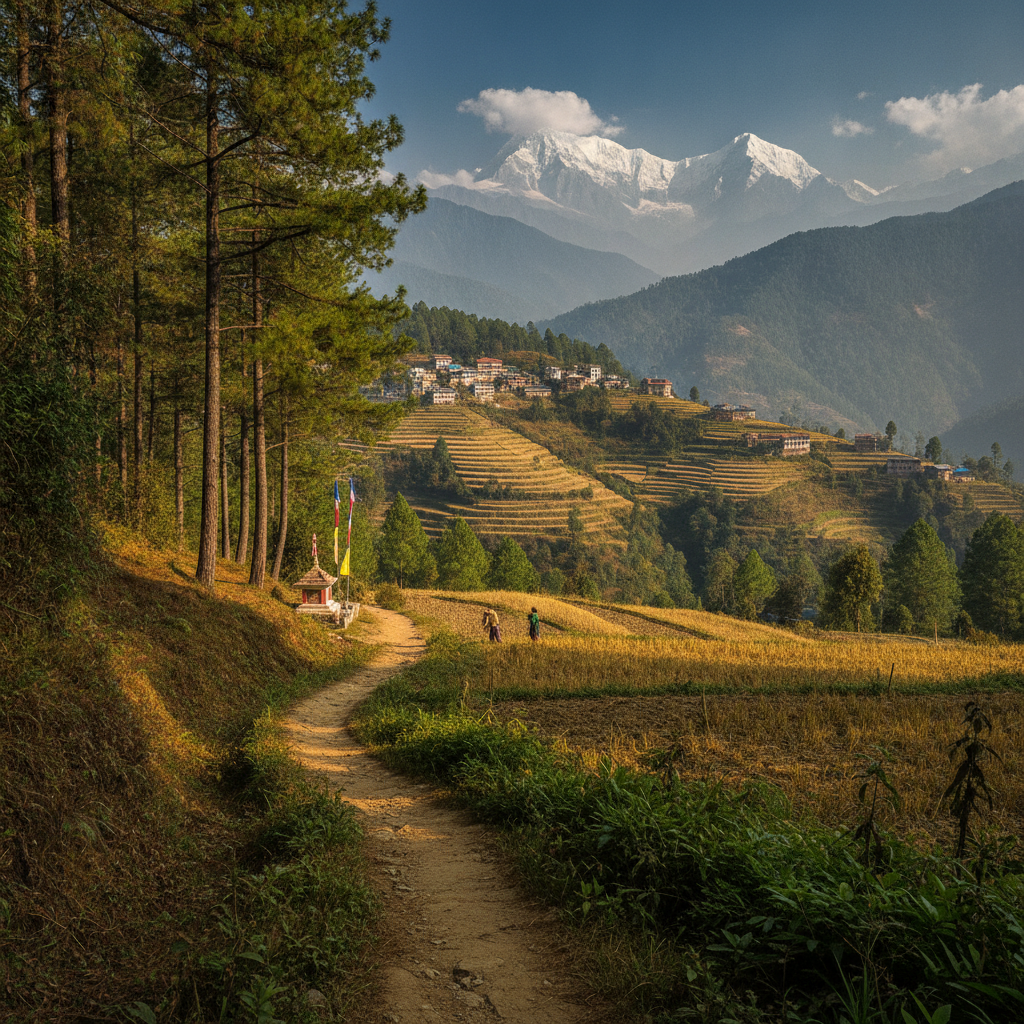
The rice terrace descent section of the Nagarkot-to-Bhaktapur trek (the long traverse through the intensively terraced agricultural landscape of the mid-slope zone between the ridge forest and the valley floor, the most visually spectacular single agricultural landscape accessible on any Nepal day walk near Kathmandu) is the most scenically rewarding single trail section accessible during the descent — the terrace landscape's character (the stone-walled agricultural terraces cascading from the forest edge above to the river valley below, the width and the regularity of the terraces in this section reflecting the most optimally-engineered single traditional agricultural system accessible near Kathmandu, the irrigation channel network that distributes water from the ridge spring sources to each terrace level visible in the stone channels at the terrace edges) and the descent path's panoramic views (the Bhaktapur valley visible ahead and below as the terrace descent proceeds, the destination city's distinctive skyline of pagoda roofs visible in the far distance providing the most encouraging single trekking destination view accessible on the Nagarkot descent) create the most visually rewarding single mid-section of the day trek.
- 4
River Valley Crossing
The river valley crossing on the Nagarkot-to-Bhaktapur trek (the section where the descent path reaches the valley floor and crosses the river that drains the Nagarkot ridge's southern slopes, the most geographically transitional single moment of the day trek — from the agricultural hillside to the flat valley approach toward Bhaktapur) is the most environmentally varied single trail section accessible on the descent — the river crossing's specific character (the simple suspension bridge or the stepping-stone ford depending on the water level, the river's clear water reflecting the Himalayan source and the local wildlife visible in the stream banks — the dippers bobbing in the current, the kingfishers visible on the overhanging branches) and the valley floor approach (the flat path through the valley bottom vegetation, the transition from the open terraced hillside to the riverside trees creating the most distinctly different single micro-environment accessible on the descent trek) create the most ecologically varied single trail section accessible on the Nagarkot day walk.
- 5
Bhaktapur City Entry
The Bhaktapur city entry (the arrival at the UNESCO World Heritage medieval city at the conclusion of the Nagarkot descent trek, the traditional gates and the brick lanes of Bhaktapur encountered after the rural descent through the terraces and the forest creating the most dramatically contrasted single trekking arrival accessible near Kathmandu) is the most rewarding single day trek conclusion accessible from any Nepal hill station — the city entry's specific experience (the transition from the rural landscape of the descent to the urban medieval environment of Bhaktapur — the brick-paved lanes, the temple-lined squares, and the continuous architectural heritage of the city visible from the first steps inside the historic boundary) and the city's specific character after the walk (the most completely medieval single urban environment accessible in Nepal, the physical exertion of the descent amplifying the sensory contrast with the suddenly architectural and culturally dense environment of the Bhaktapur historic core) create the most completely experientially contrasted single day trek arrival accessible in Nepal.
- 6
Bhaktapur Durbar Square
The Bhaktapur Durbar Square at the end of the Nagarkot trek (the royal square of the medieval Malla kingdom, the most completely preserved single medieval royal square accessible in Nepal, the 55-Window Palace, the Golden Gate, and the various pagoda temples creating the most architecturally rich single heritage space accessible at any Nepal trek destination) is the most culturally rewarding single trek conclusion accessible within day-trip distance of Kathmandu — the square's specific highlights (the 55-Window Palace — the most elaborately wood-carved single royal building accessible in Nepal, the palace's peacock windows visible from the Durbar Square approach as the most intricate single piece of decorative woodcarving accessible in the Nepal heritage circuit — and the Golden Gate — the most ornately metalwork-decorated single entrance accessible in Nepal, the gilded copper repousse work covering every surface of the gateway arch) and the square's living cultural character (the Newari community's daily activity visible in the square's margins, the pottery district adjacent to the royal square where the traditional Newari pottery is still produced by hand, and the various food vendors selling the distinctly Bhaktapur juju dhau — the local yoghurt that is the most regionally distinctive single food product accessible in the city) complete the most satisfying single day trek conclusion accessible from any Nepal hill station.
Walk this route with audio
Stories play automatically as you reach each stop — no tapping needed.