Medan Chinatown & Chinese Heritage Walk
Explore Medan's vibrant Chinese quarter — the largest urban Chinese community in Sumatra was established during the plantation era when Hakka and Hokkien workers imported as plantation labour created a permanent community that became the commercial backbone of colonial and post-colonial Medan.
- 1
Vihara Gunung Timur Temple
Vihara Gunung Timur (Eastern Mountain Temple) is the largest Chinese Buddhist temple in Medan and one of the most important Chinese temples in Sumatra — the temple complex combining Buddhist, Taoist, and Confucian worship practices in a single elaborate facility reflects the syncretic religious character of the Hokkien and Hakka Chinese communities of Medan, and the temple's incense-filled halls, elaborate altar displays, and resident monks maintain a religious practice that has continued through the plantation era, Japanese occupation, and post-independence Indonesian nationalism.
- 2
Medan Chinatown Street Market
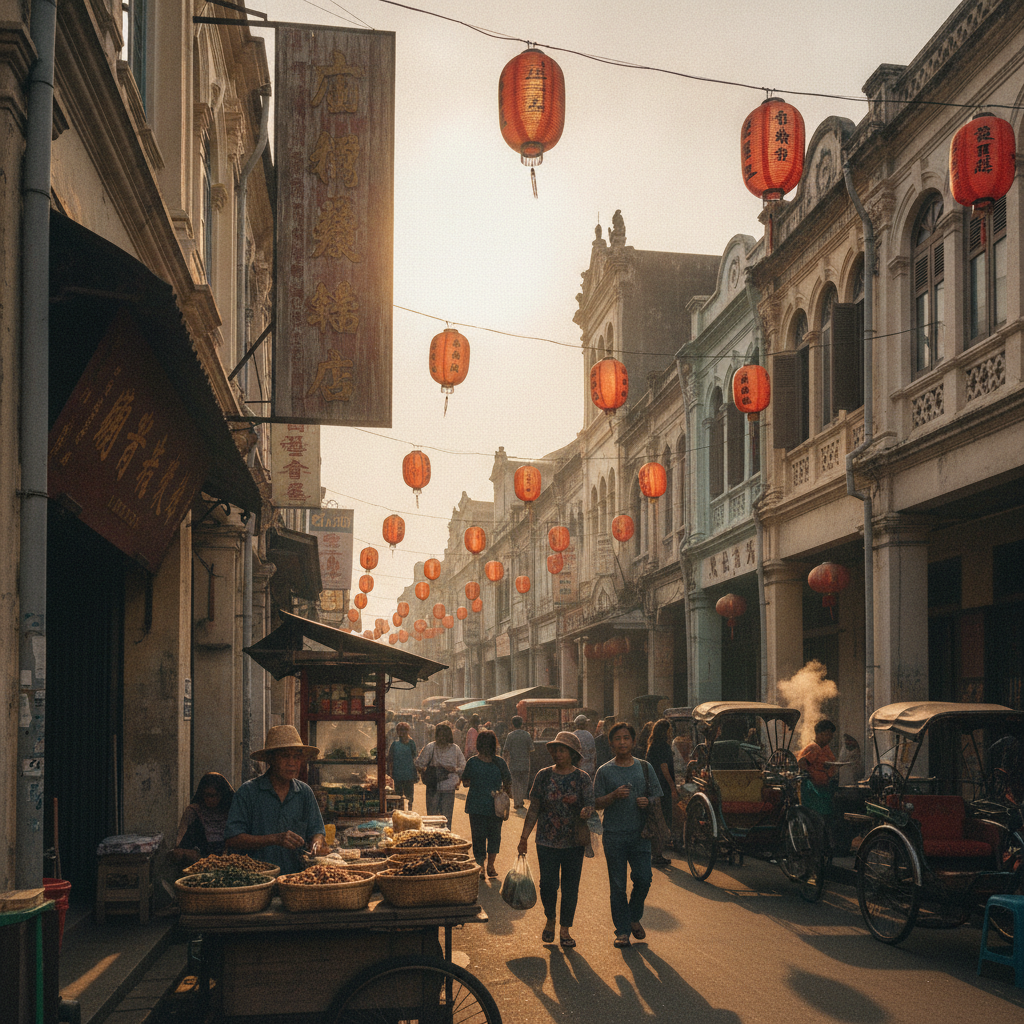
Medan's Chinatown in the Jalan Zainul Arifin area preserves the commercial character of the plantation-era Chinese trading district — the traditional apothecaries selling dried herbs and medicinal preparations, the gold shops maintained by Hokkien families, the Chinese bakeries producing steamed buns and mooncakes, and the hawker centres serving Hokkien noodles, char kway teow, and dim sum create a Chinese commercial district that is both a living economic space and an ethnic heritage environment.
- 3
Sri Mariamman Temple
The Sri Mariamman Hindu temple in Medan's multicultural commercial district serves the Tamil South Indian community that came to North Sumatra as estate workers on the rubber plantations of the Deli region — the temple's colourful gopuram (tower) decorated with Hindu deities in the South Indian temple architectural tradition stands in the middle of a Chinese commercial district, creating the distinctive religious landscape of a city where Indian, Chinese, Malay, and Javanese communities have coexisted in the same urban space for over a century.
- 4
Pasar Ikan Lama Chinese Market
Pasar Ikan Lama (Old Fish Market) is one of Medan's oldest established markets, historically operated by Chinese traders — the market that has sold fish, produce, and dry goods to Medan's diverse population since the colonial era operates in the building stock of the early 20th century, with the Chinese shop-house format visible in the surrounding streets creating an urban context that has changed relatively little in overall character despite a century of demographic and economic transformation.
- 5
Medan Chinese Cemetery
The Chinese cemetery in Medan is a repository of the genealogical history of the city's Chinese community — the tombstones recording the names, birth villages in Fujian and Guangdong provinces, and death dates of the plantation-era immigrants and their descendants document the founding generation of Medan's Chinese community, their clan affiliations, and the mortality rates of plantation labour that brought the majority of these people to Sumatra in the late 19th and early 20th centuries.
- 6
Pecinan Food Culture
Medan's Chinese food culture is arguably the most sophisticated Chinese culinary tradition in Sumatra — the combination of Hokkien, Hakka, and Teochew cooking traditions adapted to local ingredients over four generations of settlement has produced distinctive Medan-Chinese dishes like bihun bebek (rice noodles with duck), sate Kerang (clam satay), and the various dim sum preparations served in the coffee shops and hawker centres of the Chinatown area that draw food tourists specifically to Medan from across Indonesia and from Singapore and Malaysia.
Walk this route with audio
Stories play automatically as you reach each stop — no tapping needed.