Lumbini Pilgrimage & Meditation Walk
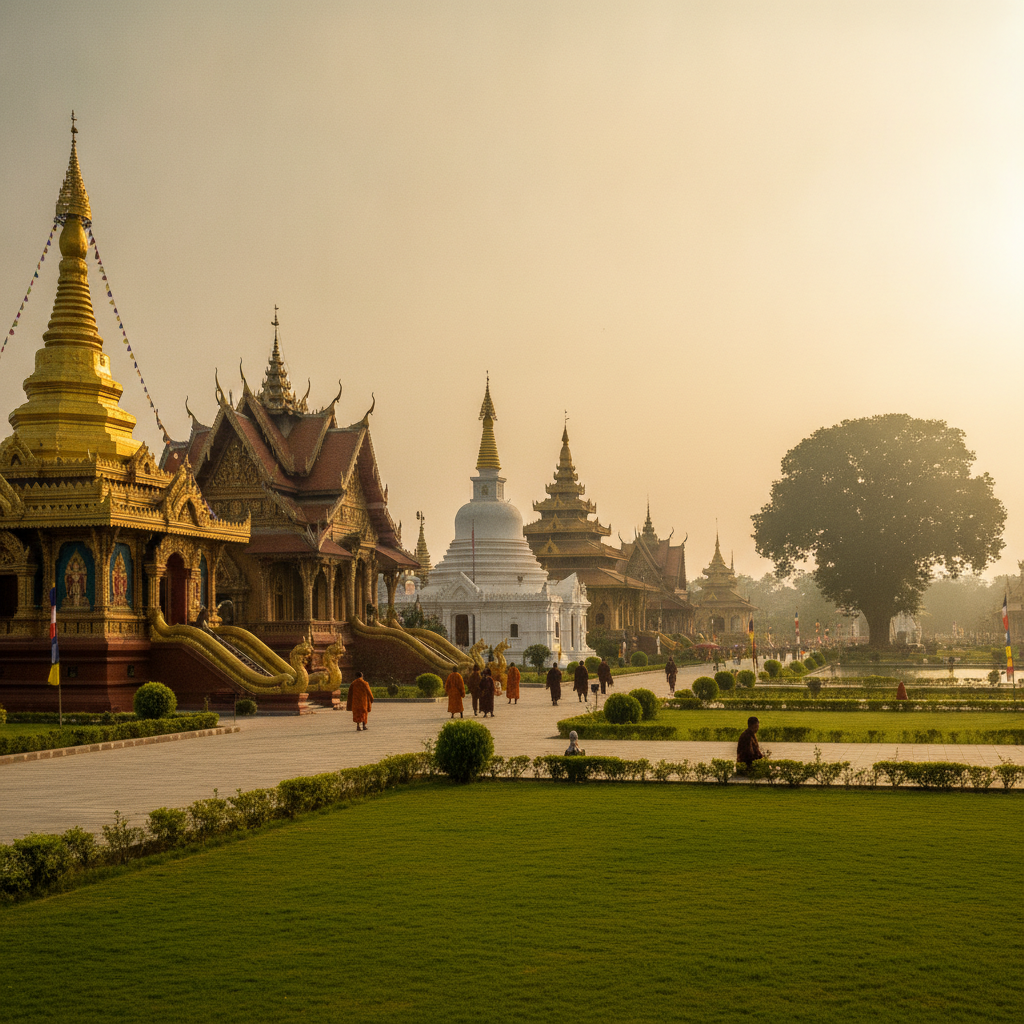
Find peace at the source — Lumbini's combination of the world's most sacred Buddhist site, the surrounding monastery meditation halls, and the canal-threaded landscape of the Monastic Zone creates the most completely supported single meditation and mindfulness environment accessible at any pilgrimage destination on earth.
- 1
Dawn Circumambulation Path
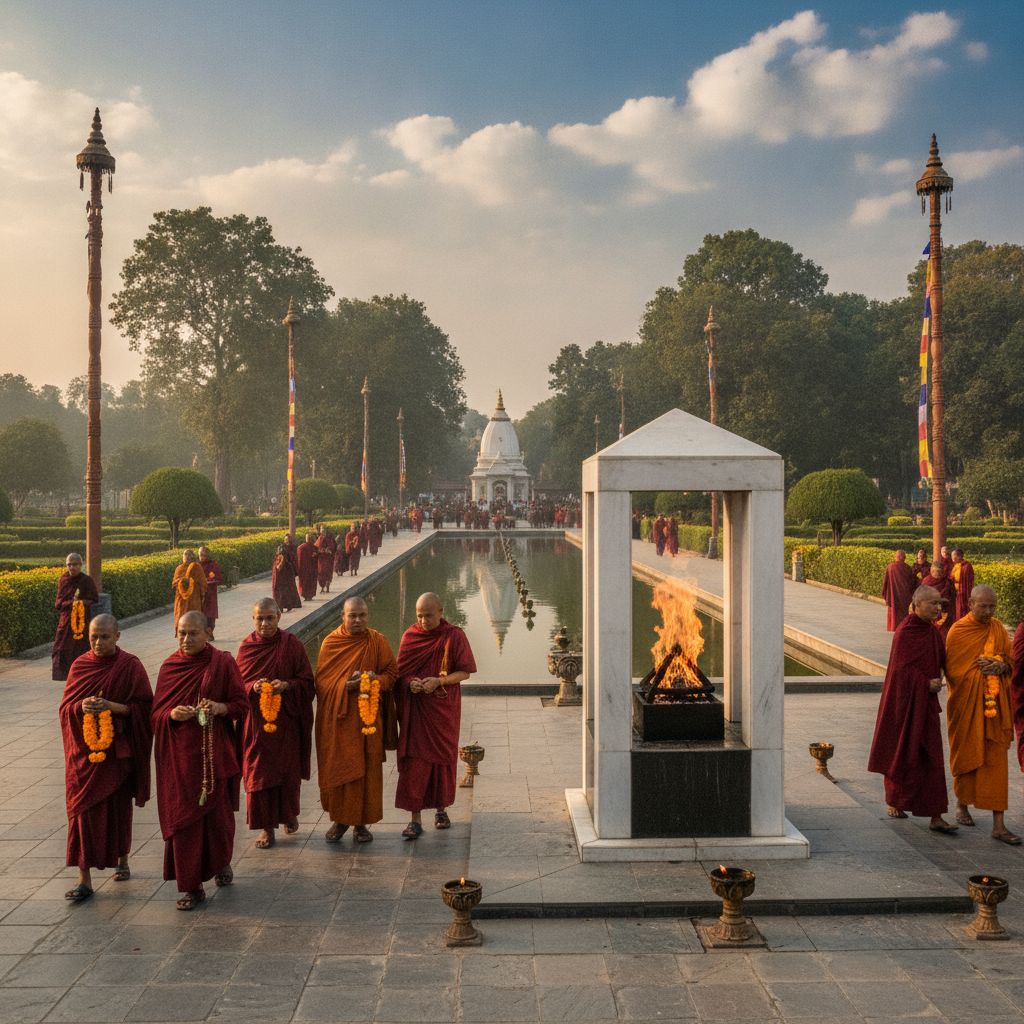
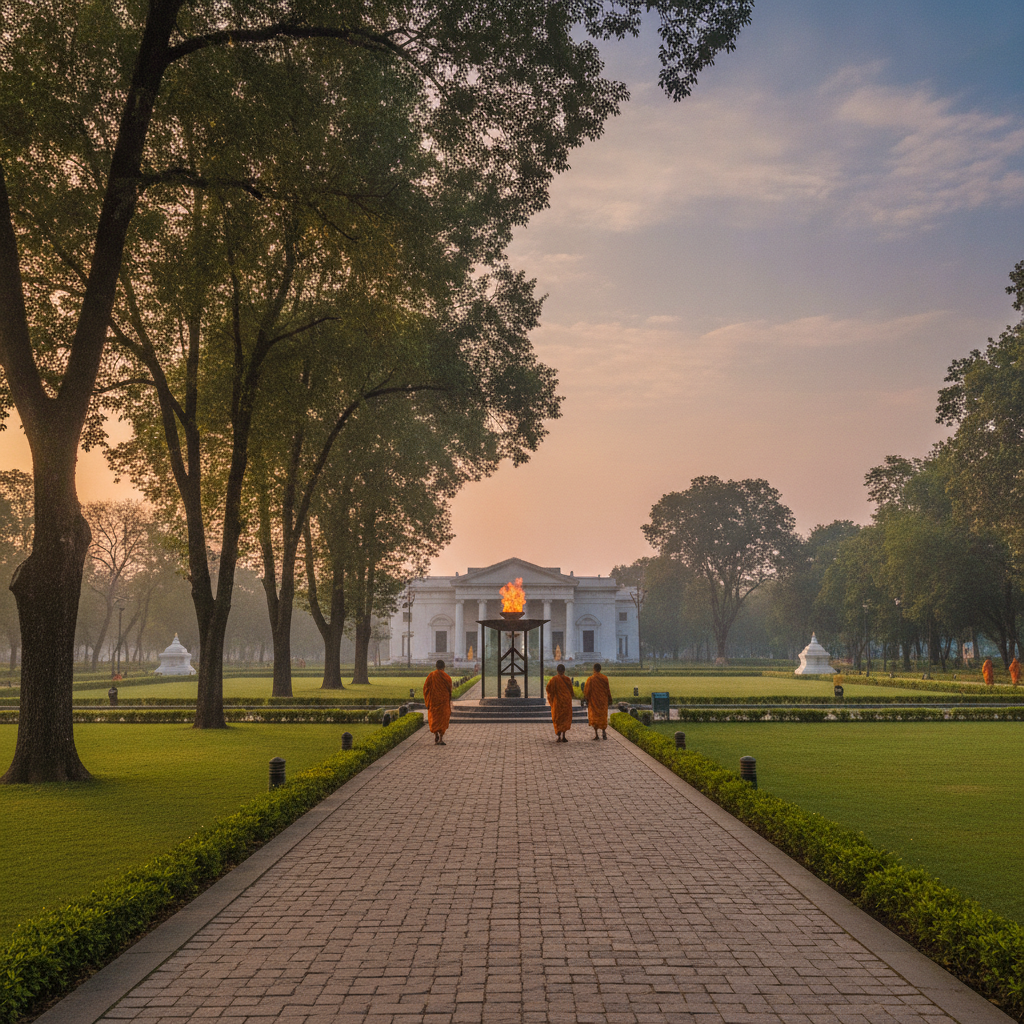
The dawn circumambulation path around the Maya Devi Temple (the clockwise walking meditation circuit around the birthplace shrine, the most universally observed single Buddhist pilgrimage practice performed by the monks, nuns, and lay pilgrims of all Buddhist traditions who visit Lumbini each morning before the temple opens) is the most genuinely multi-traditional single meditation walk accessible in the Buddhist world — the circumambulation's participants (the Theravada monks in orange robes, the Tibetan monks in maroon, the Korean nuns in grey, and the lay pilgrims from every Buddhist country, all walking the same path in the same clockwise direction around the same sacred spot) create the most visually diverse single unified religious practice accessible at any world pilgrimage site. The path's specific atmosphere at dawn (the silence of the early morning broken only by the footsteps and the occasional murmured mantra, the mist from the adjacent pond still visible over the archaeological ruins, and the first light catching the white stupa above the temple creating the most atmospherically sacred single dawn scene accessible in Nepal) and the physical experience of the circumambulation (the repetitive walking creating the natural meditative state in which the sacred geography becomes not a spectacle but a presence) make the Lumbini circumambulation the most directly contemplatively effective single physical act accessible at any South Asian pilgrimage site.
- 2
Vipassana Meditation Hall
The Vipassana Meditation Hall in the Lumbini Monastic Zone (the dedicated meditation centre offering the Vipassana insight meditation instruction in the tradition most directly connected to the historical Buddha's own teaching, the centre's residential programme accepting the serious practitioners for the 10-day silent retreat that is the most accessible single formal Buddhist meditation training programme available in Nepal) is the most directly practice-supporting single Buddhist facility accessible at the birthplace destination — the meditation hall's physical design (the purpose-designed sitting hall with the individual cushion spaces, the silence maintained throughout the residential areas, and the schedule that regulates the sitting meditation periods, the walking meditation intervals, and the teacher's discourse sessions) and the retreat's setting at the birthplace (the most symbolically motivating single location for the commencement of a meditation practice, the knowledge that the same teaching methodology is being practised at the place where the teacher was born creating the most historically-contextualised single meditation experience accessible in Nepal) create the most completely formal single meditation retreat experience available at any Nepal pilgrimage destination. The 10-day retreat's transformative character (the most consistently life-changing single experience cited by practitioners who have completed the course at Lumbini, the combination of the intensive practice and the sacred setting producing outcomes described as qualitatively different from the same practice conducted elsewhere) makes the Lumbini Vipassana retreat the most highly recommended single formal meditation experience accessible in Nepal.
- 3
Bodhi Tree Garden
The Bodhi tree garden at Lumbini (the collection of Ficus religiosa trees planted by various Buddhist nations' pilgrimage groups in the Monastic Zone, the sacred fig tree species under which the historical Buddha attained enlightenment at Bodh Gaya and whose presence at the birthplace creates the most symbolically complete single tree-planting visible in any Buddhist pilgrimage site) is the most botanically meaningful single garden accessible in the Lumbini complex — the Bodhi tree's significance (the tree species that is simultaneously the most ecologically ordinary and the most spiritually charged single plant accessible in the Buddhist world, its heart-shaped leaves with the distinctively elongated drip-tip visible in every Buddhist country where the tree has been planted from the cuttings of the original Bodh Gaya tree and its descendants) and the garden's meditative use (the practising meditators visible sitting beneath the Bodhi trees in the garden, the shade of the tree the traditional meditation site of the Buddhist tradition since the first teacher's enlightenment) create the most directly meditation-tradition-connecting single outdoor space accessible at the Lumbini pilgrimage site. The Bodhi tree's sound (the heart-shaped leaves catching even the lightest breeze and creating the characteristic rustling that is the most immediately distinctive single tree sound accessible in the Buddhist pilgrimage garden, the sound traditionally associated with the awareness of impermanence that is the cornerstone of the Buddha's teaching) is the most directly philosophically resonant single natural sound accessible at the Lumbini meditation garden.
- 4
Canal Walking Meditation
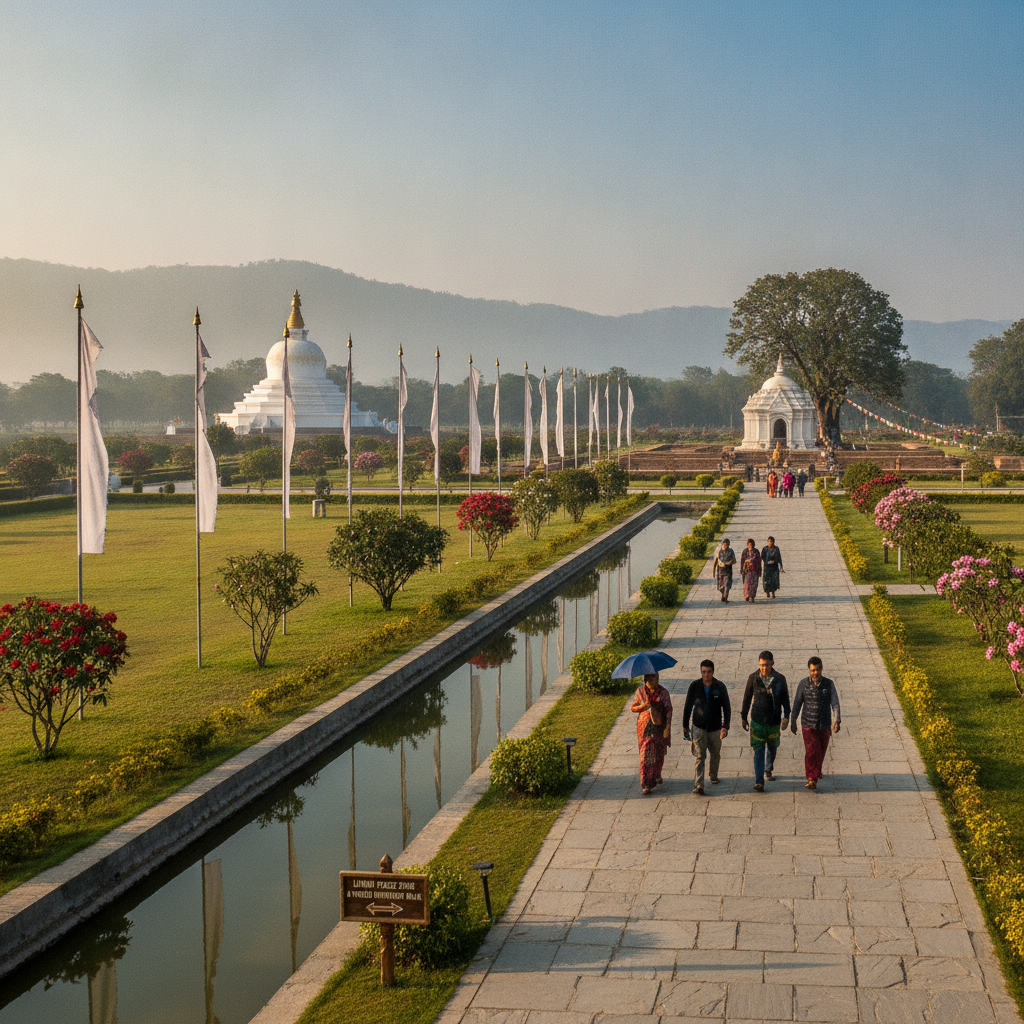
The canal walking meditation at Lumbini (the slow mindful walk along the main canal that bisects the Monastic Zone, the water reflecting the monastery buildings and the surrounding trees, the pace set by the walking meditation instruction at its most leisurely and most attention-directing) is the most practically accessible single formal meditation practice available to the non-residential visitor at Lumbini — the canal path's specific character for the walking meditation (the flat, straight path that removes the need for navigational attention and allows the full awareness to settle on the physical sensations of the walking — the foot lifting, the moving, the placing — that constitute the classical walking meditation object) and the path's sensory environment (the water sounds of the canal, the reflections of the international monastery buildings providing a visual anchor without becoming a visual distraction, and the birds audible in the trees along the canal bank providing the most gently animating single background accessible to the walking meditator) create the most completely supported single moving meditation environment accessible at any Nepal religious site. The canal's social meditation character (the other practitioners visible walking at the same slow pace in the same direction, the shared silence of the walking practice creating the most effortlessly community-supported single meditation experience accessible in a public outdoor space) is the most naturally group-meditative single physical environment accessible in Nepal.
- 5
World Peace Pagoda
The World Peace Pagoda at Lumbini (the Japanese-built white stupa visible above the tree line of the Lumbini complex, the monument built by the Nipponzan Myohoji Buddhist order as a symbol of universal peace, its brilliant white form and the golden Buddha image on each of its four faces creating the most immediately architecturally distinctive single structure accessible from the Lumbini approach road) is the most visually iconic single monument accessible in the greater Lumbini area — the pagoda's design (the pure white dome form above the drum base, the architectural language of the ancient Indian stupa translated into the contemporary Japanese Buddhist monument-building tradition, the four golden Buddha images in the cardinal directions visible from the surrounding landscape) and the pagoda's position (the elevated mound that positions the white dome above the tree line of the surrounding flat Terai, making the pagoda visible from a 10km radius and creating the most effective single landmark structure accessible in the Lumbini zone) create the most far-visible single monument accessible in southern Nepal. The pagoda's peace message context (the Nipponzan Myohoji order's mission of building peace pagodas at significant sites worldwide, the Lumbini pagoda's position at the Buddha's birthplace making it the most symbolically appropriate single Nipponzan construction accessible in their global network) is the most directly peace-pilgrimage-motivating single monument accessible at any Nepal religious destination.
- 6
Evening Lamp Offering
The evening lamp offering at the Maya Devi Temple (the butter lamp and candle-lighting ritual performed by the pilgrims at the temple's outer altar as the day ends, the small flames of the individual offerings accumulating to the most collectively-lit single devotional scene accessible in Nepal, the warm light visible against the deepening blue of the Lumbini evening sky) is the most collectively devotional single evening ritual accessible at any Nepal pilgrimage site — the lamp offering's specific meaning at this location (the flames offered at the exact birthplace of the teacher who metaphorically described his teaching as a lamp that dispels the darkness of ignorance, the most directly symbolic single act accessible in the Buddhist devotional vocabulary performed at the most symbolically appropriate single location accessible in the Buddhist world) and the offering ritual's community character (the pilgrims from multiple countries lighting their individual lamps at the same altar simultaneously, the most visually unified single moment of the multi-national Buddhist pilgrimage community accessible at Lumbini) create the most completely meaningful single devotional encounter available at the Nepal pilgrimage destination. The lamp-lit evening at the Maya Devi Temple (the warm glow of the accumulated offerings illuminating the ancient stone facade of the temple, the smoke of the incense rising in the still Lumbini air, and the sound of the various national communities completing their evening prayers) is the most atmospherically sacred single concluding moment accessible at the world's most important Buddhist birthplace.
Walk this route with audio
Stories play automatically as you reach each stop — no tapping needed.