Lumbini Buddha Jayanti Festival Walk
Celebrate Buddha Jayanti at Lumbini — the full moon of Vaisakha (April-May) marks the triple occasion of the Buddha's birth, enlightenment, and passing, and Lumbini's celebration of this most sacred single Buddhist festival attracts pilgrims from every Buddhist country to the birthplace, creating the most internationally attended single religious festival accessible in Nepal.
- 1
Festival Procession Route
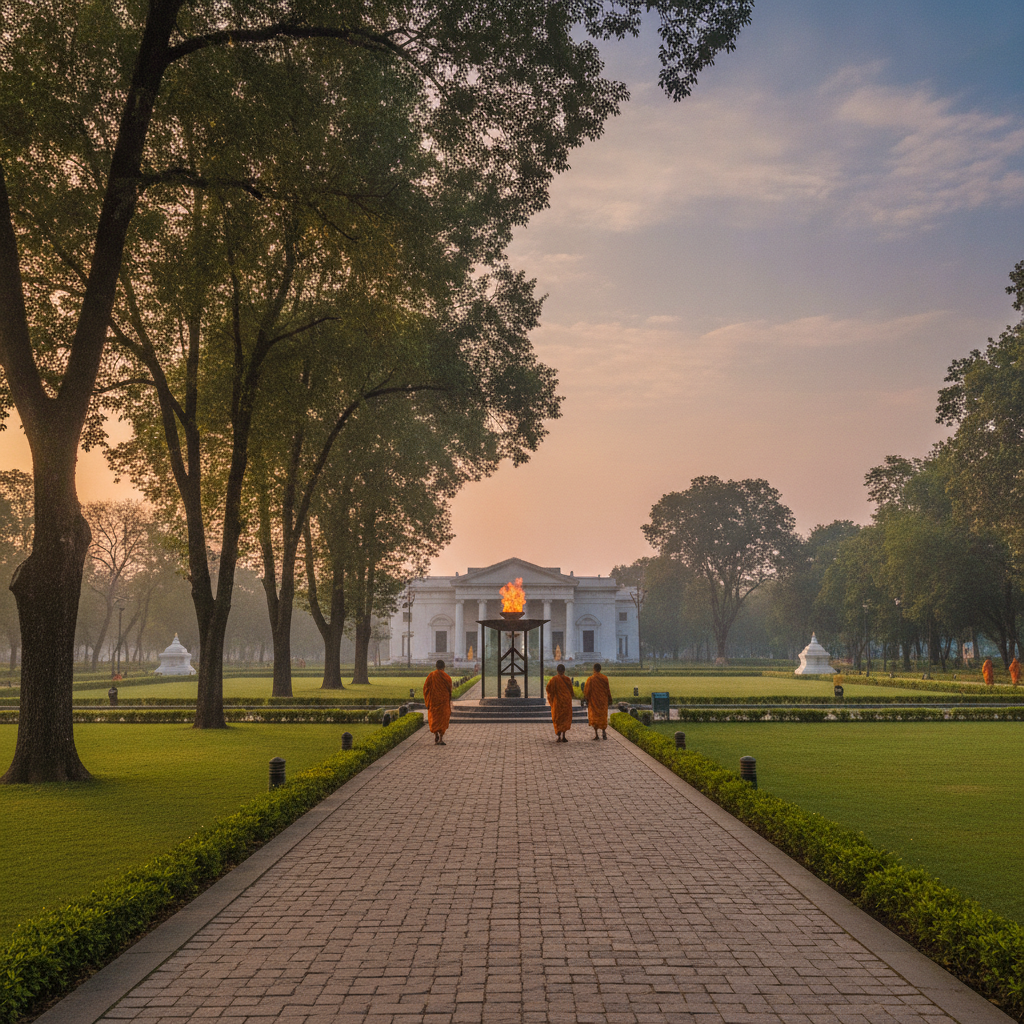
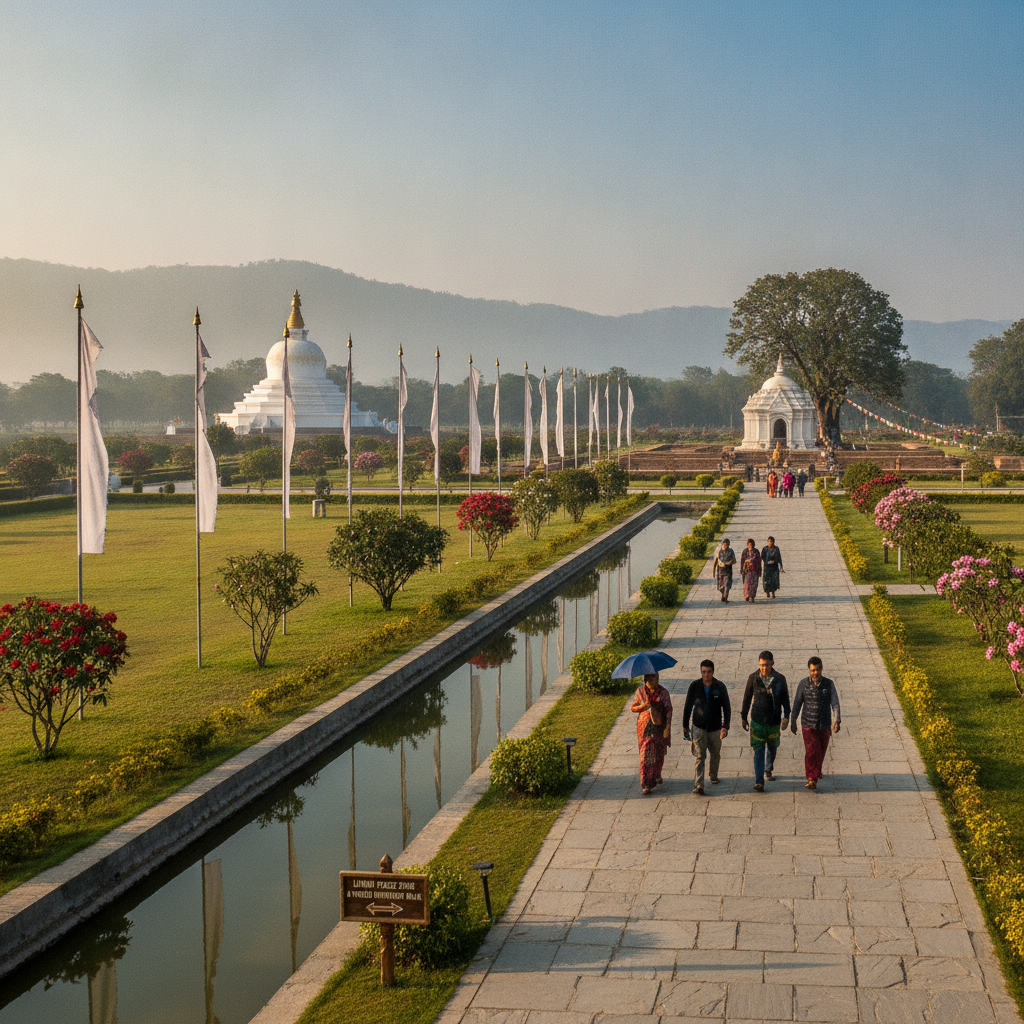
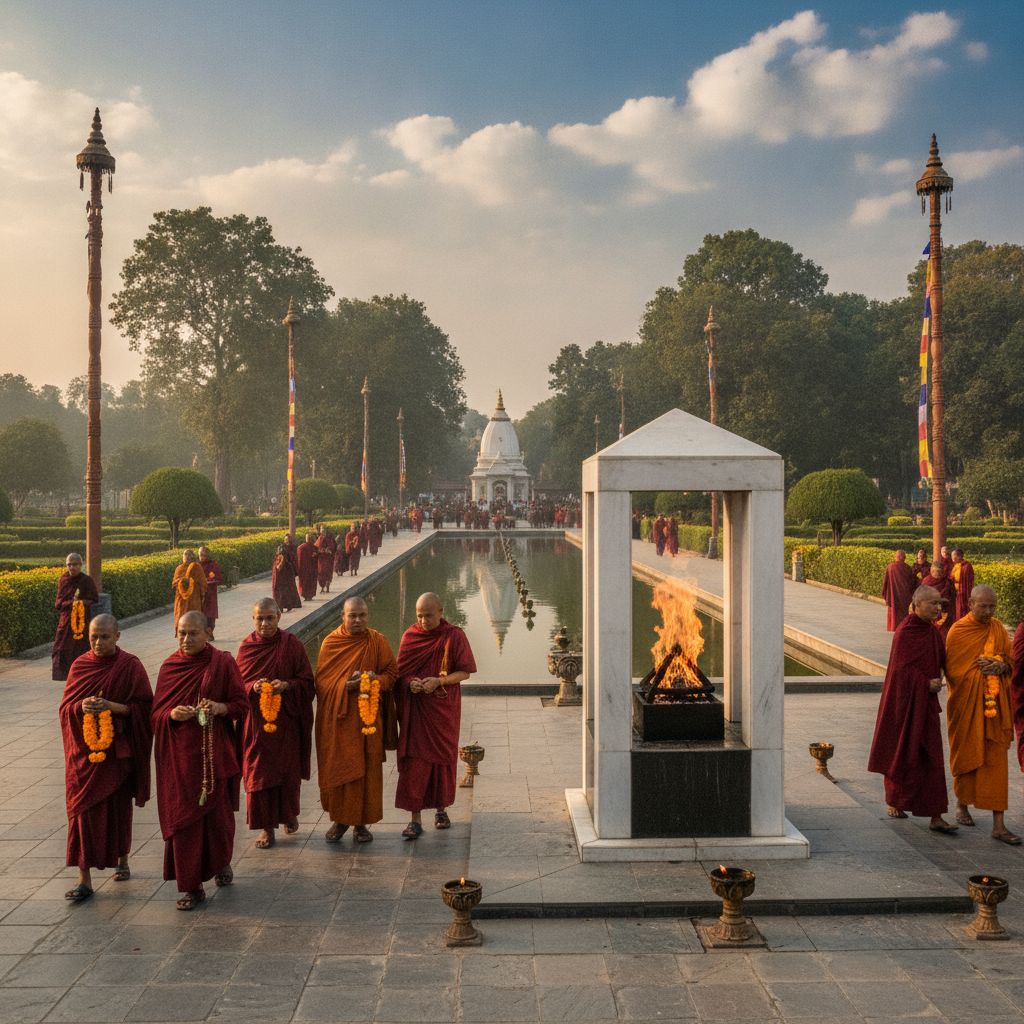
The Buddha Jayanti festival procession route at Lumbini (the ceremonial path from the World Peace Pagoda to the Maya Devi Temple followed by the international Buddhist communities on the Vaisakha Purnima full moon day, the most geographically and culturally diverse single religious procession accessible in Nepal) is the most internationally representative single religious event accessible in the country — the procession's participants (the Sri Lankan monks in saffron, the Myanmar monks in burgundy, the Thai monks in orange, the Tibetan monks in maroon, and the Korean and Japanese monks in grey or black — all walking the same axis in the same direction toward the same birthplace, the most visually spectacular single display of the Buddhist world's diversity accessible anywhere) and the procession's timing (the full moon night of Vaisakha, the sacred moment in the Theravada calendar when the exact conditions of the Buddha's birth are astronomically replicated creating the most historically parallel single ceremonial moment accessible in the contemporary Buddhist world) create the most immediately awe-inspiring single religious event accessible in Nepal.
- 2
Candlelight Ceremony
The Buddha Jayanti candlelight ceremony at the Maya Devi Temple (the mass candle and butter lamp offering performed by the pilgrims gathered at the birthplace on the Vaisakha full moon night, the thousands of individual flames accumulated around the temple perimeter creating the most numerically impressive single candlelight display accessible at any Nepal religious festival) is the most visually spectacular single religious ceremony accessible in Nepal — the ceremony's specific character at the birthplace (the accumulated light of thousands of individual offerings creating an illuminated circle around the most sacred single spot in Buddhism, the Maya Devi Temple visible above the sea of flames and the practitioners' faces lit by the individual candles they hold creating the most directly devotionally-photographable single scene accessible at any Nepal heritage site) and the ceremony's acoustic character (the simultaneous chanting of the pilgrims from different traditions — the Pali suttas, the Sanskrit mantras, and the Tibetan chants audible simultaneously in the most acoustically complex single religious ceremony accessible in Nepal) create the most sensorially overwhelming single sacred event accessible at any Nepal pilgrimage destination.
- 3
National Flag Offerings
The national flag offerings at the Buddha Jayanti festival (the display of the flags of all Buddhist nations arranged around the Sacred Garden during the Vaisakha Purnima celebration, the 30-plus national flags visible simultaneously in the most internationally diverse single flag display accessible at any Nepal heritage site) is the most directly globally-Buddhist-community-visibilising single festival display accessible at the birthplace — the flag display's specific meaning at Lumbini (the national flags representing the living Buddhist communities of the contemporary world gathered at the place where the tradition began, the most directly birth-to-present single religious continuity accessible in any world heritage pilgrimage site's festival) and the flags' arrangement (surrounding the Maya Devi Temple in the order of the Monastic Zone's organisation, the flags of the national monastery builders visible above the walls of the monastery compounds they maintain at the birthplace) create the most geographically comprehensive single Buddhist world survey accessible in Nepal. The national flag offerings' visual effect at sunrise (the flags catching the first light above the dawn mist of the Lumbini Sacred Garden, the most cinematically international single heritage site morning scene accessible at any Nepal pilgrimage destination) is the most visually symbolically rich single festival moment accessible at the birthplace.
- 4
Alms Round Festival Day
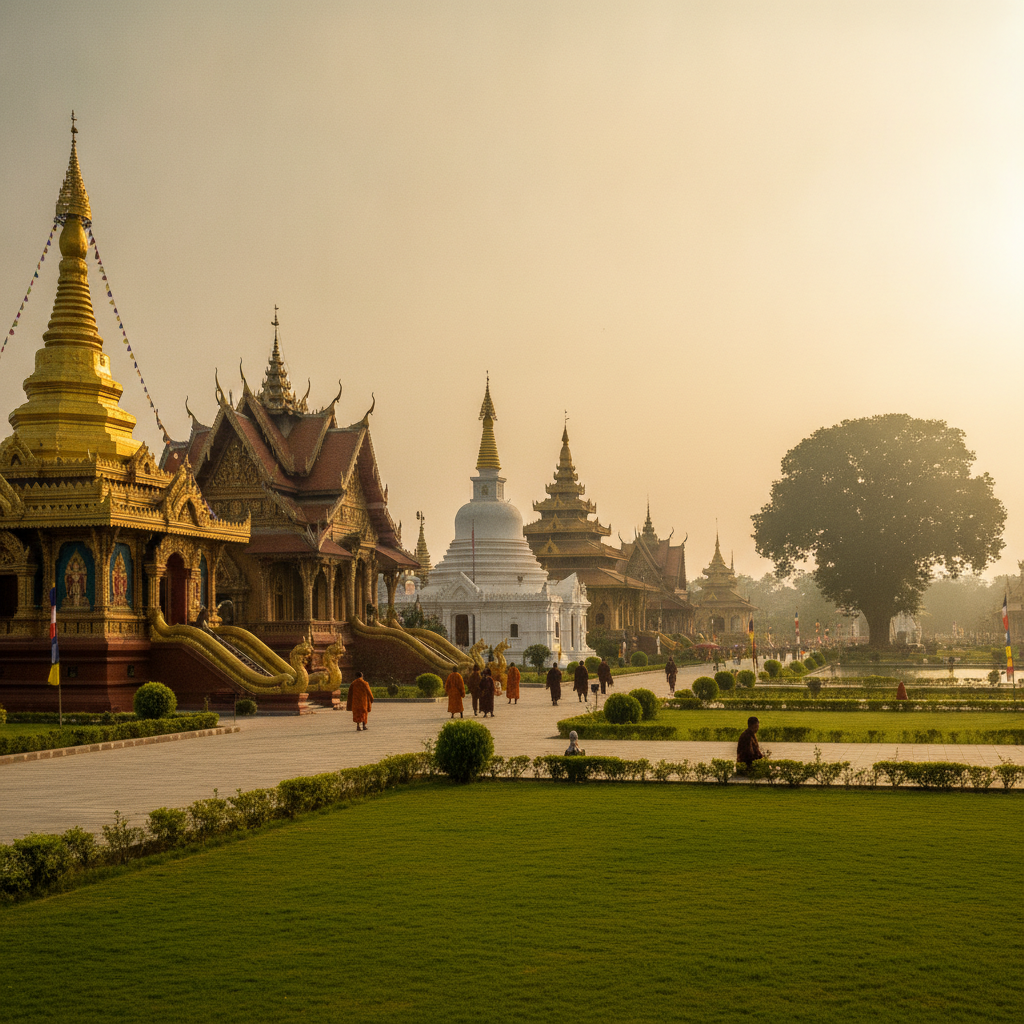
The alms round on the Buddha Jayanti festival morning (the mass alms round by the hundreds of monks from all Buddhist nations who participate in the Lumbini festival, the monks walking in their respective national processions through the Monastic Zone while the lay community offers the most numerically impressive single alms-giving event accessible in Nepal) is the most directly Buddhist-community-function-demonstrating single festival activity accessible at Lumbini — the alms round's specific character on the festival day (the usual small group alms rounds of the individual monastery's monks expanded to the hundreds of simultaneous participants, the most visually overwhelming single expression of the daily monastic practice accessible in Nepal) and the lay community's participation (the Nepali villagers, the Thai, Myanmar, and Sri Lankan pilgrim lay communities, and the Tibetan and Chinese devotees all offering food to the monks of traditions different from their own in the most practically interfaith single Buddhist act accessible in Nepal) create the most directly cross-traditional single religious community practice visible at any Nepal heritage festival. The alms round's movement through the Monastic Zone (the processions of monks from the various national monasteries converging on the central canal axis, the different robes and the different languages visible and audible simultaneously in the most internationally animated single religious procession accessible in Nepal) is the most directly globally-Buddhist single annual event observable at the birthplace.
- 5
International Cultural Performances
The international cultural performances at the Buddha Jayanti festival (the performing arts presentations by the Buddhist nations' delegations at the Lumbini amphitheatre — the Thai classical dance, the Japanese traditional music, the Sri Lankan drumming, and the Tibetan mask dance presented in the most culturally diverse single performance programme accessible at any Nepal religious festival) is the most directly arts-and-culture-celebrating single religious festival event accessible in Nepal — the performances' cultural specificity (each national delegation performing the most directly national single artistic tradition in the Buddhist cultural category accessible in their heritage — the Thai khon masked dance, the Japanese gagaku court music, and the Korean Buddhist sutras chanted to the traditional percussion creating the most internationally varied single performance programme accessible at any Nepal heritage event) and the festival's outdoor performance setting (the amphitheatre within the Lumbini heritage zone, the performances visible against the backdrop of the international monastery buildings and the Lumbini landscape creating the most evocatively-setting-integrated single performance venue accessible in Nepal) create the most completely culturally celebratory single festival event available at the Buddhist birthplace.
- 6
Full Moon Night Vigil
The Vaisakha full moon night vigil at the Maya Devi Temple (the all-night meditation and chanting programme maintained by the various monastic communities through the night of the most sacred single date in the Theravada Buddhist calendar, the temple illuminated by the accumulated offerings of the thousands of pilgrims and the full moon visible above the ancient structure) is the most spiritually charged single night accessible at any Nepal heritage site — the vigil's specific character (the monks from the different traditions taking turns to maintain the continuous chanting that keeps the most uninterrupted single sacred sound accessible in Nepal going through the full moon night, the individual pilgrims joining the vigil at any point through the night and remaining as long as their practice supports) and the full moon's specific quality at Lumbini (the Terai's flat horizon allowing the most completely rising and setting single full moon accessible in Nepal, the moon's trajectory from its rising in the east to its setting in the west visible without interruption from the flat Sacred Garden clearing, creating the most astronomically complete single Vaisakha Purnima accessible in the Buddhist pilgrimage tradition) create the most completely Buddha-Jayanti-celebrating single night experience accessible anywhere in the Buddhist world.
Walk this route with audio
Stories play automatically as you reach each stop — no tapping needed.