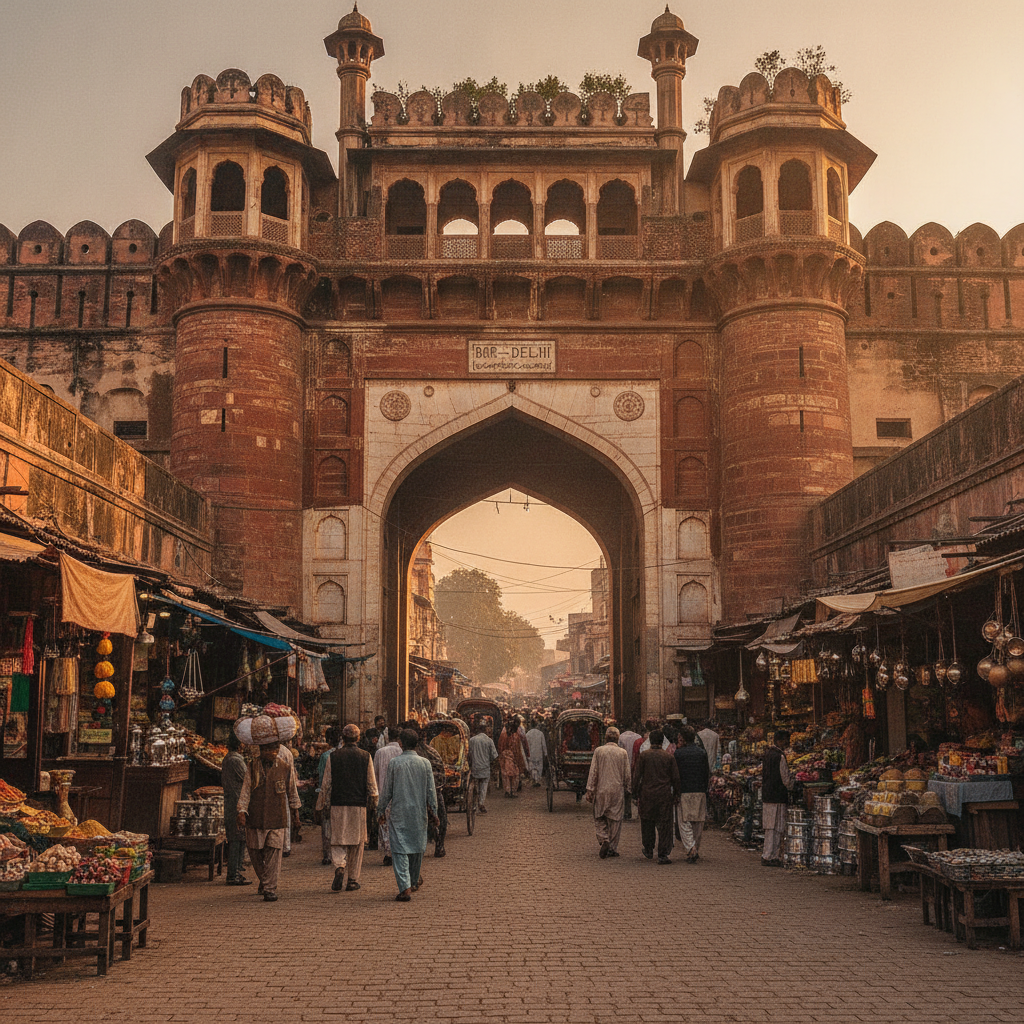
Lahore Walled City Mughal Heritage Walk
Walk the walled city of Lahore — one of the greatest surviving Mughal urban environments in the world, where the Delhi Gate, Wazir Khan Mosque, and the dense lanes of the old city preserve 400 years of architectural ambition in terracotta brick and painted tile, surrounded by the chaotic vitality of a South Asian city that never stopped living inside its historical fabric.
- 1
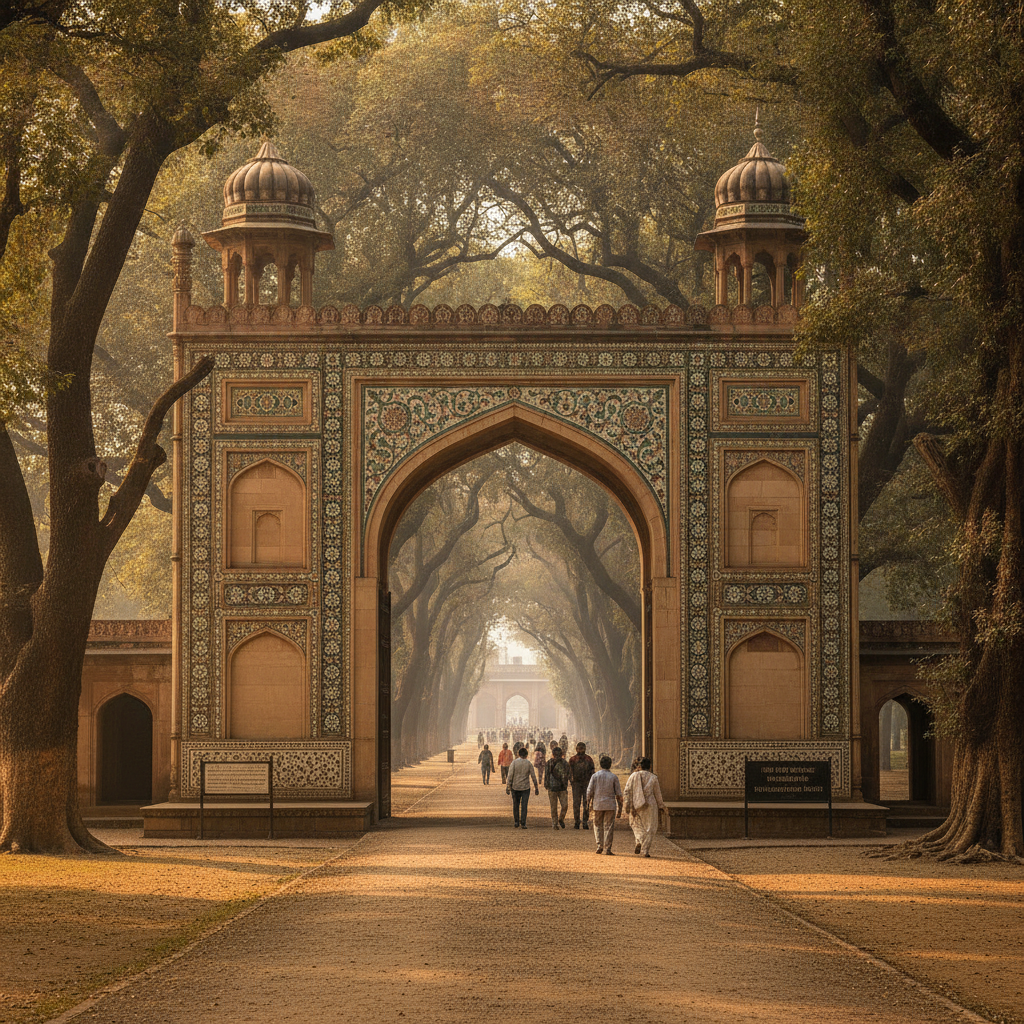
Delhi Gate Walled City Entry
Enter the old city through Delhi Gate — one of the thirteen original gates of the Mughal walled city, the 16th-century gateway now restored and flanked by the dense commercial activity that characterizes every approach to the historic core.
- 2
Wazir Khan Mosque
The 1634 masterpiece of Mughal decorative art — the mosque built by Emperor Shah Jahan's viceroy, its interior and exterior surfaces covered in extraordinary kashi (tile mosaic) work in turquoise, cobalt, and gold, considered the finest example of Mughal polychrome tilework anywhere.
- 3
Shahi Hammam (Royal Baths)
The 1635 royal bathhouse adjacent to the Wazir Khan Mosque — the largest surviving Mughal-era bathhouse, its domed chambers and hot and cold rooms restored to show how the Mughal imperial court maintained its elaborate bathing rituals in the provincial capital.
- 4
Chowk Wazir Khan Historic Square
The traditional bazaar square in front of the mosque — the open space that has functioned as a market, meeting point, and community center for four centuries, still lined with the craft workshops that historically served the mosque complex and the surrounding neighborhoods.
- 5
Gali Surjan Singh Hindu Quarter
The historic Hindu residential lane where the carved wooden havelis (merchant houses) of the pre-Partition era still stand — the elaborate wooden bay windows and carved facades of 19th-century Lahori Hindu merchant architecture, now occupied by Muslim families.
- 6
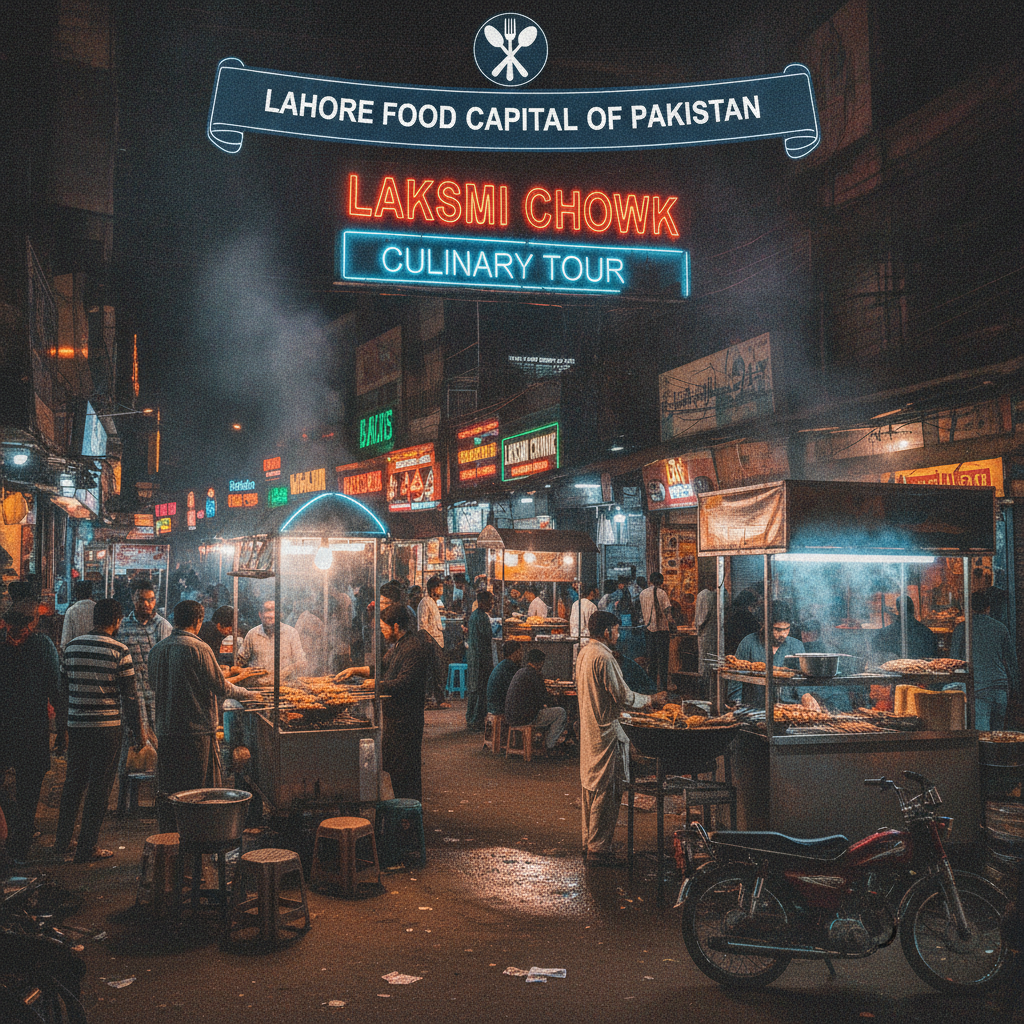
Food Street Gawalmandi
The famous Lahore food street in the old city — the evening transformation of a historic lane into a dining destination where traditional Lahori dishes are served at tables set in the illuminated street, the architecture of the old city providing the backdrop to the city's most celebrated eating experience.
Walk this route with audio
Stories play automatically as you reach each stop — no tapping needed.