Krabi Khao Phanom Bencha National Park Walk
Explore the Krabi interior — Khao Phanom Bencha National Park north of Krabi Town protects the primary forest of the province's interior mountains, providing waterfalls, bird watching, and the most accessible primary forest hiking available in the Krabi area.
- 1
Park Entrance Trailhead
The Khao Phanom Bencha National Park entrance north of Krabi Town marks the transition from the lowland rubber plantation landscape that dominates most of the Krabi mainland to the protected primary forest of the park's interior — the change in vegetation immediately visible at the park boundary (from the uniform rubber tree rows of the plantation to the diverse multi-storey structure of the primary forest) provides an immediate sense of the ecological contrast between the commercial landscape and the protected natural environment. The park entrance fee supports the ranger operations that protect the forest from the encroachment and poaching that continues to threaten the remaining forest areas of the province.
- 2
Huay Sadeh Waterfall
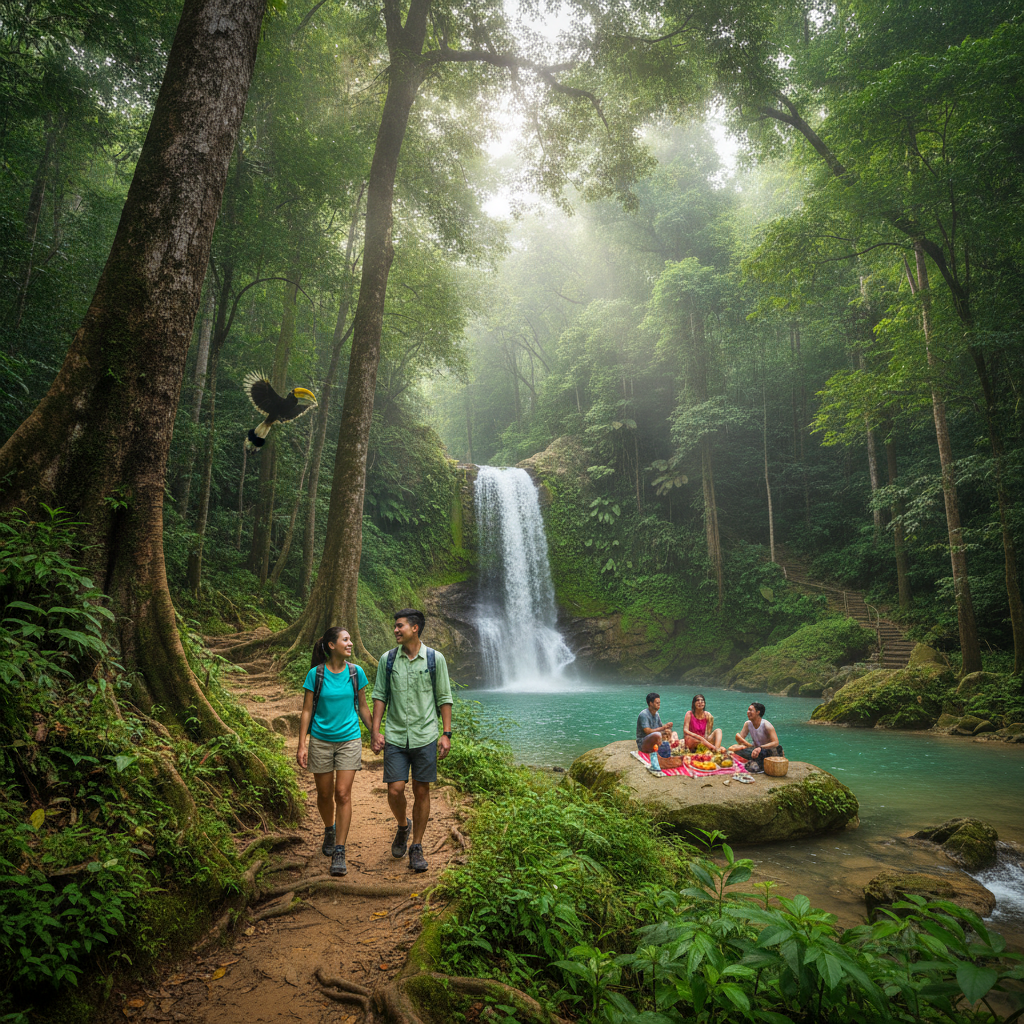
The Huay Sadeh waterfall within the Khao Phanom Bencha park is the most accessible waterfall in the Krabi interior — the multi-tiered cascade in the primary forest setting provides the most complete tropical waterfall experience accessible from the Krabi area, with the natural swimming pools at the base of the lower tiers providing the most refreshing freshwater bathing available near the resort areas. The trail to the waterfall passes through forest with substantial bird activity (the great hornbill, the fire-backed pheasant, and the various flycatcher species of the forest interior are regularly sighted by early morning visitors), making the walk to the waterfall as rewarding as the destination.
- 3
Primary Forest Canopy
The primary forest of Khao Phanom Bencha represents one of the last significant areas of intact lowland dipterocarp forest remaining in Krabi province — the multi-storey forest structure (the emergent dipterocarps rising above the main canopy, the sub-canopy of smaller trees, the understorey of ferns, rattans, and young trees) provides the full ecological complexity of the undisturbed forest that has been largely cleared from the lowlands for rubber and oil palm cultivation. The forest's biodiversity (the mammals including leopard, Malayan sun bear, and the various primate species documented within the park boundaries) is visible in the signs of animal activity even when the animals themselves are not seen: the claw marks on the dipterocarp bark, the fruit debris below the feeding trees, and the hornbill nesting cavities in the large old trees.
- 4
Khao Phanom Bencha Summit
The Khao Phanom Bencha summit (1,397 metres) is the highest peak in Krabi province and requires a full-day guided hike through the primary forest — the summit trail passes through the transition zones from the lowland forest through the montane forest to the stunted cloud forest at the highest elevation, with the vegetation changing character dramatically as the altitude increases. The summit viewpoint (when cloud-free) provides the most comprehensive panorama of the Krabi province landscape available from any single point: the coastal karst in the southern distance, the mangrove estuaries of the coast, the agricultural lowlands, and the forested mountain range continuing northward into the Phang Nga highland all visible from the highest accessible point in the province.
- 5
Wildlife Watching Dawn
The Khao Phanom Bencha forest at dawn (the park opening at 6am and the first light reaching the forest floor at around 6:30am) provides the most productive wildlife watching conditions in the park — the dawn chorus of the birds in the forest canopy (the gibbons' hooting calls audible from up to 2km away, the hornbills' wing-beat sound as they fly between the emergent trees, and the bird dawn chorus of the forest edge) creates an acoustic experience of tropical forest biodiversity that contrasts dramatically with the sound environment of the coastal resort areas. The probability of mammal encounters (the short-tailed macaque bands, the dusky leaf monkey troops, and the occasional slow loris visible in the forest edge trees at first light) is highest in the dawn hours before the main visitor activity begins.
- 6
Rubber Plantation Landscape
The rubber plantation landscape surrounding the Khao Phanom Bencha park boundary represents the dominant agricultural use of the Krabi mainland — the Para rubber (Hevea brasiliensis) plantations that cover most of the accessible flatland and gentle hillsides of Krabi province are the economic foundation of the non-tourist rural community. The rubber tapping operation (the scored diagonal cuts in the bark, the collection cups at the base of each tree, and the rubber sheet processing at the plantation's on-site smokehouses) provides the most direct encounter with the agricultural economy that existed before tourism arrived and which continues to employ the majority of the rural Krabi population today.
Walk this route with audio
Stories play automatically as you reach each stop — no tapping needed.