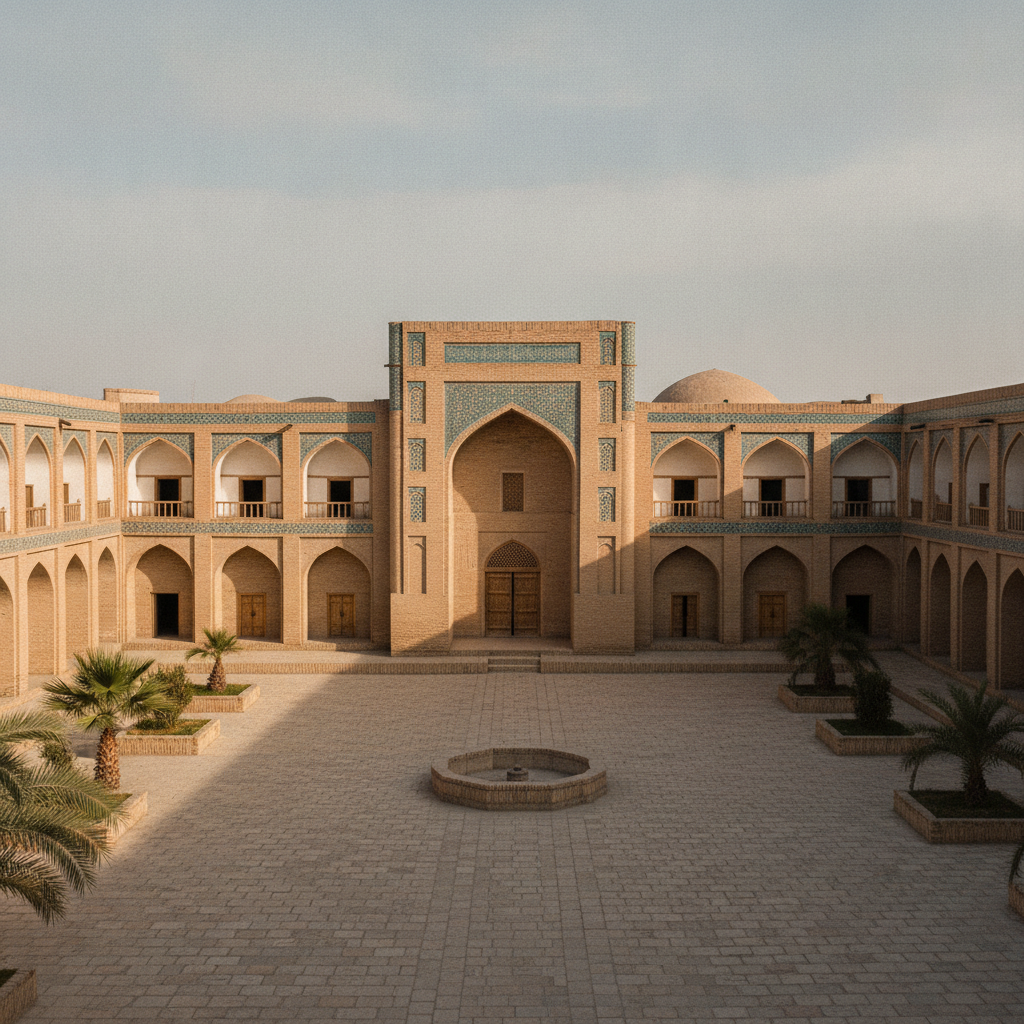
Khiva Ichan Kala UNESCO Walled Inner City
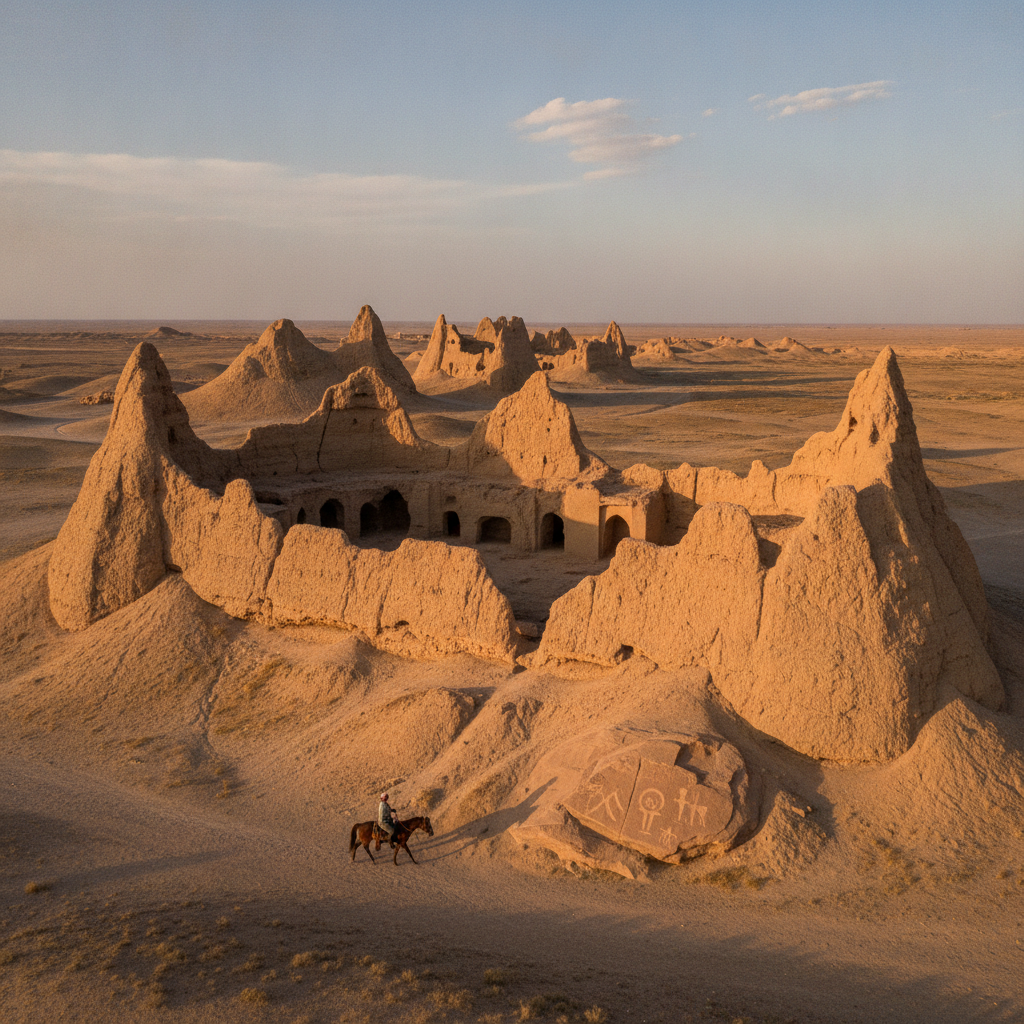
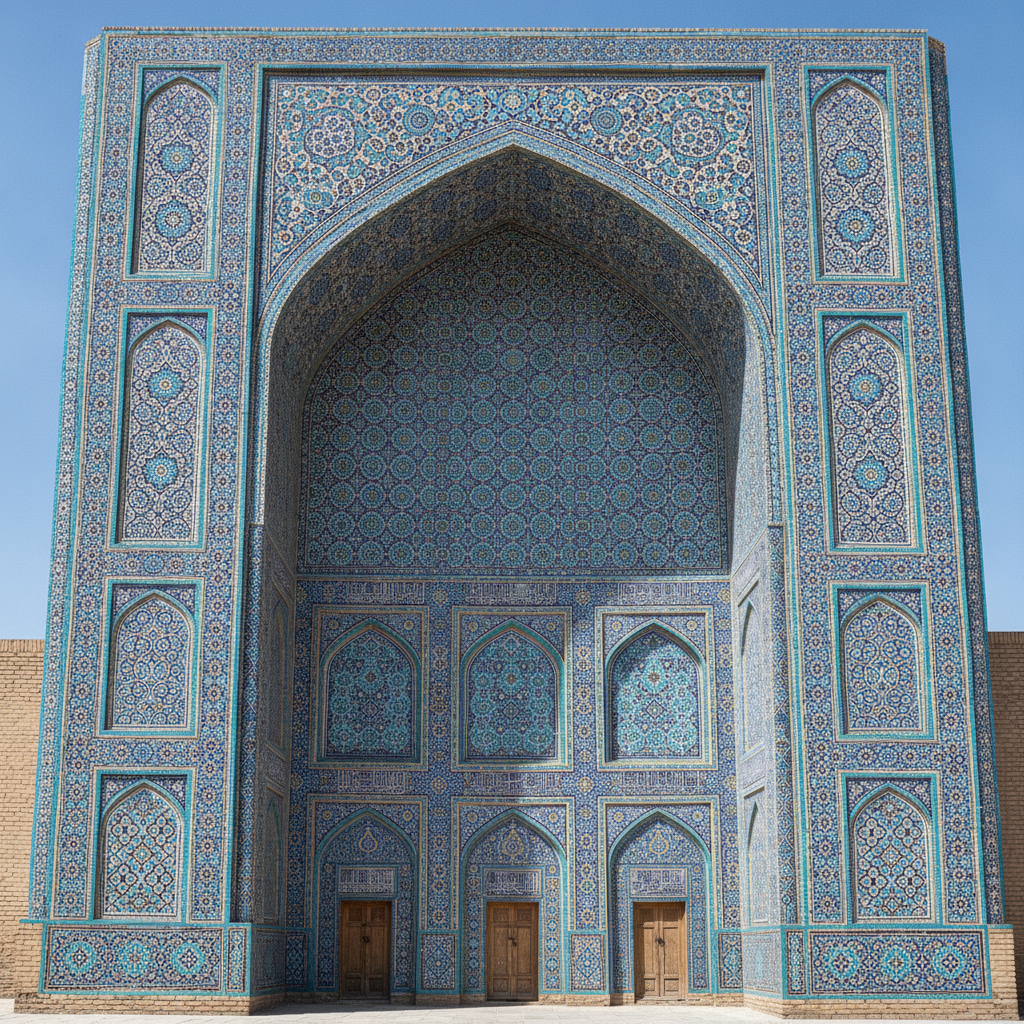
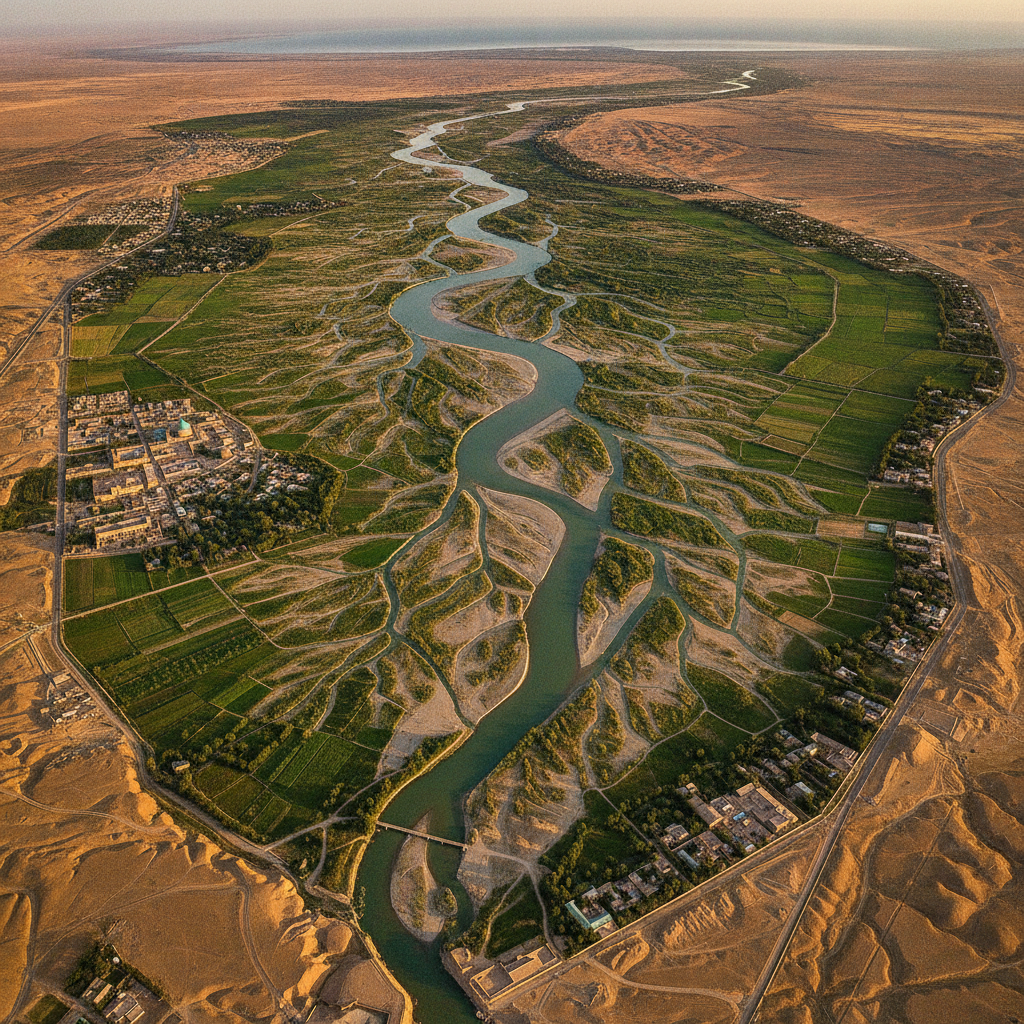
Explore Ichan Kala — the completely preserved inner walled city of Khiva, a UNESCO World Heritage site where the medieval urban fabric of a Central Asian Silk Road city survives intact, the mud-brick walls enclosing a dense collection of mosques, madrasas, minarets, and caravanserais that make Khiva the best-preserved historic city in Central Asia.
- 1
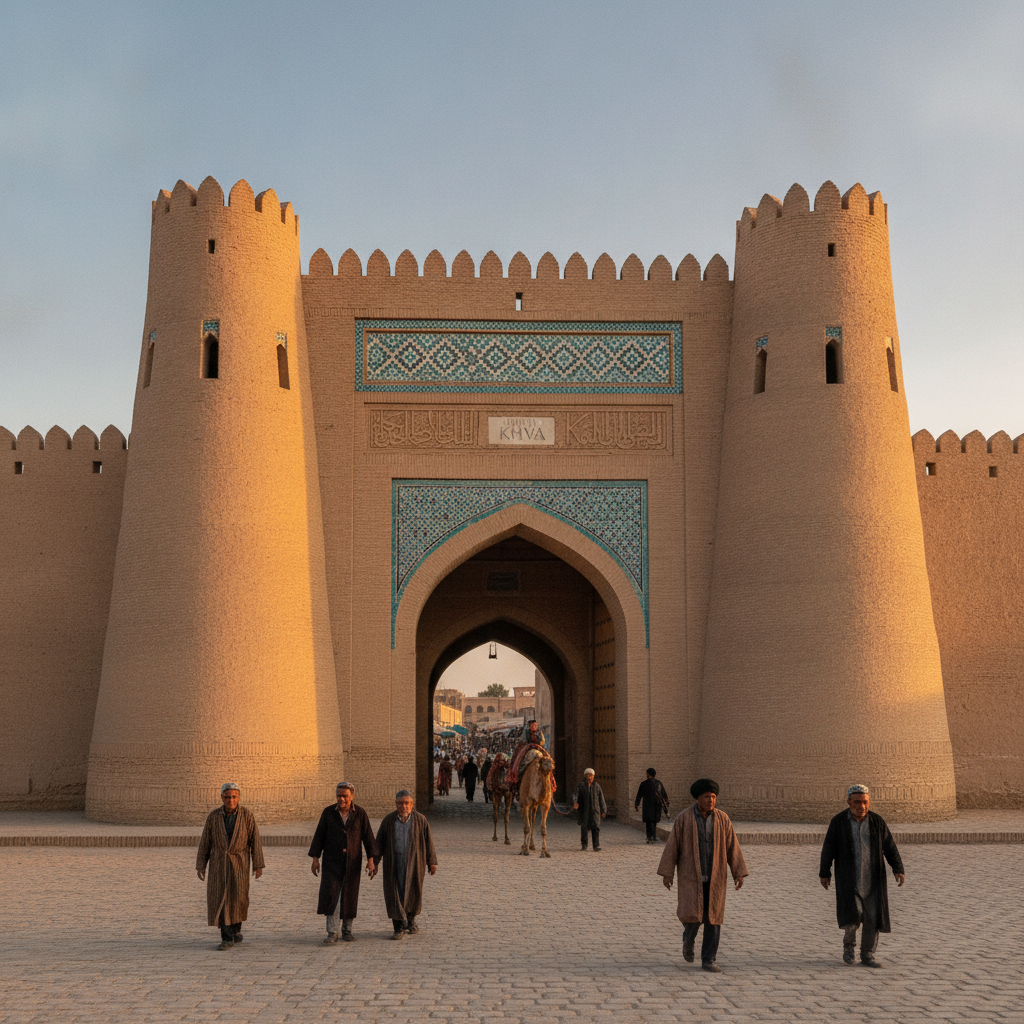
Ichan Kala Western Gate Ata Darvoza
Enter Ichan Kala through the Ata Darvoza western gate — the main ceremonial entrance to the walled city, the gateway rebuilt in the 19th century by the Khiva khans, the passage through the thick mud-brick walls a transition from the modern city outside to the preserved medieval urban landscape within.
- 2
Islam Khoja Minaret
The Islam Khoja Minaret — the tallest structure in Khiva at 57 meters, built in 1910 by the reformist prime minister Islam Khoja, the distinctive tapering column with its horizontal bands of turquoise and white tilework visible from every point in the walled city, the minaret and adjacent madrasa one of the last great monuments built in the Khan era.
- 3
Kalta Minor Blue Minaret
The unfinished Kalta Minor minaret — the massive cylindrical blue-tiled stump begun by Muhammad Amin Khan in the 1850s to be the tallest minaret in Central Asia, construction halted when the khan died in battle, the stumpy broad-based minaret covered in brilliant turquoise and blue majolica tiles becoming one of Khiva's most distinctive monuments.
- 4
Khan Palace Kunya Ark
The Kunya Ark palace — the old fortress and palace complex of the Khiva khans occupying the northwest corner of Ichan Kala, the complex containing the audience hall, harem, mosque, and mint of the ruling dynasty, the buildings dating from the 17th to 19th centuries showing the architectural evolution of the Khorezm khanate's court.
- 5
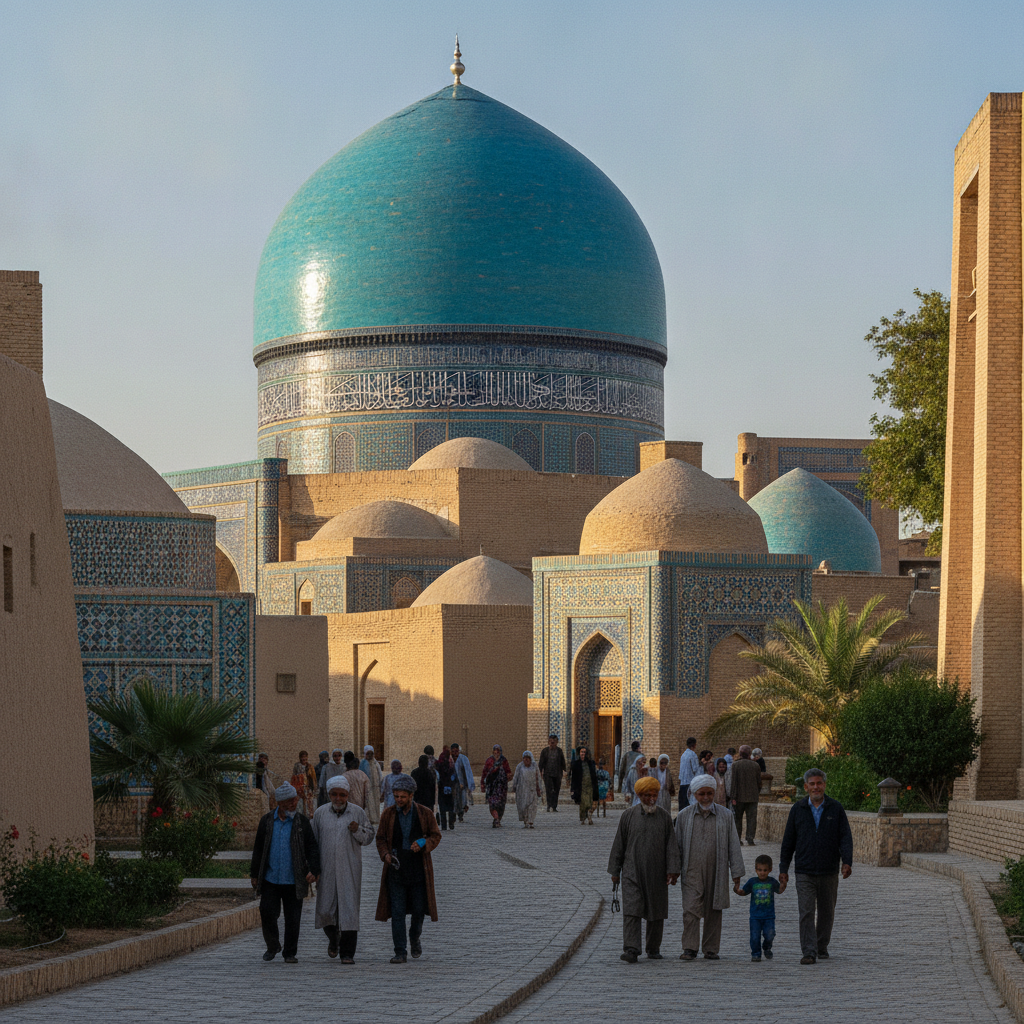
Pahlavon Mahmud Mausoleum
The Mausoleum of Pahlavon Mahmud — the blue-domed tomb of Khiva's patron saint, a 14th-century poet-wrestler who is the symbolic protector of the city, the interior decorated with the finest tile work in Khiva, the building a center of pilgrimage and the burial place of several 19th-century Khiva khans.
- 6
Djuma Mosque Carved Columns
The Djuma Mosque with its forest of 218 carved wooden columns — the unique mosque whose prayer hall is supported by columns collected from different periods and locations, some dating to the 10th century, the carved wooden capitals displaying the full range of Khorezm woodcarving tradition across a thousand years in a single building.
Walk this route with audio
Stories play automatically as you reach each stop — no tapping needed.