Khiva Pahlavon Mahmoud Mausoleum Pilgrimage
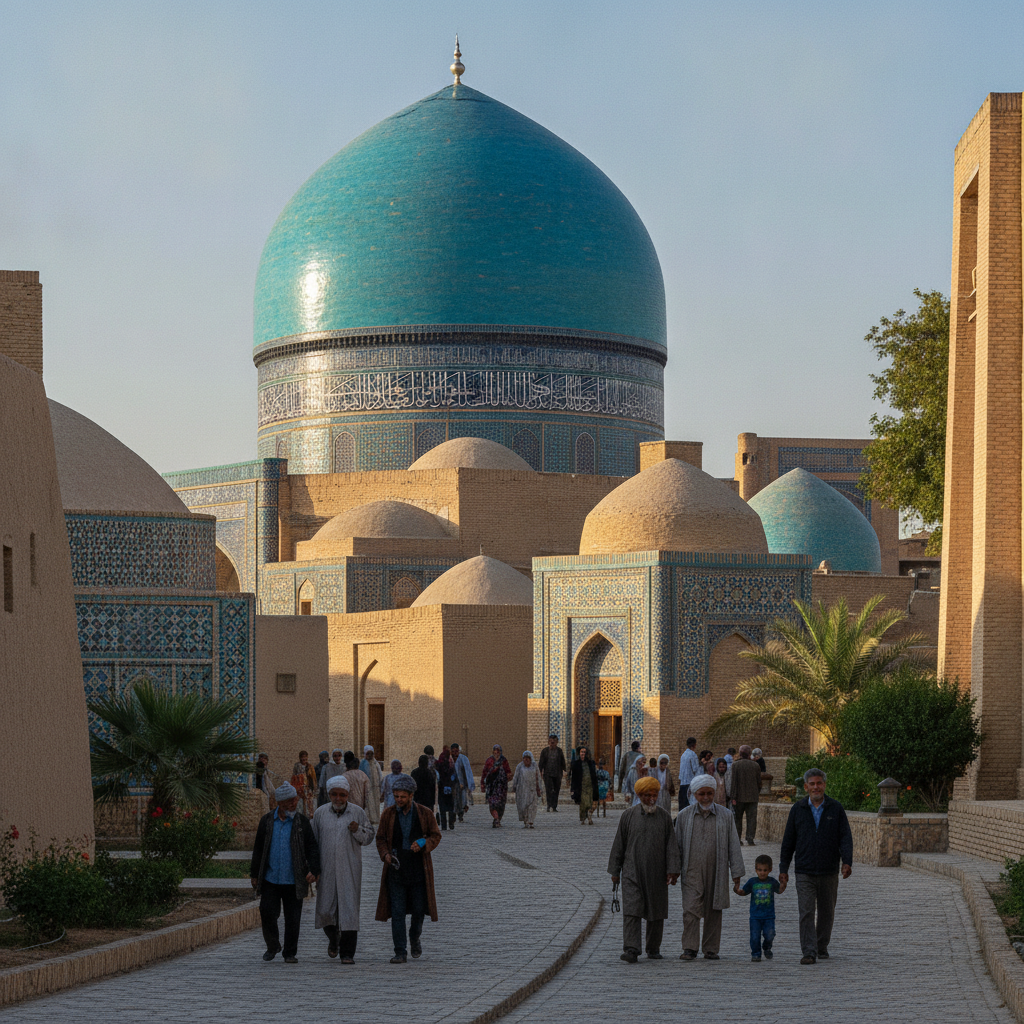
Visit the shrine complex of Pahlavon Mahmoud — the beloved patron saint of Khiva, a 13th-14th century poet, philosopher, and legendary wrestler whose mausoleum is the most sacred site in Khiva, the complex that has drawn pilgrims for 600 years and whose blue-tiled dome is the most photographed image of the city.
- 1
Blue Dome Exterior
The blue dome exterior of the Pahlavon Mahmoud Mausoleum — the brilliant cobalt blue dome rising above the surrounding buildings of Ichan Kala, the color achieved with cobalt-tin glazed tiles that have maintained their intensity for 600 years, the dome visible from the Khiva walls and serving as the spiritual compass of the walled city.
- 2
Shrine Interior Decoration
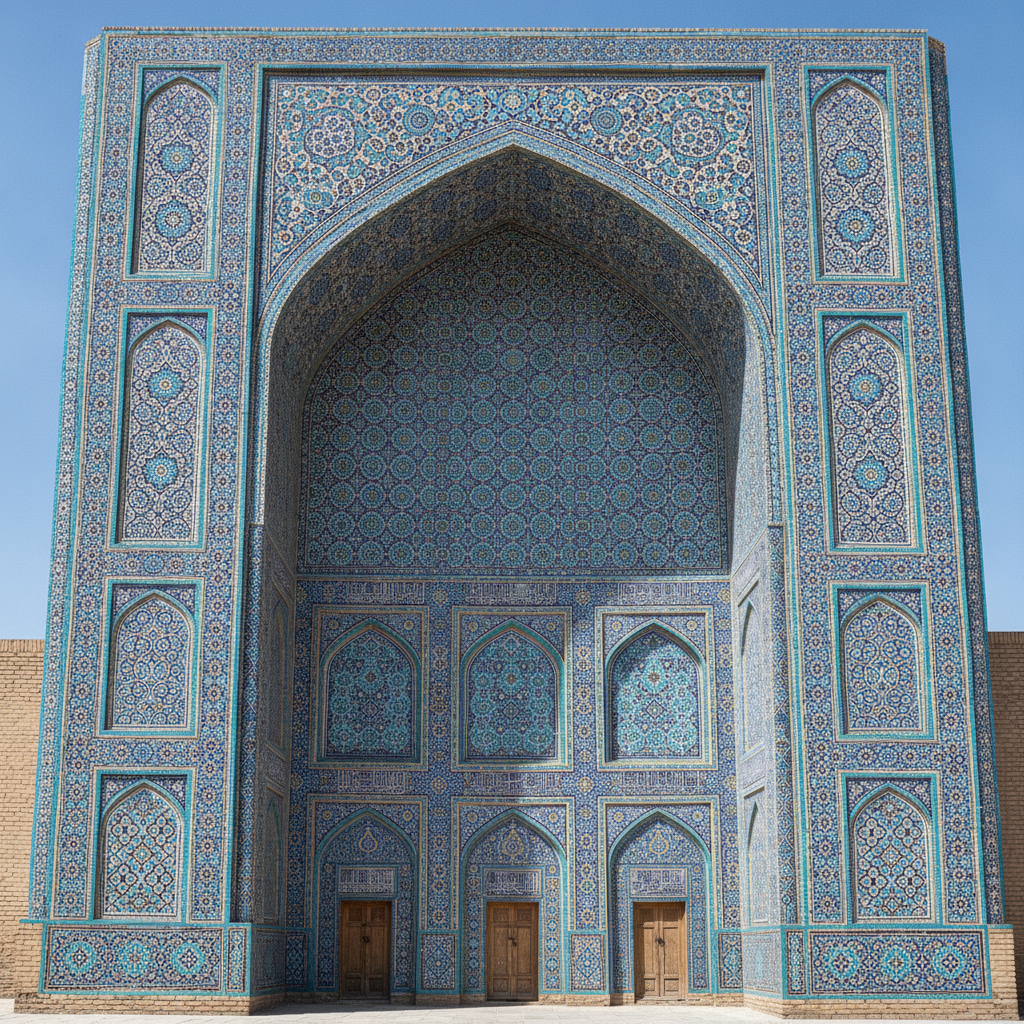
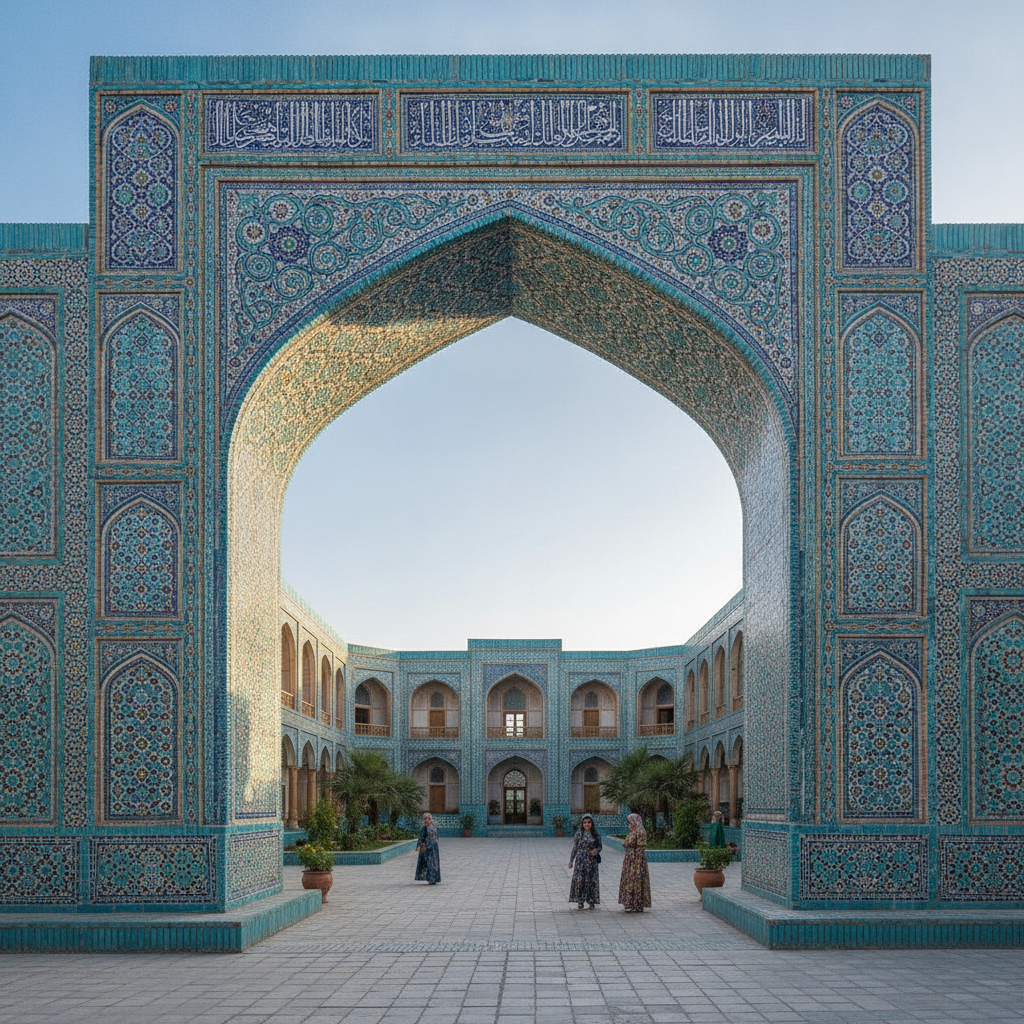
The shrine interior decoration — the walls and ceiling covered in the finest tile work in Khiva, the hexagonal tiles arranged in complex geometric patterns, the cartouches of Quranic calligraphy in white on blue, and the elaborate carved plaster work of the transition zone between the walls and the dome.
- 3
Pahlavon Mahmoud Tomb
The tomb of Pahlavon Mahmoud at the center of the shrine — the cenotaph of the saint who is simultaneously venerated as a Sufi poet, a wrestling champion, and a fur trader, the polymath identity of the saint reflecting the integrated cultural life of medieval Khiva where physical prowess, commercial success, and spiritual achievement were equally valued.
- 4
Khan Burial Chamber
The burial chamber of the Khiva khans adjacent to the saint's tomb — the rulers who sought proximity to the patron saint by burying themselves in his mausoleum, the 19th-century khans who added their own tomb chambers to the complex creating a dynastic necropolis organized around the saint's memory.
- 5
Pilgrimage Devotional Practice
The pilgrimage devotional practices at the shrine — the women touching the tomb seeking fertility, the men reciting prayers for business success, the votive cloths tied to the grille around the tomb, the practices blending Islamic devotion with the Sufi tradition of seeking intercession through the saints.
- 6
Shrine Garden Setting
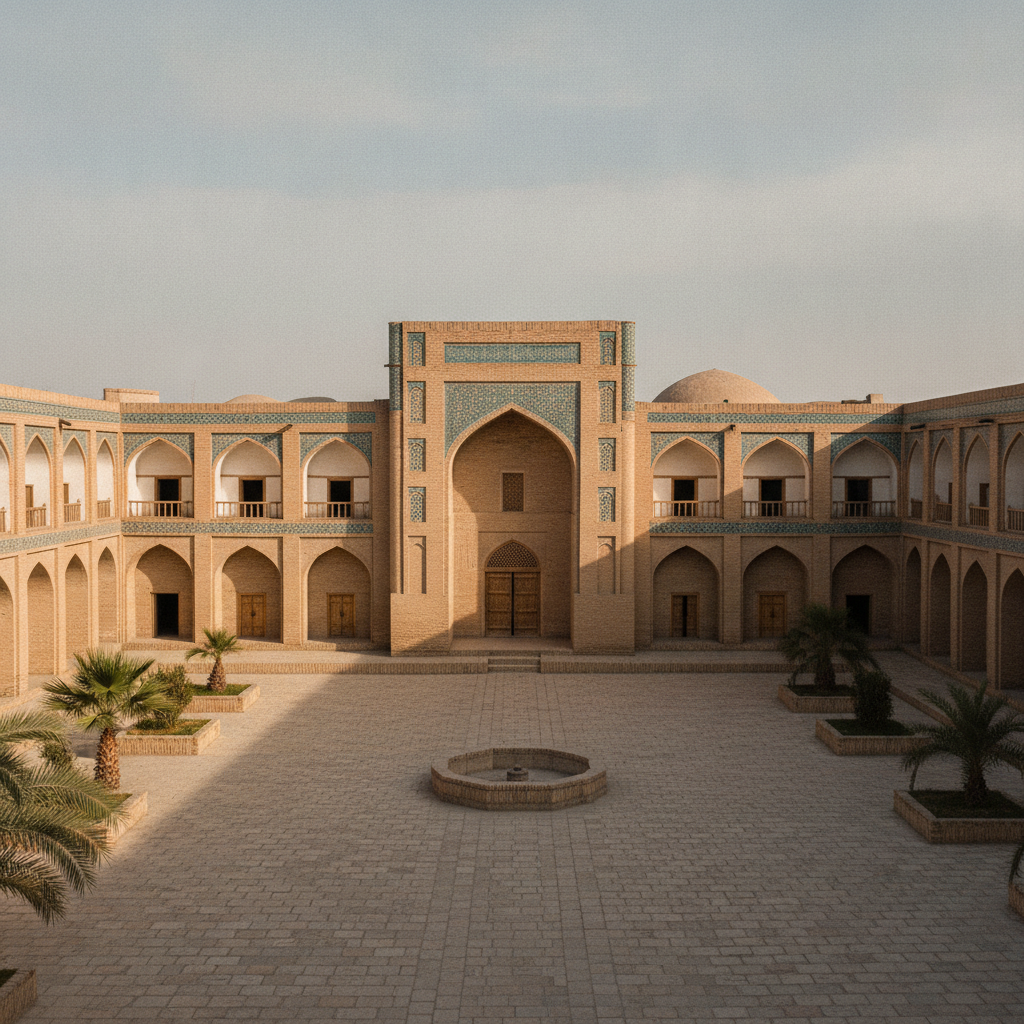
The garden setting of the shrine complex — the small garden surrounding the mausoleum within the walled city, the mulberry trees providing shade for the pilgrims, the tranquil space set apart from the tourist activity of the surrounding streets, the garden maintaining the atmosphere of a living religious site rather than a museum.
Walk this route with audio
Stories play automatically as you reach each stop — no tapping needed.