Kanchanaburi Food & River Fish Walk
Eat through Kanchanaburi — the river town's food culture is defined by the fresh fish from the Mae Klong River system, the Mon-influenced curry preparations, and the agricultural produce from one of Thailand's most productive farming provinces.
- 1
Mae Klong River Fish Restaurants
The riverside restaurants specialising in fresh Mae Klong River fish are the most important food destination in Kanchanaburi — the fresh pla kapong (Asian sea bass/barramundi, the most prized river fish of the Mae Klong system), the pla chon (snakehead fish, the traditional Thai river fish with its distinctive firm, flavourful flesh), and the freshwater prawns (smaller than the Ayutthaya tiger prawns but equally valued for their sweetness) prepared in the central Thai manner (the whole fish steamed with lime and chilli, the fish curried with the green curry paste, or the fish simply grilled over charcoal and served with the nam jim talay dipping sauce) constitute the most specifically Kanchanaburi food experience available. The floating restaurants' evening setting over the river provides the most atmospheric context for the river fish meal.
- 2
Mon Food Traditions
The Mon community's food traditions (the rice dishes cooked with the Mon spice preparations, the fermented fish products used as flavouring agents in the Mon curry tradition, and the Mon desserts using the palm sugar and coconut milk of the western Thailand agricultural landscape) are most accessible at the Mon village community markets in the river villages west of the town — the Mon food culture (the most ancient layer of the culinary tradition in western Thailand, predating both the Thai and the Burmese traditions of the region) is distinct from the central Thai cuisine that dominates the tourist restaurant market in the town centre and represents the most historically significant food tradition accessible in the Kanchanaburi area.
- 3
Sugar Products Market
The sugarcane products available at the Kanchanaburi markets (the fresh sugarcane juice pressed to order at the market stalls, the palm sugar from the toddy palms of the river valley, and the sugar confectionery products specific to the central-western Thai tradition) represent the most direct encounter with the agricultural produce of the province's most important crop — the sugarcane plantations visible from the roads west of the town supply the sugar processing industry that provides employment to the agricultural communities of the Mae Klong valley. The fresh sugarcane juice pressed in front of the customer at the roadside stalls is the most refreshing single beverage accessible in the Kanchanaburi heat.
- 4
River Kwai Night Bazaar
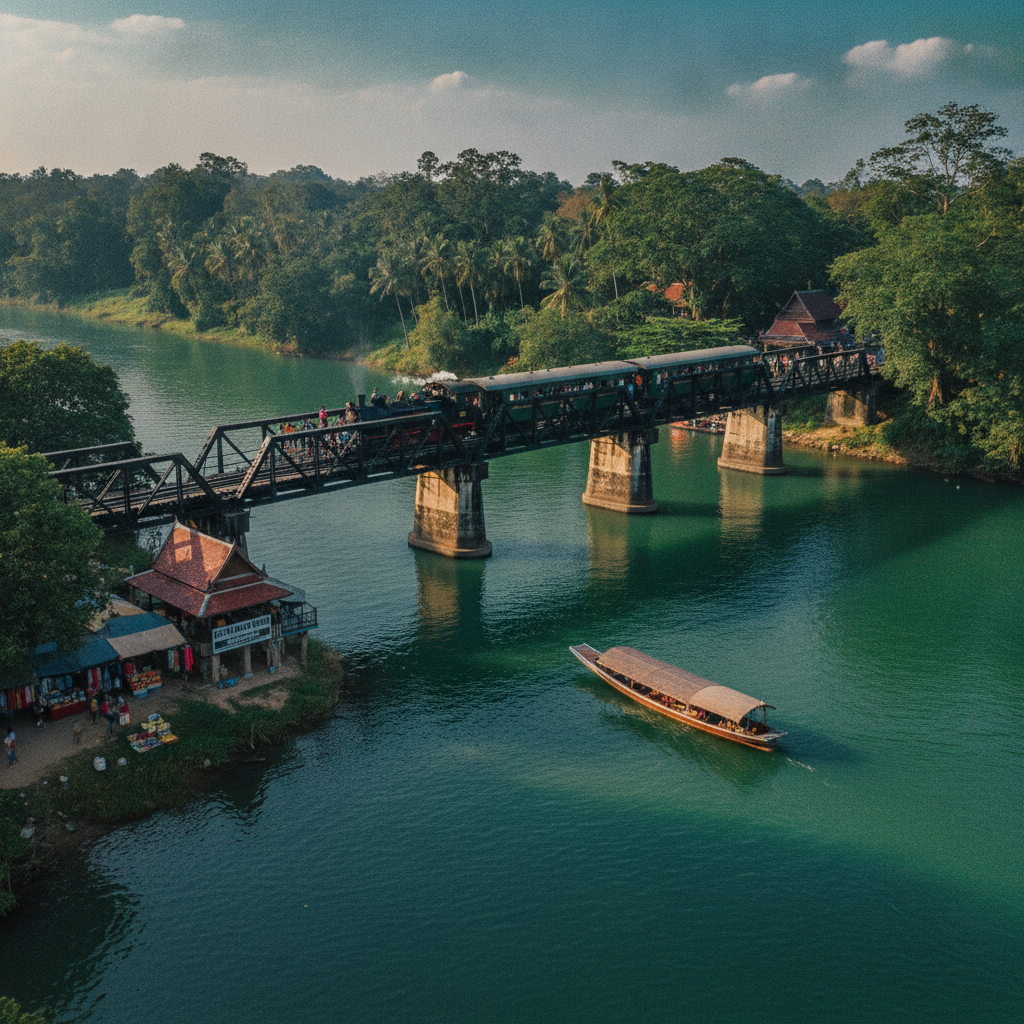
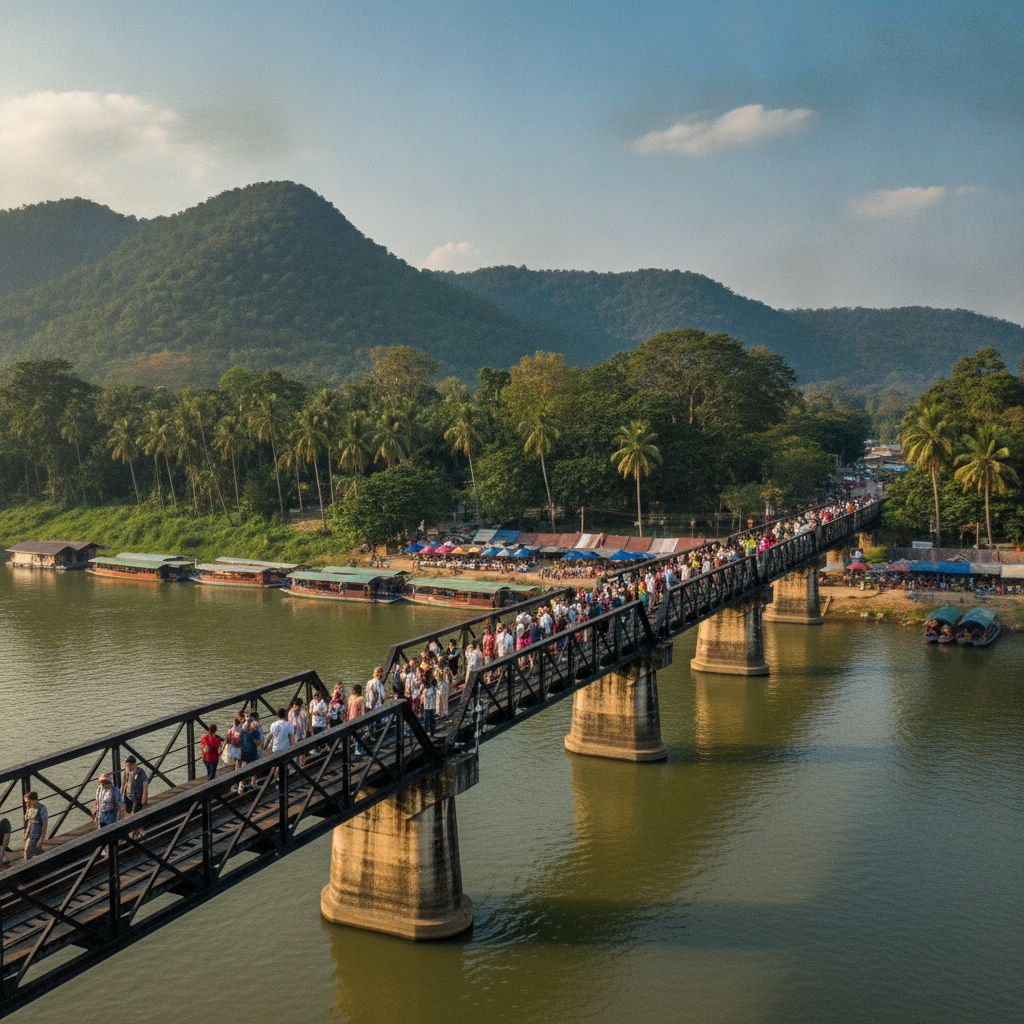
The River Kwai Night Bazaar near the Bridge area (operating in the evening from around 5pm) caters primarily to the tourist market visiting the Bridge and the WWII sites — the food vendors (the standard Thai tourist food: pad thai, tom yam, mango sticky rice, and the fresh fruit preparations), the souvenir operations (the WWII-themed merchandise, the Bridge memorabilia, and the regional handicrafts), and the musical performances that occur on the bazaar's performance stage create the most organised and most tourist-oriented evening entertainment in Kanchanaburi. The bazaar is less authentic than the town's morning and evening markets but is the most accessible evening activity for visitors based at the Bridge-area guesthouses.
- 5
Tamarind Products Local
The tamarind (makham) products specific to the Kanchanaburi area (the sweet-sour tamarind paste used as both a cooking ingredient and a table condiment, the tamarind candy sold at market stalls throughout the province, and the tamarind-based drinks that are the most popular refreshment at the provincial festivals) reflect the extensive tamarind tree cultivation visible along the Mae Klong valley roads — the mature tamarind trees (some over 100 years old, with their distinctive spreading canopy and the distinctive seed pods visible in the December-February harvest season) are the most characteristic roadside trees of the western Thailand agricultural landscape and their products are the most locally distinctive food souvenir available in the province.
- 6
Death Railway Station Snack Market
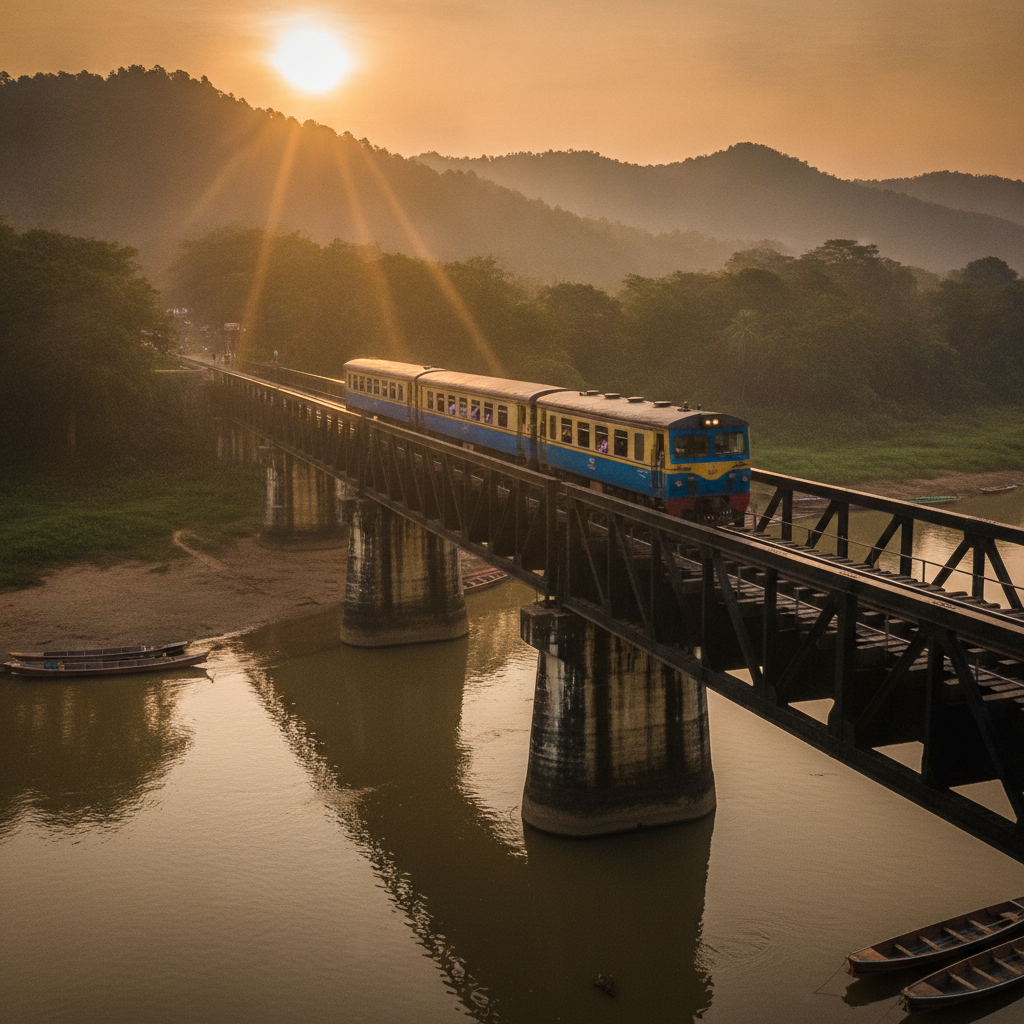
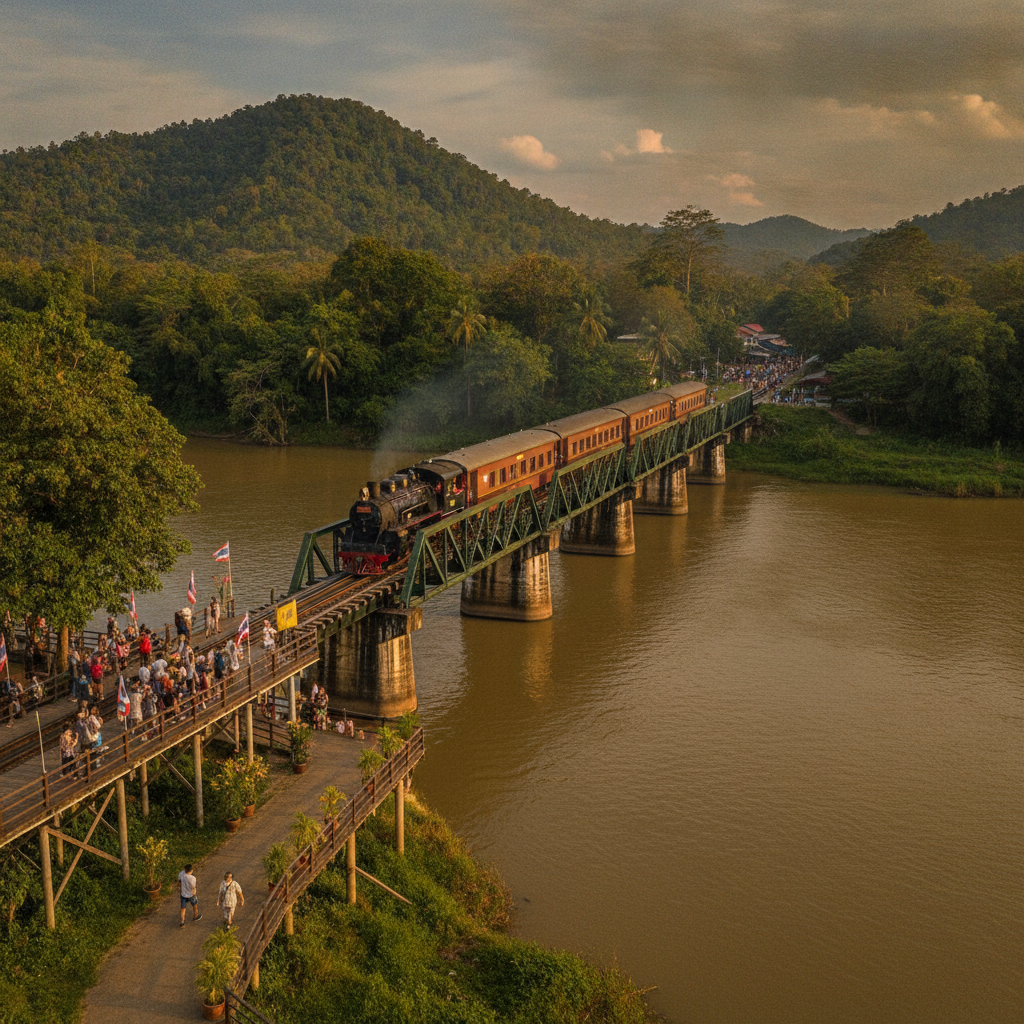
The small market that operates at the Kanchanaburi train station platform during the departure and arrival of the Death Railway heritage trains provides the most spontaneous and most visually lively food encounter accessible at the historical rail infrastructure — the vendors selling the train journey snacks (the grilled corn, the fresh fruit portions, the packaged dried fruits, and the drinks) to the heritage train passengers recreate a version of the station platform market culture that was a feature of the original Thai railway experience before the modernisation of the rail system. The market's brief active period (the 15-20 minutes before each train departure) creates an atmosphere of concentrated commercial activity that is completely different from the quieter station environment between trains.
Walk this route with audio
Stories play automatically as you reach each stop — no tapping needed.