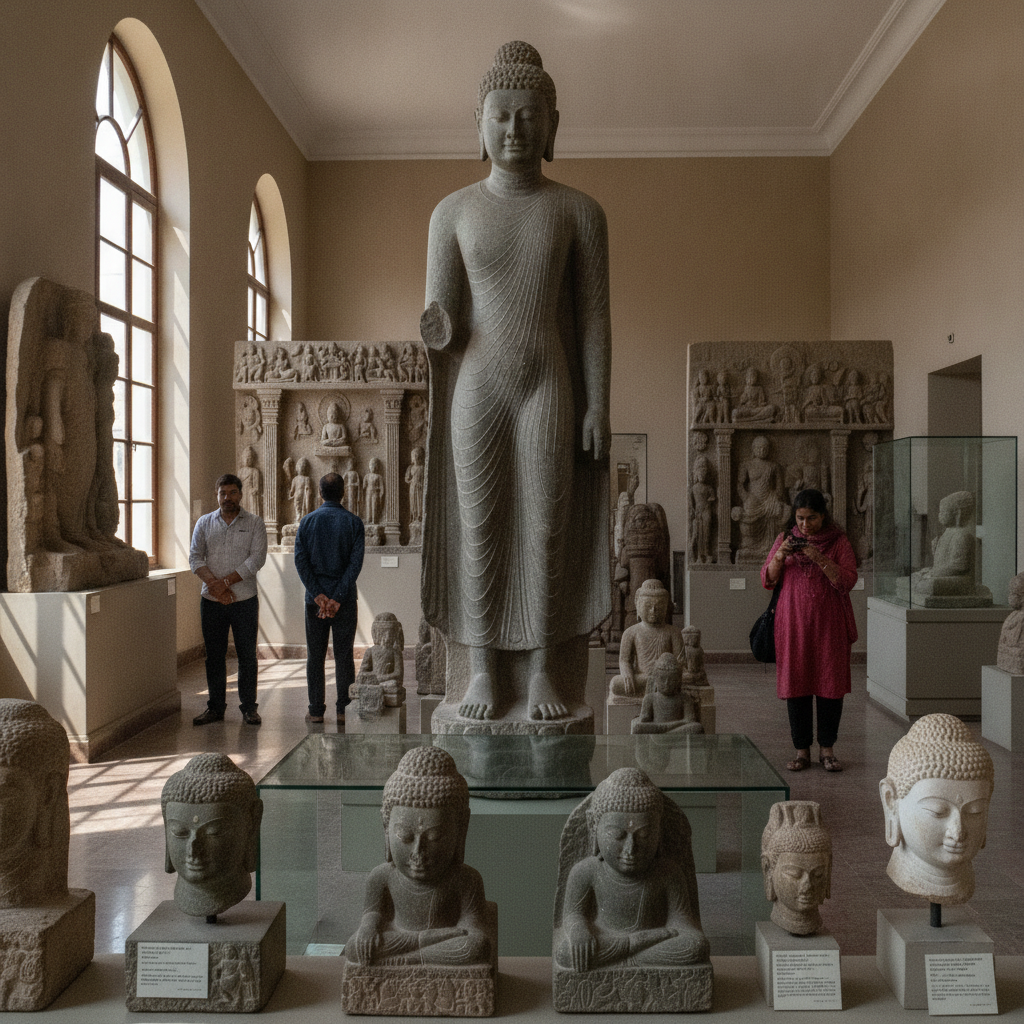
Islamabad to Taxila UNESCO Buddhist Heritage
Day trip to Taxila — the UNESCO World Heritage Site 35 kilometers from Islamabad where the ancient city of Takshashila flourished as a great center of Buddhist learning from the 5th century BCE, and where the Gandhara civilization produced the first human images of the Buddha in a Greco-Buddhist art style that spread throughout Asia.
- 1
Taxila Museum
Begin at the Taxila Museum where the finest Gandhara sculptures are collected — the stone and stucco Buddhist art combining Hellenistic figural sculpture with Buddhist iconography, the result of Alexander the Great's campaign through this region creating an artistic synthesis that defined Buddhist art for centuries.
- 2
Dharmarajika Stupa
The 3rd-century BCE stupa established by Emperor Ashoka — one of the oldest Buddhist monuments in South Asia, the circular brick structure surrounded by the foundations of monastic buildings that once housed hundreds of Buddhist monks studying at Taxila's famous universities.
- 3
Jaulian Monastery
The remarkably preserved 2nd-century CE Buddhist monastery on a hilltop above the valley — the main stupa court with its dozens of votive stupas, each once decorated with Gandhara Buddha figures, and the monks' cells and assembly halls giving the clearest picture of life in a Gandhara Buddhist monastery.
- 4
Sirkap Ancient City
Walk the grid-plan streets of Sirkap — the Parthian-era city laid out on the Hippodamian grid plan introduced by Greek urban planners, the foundations of temples, shops, and residences visible for hectares, the extraordinary preservation of an ancient urban plan 2,000 years old.
- 5
Mohra Muradu Monastery
The hidden monastery with the best-preserved plasterwork in Taxila — the main stupa surrounded by smaller votive stupas whose original white plaster coating and painted decorations give a vivid sense of how the Gandhara monuments looked when they were active religious sites rather than archaeological ruins.
- 6
Taxila Archaeological Landscape
The overall landscape of the Taxila valley where three successive ancient cities are visible in the terrain — the pre-Mauryan Bhir Mound, the Greek-influenced Sirkap, and the Kushan-era Sirsukh, the layered archaeology of over 1000 years of urban occupation visible in the contours of the Punjab valley.
Walk this route with audio
Stories play automatically as you reach each stop — no tapping needed.
More in islamabad
Islamabad to Abbottabad and Nathiagali Mountain Valley
Islamabad Lok Virsa Folk Heritage Museum
Islamabad to Murree Hill Station Escape

Islamabad Rawalpindi Old Bazaars and Cantonment
Islamabad Rawal Lake and Leisure Parks