Islamabad Faisal Mosque and Planned Capital Architecture
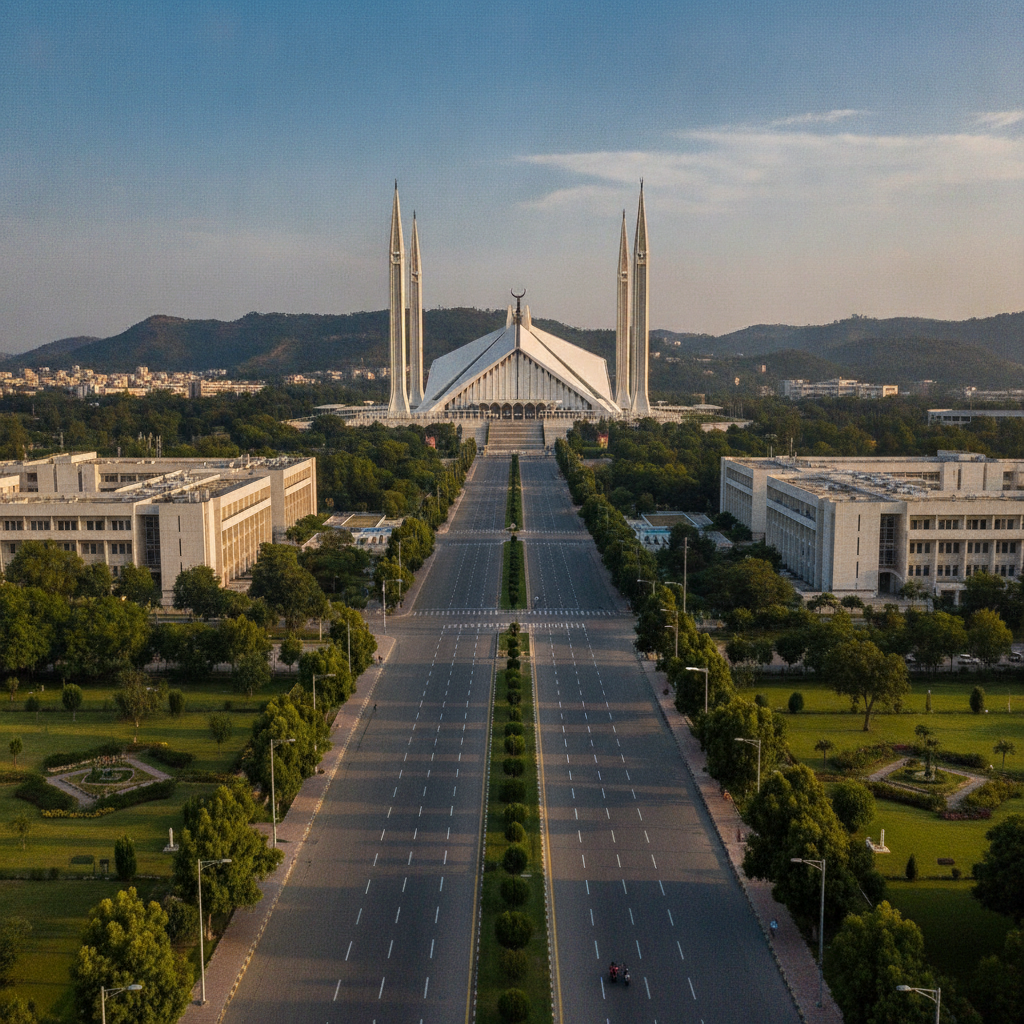
Visit the Faisal Mosque — the iconic 1986 structure designed by Turkish architect Vedat Dalokay whose tent-shaped prayer hall flanked by four minarets has become the defining image of Pakistan's planned capital, then explore the modernist architecture of the city built from scratch in the 1960s to replace Karachi as Pakistan's capital.
- 1
Faisal Mosque Main Approach
Approach the Faisal Mosque along the broad boulevard from the F-7 sector — the mosque's white concrete tent-shaped prayer hall and its four 90-meter minarets becoming visible as the road rises, the building designed to evoke a Bedouin desert tent, funded by Saudi Arabia and named after King Faisal.
- 2
Mosque Prayer Hall Interior
Enter the prayer hall of the Faisal Mosque — the vast interior space beneath the tent structure, the Arabic calligraphy decorating the walls, and the capacity for 10,000 worshippers inside with room for 200,000 in the grounds, making this one of the largest mosque complexes in the world when built.
- 3
Shah Faisal Masjid Museum
The small museum in the mosque complex documenting the mosque's construction and Islamic art — the engineering achievement of building the tent-shaped concrete structure in the 1980s and the donations from Muslim countries worldwide that funded the project.
- 4
Constitution Avenue Government District
Walk the Constitution Avenue ceremonial route — the broad avenue lined with Pakistan's major government buildings, the Parliament House, the Supreme Court, the Presidency, and the Foreign Ministry, all designed in a Pakistani modernist style that blends Islamic geometric motifs with 1960s international architecture.
- 5
Parliament House
The domed Parliament building designed by Edward Durell Stone — the American architect who also designed the Kennedy Center and the US Embassy in Delhi, the building combining classical dome form with a colonnaded facade, now Pakistan's legislative center and the symbolic heart of the capital.
- 6
Pakistan Monument
The modern monument on the Shakarparian Hills in the shape of a four-petaled flower representing Pakistan's four provinces — the museum inside tracing Pakistan's history from the Indus Valley civilization to independence, the viewpoint from the monument giving panoramic views of the capital below.
Walk this route with audio
Stories play automatically as you reach each stop — no tapping needed.