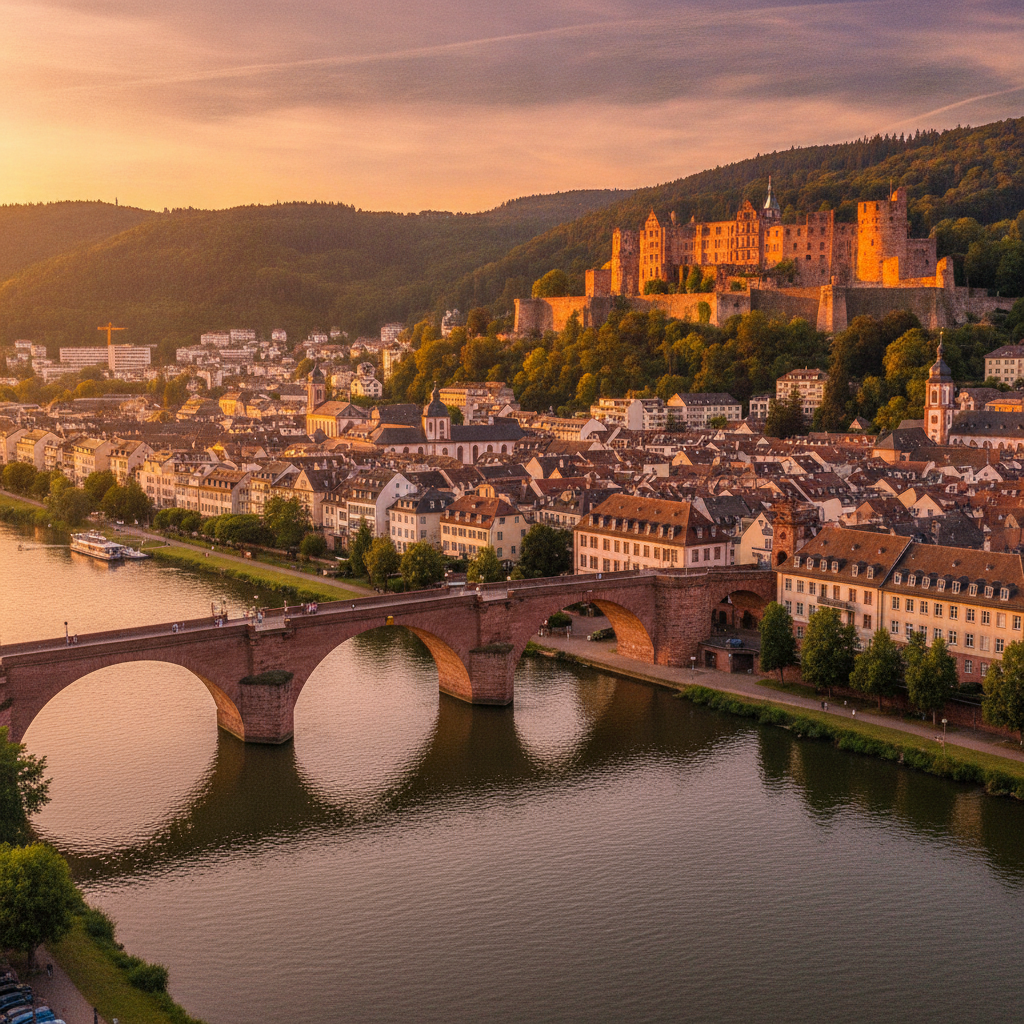
Heidelberg — Philosophenweg, Wine Country, Museums, Student Culture & Nightlife
Heidelberg's Romanticism extends to the cherry-blossom Philosophenweg, the wine villages of the Neckar valley, the 600,000-year-old Homo heidelbergensis jaw at the Kurpfälzisches Museum, and the most compact student pub culture in any German university city.
- 1
The Philosophenweg and the Heiligenberg
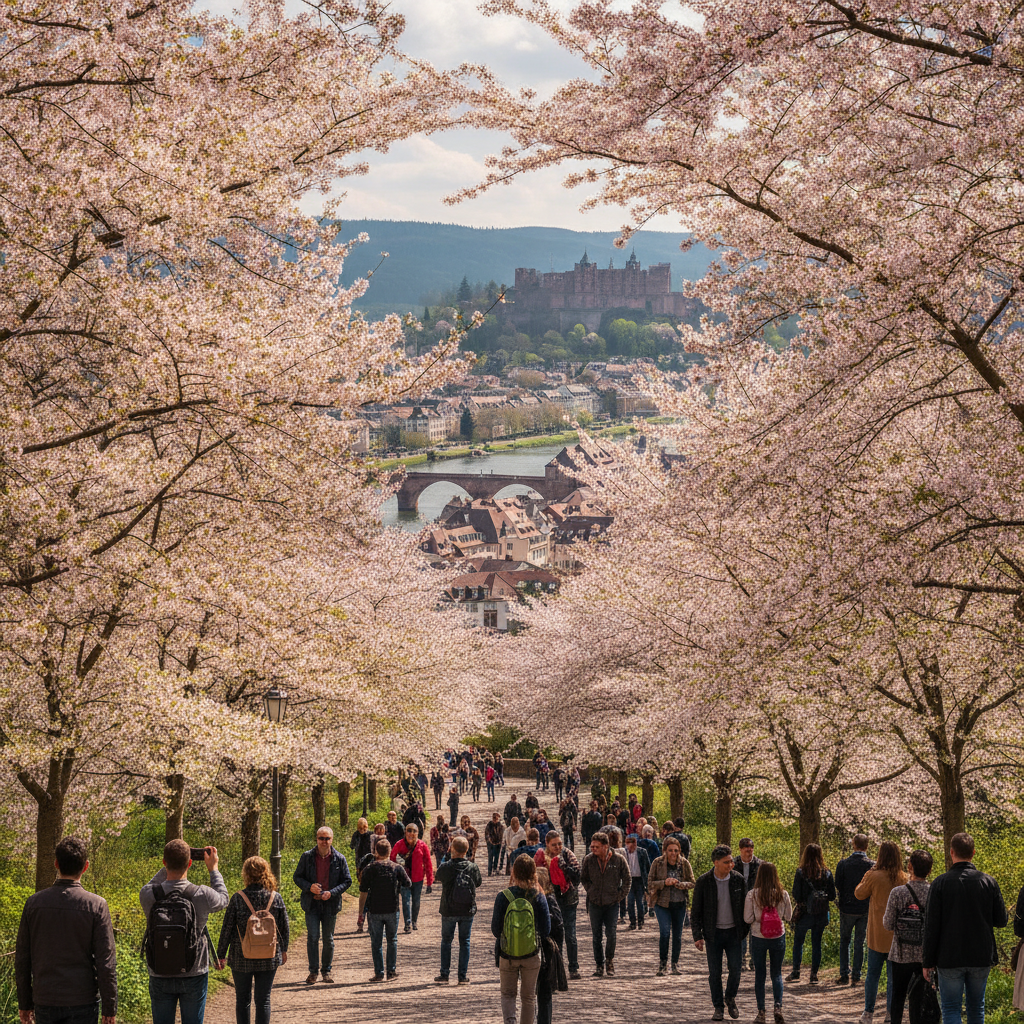
Philosophenweg (the Philosophers' Walk — the 2km path on the Heiligenberg hillside opposite the Heidelberg Castle at 200m above the Neckar, the most intellectually associated single walking path in Germany): the path (the Philosophenweg from the Theodor-Heuss-Brücke north to the Ziegelhausen district — the most completely panoramic single walking path in Heidelberg, the view from the path the most comprehensive simultaneous view of the Altstadt, the Old Bridge, and the Castle available from any walking trail, the path open and free 24 hours, the most used early morning and late afternoon), the spring cherry blossoms (the cherry trees along the Philosophenweg — the most photographed spring seasonal change in Heidelberg, the Japanese cherry trees planted in the 1930s at the path edge, the 2-week peak blossom period typically from late March to mid-April, the most visited single natural event in the Heidelberg calendar), the Thingstätte (the Thingstätte amphitheatre at the Heiligenberg summit at 440m — the 1935 open-air amphitheatre built by the Nazi authorities for the mass ritual performances, the most sinisterly architecturally purposed heritage structure on the Heidelberg hills, the stone seating for 8,000 spectators the most historically uncomfortable single viewing position in the Heidelberg landscape, free access daily), the Michaelskloster (the St. Michael Monastery ruins at the Heiligenberg summit — the Benedictine monastery founded 870 CE, the oldest surviving monastic ruins in the Heidelberg area, the rough stone walls and the Romanesque window frames the most historically specific standing ruins accessible on the Philosophenweg circuit, free), the Snakepath (the Schlangenweg ('Snake Path') — the serpentine staircase path connecting the Philosophenweg to the Neckar riverbank below through the vineyard terraces, the most dramatically vertical single connection path in Heidelberg, the view from the Schlangenweg the most directly downward-into-the-river view accessible on foot in Heidelberg) and the Heiligenberg hike (the 4-hour Heiligenberg round trip from the Theodor-Heuss-Brücke: the Philosophenweg north, the Heiligenberg summit with the Thingstätte and the monastery ruins, the descent via the Wolfsbrunnen forest valley to the Schlierbach village, and the tram back to the Bismarckplatz — the most complete single half-day nature-and-history circuit accessible on foot from the Heidelberg Altstadt).
- 2
Heidelberg's Surrounding Villages — Schlierbach and Ziegelhausen
Heidelberg Environs (the villages immediately east of the Heidelberg Altstadt in the Neckar valley — the most architecturally intact pre-industrial rural landscape within walking distance of any major German city centre): Schlierbach (the Schlierbach monastery and village 3km east of the Heidelberg centre — the Zisterzienserkloster Schlierbach (Cistercian Monastery) the most completely preserved active Cistercian monastery in the Heidelberg area, the church interior the most ornately Baroque ecclesiastical interior accessible on foot from Heidelberg, the monastery garden the most meditative single cultivated space in the Heidelberg Neckar valley, the monastery cheese and the monastery beer available at the monastery shop the most specifically monastic food purchase from the Heidelberg day trip), the Wolfsbrunnen (the Wolfsbrunnen spring and restaurant in the Wolfsbrunnen valley between the Schlierbach and the Ziegelhausen — the spring the most legend-associated single water source in the Heidelberg area, the witch legend of Jetta the most specifically Heidelberg supernatural narrative, the Wolfsbrunnen restaurant the most historically atmospheric valley restaurant accessible from the Heidelberg Altstadt, accessible by tram 33 to the Wolfsbrunnen terminus in 20 minutes), Ziegelhausen (the Ziegelhausen village 4km east — the most characteristically Neckar-valley sandstone-architecture village accessible from Heidelberg by bicycle on the Neckartalradweg in 20 minutes, the Ziegelhausen watermill and the sandstone quarry the most directly productive heritage industrial sites in the Heidelberg suburb), the Rohrbach district (the Rohrbach neighbourhood south of the Altstadt — the most topographically varied inner suburb of Heidelberg, the Römerstraße the oldest confirmed Roman road route in the Heidelberg area running through Rohrbach, the most historically layered single suburb street in the city), Dossenheim (the Dossenheim village 8km north of Heidelberg — the Dolomite and limestone quarry on the Dossenheim Stein the most active and the most visually dramatic stone quarrying site accessible from the Heidelberg day-trip range, the village the most geologically interesting single Neckar valley destination for the visitor with the geological interest) and the Leimen (the Leimen town 10km south of Heidelberg — the birthplace of Boris Becker the most specifically tennis-associated single community in Baden-Württemberg, the Boris Becker Tennis Academy the most visited single sports heritage address in the Heidelberg south suburbs).
- 3
Heidelberg's Wine and the Baden Wine Route
Heidelberg wine culture (Heidelberg at the northern end of the Baden wine region — the most southerly major German university city and the most northern significant German red wine producing area, the Heidelberg hinterland the most underappreciated wine-producing landscape in the Rhineland-Palatinate): the Baden wine region (the Baden wine region — the most southerly of the 13 German wine regions, the warmest German wine region by annual growing degree days, the most internationally exported German red wine by the proportion of red wine production (the Spätburgunder (Pinot Noir) from the Baden Kaiserstuhl and the Markgräflerland the most internationally critically recognised), the Baden wine the most directly French-influenced in style of any German wine by the proximity of the Alsace wine region across the Rhine), the Heidelberg wine villages (the wine villages in the Heidelberg area: the Rohrbach and the Handschuhsheim within the Heidelberg city limits the most historically established Heidelberg wine neighbourhoods, the Handschuhsheim cooperative the most regularly visited wine co-operative in the Heidelberg suburban area, the red sandstone vineyard terraces on the Heidelberg Königstuhl the most dramatically positioned city-limit vineyards in any German university city), the Oechsle scale (the Oechsle scale — the German wine quality measurement system invented by Christian Ferdinand Oechsle (1774-1852) born in Pforzheim 60km south of Heidelberg, the most used single indirect Heidelberg contribution to the global wine industry, the Oechsle measurement the primary German wine harvest quality indicator), the Steinsberg (the Steinsberg near Sinsheim 25km south of Heidelberg — the most dramatically isolated hill-top castle in the Kraichgau agricultural landscape, the 12th-century Steinsberg castle the most completely preserved round keep ('Kraichgauer Wahrzeichen') in the Baden-Württemberg, accessible by car in 30 minutes the most unexpected architectural heritage in the Heidelberg day-trip range), the Elsenz valley (the Elsenz valley southwest of Heidelberg — the most complete pre-industrial agricultural landscape in the Heidelberg area, the wine-growing villages of Meckesheim, Mauer, and Neckargemünd the most authentically agricultural wine-and-fruit communities within the Heidelberg S-Bahn reach) and the Weinstube (the Heidelberg Weinstube (wine tavern) tradition — the Weinstube zum Spreisel at Hauptstrasse 131 the most historically rooted traditional Heidelberg wine tavern, the Pfälzer Riesling and the Baden Spätburgunder the 2 most recommended wines by the proprietors, the Weinstube the most specifically regional winedrinking experience in Heidelberg distinct from the Kneipe and the Brauhaus beer culture).
- 4
The Kurpfälzisches Museum and Heidelberg Collections
Kurpfälzisches Museum (the Electoral Palatinate Museum at Hauptstrasse 97 — the most comprehensive museum of Heidelberg city and regional history in a Baroque palace building, the most historically layered single museum in Heidelberg): the permanent collection (the Kurpfälzisches Museum collection spanning the Roman era through the 20th century: the most important single object: the Schadelknochen Jaw (the 600,000-year-old jawbone of Homo heidelbergensis, discovered 1907 in the Mauer sandpit 10km south of Heidelberg, the most significant single prehistoric human fossil discovery in Germany and one of the most important human evolution specimens in the world, the most visited single museum object in Heidelberg), the Apostles altarpiece (the Zwölf-Apostel-Altar by Tilman Riemenschneider c. 1509 — the most important single carved-wood altarpiece in a Heidelberg museum, the Riemenschneider style the most distinctive single sculptural manner in German Gothic woodcarving), the Romantic collection (the Heidelberg Romantic paintings — the Graimberg castle views and the Carl Philipp Fohr Rhine and castle landscapes the most specifically Heidelberg Romantic paintings in any museum collection), the practical (CHF 3 adults, Tuesday-Sunday 10am-6pm, Thursday to 10pm, the museum café in the Baroque garden courtyard the most atmospherically positioned museum lunch in Heidelberg), the History of Science collection (the Heidelberg scientific heritage — the university instruments collection from the 16th to 19th century including the oldest complete astronomical clock mechanism in Germany, the most directly university-connected museum collection in Heidelberg) and the special exhibitions (the Kurpfälzisches Museum the most regularly programmed exhibition venue in Heidelberg for the local and regional history special exhibitions — typically 3-4 temporary exhibitions per year, the most comprehensively local in topic of any Heidelberg museum programme, the most directly relevant exhibition programme for the visitor interested in the Heidelberg regional history).
- 5
Heidelberg's Student Culture and the Summer Festivals
Heidelberg student culture (the Universität Heidelberg 30,000 students the most demographically influential single institution in the city — the student population 30% of the Heidelberg total resident population, the most student-population-dominant of any city among the major German universities): the Studentenkarzer (the Student Prison at Augustinergasse 2 — the university prison 1778-1914 for student miscreants from duelling to disturbing the peace, the walls covered with the prisoner graffiti and drawings the most unique academic heritage site in any German university, the prison the most specifically Heidelberg student heritage experience, CHF 3 adults), the Mensa culture (the Heidelberg Universität Mensa at Grabengasse 14 — the most historically integrated university canteen in the Heidelberg Altstadt, the daily lunch for €4-6 accessible to non-students at the guest rate, the most cost-efficient hot lunch in the Heidelberg Altstadt), the Heidelberg Student Kiss (the Studentenkuss — the Heidelberger Studentenkuss chocolate the most commercially successful single confectionery brand associated with Heidelberg, available at the Knösel confectionary at Haspelgasse 16, the most specifically Heidelberg edible souvenir, the brand established 1863), the Stiftsfest (the Stiftsfest at the Heidelberg University in June — the most attended single outdoor festival in Heidelberg with the live music, the food stalls, and the 20,000 visitors on the Old University square, the most directly student-facing cultural event in Heidelberg), the Heidelberg Herbst (the Heidelberg Herbst (Autumn Festival) in September — the most historically rooted annual street fair in Heidelberg, the medieval-costumed fair on the Hauptstrasse and the Marktplatz the most atmospherically Romantic single annual event in Heidelberg, the traditional crafts, the food stalls, and the period-costumed performers the most visitor-engaging autumn cultural programme in any German university city) and the Heidelberg open-air cinema (the open-air cinema at the Heidelberg Market Square and the Thingplatz in summer — the most atmospherically Romantic single outdoor cinema setting in Germany at the Thingplatz with the castle visible above, the programme in July-August the most attended free outdoor cultural event in the Heidelberg summer, the blanket and the sunset the only entry requirements).
- 6
Heidelberg Night — Bars, Clubs and the Student Pub Mile
Heidelberg nightlife (the most compact single nightlife district in any German university city — the Untere Strasse and the Hauptstrasse the primary bar streets, the entirety of the Heidelberg Altstadt the most walkable single pub mile in Germany): the Untere Strasse (the Untere Strasse parallel to the Hauptstrasse — the most specifically bar-and-pub focused single street in Heidelberg, the Zum Sepp'l at Hauptstrasse 213 the most historically atmospheric student pub in Heidelberg, the Schnookeloch at Haspelgasse 8 the most characteristically medieval-cellar Weinstube in the Altstadt, the Heidelberger Brauhaus at Leyergasse 6 the most complete Heidelberg brewery-and-pub experience with the locally brewed Heidelberger beer), the Heidelberger Herbst evening (the most animated single evening in the Heidelberg Altstadt during the Heidelberg Herbst in September — the Hauptstrasse lined with the traditional craft and food stalls, the bars open until the 3am closing the most extended single licensed-hours evening in the Heidelberg annual calendar), the Nachtleben (the Heidelberg club scene: the Cave54 at Krämergasse 2 the most long-established student jazz club in Heidelberg, the Billy Blues Sportsbar at Bergheimer Strasse 146 the most commercially prominent sports bar, the O'Reilly's Irish Pub at Hauptstrasse 37 the most internationally branded but the most consistently visited late-night venue for the international student community), the Rooftop bar (the Hotel Kulturbrauerei Heidelberg rooftop terrace — the most dramatically elevated bar position in the Heidelberg Altstadt with the castle view, the most recommended single evening bar elevation for the castle-and-city illumination in the warm season, open May-September), the Markgräfler Weinstube (the most atmospheric of the Heidelberg wine tavern tradition — the Weinstube zum Spreisel at Hauptstrasse 131 the most historically rooted, the Baden Spätburgunder by the glass the most recommended single Heidelberg wine tavern experience, the late-evening conversations the most specifically Heidelberg student intellectual social activity) and the Heidelberg late-night eating (the Denner's Sandwichbox at Hauptstrasse 90 the most visited late-night food stop in the Heidelberg Altstadt open until 4am, the Döner Kebab stands at the Bismarckplatz the most efficiently positioned late-night street food in the primary Heidelberg tram interchange, the pizza delivery from the Heidelberg Pizza Lieferservice the most reliably late-night delivered food in the Heidelberg student quarter).
Walk this route with audio
Stories play automatically as you reach each stop — no tapping needed.
More in heidelberg
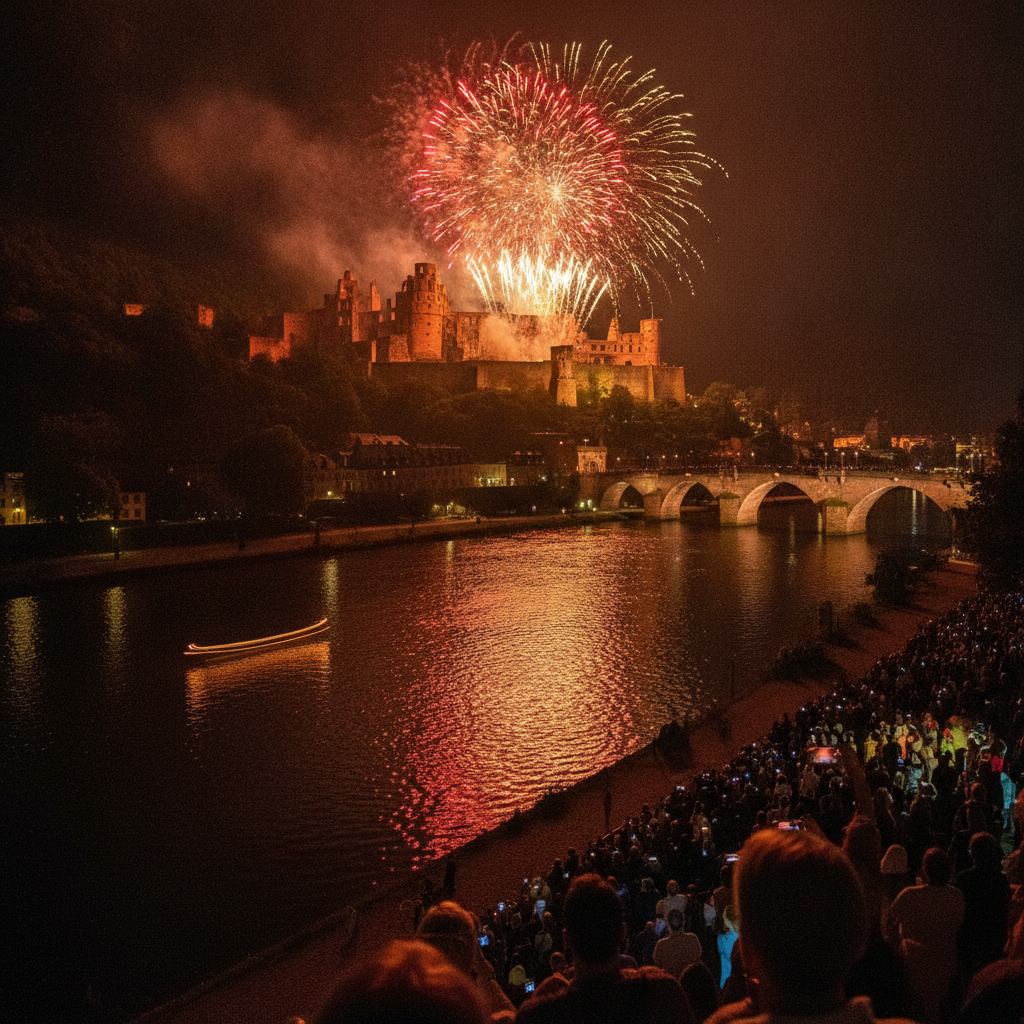
Heidelberg — Castle Illumination, Roman Ladenburg, Baroque Architecture, Odenwald Hiking & Bergstrasse Wine
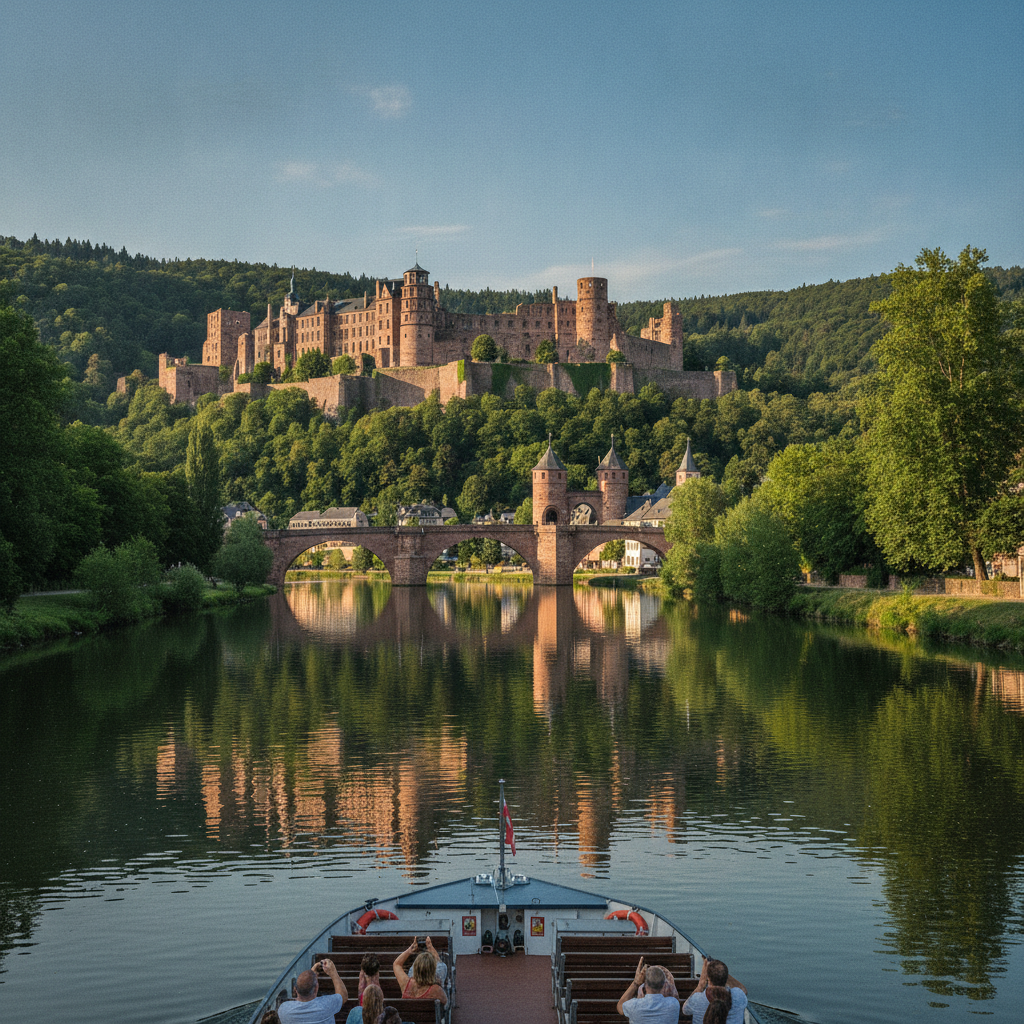
Heidelberg — Neckar Cruise, Mannheim Baroque Palace, Worms Cathedral & Speyer's Romanesque Kaiserdom
Heidelberg — Königstuhl Summit, Handschuhsheim Village, the Electoral Palatinate & Heidelberg in Literature
Heidelberg — Churches, Schwetzingen Garden, Christmas Market, Art Scene & the Full Events Calendar