Heidelberg — Churches, Schwetzingen Garden, Christmas Market, Art Scene & the Full Events Calendar
The Heiliggeistkirche held the most contested Reformation history of any German church; Schwetzingen has Europe's most thematically diverse Baroque garden with a mosque folly; and Heidelberg's events calendar runs from the Spring Music Festival to the most castle-scenographic Christmas market in Germany.
- 1
The Heiliggeistkirche and the Heidelberg Altstadt Churches
Heidelberg churches (the ecclesiastical architecture of the Heidelberg Altstadt — the most religiously historically contested single group of church buildings in Germany, the Heiliggeistkirche the most symbolically contentious church in the Reformation history of the Rhineland): the Heiliggeistkirche (the Heiliggeistkirche (Church of the Holy Spirit) at the Marktplatz — the Gothic collegiate church of 1400-1441, the most architecturally prominent church in the Heidelberg Altstadt, the church the most religiously contested single building in the Reformation Rhineland: the church alternated between Catholic and Reformed worship from 1546 to 1706, the most frequently denomination-changed church in German Reformation history, a wall dividing the nave for Catholic mass and the choir for Reformed worship from 1706 to 1936, the wall removed in 1936 the most dramatic single interior de-partitioning in 20th-century German church history, the church today the most photogenic single building in the Heidelberg Marktplatz composition), the Peterskirche (the Peterskirche (Church of St. Peter) at Grabengasse 1 — the most historically ancient parish church in Heidelberg, the Romanesque crypt the most completely preserved pre-Gothic ecclesiastical space in the Heidelberg Altstadt, the church the funerary church of the Heidelberg Professors and the students since the 15th century, the epitaphs of the university professors on the exterior walls the most specifically academic funerary monument assemblage of any church in Germany), the Jesuitenkirche (the Jesuit Church at Schulgasse — the most ornate Baroque Catholic church in Heidelberg, the construction from 1712-1759 during the return of Catholic worship under the Elector Johann Wilhelm, the most architecturally Counter-Reformation-distinctive church interior in the Heidelberg Altstadt), the Providenzkirche (the Providenzkirche (Church of Providence) at Universitätsplatz — the most prominently university-district-positioned Reformed church in Heidelberg, the most regularly student-population-attended single church in Heidelberg, the Bach cantata concerts in the Providenzkirche the most regularly programmed church music in Heidelberg), the Holy Ghost Hospital (the Heilig-Geist-Spital at the Steingasse — the medieval charitable hospital on the Neckar bank, the most completely surviving medieval hospital building complex in Heidelberg, the hospital now converted to residential use with the original Gothic vaulting preserved in the ground floor, the most architecturally surprising medieval conversion in the Heidelberg Altstadt) and the Heidelberg Reformationsdenkmal (the Heidelberg Reformation monument (Reformationsdenkmal) at the Universitätsplatz — the bronze memorial figures of Elector Palatine Frederick III and the Heidelberg Catechism authors, the most specifically Calvinist-Reformation-commemorative single monument in any German university city, the most directly connected single public monument to the Heidelberg Catechism and the Reformed faith tradition).
- 2
The Schwetzingen Palace and Garden — Europe's Baroque Garden Masterpiece
Schwetzingen Palace (the Schwetzinger Schloss und Schlossgarten (Schwetzingen Palace and Garden) 20km west of Heidelberg — the most extensively designed and the most thematically diverse Baroque and Rococo garden in Germany, one of the great European landscape gardens): the palace (the Schwetzingen Palace (Schloss Schwetzingen) — the Electoral Palatinate summer residence from 1748 under Elector Carl Theodor, the most completely Baroque-to-Rococo transitional palace complex in Baden-Württemberg, the Rokokotheater (Rococo Theatre) in the palace the most completely preserved single 18th-century court theatre in Germany with the original machinery, the Rokokotheater the most atmospherically positioned single historic opera house in any south German Baroque garden), the French garden (the French formal garden (Französischer Garten) at the Schwetzingen palace front — the most completely geometric Baroque parterre in Germany, the fountain at the central axis the most prominently positioned water feature in the formal garden zone, the 2 circular garden buildings (Zirkelbauten) framing the garden the most precisely symmetrically composed single formal garden composition in Baden-Württemberg), the English landscape garden (the English landscape garden (Englischer Garten) in the east section of Schwetzingen — the most extensively designed 18th-century English landscape garden in Germany, the conversion from formal to landscape garden by Elector Carl Theodor from 1776-1804 the most historically instructive single transition from Baroque to Romantic garden design in any German garden), the Moschee (the Mosque (Moschee) at Schwetzingen — the most architecturally unexpected single Romantic folly in any German garden, the Turkish mosque (1779-1795) the most completely constructed Islamic-inspired single architectural folly in any 18th-century German landscape garden, the minaret and the dome the most distinctively non-European garden architecture in the Baden-Württemberg garden heritage), the Apollotempel (the Apollo Temple (Apollotempel) at Schwetzingen — the Neoclassical rotunda temple the most elegantly composed single classical folly in the Schwetzingen garden, the figure of Apollo on the dome the most photographically refined single garden ornament in Schwetzingen, the temple reflection in the pool the most consistently photographed single garden composition in the Schwetzingen landscape garden) and the asparagus connection (the Schwetzingen asparagus festival — the most famous single asparagus-celebrating event in Germany, Schwetzingen the self-proclaimed 'Asparagus Capital of Germany' (Spargelstadt), the annual Spargel-Saison from April to June 24 the most commercially celebrated single food season in the Heidelberg area, the asparagus menus in Schwetzingen town restaurants the most comprehensively asparagus-menu-focused dining in the Rhineland, the market stalls with the white and the green asparagus the most directly farm-purchase-accessible single German asparagus market).
- 3
Heidelberg's Christmas Markets and Winter Scene
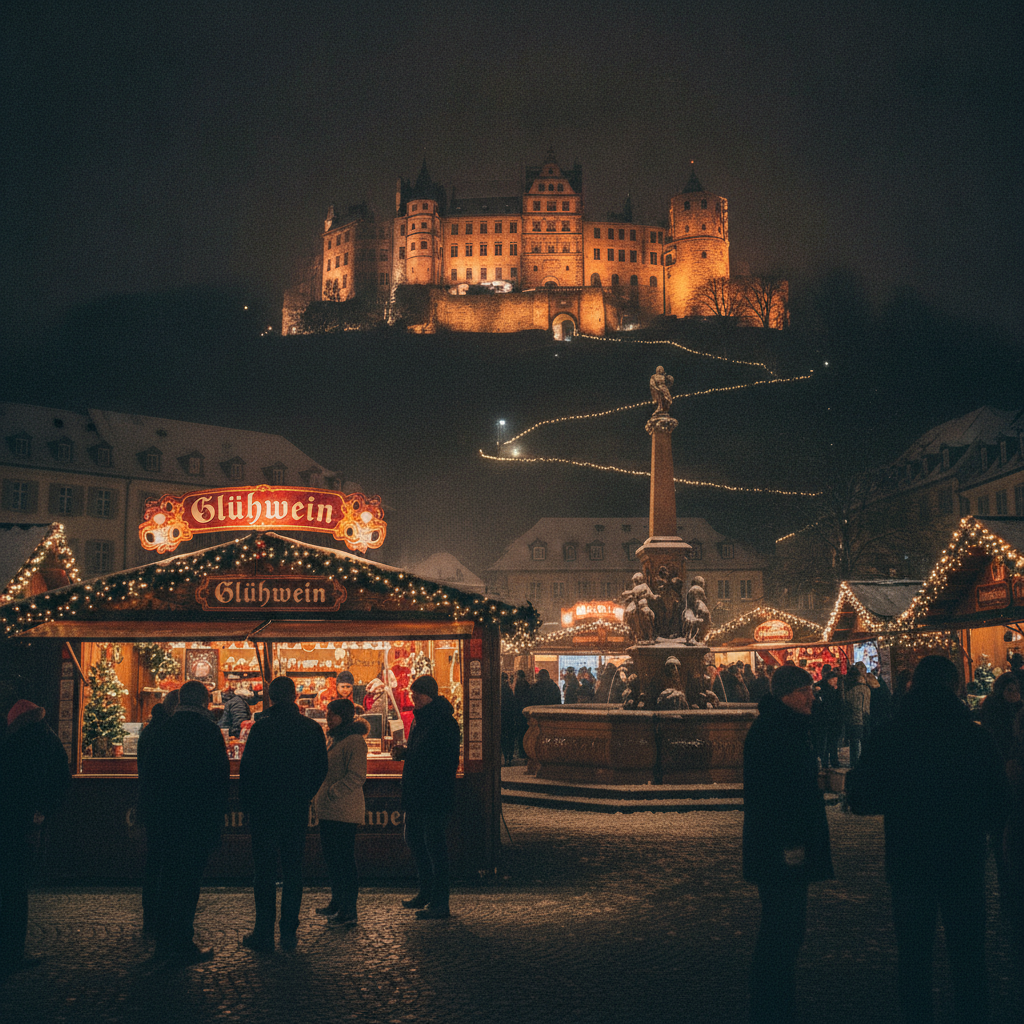
Heidelberg Christmas (the Heidelberg Christmas season — the most atmospherically Romantic single German city Christmas market location, the Baroque Altstadt and the castle floodlit in winter the most dramatically scenographic single German Christmas market setting outside of the Nuremberg and the Dresden markets): the Heidelberg Christmas Market (the Heidelberger Weihnachtsmarkt — the Christmas market on the Marktplatz and the Kornmarkt from late November to December 23, the most centrally positioned Christmas market in any German university city, the illuminated Heiliggeistkirche the most photogenic single Christmas market backdrop in Baden-Württemberg, the market stalls the most comprehensively traditional handcraft-seller focused of any Christmas market in Heidelberg with the regional pottery, the wooden toys, and the Lebkuchen gingerbread the 3 most distinctive product categories), the Kornmarkt market (the Kornmarkt Christmas market at the foot of the Heidelberg Castle — the most dramatically castle-backdrop-positioned Christmas market in Germany, the market stalls lit up with the castle floodlit above the most specifically Heidelberg Christmas image, the Glühwein (mulled wine) at the Kornmarkt the most scenically positioned single Christmas drink position in Baden-Württemberg), the Heidelberg ice skating (the Heidelberg ice rink (Eisbahn) on the Universitätsplatz in December-January — the most centrally positioned outdoor ice rink in any German university city, the skating directly in front of the 1712 Old University building the most historically atmospheric ice skating in Germany, the most popular single Christmas-season family activity in the Heidelberg Altstadt), the castle winter illumination (the Heidelberg Castle winter illumination in December — the castle floodlit in blue and white for the Christmas season, the most dramatically silhouetted single German castle in the winter Christmas illumination, the view from the south Neckar bank the most precisely framed Christmas castle view in Germany), the Epiphany market (the Heidelberg Dreikönigssmarkt (Three Kings' Market) on January 6 — the most specifically Epiphany-celebrating single supplementary Christmas market in the Heidelberg Altstadt, the most traditionally religious single market day in the Heidelberg Christmas calendar, the carol singing and the nativity performances on the Marktplatz the most attended single outdoor choral event of the Heidelberg Christmas season) and the winter walking (the Heidelberg winter walking — the Philosophenweg in winter the most mist-and-frost-atmospherically-charged single walking path in Heidelberg, the castle visible through the bare oak branches the most structurally clear single winter castle view, the Wolfsbrunnen valley in frost the most atmospherically isolated single winter forest walk accessible from the Heidelberg Altstadt on foot).
- 4
The Heidelberg Art Scene — Galleries and Contemporary Culture
Heidelberg art scene (the Heidelberg contemporary art scene — the most diverse single gallery concentration in any German city south of Frankfurt with a population under 200,000, the university the primary driver of the contemporary art programme): the Heidelberger Kunstverein (the Heidelberger Kunstverein at Hauptstrasse 97 in the Kurpfälzisches Museum building — the most historically established contemporary art exhibition organisation in Heidelberg, the programme focusing on the emerging and the mid-career German-speaking contemporary artists, the most regularly changed single exhibition programme in Heidelberg at 6-8 exhibitions per year, the most directly student-engaged contemporary art venue in the Heidelberg Altstadt), the Galerie Zink (the Galerie Zink at Hauptstrasse 110 — the most commercially significant single contemporary art gallery in Heidelberg representing nationally and internationally recognised artists, the most regularly programmed single private gallery in Heidelberg with the openings the most attended single private art events in the Heidelberg Altstadt), the Photo-Biennale (the Heidelberger Biennale der Fotografie — the photography exhibition event held biennially in even years across multiple Heidelberg venues, the most comprehensively photography-focused single art event in the Heidelberg calendar, the most internationally curated single visual arts programme in any Baden-Württemberg city under Munich and Stuttgart), the Kurpfälzisches Museum exhibitions (the Kurpfälzisches Museum temporary exhibitions — the most regularly programmed temporary exhibition programme of any Heidelberg regional museum, typically 3-4 exhibitions per year focusing on the Palatinate history, the Heidelberg Romanticism, and the regional archaeology), the ZEPHYR (the ZEPHYR — Raum für Fotografie at the Reiss-Engelhorn-Museen in Mannheim (accessible from Heidelberg in 15 minutes by S-Bahn) — the most specifically photography-museum-focused single exhibition space in the Heidelberg-Mannheim metropolitan area, the permanent and temporary photography exhibitions the most internationally curated single photography programme in the Rhineland north of Frankfurt) and the Heidelberg Atelier (the Heidelberg artist studios in the Bergheim and the Neuenheim districts — the most concentrated single artist-studio district in the Heidelberg metropolitan area, the Offene Ateliers (Open Studios) event in May the most directly studio-visit-enabling single annual event in Heidelberg, the most directly artist-contact-accessible single contemporary art event in the Heidelberg cultural calendar).
- 5
The Dossenheim and Leimen — Heidelberg's Southern Villages
Heidelberg southern suburbs (the Dossenheim and Leimen communities south and north of Heidelberg — the most distinctive satellite communities in the immediate Heidelberg area by the geology (Dossenheim) and the sports celebrity (Leimen) heritage): Dossenheim (the Dossenheim community 8km north of Heidelberg on the Bergstrasse — the Dolomite and limestone quarry on the Steinbruch Dossheim (Dossenheim quarry) the most visually dramatic active limestone quarrying operation accessible from Heidelberg, the white limestone faces of the quarry visible from the A5 Autobahn the most geologically instructive single roadside view in the Heidelberg area, the Weinwanderweg (wine walking trail) through the Dossenheim vineyards on the Bergstrasse the most directly vineyard-immersive single wine trail in the Heidelberg north suburbs), the Leimen (the Leimen town 10km south of Heidelberg — the birthplace of Boris Becker (born 22 November 1967 in Leimen) the most internationally sports-famous single Heidelberg south suburb, the Tennisclub Blau-Weiß Leimen the tennis club where Becker trained before his 1985 Wimbledon victory at 17 becoming the youngest Wimbledon singles champion in history, the most specifically tennis-heritage-associated single Heidelberg suburb), the Sandhausen (the Sandhausen town 12km south of Heidelberg — the SVsandhausen football club (SV Sandhausen) the most tenaciously second-tier-Bundesliga-playing football club in the Heidelberg south area, the BWT-Stadion am Hardtwald the most forested single professional football stadium in Germany — the stadium bordered on 3 sides by the Hardtwald pine forest, the most environmentally distinctive single professional football ground in Baden-Württemberg), the Leimen asparagus (the Leimen and the Rhein-Neckar-Kreis asparagus from the sandy soils of the Kraichgau south of Heidelberg — the most directly soil-quality-aspiragus-terroir-instructive single asparagus-growing explanation accessible at the roadside farm stalls on the B3 road south of Leimen from April to June), the Rohrbach (the Rohrbach inner suburb of Heidelberg south of the Altstadt — the most topographically varied inner suburb of Heidelberg on the Rohrbach valley stream, the Römerstraße the most Roman-road-aligned street in the Heidelberg south suburbs, the Rohrbach wine-growing on the southern Königstuhl slopes the most urban-fringe single vineyard in the Heidelberg city limits) and the Kirchheim (the Kirchheim district on the Heidelberg eastern edge — the most recently developed single Heidelberg district at the Baiertal suburb, the Patrick-Henry-Village (PHV) the former US Army housing area now the most ambitious single urban regeneration project in Heidelberg history, the PHV redevelopment the most watched single brownfield-to-urban-quarter conversion in Baden-Württemberg).
- 6
Heidelberg's Calendar — the Full Year of Events
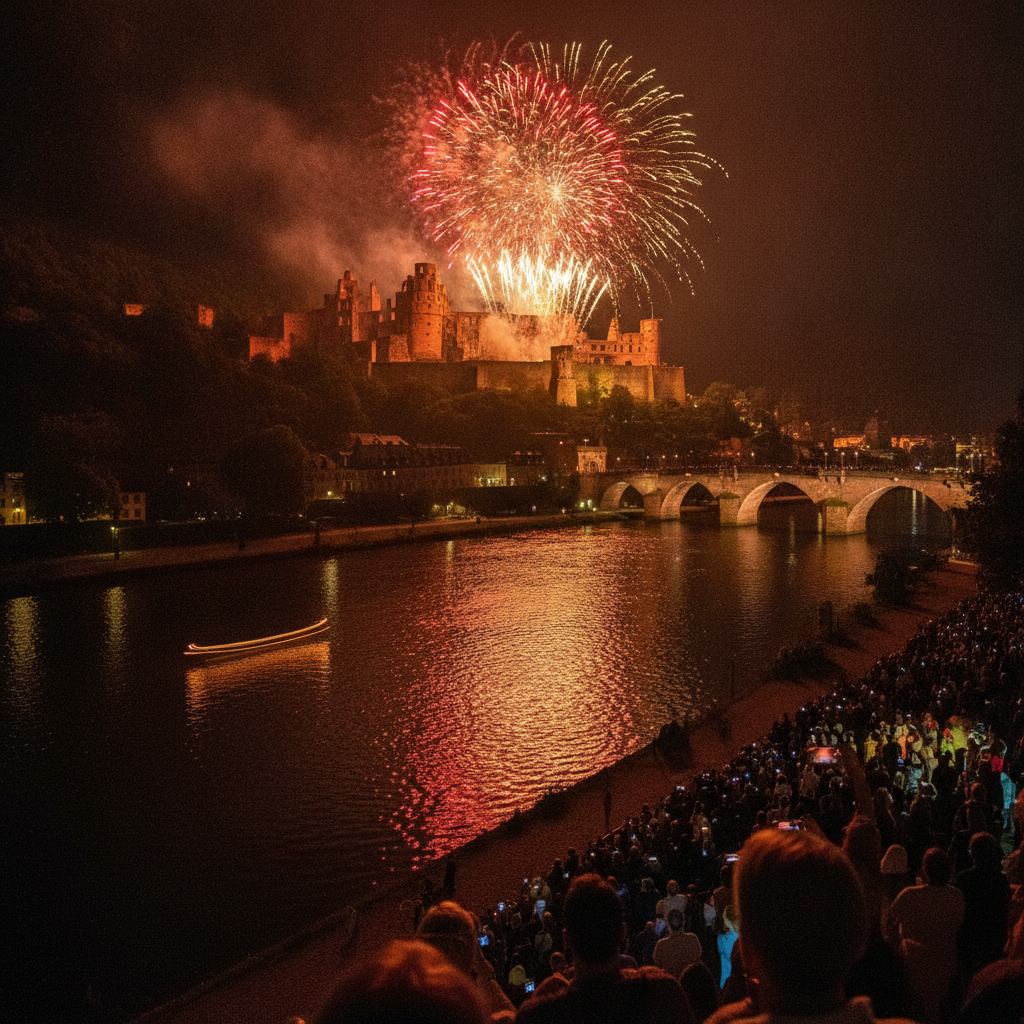
Heidelberg events calendar (the Heidelberg annual events programme — the most comprehensively historically-themed single annual events calendar of any German university city, the Schlossbeleuchtung and the Heidelberger Herbst the 2 most internationally attended events): the Heidelberger Frühling (the Heidelberger Frühling (Heidelberg Spring Music Festival) — the international chamber music festival in March-April, the most comprehensively chamber-music-programme focused single festival in Baden-Württemberg, the festival concerts in the Alte Aula of the university and the Heidelberg Philharmonie the most historically atmospheric indoor concert venues in Heidelberg), the Schlossbeleuchtung (the 3 annual Heidelberg Castle Illumination events: the May illumination, the summer main event in June (the most attended with 15,000 spectators), and the September event — the most specifically pyrotechnically-historical-narrative fireworks event in Germany, the fireworks simulating the 1693 French destruction the most consistently described event in Heidelberg tourist literature), the Schlossfestspiele (the Heidelberger Schlossfestspiele (Castle Festival) in July-August — the most atmospherically positioned outdoor theatre and concert festival in Germany at the Heidelberg Castle inner courtyard, the summer theatre programme the most historically atmospherically positioned theatrical event in the German-speaking world, the open-air Shakespeare and the classical music concerts the most visited single ticketed cultural events in the Heidelberg summer), the Heidelberger Herbst (the Heidelberger Herbst (Autumn Festival) in September — the most historically rooted annual street fair in Heidelberg, the medieval-costumed fair on the Hauptstrasse and the Marktplatz the most atmospherically Romantic single annual event in the Heidelberg autumn, the period-costumed crafts, the food stalls, and the Gaukler (jugglers and street performers) the most visitor-engaging Romantic fair in any German university city), the Weihnachtsmarkt (the Heidelberger Weihnachtsmarkt from late November to December 23 on the Marktplatz and the Kornmarkt — the most castle-backdrop-scenographic single German Christmas market, the Glühwein on the Kornmarkt the most dramatically positioned Christmas market hot drink in Germany, the market the most visited single Heidelberg event with 2 million annual visitors to the Christmas market, the most commercially successful single Heidelberg seasonal attraction) and the New Year (the Heidelberg New Year — the New Year's fireworks from the Alte Brücke and the castle area the most spectacular single amateur fireworks event in the Heidelberg calendar, the Silvester (New Year's Eve) crowd on the Alte Brücke the most photogenically bridge-framed single New Year gathering in any German Baroque city, the midnight bell of the Heiliggeistkirche the most atmospheric single New Year acoustic event in the Heidelberg Altstadt).
Walk this route with audio
Stories play automatically as you reach each stop — no tapping needed.
More in heidelberg
Heidelberg — Castle Illumination, Roman Ladenburg, Baroque Architecture, Odenwald Hiking & Bergstrasse Wine
Heidelberg — Neckar Cruise, Mannheim Baroque Palace, Worms Cathedral & Speyer's Romanesque Kaiserdom
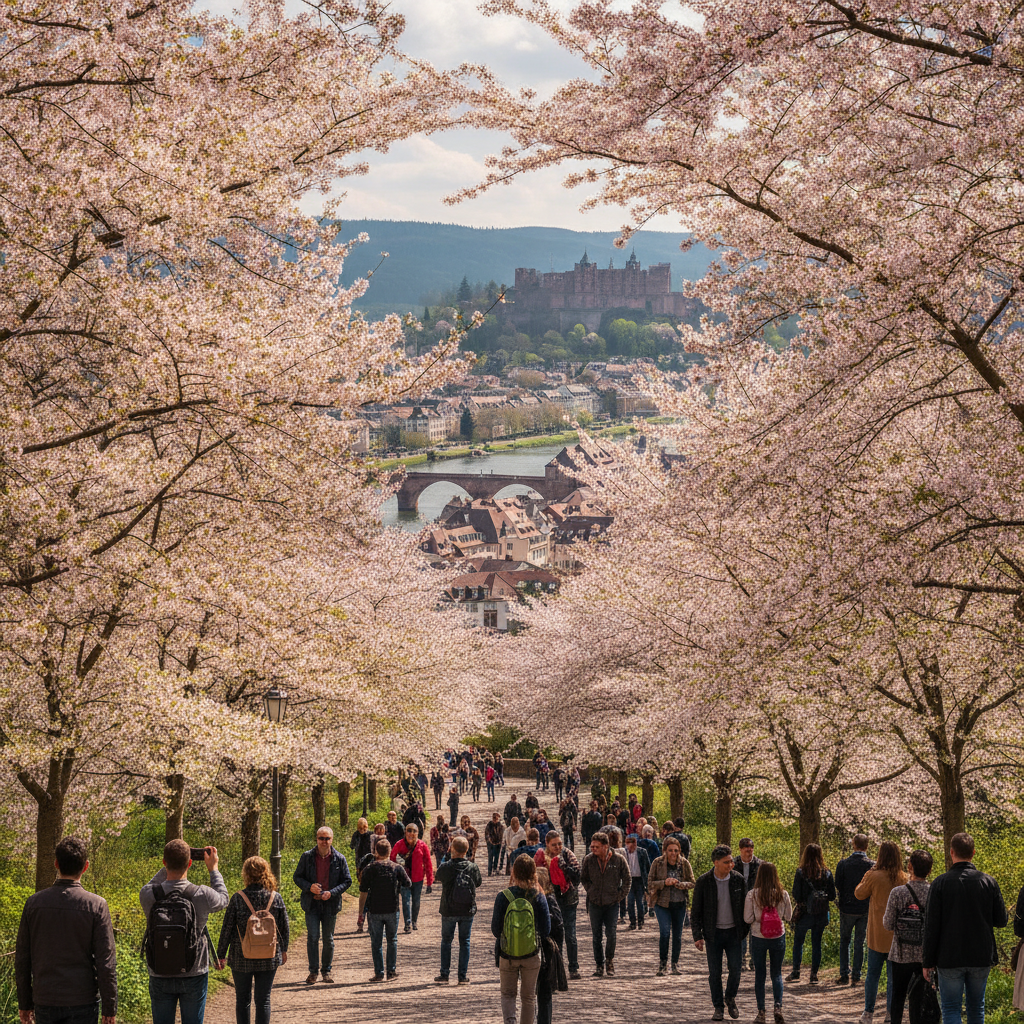
Heidelberg — Philosophenweg, Wine Country, Museums, Student Culture & Nightlife
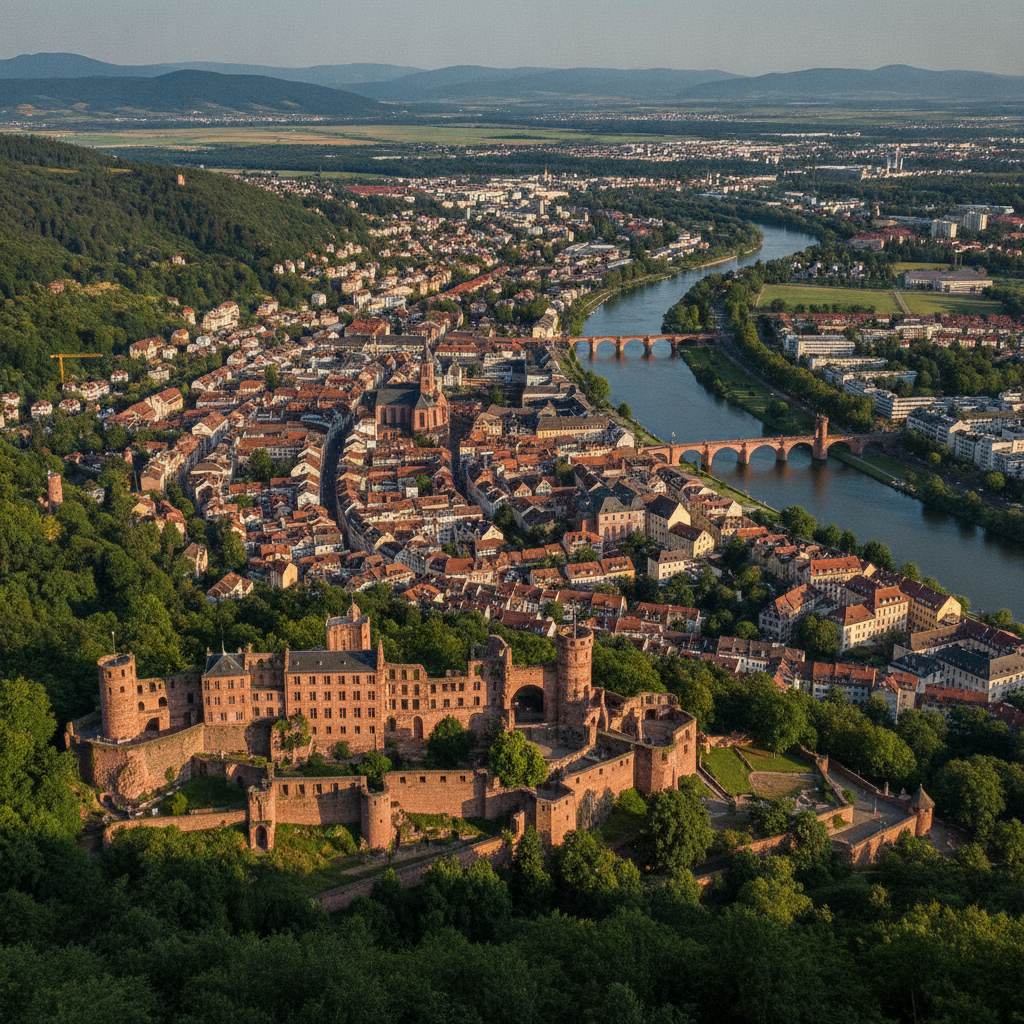
Heidelberg — Königstuhl Summit, Handschuhsheim Village, the Electoral Palatinate & Heidelberg in Literature