Heidelberg — Castle Illumination, Roman Ladenburg, Baroque Architecture, Odenwald Hiking & Bergstrasse Wine
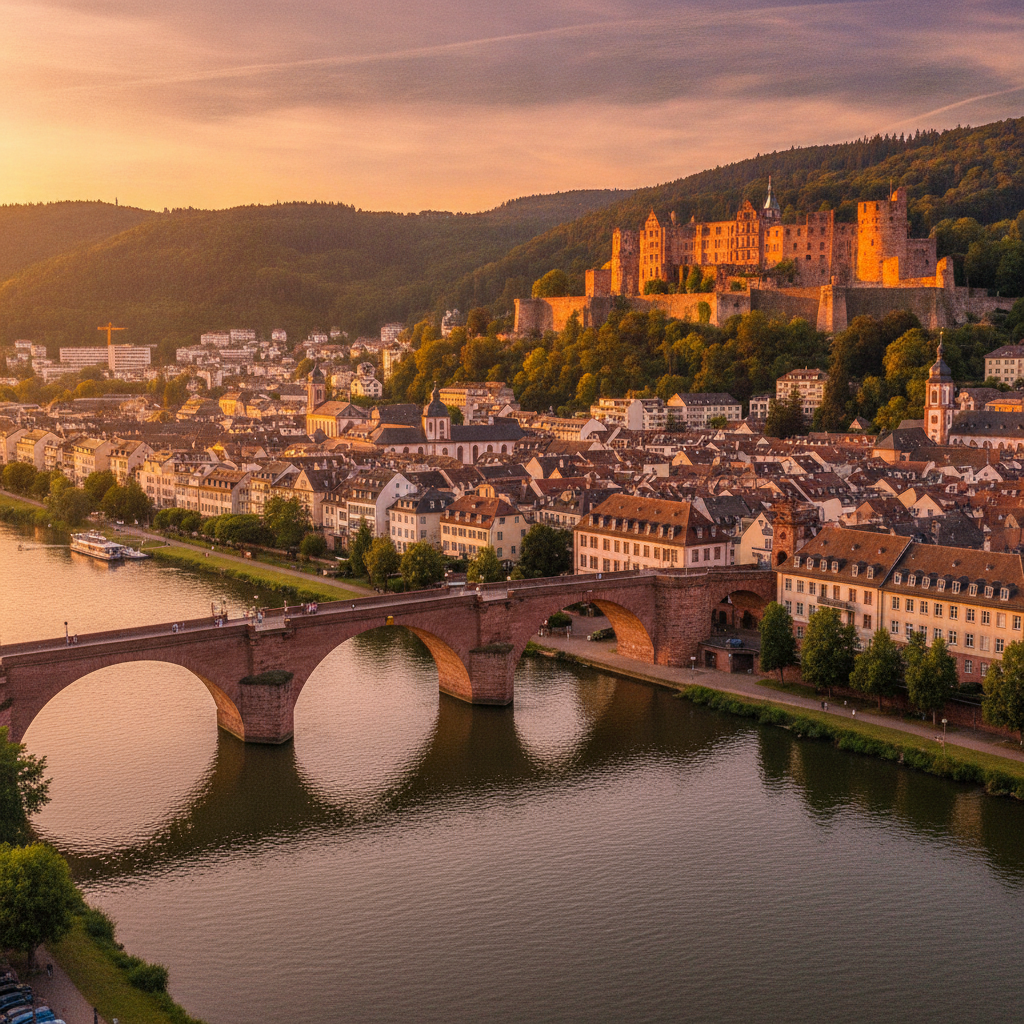
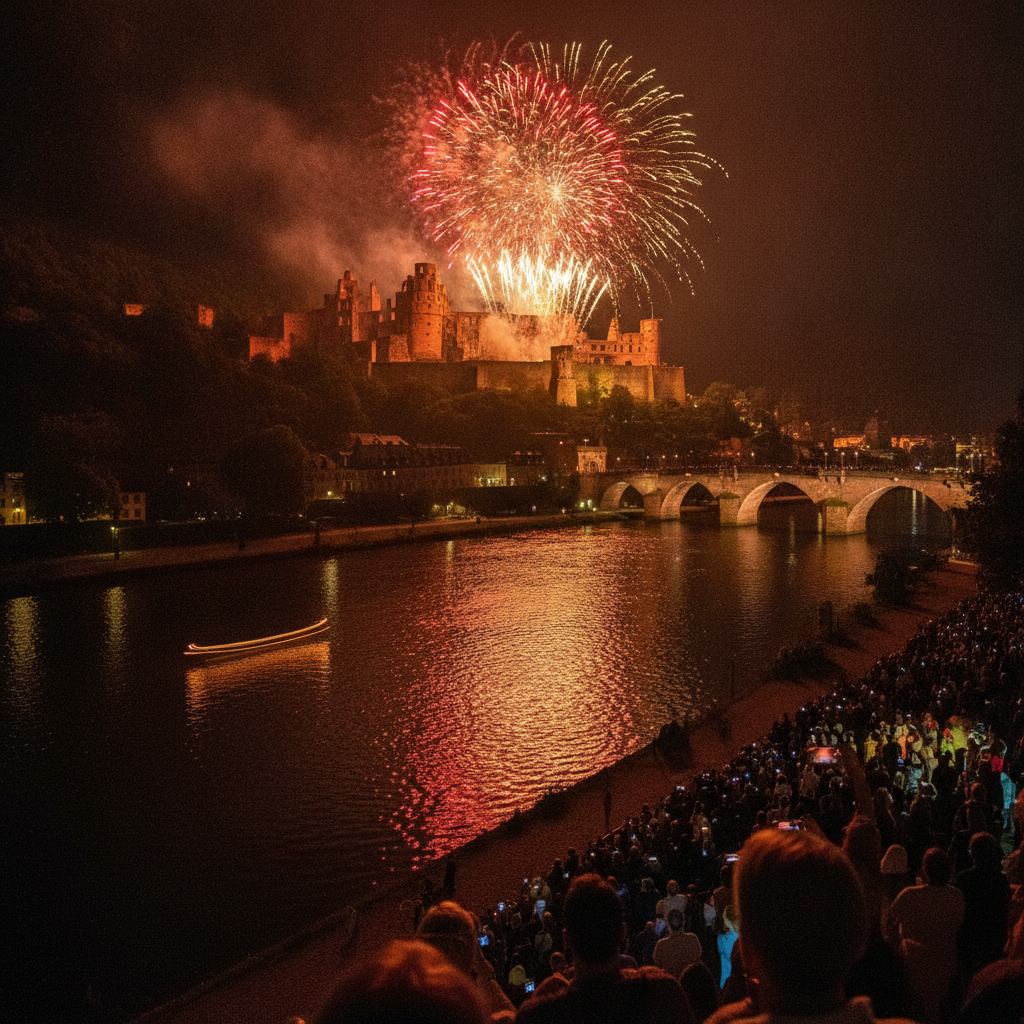
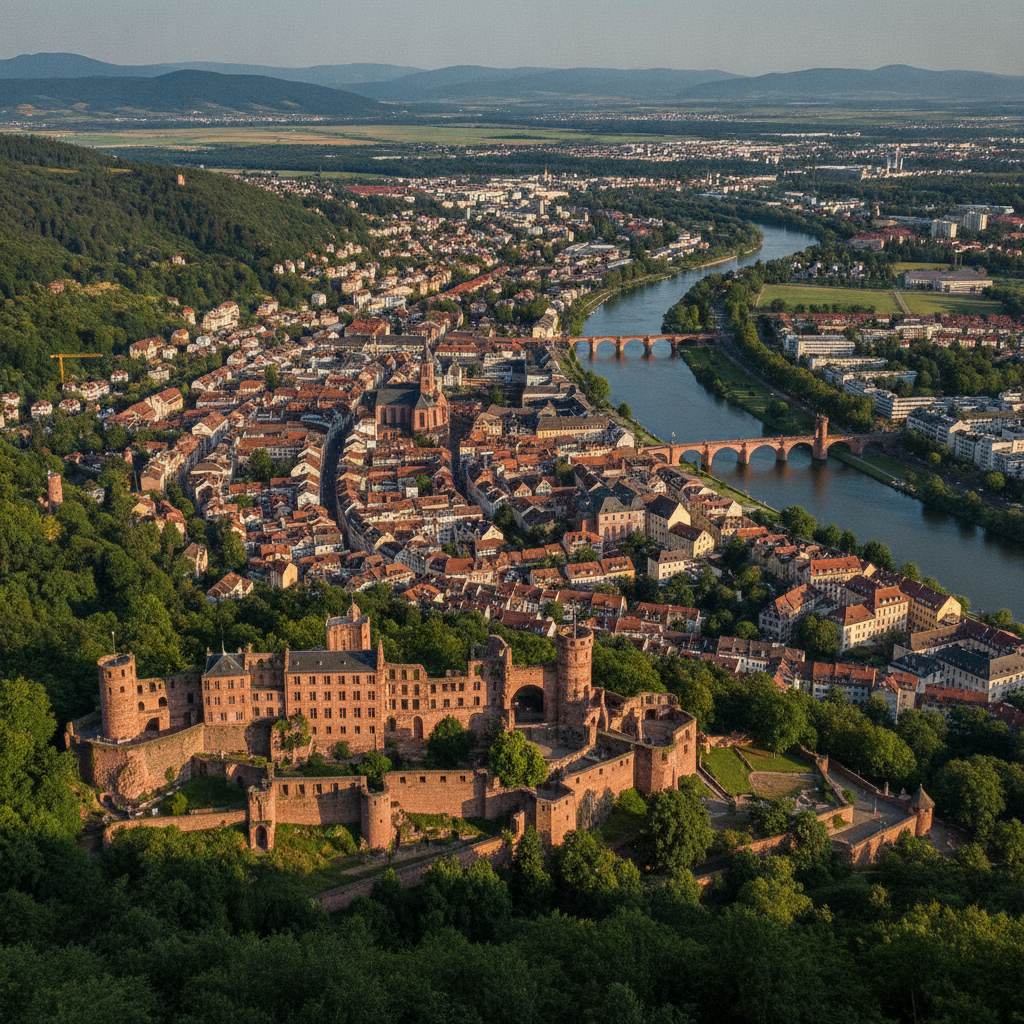
Heidelberg by night glows amber from the castle floodlights; the Schlossbeleuchtung fireworks simulate its 1693 destruction. The Roman town of Ladenburg, the Odenwald forest, and the Bergstrasse wine route complete the Heidelberg day-trip panorama.
- 1
The Heidelberg Schloss by Night — Illuminations and the Schlossbeleuchtung
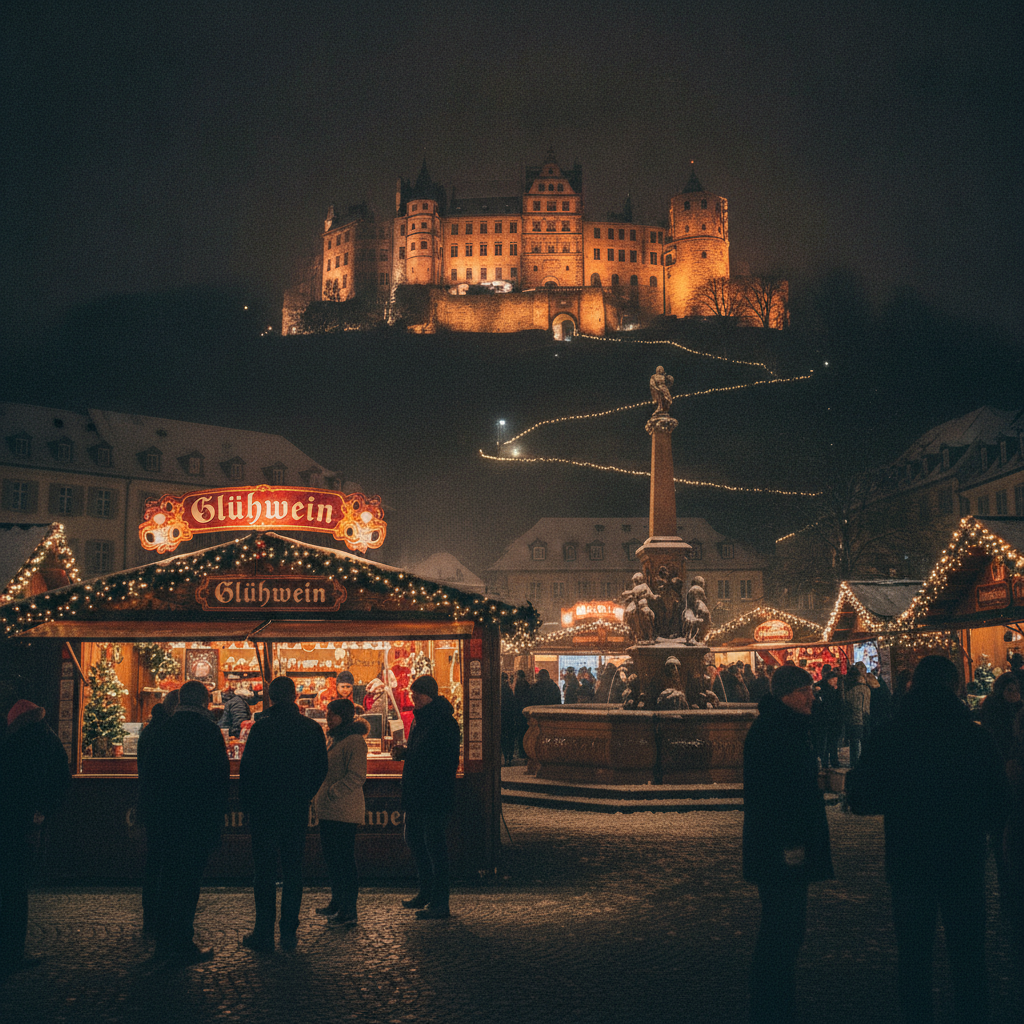
Heidelberg Castle by night (the Schloss Heidelberg after dark — the most dramatically illuminated castle ruin in Germany, the permanent floodlighting the most atmospheric single castle-by-night experience in the German-speaking world outside of the Neuschwanstein Christmas illumination): the permanent illumination (the Heidelberg Castle permanent floodlighting — the red sandstone walls lit amber and gold each evening from sunset to midnight, the most theatrically romantic single castle illumination programme of any permanent castle in Germany, the view from the south Neckar bank the most precisely framed night castle view, the Theodor-Heuss-Brücke and the Alte Brücke both offering different night view angles, the most used by photographers the view from the Brückentor gate approach), the Schlossbeleuchtung (the 3 annual Heidelberg Castle Illumination events — the most visited single event in the Heidelberg annual calendar: the first in May (Heidelberger Frühling), the second in June (the main summer Schlossbeleuchtung), and the third in September (the autumn illumination), the most specifically French-history-referenced fireworks event in Germany (the fireworks simulating the 1693 destruction of the castle by the French forces of Louis XIV during the Palatine War of Succession), the south Neckar bank from the Theodor-Heuss-Brücke to the Neuenheimer Landstrasse the most used public viewing position (free), the ticketed grandstand seating in the castle courtyard the most proximate view at €28 per seat), the Heidelberg Schloss concert season (the Heidelberger Schloss Festspiele — the summer concert and theatre season performed in the castle inner courtyard (Schlosshof), the most historically atmospheric performing arts venue in Baden-Württemberg, the programme from June to September including the Heidelberger Schlossfestspiele main season July-August, the open-air classical concerts the most visited ticketed cultural events in the castle), the castle evening visit (the Heidelberg Castle evening opening — the castle illuminated and the inner courtyard accessible until midnight daily in summer, the most atmospheric single time to visit the Heidelberg Castle, the Apothekenmuseum (Pharmacy Museum) in the castle basement the most uniquely positioned museum in any floodlit castle, the castle interior restaurant 'Schloss Heidelberg' the most atmospherically positioned dinner venue in Heidelberg at the castle inner courtyard, reservation required) and the night photography (the Heidelberg Castle night photography — the most visited single night photography subject in Baden-Württemberg, the best positions: the Neuenheimer Landstrasse opposite bank for the bridge-and-castle composition, the Alte Brücke (Old Bridge) midpoint for the castle-above-the-rooftops view, the Scheffelterrasse for the castle-and-Neckar composition, the Philosophenweg at dusk for the blossom-and-castle view in spring, the golden hour timing at the Alte Brücke the most consistently used single photographic position in Heidelberg).
- 2
The Heidelberg Roman Legacy — Ladenburg and the Roman Museum
Heidelberg Roman heritage (the Roman settlement of Lopodunum (Ladenburg) 15km north of Heidelberg — the most completely preserved Roman town layout of any city in Baden-Württemberg, the Roman grid plan the oldest surviving urban grid still in active use in the Heidelberg area): Ladenburg (the Ladenburg town on the Neckar — the most completely Roman-grid-plan-preserving town in Baden-Württemberg, the Roman Lopodunum fort and civilian settlement of the 1st-4th centuries CE the most directly archaeologically significant single Roman site accessible from Heidelberg by S-Bahn in 20 minutes, the Roman town walls fragments the most extensively surviving pre-medieval urban fabric in the Heidelberg area), the Lobdengau Museum (the Lobdengau-Museum in the Ladenburg Zehnthof — the most comprehensively Roman-period collection in the Heidelberg regional museum system, the Roman inscriptions, the Mithraic reliefs (the most important Mithraic cult relief collection in the Rhineland outside Cologne), and the Roman domestic objects the most instructive single collection for understanding Roman daily life in the upper Rhine valley), the Heidelberg Roman fort (the Roman fort (castellum) at the Bergheim district of Heidelberg — the Roman auxiliary fort established 70 CE at the point where the major Roman road from Mainz to Augsburg (the Via Regia) crossed the Neckar, the most archaeologically significant single Roman site within the Heidelberg city limits, the fort outline visible only from aerial photography but the Kurpfälzisches Museum exhibition the most accessible single Roman Heidelberg display), the Heidelberg Roman road (the Römerstraße through Heidelberg — the Roman road alignment from the Heidelberg Bergheim district through the Handschuhsheim suburb to the Ladenburg crossing still traceable in the modern street pattern, the most directly Roman-road-aligned pedestrian walking route in Heidelberg), the Roman burial ground (the Roman burial ground at the Heidelberg Bergfriedhof cemetery site — the most extensively Roman-burial-site-containing location in the Heidelberg city limits, the gravestones in the Kurpfälzisches Museum collection the most personally individualised Roman memorial objects from the Heidelberg area) and the Mithraic sanctuary (the Mithraeum at Ladenburg — the most completely excavated single Mithraic sanctuary site in Baden-Württemberg, the Mithraic relief of the bull-slaying (tauroctony) the most iconographically complete single Mithras image from the Roman Rhine frontier, the Lobdengau Museum the primary display location for all Mithraic material from the Ladenburg excavations).
- 3
The Heidelberg Baroque — The Altstadt Architecture in Detail
Heidelberg Baroque architecture (the Heidelberg Altstadt Baroque — the most completely intact urban Baroque streetscape in Germany, the 1693 French destruction followed by the 1690-1720 reconstruction the most comprehensively Baroque-rebuilt town centre in the Rhineland): the Hauptstrasse Baroque (the Hauptstrasse from the Bismarckplatz to the Marktplatz — the most comprehensively Baroque-arcade-fronted single pedestrian street in Germany, the Baroque sandstone facades the most instructive single street-level Baroque architectural sequence in any German city, the portal details — the carved sandstone cartouches, the rusticated keystones, the elliptical dormer windows — the most rewarding single detail-level architectural walk in Heidelberg), the Alte Universität (the Alte Universität (Old University) at Grabengasse 1 — the 1712 Baroque university building the most formally composed single Baroque institution building in Heidelberg, the Aula (Great Hall) interior the most completely preserved Baroque academic ceremonial space in Germany, the ceiling allegory 'Heidelberger Musen' the most specifically university-themed Baroque ceiling painting in any German academic building), the Stadtkirche (the Providenzkirche (Church of Providence) at Marktplatz — the most prominently positioned Reformed (Calvinist) church in Heidelberg, the Baroque rebuilding of 1659-1661 after the Thirty Years War the earliest post-war Baroque ecclesiastical building in Heidelberg, the most architecturally modest church relative to its historical importance in the Heidelberg townscape), the Jesuitenkirche (the Jesuitenkirche (Jesuit Church) at Schulgasse — the most elaborate Baroque ecclesiastical interior in Heidelberg, the stucco ceiling decorations and the Baroque high altar the most ornately Catholic interior in a city dominated by the Reformed tradition, the most architecturally instructive single Baroque church in the Heidelberg Altstadt for the visitor interested in the Counter-Reformation Baroque), the Haus zum Ritter (the Haus zum Ritter at Hauptstrasse 178 — the most completely Renaissance-survivor building in Heidelberg, the 1592 facade the only pre-1693 Altstadt facade surviving the French destruction intact, the most instructively Renaissance-detailed single house facade in any German city otherwise dominated by Baroque) and the baroque fountains (the Hercules Fountain at the Marktplatz and the Löwenbrunnen at the Universitätsplatz — the 2 most historically significant urban fountains in Heidelberg, the Hercules Fountain the primary civic symbolic focal point of the Marktplatz, the Löwenbrunnen the most visited single water feature in the Heidelberg academic district, both fountains the most used outdoor social gathering points in the Heidelberg Altstadt).
- 4
The Odenwald — Forest Hikes from Heidelberg
Odenwald (the Odenwald forest range east of Heidelberg — the most accessible single forested upland for day hiking from any major German city, the Odenwald the most extensively waymarked hiking area in Baden-Württemberg with 8,000km of marked trails): the Walldürner Weg (the Walldürner Weg — the primary long-distance trail crossing the Odenwald from Heidelberg east to Walldürn, the most completely waymarked single long-distance hiking route in the northern Odenwald, the trail from Heidelberg east via the Königstuhl summit the most frequently hiked section, the first 10km to the Kohlhof forest restaurant the most consistently visited woodland day-hike from Heidelberg), the Königstuhl (the Königstuhl summit at 568m — the most panoramically positioned single summit accessible from the Heidelberg city centre, the Bergbahn (rack railway) from the Heidelberg Marktplatz to the summit in 30 minutes at €12 return the most visited mechanical access, the TV tower at the summit the most prominent human structure on the Königstuhl, the summit cafe the most elevated coffee stop accessible by public transport from Heidelberg, the forest walk from the summit to the Kohlhof the most popular single short forest circuit), the Neckargemünd (the Neckargemünd town 8km east of Heidelberg on the Neckar — the most charming small Neckar valley town within cycling distance of Heidelberg, the 15km Neckartalradweg cycling route from the Heidelberg Theodor-Heuss-Brücke to the Neckargemünd the most scenic and consistently flat cycling in the Heidelberg area, the Neckargemünd old town the most picturesquely preserved small Neckar valley historic centre within the Heidelberg commuter area), the Dilsberg (the Dilsberg fortified village 5km northeast of Neckargemünd — the most completely intact medieval hill-top ring-walled village in the Odenwald, the Dilsberg castle ruins and the surviving ring wall of the 12th-century fortified village the most dramatically positioned medieval heritage site accessible from Heidelberg on the S-Bahn in 35 minutes, the view from the Dilsberg tower the most extensive single panorama over the Neckar valley in the Heidelberg area), the Michelstadt (the Michelstadt town 50km southeast of Heidelberg — the Kellerei courtyard and the Schnatterloch square the most perfectly preserved late-medieval Fachwerkhaus (half-timbered) ensemble in the northern Odenwald, the most frequently recommended Odenwald day trip destination from Heidelberg, accessible by regional bus) and the Odenwald geology (the Odenwald crystalline basement — the exposed granite and gneiss of the Odenwald the most geologically ancient exposed bedrock in Baden-Württemberg, the Heidelberg granite the specific building stone from the Odenwald quarries used in the construction of the Heidelberg Castle, the most directly material connection between the geological landscape and the built Heidelberg heritage).
- 5
Heidelberg Food — the Altstadt Restaurants and the Regional Cuisine
Heidelberg gastronomy (the Heidelberg culinary landscape — the most diverse gastronomy of any city in Baden-Württemberg north of Freiburg, the student population and the international tourist visitor base the 2 primary drivers of the Heidelberg restaurant diversity): the Palatine cuisine (the Pfälzer Küche (Palatinate cuisine) the primary regional culinary tradition of Heidelberg — the Saumagen (pig's stomach stuffed with meat and potatoes, the most specifically Palatine dish and the dish most associated with Chancellor Helmut Kohl who served it to world leaders at his Deidesheim dinners), the Pfälzer Leberknödel (liver dumplings in broth), the Grumbeere (Palatinate dialect for potatoes — the primary Pfälzer starch, prepared as Schales (potato gratin), Dampfnudeln (steamed dumplings), and Reibekuchen (potato pancakes)), the Pfälzer Riesling (the most widely consumed white wine in Heidelberg restaurants, the Pfalz wine region 25km southwest the nearest major wine region to Heidelberg), the Zwiebelkuchen (onion tart, the most typical Heidelberg autumn harvest seasonal food served in October-November with the new wine), the Baden cuisine (the Baden culinary tradition in Heidelberg — the Badische Küche the most French-influenced of all German regional cuisines by proximity of the Alsace region, the Badischer Winzersteak (wine-marinated grilled steak), the Flammkuchen (Alsatian-Badensian thin-crust tart with crème fraîche and bacon, the most ordered shared starter in Heidelberg wine bars), and the Maultaschen (Swabian pasta parcels, the most beloved single German pasta dish, called 'Herrgottsbescheißerle' (God-cheaters) because the meat was hidden inside the pasta to deceive God during Lent)), the Perkeo restaurant (the Perkeo restaurant at Hauptstrasse 75 — the most historically named Heidelberg restaurant (named for the castle dwarf), the most consistently recommended mid-range Heidelberg restaurant for the regional cuisine, the Saumagen and the Pfälzer Leberknödel the most ordered dishes, the castle terrace view), the Haarlass (the Haarlass restaurant at the Neckar bank at Rohrbacher Strasse 162 — the most scenically positioned full-service restaurant in Heidelberg with the direct Neckar riverside terrace and the castle view from the terrace, the most frequently reserved single terrace table in Heidelberg in summer) and the market (the Heidelberg Wochenmarkt (weekly market) at the Marktplatz on Tuesday, Thursday, and Saturday mornings — the most comprehensively stocked weekly market in Heidelberg for the regional produce including the Palatinate wines, the Odenwald honeys, the Kraichgau strawberries, and the Bergstrasse asparagus (the most regionally specific and the most seasonally celebrated vegetable in the Heidelberg area, available from April to June).
- 6
The Heidelberg Bergstrasse — Wine, Blossom and Castles
Heidelberg Bergstrasse (the Bergstrasse — the 'Mountain Road' along the western Odenwald escarpment from Heidelberg north to Darmstadt, the most climatically mild single corridor in all of Germany north of the Rhineland, the warmest and earliest-blossoming agricultural route in Germany): the Bergstrasse wine (the Bergstrasse wine region — the smallest of the 13 German wine regions by area, the most climatically sheltered wine region in Germany by the double protection of the Odenwald escarpment to the east and the Rhine plain microclimate from the west, the Riesling and the Grauburgunder (Pinot Gris) the most planted varieties, the Bergstrasse estates the most artisanally-scaled of any German wine region with no single estate over 15 hectares), the Starkenburg (the Starkenburg castle ruin above Heppenheim 30km north of Heidelberg — the most dramatically positioned castle ruin on the Bergstrasse, the panoramic view from the Starkenburg tower over the Rhine plain and the Odenwald the most extensive single Bergstrasse vista, the Staatsweingut Bergstrasse (the state wine estate) at the castle base the most historically established single Bergstrasse wine producer), the Lorsch Abbey (the Lorsch Abbey (Kloster Lorsch) at Lorsch 45km north of Heidelberg — the Carolingian abbey of 764 CE, the Torhalle (gatehouse) the most completely surviving single Carolingian architectural structure in Germany, the UNESCO World Heritage site since 1991, the most internationally significant pre-Romanesque building accessible from Heidelberg on a day trip), the Bensheim asparagus (the Bensheim asparagus — the Bergstrasse asparagus from the sandy loam soils of the Bensheim area, the most specifically Bergstrasse premium agricultural product, the white asparagus season from April to the Johannistag (June 24) the most seasonally celebrated single food event on the Bergstrasse, the Spargelhöfe (asparagus farms) on the Bergstrasse the most directly farm-to-table asparagus purchase within reach of Heidelberg), the Weinheim rose gardens (the Weinheim Schlosspark rose gardens 15km north of Heidelberg — the most extensively cultivated historic rose garden in Baden-Württemberg, the Weinheim Schlosspark the largest castle park garden open to the public in the Heidelberg area, the cedar of Lebanon in the park the oldest single tree in any public park in Baden-Württemberg) and the Bergstrasse cycling (the Bergstraße cycling route from Heidelberg north to Darmstadt on the R7 regional cycling route — the most completely flat cycling route in the Heidelberg hinterland at 60km total, the entire route on dedicated cycling infrastructure through the fruit orchards and wine estates, the most comprehensively agricultural cycling experience accessible from Heidelberg as a day trip by regional train return from Darmstadt).
Walk this route with audio
Stories play automatically as you reach each stop — no tapping needed.
More in heidelberg
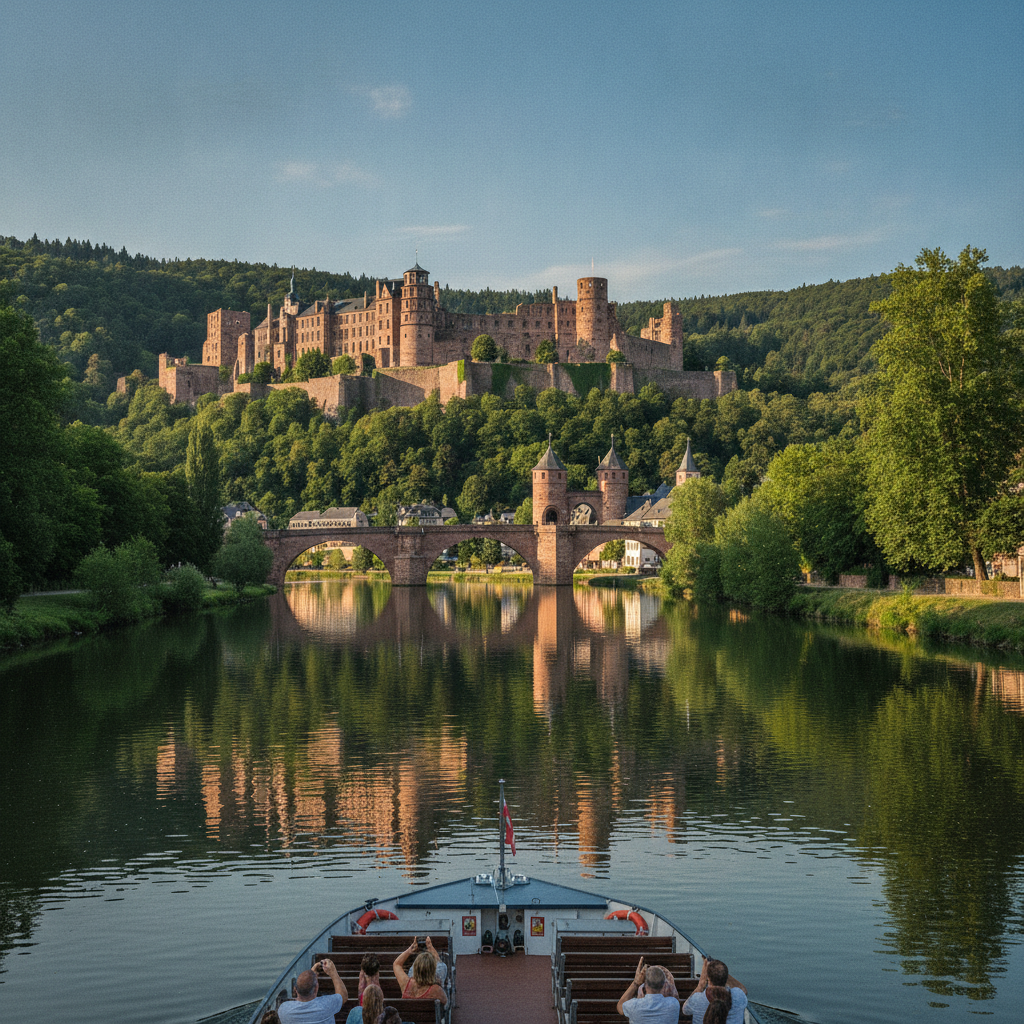
Heidelberg — Neckar Cruise, Mannheim Baroque Palace, Worms Cathedral & Speyer's Romanesque Kaiserdom
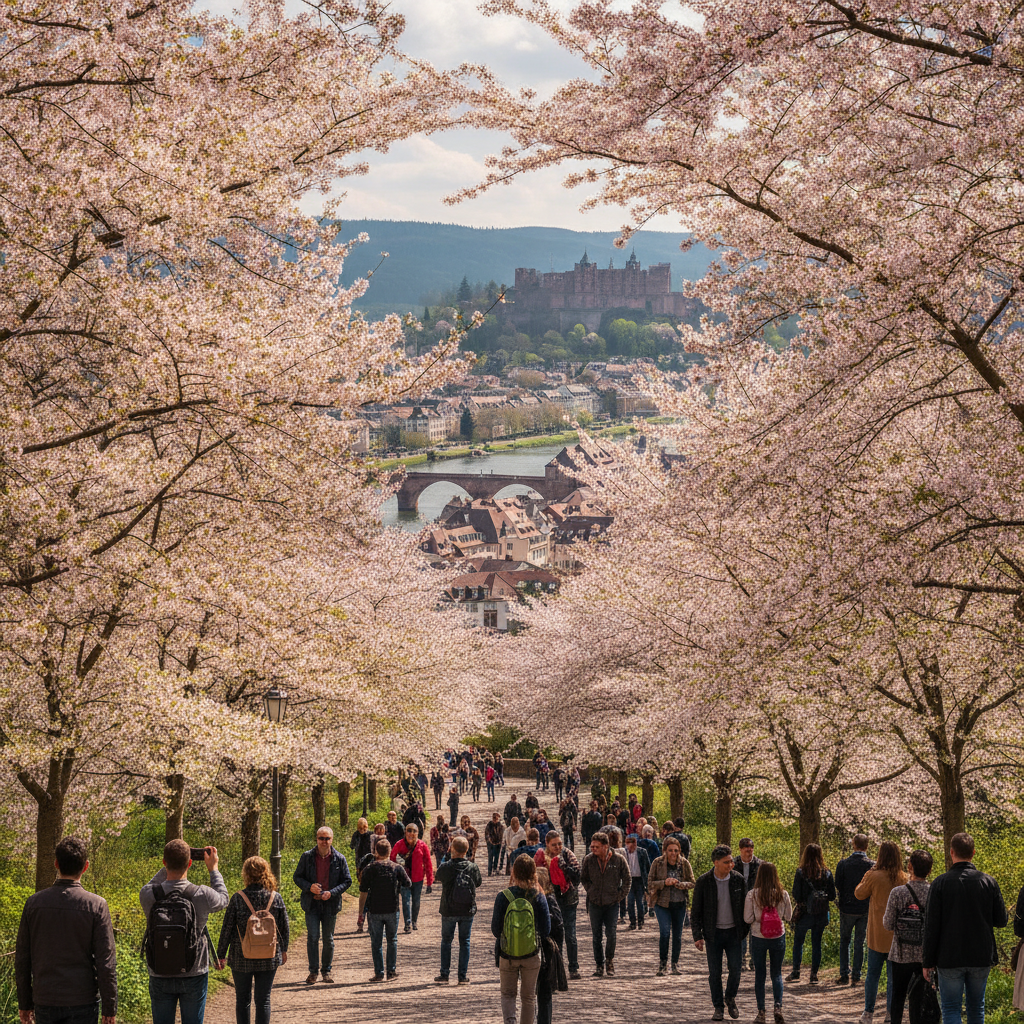
Heidelberg — Philosophenweg, Wine Country, Museums, Student Culture & Nightlife
Heidelberg — Königstuhl Summit, Handschuhsheim Village, the Electoral Palatinate & Heidelberg in Literature
Heidelberg — Churches, Schwetzingen Garden, Christmas Market, Art Scene & the Full Events Calendar